
Why 31,000+ Families Switched to This Natural Home Odor Eliminator
- The source, not the symptom Most home odors trace back to moisture trapped in footwear — spray fresheners just mask it, while enzyme-based sprays neutralize it at the root.
- Consistency beats intensity A quick daily spray after each wear outperforms a single heavy treatment — results build over 5–7 days as deep-set odor compounds break down.
- Prevention wins the long game Pairing a talc-free foot powder in the morning with an enzyme spray at night cuts off the odor cycle before it starts, not after.

What's Actually Causing That Smell in Your Home?
Most persistent household odors — especially in entryways, mudrooms, and sports bags — trace back to a single source: moisture trapped in footwear and gear. Without addressing that root cause, no amount of air freshener will fix the problem for more than a few hours.
You know the smell. It hits you the second someone opens the front door after practice. Or you catch it walking through the mudroom. It's not just "feet" — it's that deep, sour, lived-in funk that seems to settle into the walls.
That smell is coming from your shoes.
More specifically, it's coming from the moisture inside your shoes. Sweat soaks into the insole, the lining, the foam — and once it's in there, it creates the perfect environment for odor-causing bacteria to thrive. That's bromodosis in action, and it's incredibly common, especially in active households.
The average person's feet produce about half a cup of sweat per day. Now multiply that across a family of four with athletes, a partner in work boots, and a teenager who never unties their laces. You're not dealing with a small problem.
So before we get into what works, let's talk about what doesn't.
Why Do Common Home Odor Remedies Stop Working So Fast?
Most popular DIY odor remedies — baking soda, dryer sheets, aerosol sprays — mask the smell rather than targeting the source. They don't reach the moisture embedded in shoe materials, so the odor comes back within hours.
We spent three weeks putting the most popular solutions to the test. The criteria were simple:
- Does it actually eliminate odor, or just cover it?
- How long does it last? (We checked at 6 hours, 24 hours, and 48 hours.)
- Does it leave residue, staining, or damage on shoe materials?
- Is it safe around kids and pets?
- Does it work on the worst offenders — cleats, work boots, gym sneakers?
We tested four methods head-to-head: baking soda, store-bought aerosol sprays, white vinegar, and a plant-based enzyme spray. Here's what we found.
Method 1: Baking Soda
Baking soda is the classic go-to, and it's not totally useless. It does absorb some moisture and can neutralize mild odors. But here's the problem: it leaves a white chalky residue inside the shoe, it doesn't penetrate deep into the foam or lining, and results lasted about 4–6 hours before the smell crept back. It also gets messy fast — especially if you're dealing with kids' cleats that get tossed around.
Method 2: White Vinegar Spray
White vinegar has a genuine odor-neutralizing effect due to its acidity. We sprayed a diluted solution into a pair of gym shoes and let it sit overnight. The smell was gone in the morning — replaced by a strong vinegar smell that took another day to fully dissipate. Not exactly what you want greeting your houseguests. And on a pair of leather dress shoes, the acidity left visible marks on the lining. Hard pass for anything you care about.
Method 3: Store-Bought Aerosol Sprays
The big-brand aerosols smell incredible for about 45 minutes. After that? The original odor comes back, now layered under a synthetic "powder fresh" scent that somehow smells worse than the original problem. We tested two popular brands over five days. Neither made a meaningful dent in the odor from a pair of soccer cleats that had been worn daily. One left a sticky film inside the shoe.
And the ingredient lists on those aerosols? Long, hard to pronounce, and not something you'd want near a child's skin or a dog who sleeps by the shoe rack.
If you've been wondering why your shoes still smell bad even after washing, the answer is almost always that the odor source — bacteria deep in the material — never got addressed.
Most people spray the insole and call it done — but the biggest odor reservoir in most shoes is actually the toe box lining and the sidewall foam near the ball of the foot. Those areas soak up sweat directly from the skin but rarely get treated. Angle your spray toward the front inner lining, not just straight down into the heel. Two targeted sprays there will do more than five random ones into the opening.
Method 4: Plant-Based Enzyme Spray (The Clear Winner)
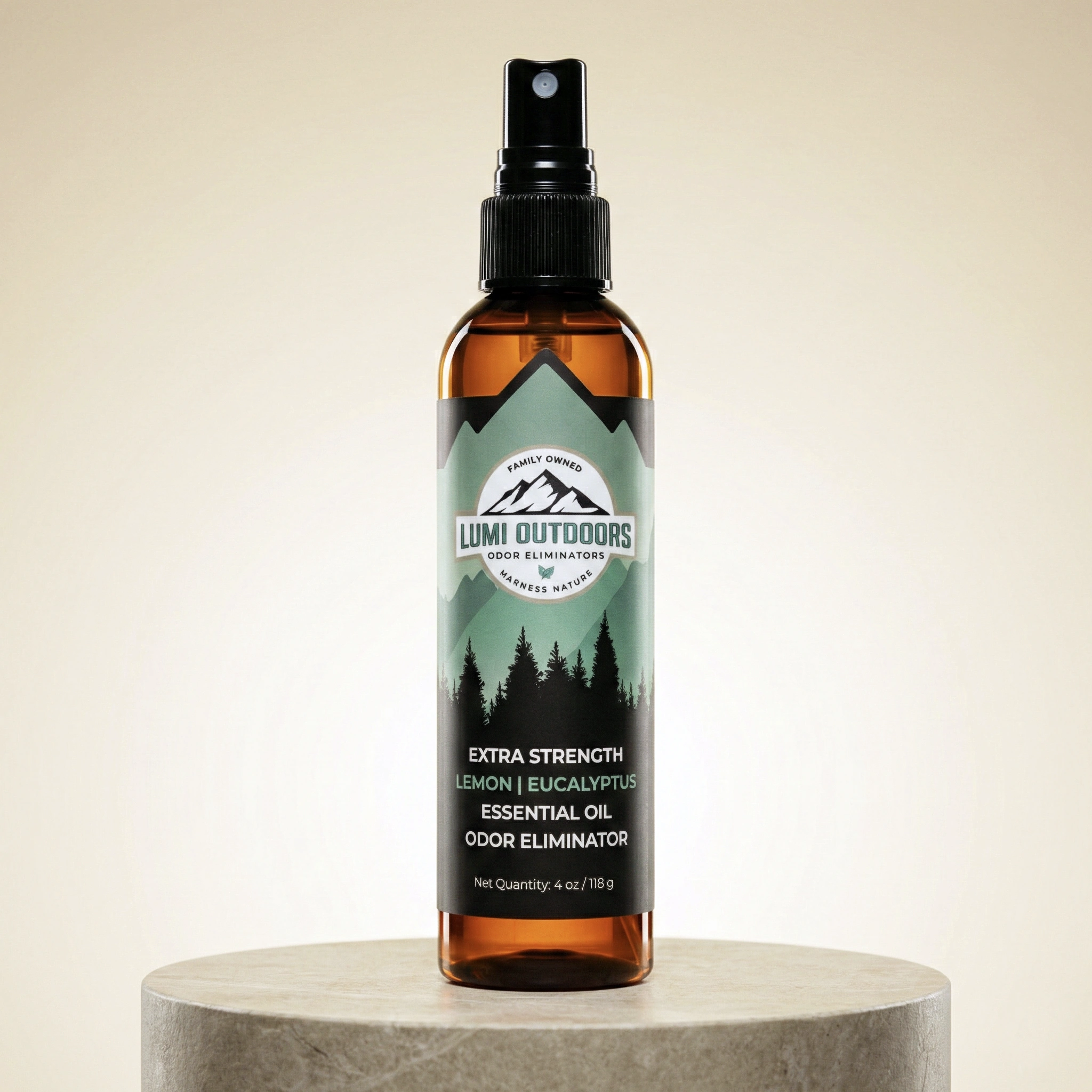
This is where things got interesting. We used the Extra Strength Shoe Deodorizer Spray from Lumi Outdoors — their lemon and eucalyptus formula — on the same pair of soccer cleats that stumped the aerosol sprays. Two sprays inside each shoe, left overnight.
By morning, the smell was gone. Not masked. Gone.
We tested again at 24 hours and 48 hours. The cleats stayed neutral-smelling through two more wears. That's not something we expected going in.
The formula uses natural enzymes to break down the odor-causing compounds at a molecular level, rather than just covering them up. No sticky residue. No white powder mess. No synthetic fragrance hangover. Just a clean, faint lemon-eucalyptus scent that fades to nothing by morning.
If you've got a serious, stubborn odor situation — think construction boots, sports cleats, or teenage sneakers — this is the product we'd reach for first. Here's what we kept in the mudroom all month:
What You'll Need
- Clean dry cloth or paper towels (for wiping out visible debris before spraying)
- Mesh laundry bag or shoe bag (for storing treated shoes in a ventilated space overnight)
- Extra Strength Shoe Deodorizer Spray Check Price →
- Newspaper or shoe trees (for maintaining shoe shape and airflow during treatment)
How Do You Stop Shoe Odor Before It Starts?
The most effective strategy isn't reactive — it's preventative. Applying a talc-free foot powder before wearing shoes absorbs sweat before it soaks into the material, cutting off the odor cycle at its source.
Here's something most odor guides don't tell you: spraying your shoes after a wear is reactive. You're already playing catch-up. The better move is stopping moisture from building up in the first place.
That's exactly what the Natural Foot Powder does. It's talc-free — which matters if you've read anything about the benefits of zinc oxide or why traditional talc formulas are falling out of favor — and uses a plant and mineral-based blend that keeps feet dry throughout the day.
We tested this alongside the spray. The combination was noticeably better than either product alone. After a week of using the powder in the morning and the spray at night, the cleats that had been the worst offenders in our test were genuinely neutral-smelling. Not "acceptable." Actually neutral.
The reason why is explained well in this breakdown of how kaolin clay outperforms traditional talc — essentially, better mineral absorption means drier shoes, which means odor-causing bacteria never get the moisture they need to thrive.
For anyone dealing with a chronic, daily odor problem — an athlete who trains every day, a partner who spends 10 hours in work boots — the spray-and-powder system isn't overkill. It's just smart. You can also check out the guide on spray vs. powder for all-day moisture control if you want a deeper breakdown of when to use each.
Does a Natural Odor Spray Work on More Than Just Shoes?

Yes. Plant-based enzyme sprays work on any porous material that traps moisture and odor — including gym bags, sports gear, car interiors, and pet bedding. The enzyme formula doesn't discriminate by surface type.
This is where we started to see why families are using this beyond just the shoe rack.
During our testing month, we also used the spray on:
- A soccer bag that had developed its own personality
- The backseat of a car after a particularly sweaty youth tournament weekend
- A hockey helmet that hadn't been treated in a season
- A mudroom bench cushion
Results across all of those were consistent with what we saw in the shoe tests. The enzyme formula neutralizes odor on contact with organic compounds — sweat, skin cells, the biological stuff that causes smell — regardless of what material it's sitting in. You do need to let it dry fully (usually overnight), but the payoff is a genuinely fresh surface, not just a masked one.
For specific gear like neoprene or cleats, check out these guides: how to neutralize neoprene smell and 5 ways to use a cleat deodorizer without washing. Both have application tips that translate well to the Lumi spray.
According to the CDC's guidelines on hygiene, managing moisture and controlling odor-causing environments in shared spaces is a key part of maintaining a healthy home — especially when kids and pets share those spaces daily.
Which Natural Odor Eliminator Is Right for Your Situation?
The right formula depends on odor severity and scent preference. Extra strength lemon-eucalyptus for serious odors, lavender tea tree for sensitive households, and citrus tea tree for daily light maintenance.
We tested both side-by-side against the big-brand aerosols. The difference isn't just in the smell — it's in the chemistry. Here's how the natural option compares:
| Feature | Extra Strength Shoe Deodorizer Spray | Store-Brand Aerosol Spray |
|---|---|---|
| Odor Elimination vs. Masking | Neutralizes odor at the molecular level with natural enzymes | Covers odor with synthetic fragrance — smell returns within hours |
| Lasting Power | 24–48 hours per application, builds over consistent daily use | 30–90 minutes before original odor resurfaces |
| Residue Left Behind | Zero residue — dries completely clear | Sticky film reported on leather linings and insoles |
| Safe for Kids & Pets | 100% plant-based, no harsh chemicals, parabens, or aluminum | Contains synthetic fragrance compounds and chemical propellants |
| Works on Worst-Case Odors | Cleared soccer cleats worn daily after 2 applications | No meaningful improvement on sports footwear after 5 days |
| Price Per Use | Higher upfront cost, but fewer applications needed for results | Lower upfront cost, but requires daily heavy use to maintain |
Not everyone's situation is the same, so here's a quick guide:
- Worst-case odors (cleats, work boots, gym shoes): Extra Strength Shoe Deodorizer Spray — the lemon eucalyptus formula is the most potent and handles even multi-week buildup.
- Sensitive to strong scents: The Natural Lavender Tea Tree Shoe Deodorizer Spray delivers the same odor-neutralizing results with a softer, herbal scent. Good for anyone who finds citrus or eucalyptus too sharp.
- Daily maintenance, mild odors: The Natural Citrus Tea Tree Shoe Deodorizer Spray is perfect for everyday sneakers and regularly worn family shoes. Light, fresh, and easy to use after every wear.
- Chronic sweating and daily athletes: The full Natural Foot Powder and Extra Strength Shoe Deodorizer Spray bundle is genuinely the most effective system we tested. Powder in the morning, spray at night.
For a direct third-party comparison, the Lumi Outdoors vs. Dr. Scholl's breakdown lays it out clearly if you want to see how these stack up against the pharmacy staple.
How Long Does a Natural Odor Eliminator Actually Last?

A plant-based enzyme spray typically delivers 24–48 hours of effective odor control per application, with results building over consistent daily use. Pairing it with a moisture-absorbing powder extends that window significantly.
This is one area where honesty matters more than marketing.
Natural sprays aren't a once-and-done fix. If you spray once and then stuff your shoes in a gym bag for three days, they will smell again. The enzyme formula does its job, but it can't fight fresh sweat that's been sitting in an unventilated bag all week.
Consistency is the whole game here. A quick spray after each wear — it takes about five seconds — and a sprinkle of powder before — another five seconds — and you'll notice results compound over about a week. The shoe materials slowly get "reset" as repeated enzyme treatments break down the deep-set odor compounds that have built up over months.
We saw this clearly in our testing. By day three, the improvement in the worst-offending shoes was noticeable. By day seven, they passed the "hold them near your face" test. That's a real benchmark.
And for winter boots specifically, where moisture gets sealed in by design, the approach is slightly different — there's a good walkthrough in these 5 hacks for winter boot smell removal that pairs well with the spray routine.
Is the natural route perfect? Honestly, it requires more consistency than a heavy chemical spray that blasts everything into submission. But the tradeoff is no synthetic chemicals near your family's skin, no damage to shoe materials, and an approach that actually works long-term. Here's the honest breakdown:
- Enzyme formula genuinely eliminates odor — not just covers it
- Zero residue on any shoe material tested, including leather and mesh
- Plant-based and safe for children, pets, and sensitive skin
- Works on more than shoes — bags, car interiors, sports gear all responded well
- Results improve with consistent daily use over a 5–7 day reset period
- Requires daily consistency to maintain results — a single use won't fix a months-long buildup
- Initial scent (lemon-eucalyptus) may be strong for highly sensitive users — the lavender formula is the gentler alternative
Ready to stop the smell from winning every time someone walks in the door?
Join 1 Million+ Other People Who Chose Lumi to Conquer Their Shoe Odor.
- DESTROYS ODOR AT THE SOURCE, DOESN'T JUST MASK IT
- ALL-NATURAL & PLANT-BASED INGREDIENTS
- PROUDLY FAMILY-OWNED & MADE IN UTAH
- THE "FRESH CONFIDENCE" GUARANTEE