
3 Reasons Kaolin Clay Foot Powder Outperforms Traditional Talc
- Talc Sits, Clay Absorbs Talc creates a surface barrier that saturates fast, while kaolin clay's porous structure actively draws moisture away from skin all day long.
- Dry Feet Mean No Odor Odor comes from bacteria feeding on sweat, so removing moisture before it builds up stops the smell before it ever starts.
- Safety Matters Too Kaolin clay is talc-free, pH-neutral, and safe for daily use on all family members — including kids who wear cleats every weekend.

You grab the baby powder. You shake it into your kid's cleats, maybe into your own work boots, and you figure that's that. Talc has been the go-to for sweaty feet since your grandparents were kids. It's everywhere, it's cheap, and it feels like it should work.
But here's the thing — if you've been reaching for that familiar white canister and still waking up to shoes that smell like a locker room, you're not doing it wrong. The product is just... wrong for the job.
Talc isn't bad because it's old-fashioned. It's bad because of what it can't do at a molecular level. And kaolin clay? It operates completely differently. Once you understand why, you won't go back.
Is Kaolin Clay and Talc the Same Thing?
No — kaolin clay and talc are fundamentally different minerals with different structures, absorption mechanisms, and safety profiles. Talc is a magnesium silicate that sits on the skin's surface, while kaolin is an aluminum silicate with a porous, layered structure that actively draws moisture away from the skin.
Both are white, both are powdery, and both have been used in personal care products for decades. That surface-level similarity is exactly why so many people assume they're interchangeable. They're not.
Talc is essentially a flat, waxy mineral. Under a microscope, it looks like tiny overlapping plates with a slick, hydrophobic surface. That texture feels silky, which is why it's been a staple in cosmetics. But that slick surface also means moisture tends to bead on it rather than get absorbed into it. Talc creates a barrier effect — it coats the skin and reduces friction, but it doesn't truly pull sweat away.
Kaolin clay, by contrast, has a layered aluminosilicate structure with a genuinely porous surface. It doesn't just sit on top of your skin — it draws in moisture the way a sponge draws in water. The difference matters a lot if your feet sweat the way most active adults' feet sweat.
And let's be honest: if you've got a teenager in soccer cleats or a partner who's on their feet on a job site all day, you're not dealing with light perspiration. You're dealing with the kind of moisture that soaks through socks and turns a $180 pair of boots into a biohazard.
Most people apply foot powder after they've already started sweating — and by then, the moisture has already started its work. Apply kaolin clay powder to completely dry feet immediately after your shower, before you put on socks, and let it sit for 60 seconds. That brief contact time before any activity lets the clay bond with the skin's surface and set up its absorption layer properly. Athletes who do this consistently report noticeably drier feet even during two-a-day training blocks.
Why Does Talc Fail for People With Hyperhidrosis?

Talc fails for excessive sweaters because its surface area and absorption capacity are too low to handle high sweat volumes. It quickly becomes saturated, clumping into a paste that actually traps moisture against the skin rather than removing it.
Here's what happens in real time. You dust talc into your shoes before a run or a 10-hour shift. For the first 20 minutes, it feels fine. Then your feet start producing sweat in earnest — and talc can only absorb so much before it hits its limit.
Once it's saturated, it doesn't just stop working. It clumps. And those clumps create a warm, damp environment — exactly the kind of conditions where odor-causing bacteria thrive. You've essentially built them a little ecosystem.
People with hyperhidrosis — clinically excessive sweating — can produce four to five times more sweat than average. For them, talc isn't just ineffective. It's actively counterproductive, turning into a paste that causes skin irritation and accelerates the breakdown of sock fabric and shoe liners.
Kaolin clay doesn't saturate the same way. Its porous structure gives it significantly more surface area to work with, meaning it keeps pulling in moisture well past the point where talc would've given up. That's not a marketing claim — it's basic materials science. The absorptive capacity of clay minerals has been studied extensively in pharmaceutical and cosmetic research.
If you're already doing the extra work — washing insoles, rotating shoes, airing things out — and still fighting the smell, this is why. You're using the right strategy with the wrong ingredient.
If you want to stop moisture before it takes over, you need something built to absorb at volume. This is the one we keep by the door:
What You'll Need
- Clean dry towel (for patting feet dry before application)
- Small shaker or travel container (for on-the-go reapplication)
- Natural Foot Powder Check Price →
- Cedar shoe trees (to maintain shoe shape and support overnight drying)
What Makes Kaolin Clay More Effective Than Talc for Odor Control?
Kaolin clay addresses odor at its root cause — excess moisture — rather than just masking it. By keeping the foot environment consistently dry, it removes the conditions that allow odor-causing bacteria to multiply in the first place.
Odor from feet isn't really a foot problem. It's a moisture problem. Your feet have more sweat glands per square inch than almost anywhere else on your body — about 250,000 total across both feet. That sweat itself is odorless. The smell comes from bacteria on the skin breaking down sweat compounds and producing byproducts like isovaleric acid. That's the "gym locker" smell you know so well.
Dry feet don't produce much odor. Wet feet, sitting in a warm shoe for hours, absolutely do.
Talc gives you the illusion of dryness for a short window. Kaolin gives you actual dryness for much longer. And when the foot environment stays dry, the bacterial cycle — sweat in, odor out — slows down substantially.
There's also the bentonite factor. Many high-quality kaolin clay powders pair kaolin with bentonite, another clay mineral with powerful absorbent and drawing properties. Bentonite has a negative ionic charge that actively attracts positively charged molecules, including many sweat compounds. Together, kaolin and bentonite create a layered moisture-management system that no flat talc particle can replicate.
This matters a lot if you're trying to protect footwear with soft liners — running shoes, dress shoes, cleats — where moisture buildup causes material breakdown over time. Keeping the inside of a shoe dry isn't just about comfort. It's about protecting a real investment. For runners dealing with this exact issue, check out our guide on why carbon plate foam makes running shoes reek — the moisture-absorption principle is exactly the same.
We tested our natural powder against traditional talc side-by-side over a week of daily use in athletic shoes. The difference wasn't subtle — here's what we found:
| Feature | Natural Foot Powder | Traditional Talc Powder |
|---|---|---|
| Moisture Absorption Capacity | High — porous mineral structure draws in sweat continuously | Low — flat surface saturates quickly and clumps |
| Odor Control Duration | All-day protection when applied correctly | 20–30 minutes before effectiveness drops |
| Skin Safety | pH-neutral, no respiratory concerns, safe for kids | Linked to respiratory concerns; some deposits contain asbestos |
| Shoe Material Safety | Inert — won't degrade leather, suede, or foam liners | Can clump and cause material breakdown over time |
| Performance for Hyperhidrosis | Designed for high-sweat scenarios — absorbs at volume | Ineffective — becomes paste under heavy perspiration |
| Formula | Talc-free, natural mineral and plant-based ingredients | Talc-based, synthetic fragrance common |
Is Kaolin Clay Powder Safe for Daily Use on Feet?
Yes — kaolin clay is widely regarded as one of the safest topical minerals for daily skin contact. Unlike talc, it carries no links to respiratory concerns and is regularly used in pharmaceutical and baby-care products due to its gentle, non-irritating nature.
This is where talc has a real problem, and where switching to kaolin isn't just a performance choice — it's a sensible one for your family's health.
The safety questions around talc aren't new. There have been long-standing concerns, particularly around talc products used in high-friction areas over long periods. The issue is that some natural talc deposits contain asbestos as a geological neighbor, and inhalation of talc dust is something health professionals recommend minimizing, especially around young children.
Kaolin doesn't carry that baggage. It's been used in pharmaceutical applications, in products for sensitive skin, and in formulations specifically designed for babies and toddlers. For a parent who's been dusting talc into a child's cleats every Saturday morning for years, this is worth knowing.
From a practical standpoint, kaolin also feels better. Because it genuinely absorbs moisture rather than creating a surface barrier, it doesn't build up the same way talc does. You get a cleaner feel at the end of the day — less residue, less clumping, no white paste on the sock line.
And for those whose feet spend hours in enclosed footwear — like gamers who wear the same pair of slippers through a 6-hour session, or athletes logging back-to-back practices — that consistent dryness over long wear periods makes a real difference. (If you're dealing with slipper odor specifically, this 3-step guide to deodorizing slippers without washing is worth bookmarking.)
How Should You Actually Apply Kaolin Clay Foot Powder for Best Results?

For maximum effectiveness, apply kaolin clay foot powder directly to clean, dry feet before putting on socks, then add a light dusting inside the shoe itself. Reapply if wearing the same pair for more than 8 hours or after intense physical activity.
Application sounds simple, but most people make one consistent mistake: they apply powder after they've already started sweating, or they only treat the shoe and skip the foot. You need both.
Here's the routine that actually works:
- Start dry: Pat your feet thoroughly after showering. Moisture on the skin at application time limits how effectively the clay can absorb throughout the day.
- Apply to feet first: Focus on the ball of the foot, the arch, and between the toes — the areas where sweat glands are densest and where moisture accumulates first.
- Dust the shoe liner: A light coating on the insole adds a second line of defense. You're creating a dry zone from both directions.
- Don't over-apply: You don't need a thick layer. A thin, even coating is all the clay needs to do its job. Too much and it'll shift around in the shoe.
For athletes doing two-a-days, or professionals who change shoes mid-shift, reapplying between sessions is a smart habit. A small travel container in the gym bag or work locker makes this easy to maintain without thinking about it.
If you're using the Natural Foot Powder, it can go directly on feet or into shoes — and because it's talc-free, you don't need to worry about irritation even with daily use. That versatility is what makes it work for triathletes dealing with back-to-back sessions just as well as for the parent managing three kids' worth of sports gear. Speaking of triathlons, if you've ever dealt with post-race shoe odor, these 5 pro hacks for triathlon shoe odor pair perfectly with a powder-first strategy.
Nothing's perfect, and switching from a familiar product to something new always takes a moment of adjustment. Here's the honest breakdown of what you're getting:
- Absorbs sweat far more effectively than talc, especially during high-intensity activity
- Safe, pH-neutral formula that won't irritate skin or damage shoe materials
- Works proactively — apply before sweat starts for best results
- Versatile for feet and shoe interiors across all footwear types
- Talc-free and family-safe for daily use on kids and adults
- Requires daily application for best results — not a one-and-done fix
- Takes a few days of consistent use to notice the full difference if switching from talc
What Are the Benefits of Kaolin Clay Powder Compared to Other Natural Alternatives?
Kaolin clay outperforms common alternatives like baking soda, cornstarch, and arrowroot powder because it combines high moisture absorption with a skin-neutral pH and a fine particle size that doesn't degrade shoe materials over time.
Baking soda is the classic DIY recommendation. And it does work — for a little while, and for mild cases. But baking soda is alkaline, with a pH around 8-9. Repeated contact with skin and shoe liners at that alkalinity can cause irritation and, over time, actually breaks down certain shoe materials. Suede and leather are especially vulnerable. If you've got a nice pair of New Balance 990s, you really don't want to be shaking baking soda into them regularly. (Here's exactly why, and what to do instead: the 3-step guide to deodorize New Balance 990v6 without ruining suede.)
Cornstarch and arrowroot powder are gentler, but they're primarily starch — they absorb moisture by swelling, and once swollen, they can become a food source for microbes in warm, enclosed environments. You've traded one problem for another.
Kaolin sits at a nearly neutral pH (~6-7), is inert (it doesn't react with other materials), and its mineral structure doesn't degrade or become a nutrient source. It just absorbs moisture quietly and consistently until you remove it. For footwear that costs real money — quality running shoes, work boots, leather dress shoes — that material-safe quality matters.
If you're managing footwear across multiple categories, you might also want to read about how to pick spray vs. powder for barefoot shoes. Not every shoe calls for the same approach, and knowing when powder wins over spray saves you from wasting product.
The bottom line on alternatives: they're better than nothing, but they're compromises. Kaolin isn't a compromise — it's the right material for the job.
- Absorbs sweat far more effectively than talc, especially during high-intensity activity
- Safe, pH-neutral formula that won't irritate skin or damage shoe materials
- Works proactively — apply before sweat starts for best results
- Versatile for feet and shoe interiors across all footwear types
- Talc-free and family-safe for daily use on kids and adults
- Requires daily application for best results — not a one-and-done fix
- Takes a few days of consistent use to notice the full difference if switching from talc
Done fighting shoe odor that keeps coming back?
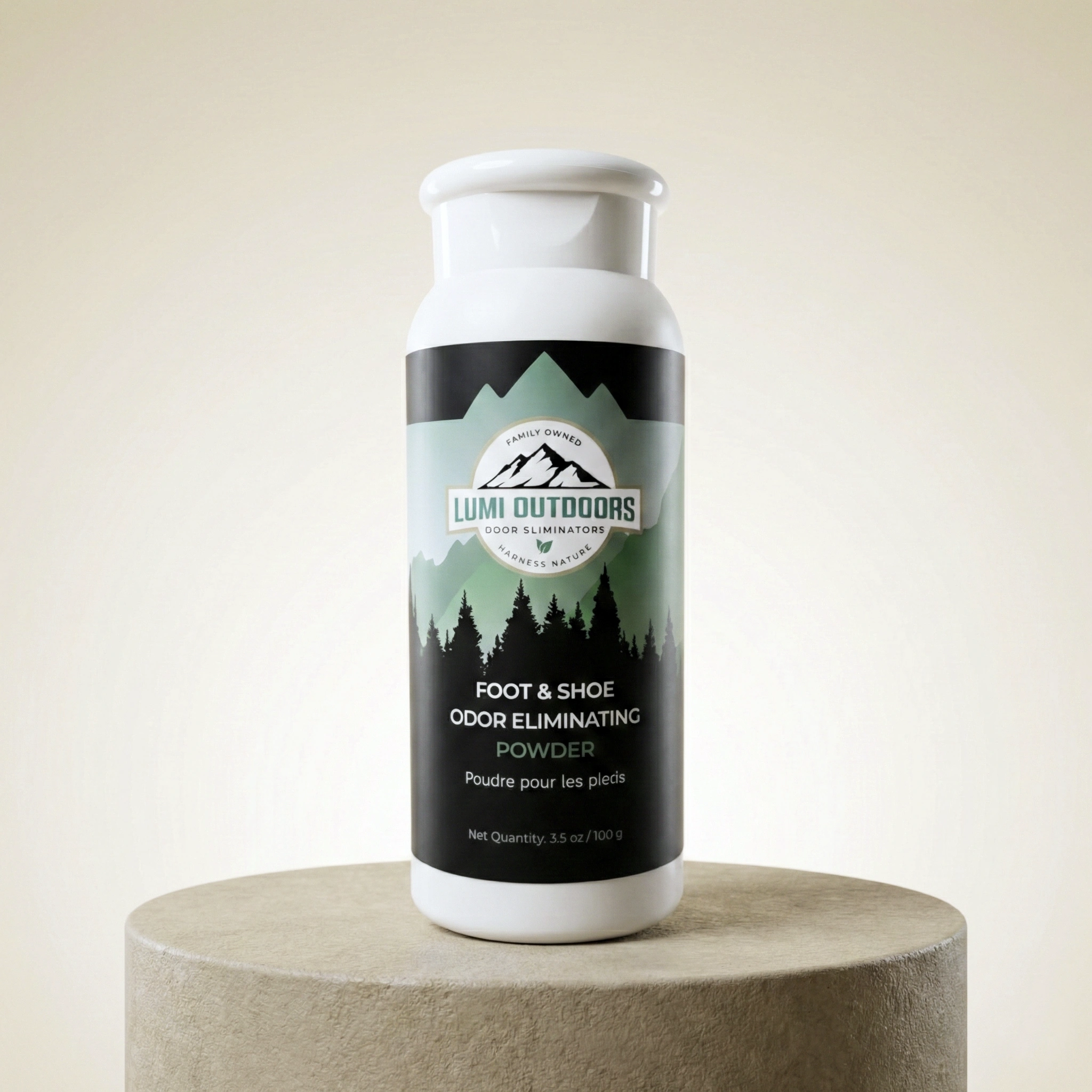
The best way to fight odor is to stop it before it starts. Our all-natural, talc-free foot powder is your first line of defense against mois...
- ABSORBS SWEAT & NEUTRALIZES ODOR
- ALL-NATURAL & TALC-FREE FORMULA
- PROUDLY FAMILY-OWNED & MADE IN UTAH
- THE "FRESH CONFIDENCE" GUARANTEE