
How to Pick Spray vs Powder Barefoot Shoes for All-Day Moisture Control
- The Question Is Wrong Spray and powder don't compete — powder prevents odor before it starts, while spray eliminates what's already set in after wear.
- Barefoot Shoes Are Extreme No socks means every drop of sweat transfers directly into the insole, making odor build up faster than in any other shoe type.
- You Need Both, Every Day The 24-Hour Barefoot Protocol — powder before wear, spray after wear — is the only approach that covers both phases of the problem.
- Talc-Free Formula Matters Talc-based powders clump against thin barefoot insoles and trap odor. A plant-based, talc-free powder absorbs cleanly throughout the day.

Why Do Barefoot Shoes Smell So Much Worse Than Regular Shoes?
Barefoot shoes create a direct, unfiltered contact point between your foot and the insole. No sock layer means every drop of sweat goes straight into the shoe's foam and fabric, creating a warm, damp environment that odor-causing bacteria thrive in far faster than in traditional footwear.
You put on your Vivobarefoot or Xero Shoes, head out for a run, and love every second of the ground-feel beneath your feet. But then you come home, slip them off, and — wow. The smell hits you like a wall.
This isn't you being unhygienic. This is physics.
Your feet have around 250,000 sweat glands packed into them. A single foot can produce up to half a pint of sweat per day during moderate activity, according to the American Academy of Dermatology. In a regular sneaker with socks, that sweat is wicked away from the shoe lining by the fabric of the sock. The sock acts as a buffer. It absorbs the moisture. It gets tossed in the wash.
In a barefoot shoe? There's no buffer. The sweat transfers directly into the thin insole. That insole — usually a minimalist foam or textile layer — soaks it all up and holds it. And once that moisture is locked in the foam, bacteria get to work fast. The byproduct of that process is the odor you're smelling. It's not the sweat itself. It's what happens when bacteria process the sweat.
This is also why sockless shoes in general have a reputation for getting funky so much faster than regular footwear. Barefoot shoes just take it to an extreme because the insole contact is so intimate and total.
So what do you do about it? Most barefoot shoe fans ask the same question: "Should I use a spray or a powder?"
And that's actually the wrong question to ask.
What You'll Need
- Soft-bristled shoe brush (for weekly insole cleaning)
- Removable insoles (for deeper weekly spray treatment)
- Natural Foot Powder and Extra Strength Shoe Deodorizer Spray Check Price →
- Open shoe rack or ventilated storage (for overnight drying)
What Is the Real Difference Between Shoe Spray and Shoe Powder?
Spray and powder are not competing solutions — they perform completely different jobs. Powder prevents odor by absorbing moisture before bacteria can process it. Spray eliminates odor that has already set into the shoe material after wear. Using one without the other leaves half the problem unsolved.
Here's where most people get this wrong. They try a spray, get okay results, then try a powder, get okay results, and end up just alternating between the two hoping one will finally "work." Neither one works in isolation. Not because they're bad products, but because they're solving different problems at different times.
Think of it like this. Powder is your pre-game strategy. Spray is your post-game recovery.
What Powder Actually Does
A good foot and shoe powder — like the Lumi Outdoors Natural Foot Powder — works by absorbing the sweat before it saturates your insole. The active absorbing agents in a quality powder draw moisture away from the skin surface and trap it so it can't pool in the shoe material.
When the insole stays relatively dry, bacteria don't get the warm, wet environment they need. No wet environment, no rapid bacteria growth. No rapid bacteria growth, no odor compounds being produced. The powder's job is to keep the whole system dry from the start. It's a preventative shield, not a cure.
What Spray Actually Does
A spray — specifically an extra-strength formula — works on what's already in the shoe. After you take your barefoot shoes off, bacteria and their odor byproducts are already embedded in the insole material and the shoe's inner lining. A quality spray uses natural enzymes and plant-based compounds to neutralize those odor compounds at the molecular level.
The spray reaches into the fibers and foam. It breaks down the source of the smell. It doesn't just mask it with fragrance. A good spray doesn't care that the shoe is dry now — it's targeting residue that's already set in. That's a reactive job, not a preventative one.
Asking "which is better, spray or powder?" is a bit like asking "which is better, a raincoat or an umbrella?" They work at different moments. They solve different phases of the same problem.
Here's something most barefoot shoe guides skip entirely: the toe box is the primary odor reservoir, not the heel or arch. Because barefoot shoes promote a natural toe-spread gait, the toes press down and forward with each step, pushing sweat directly into the toe box foam. When you spray, angle the nozzle toward the front third of the shoe and hold it there for a full 2-second burst before moving back. Most people spray the middle of the shoe and wonder why the front still smells.
Does Alternating Between Spray and Powder Actually Work for Barefoot Shoes?

No. Alternating between spray and powder means you're never getting full coverage. You're either preventing or reacting — never both. Barefoot shoes require a dual-phase protocol because they accumulate moisture and odor simultaneously.
A lot of barefoot shoe communities online recommend rotating between a powder day and a spray day. The logic sounds reasonable, but it falls apart when you think about the timeline of what's happening inside your shoe.
On a "powder day," you coat the insole before wearing it. Great — the sweat is absorbed during the day. But when you take the shoes off, that absorbed sweat residue is still in the powder layer sitting against the insole. You don't spray after, so the bacteria residue just stays there overnight. By morning, it's had hours to develop. The next day, you spray the shoe — but now you're playing catch-up against a full night of odor buildup. And you're not applying powder before you put them on, so you're going into the day with an already-damp insole from yesterday.
You're always one step behind.
The barefoot shoe environment is just too intense for a half-measure approach. The foot-to-insole contact is so complete, and the sweat volume in an active session is so high, that you need both phases working together every single day.
We tested this side-by-side for a week. Here's how the approaches actually compare:
| Feature | Natural Foot Powder and Extra Strength Shoe Deodorizer Spray | Single-Product Approach (Spray or Powder Only) |
|---|---|---|
| Moisture Prevention | Talc-free powder absorbs sweat before it saturates the insole | No powder step means sweat soaks straight into the foam |
| Odor Elimination | Extra-strength enzyme spray neutralizes set-in odor compounds | Powder alone can't neutralize odor that's already in the material |
| Daily Reset | Full 24-hour prevention + elimination cycle every day | Alternating days leave half the problem unaddressed overnight |
| Safe for Thin Insoles | Plant and mineral-based formula won't clump or paste | Talc-based powders cake against minimalist foam insoles |
| Long-Term Shoe Preservation | Dry environment prevents material breakdown and odor saturation | Chronic moisture accelerates foam degradation and permanent odor |
What Is the 24-Hour Barefoot Protocol That Actually Keeps Shoes Fresh?

The 24-Hour Barefoot Protocol uses powder before wear to block moisture and an extra-strength spray after wear to neutralize what got through. Together, they create a complete cycle of prevention and elimination that resets the shoe every 24 hours.
This is the system that actually works for barefoot shoe wearers. It's not complicated. It takes about 45 seconds total per day. But the consistency is what makes it effective.
Step 1: The Morning Shield (Before You Put Them On)
Before your first wear of the day, apply the Lumi Outdoors Natural Foot Powder directly to your feet — tops, soles, and between your toes. Then tap a small amount into the insole of each shoe and spread it lightly with your finger. You want a thin, even coat, not a pile of powder. This talc-free, plant and mineral-based formula absorbs sweat throughout the day before it can saturate the insole. It feels silky, not chalky, and won't clump against the shoe material.
This step is your moisture barrier. Think of it as putting a dry layer between your foot and the foam.
Step 2: The Evening Reset (After You Take Them Off)
When you get home and slip the shoes off, don't just toss them in the corner. Give each shoe 2-3 sprays of the Lumi Outdoors Extra Strength Shoe Deodorizer Spray directly into the insole and up into the toe box. Then leave them open, upright, in a spot with decent airflow overnight.
The extra-strength lemon and eucalyptus formula goes to work neutralizing whatever bacteria residue made it through despite the powder. The natural enzymes break down the odor compounds rather than just covering them up with fragrance. By morning, the shoe is genuinely fresh — not just temporarily masked.
Step 3: The Weekly Deep Reset
Once a week, remove the insoles if they're removable. Lay them flat, give them a more generous spray on both sides, and let them dry fully before putting them back. This is also a good time to check the shoe's toe box and heel cup — these spots collect more residue than people realize. A light brush with a soft-bristled shoe brush will dislodge any dried powder or debris before you re-spray.
This weekly step keeps the system honest. You're not letting buildup accumulate and compound over time.
What Should You Look for in Products for Barefoot Shoe Care?
For barefoot shoes specifically, you need a talc-free powder that won't clump against thin insoles and a spray formula strong enough to penetrate dense foam — while being gentle enough not to damage the shoe's materials or your skin.
Not all powders and sprays are created equal for minimalist footwear. Barefoot shoes use materials differently than traditional shoes, so the products you choose actually matter.
Why Talc-Free Powder Matters for Thin Insoles
Traditional talc-based powders can cake against thin foam insoles. When sweat hits caked powder, it forms a paste-like residue that actually traps odor rather than absorbing moisture cleanly. A talc-free, plant and mineral-based formula — like the one in the Lumi powder — maintains its texture throughout the day. It keeps absorbing rather than clumping. For the ultra-thin insoles common in barefoot shoes, that's not a minor detail. It makes a real difference in how long the protection lasts.
According to research on foot health from the NCBI, moisture management is the single most important factor in preventing foot odor — more so than any reactive treatment. That's exactly why the powder step comes first.
Why Spray Strength Matters for Barefoot Shoes
Regular "freshening" sprays work fine for light odors in standard shoes. But barefoot shoes, especially after a run or a full work day, have odor compounds that have penetrated deeper into the foam. You need a formula with actual enzymatic or plant-based odor-neutralizing compounds — not just a citrus fragrance that evaporates in 20 minutes. The extra-strength formulas are made for this level of saturation.
This is also why pure essential oils alone don't solve the problem — they smell nice, but they don't have the staying power to neutralize set-in odor compounds in dense foam materials.
Nothing's perfect, and this system does ask something of you. Here's the honest breakdown:
- Addresses both phases of barefoot shoe odor — prevention and elimination
- Talc-free powder formula stays clean and absorbent against thin insoles
- Extra-strength spray reaches deep into dense foam materials
- 100% plant-based and safe for direct skin contact
- More cost-effective than buying spray and powder separately
- The protocol requires daily consistency — skipping days lets odor compound
- Very heavily saturated insoles may need a full soak-and-dry before the system fully resets
Is the Lumi Spray + Powder Bundle Worth It for Barefoot Shoe Wearers?
For anyone serious about maintaining barefoot shoes long-term, the bundle is the most cost-effective way to get the complete two-phase system. Buying both products separately costs more, and the bundle is specifically designed for the prevention-plus-elimination approach the protocol requires.
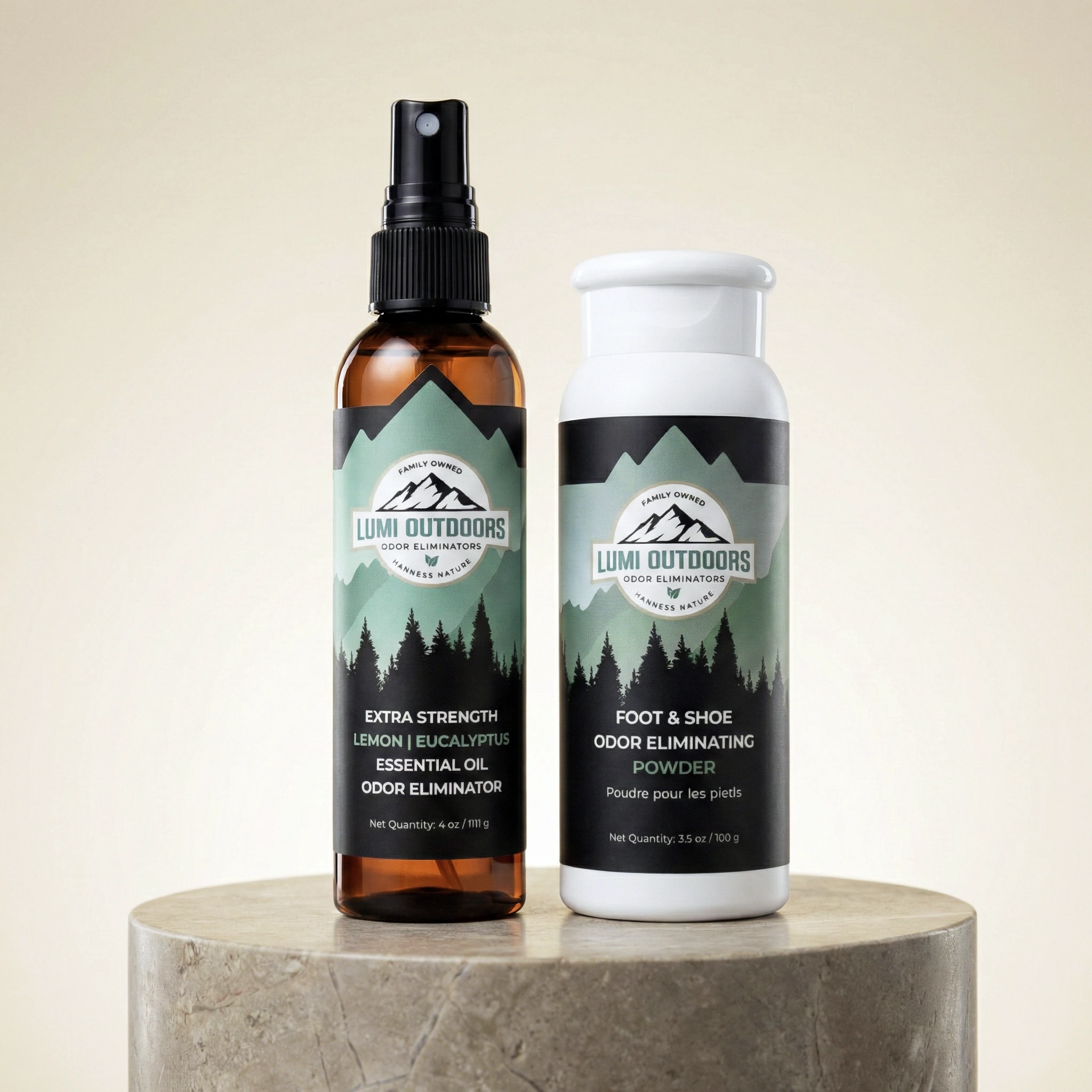
The Natural Foot Powder and Extra Strength Shoe Deodorizer Spray bundle is exactly the "24-Hour Barefoot Protocol" in a box. You get the talc-free powder for the morning prevention phase and the extra-strength lemon and eucalyptus spray for the evening elimination phase. Both are 100% plant-based, free from harsh chemicals and parabens, and safe to use directly on your skin or inside your shoes without worry.
If you're just experimenting, start with one or the other. But if you've been fighting chronic odor in your barefoot shoes and nothing has stuck, the bundle addresses why: you've been treating one phase of a two-phase problem.
For more on how this spray system holds up in intense conditions, here's what 31,000+ reviewers found when using it on saltwater shoe odor — one of the hardest odor scenarios there is.
And if this is your first time thinking systemically about shoe odor, it's worth reading about why washing smelly gym shoes can actually make the problem worse — the same principle applies to barefoot shoes, which are even more vulnerable to material breakdown from machine washing.
Your barefoot shoes are an investment. A good pair runs anywhere from $100 to $200+. The protocol above — powder every morning, spray every evening — costs you less than a dollar a day and can double the usable life of the shoe by preventing the odor saturation that makes people throw them out early.
That's not a small thing. Barefoot shoes are supposed to be about simplicity and connection to movement. They shouldn't be the thing you hide in the garage because you're embarrassed to bring them inside.
Ready to stop your barefoot shoes from clearing the room?
Join 1 Million+ Other People Who Chose Lumi to Conquer Their Shoe Odor.
- THE ULTIMATE 1-2 PUNCH AGAINST ODOR
- A COMPLETE KIT FOR SHOES, BAGS & GEAR
- PROUDLY FAMILY-OWNED & MADE IN UTAH
- THE "FRESH CONFIDENCE" GUARANTEE