
Lumi Outdoors vs. Dr. Scholl's: Which Shoe Deodorizer Actually Works?
- Fragrance vs. Neutralization Dr. Scholl's masks odor with fragrance; Lumi uses natural enzymes to break it down at the source — which is why one lasts and one doesn't.
- Serious Shoes Need Serious Solutions For high-use footwear like work boots and cleats, a light-duty drugstore spray won't hold up past a single day of wear.
- The System Beats the Single Product Pairing a powder for moisture prevention with a spray for odor elimination gives you complete coverage — and stops the problem from coming back.

Here's a scenario that might sound familiar. You walk into the mudroom after a long day, and the smell hits you before the lights even come on. Your kid's cleats. Your partner's work boots. That one pair of sneakers that never fully dried from last Tuesday's rain. The odor is past "noticeable" and deep into "embarrassing" territory — especially when company's coming over.
So you grab whatever's under the sink. Maybe some Dr. Scholl's. Maybe a generic spray from the drugstore. You give the shoes a few spritzes, leave them overnight, and hope for the best.
Sound familiar? We tested the two most popular options head-to-head — Lumi Outdoors Extra Strength Spray and Dr. Scholl's Odor Destroyers — over seven full days, on four different pairs of shoes, to find out which one actually holds up.
Why Does Shoe Odor Come Back Even After You Spray?
Shoe odor returns because most sprays only mask the smell temporarily — they don't address the moisture trapped inside the shoe material, which is what feeds odor-causing bacteria in the first place.
Most people think shoe odor is about smell. But smell is just the symptom. The root cause is moisture — specifically, the warm, damp environment inside a shoe after wear. Your feet have over 250,000 sweat glands, and they're working constantly. That sweat soaks into the insole, the lining, the foam — and it sits there.
Bacteria thrive in that environment. As they break down sweat, they produce the compounds responsible for that sour, acrid smell — a condition sometimes called bromodosis. A fragrance-based spray can cover that up for a few hours, but the second the shoe warms up again, the smell comes back.
That's why so many sprays feel like they work at first — and then stop working entirely after a few uses. You're not treating the source. You're just buying time.
Understanding this changes how you approach the problem. And it's the main thing that separates products that actually fix the issue from products that just delay it.
What You'll Need
- Cedar shoe trees (for maintaining shape and absorbing residual moisture between wears)
- Shoe horn (to preserve heel lining integrity and reduce interior wear)
- Extra Strength Shoe Deodorizer Spray Check Price →
- Mesh laundry bag (for airing out insoles separately overnight)
How Did We Test These Two Products?
We tested Lumi Outdoors Extra Strength Spray and Dr. Scholl's Odor Destroyers on four pairs of shoes over seven days, judging each on odor elimination after 12 hours, residue or moisture left behind, how long the freshness lasted, and whether the smell returned after the next wear.
We were deliberate about this. No cherry-picking shoes or cheating the conditions. Here's what we tested on:
- A pair of kid's soccer cleats worn three times per week
- Men's construction work boots (worn daily, 10-hour shifts)
- Everyday gym sneakers (used 4-5 times per week)
- A pair of older running shoes with pre-existing odor buildup
Both sprays were applied in equal amounts each evening — about 2-3 sprays per shoe — and the shoes were left in a normal indoor environment overnight. No baking soda, no cedar inserts, no additional products. Just the spray on its own.
We checked results in the morning (12-hour mark) and after the next full day of wear (24-hour mark).
The single biggest mistake people make with shoe deodorizer spray is applying it to a cold shoe before the next wear, rather than to a warm shoe right after removal. Shoe materials are most porous immediately after wear — that's when the formula can actually penetrate the insole foam and lining where odor compounds live. Spray as soon as the shoes come off, and you'll see a meaningful difference in how long the freshness holds.
What Happened With Dr. Scholl's Odor Destroyers?
Dr. Scholl's performed adequately on lightly worn shoes but struggled with persistent or heavily soaked footwear — the odor returned within a single day of wear in most cases.
Let's be fair here. Dr. Scholl's isn't a bad product. On the gym sneakers with mild-to-moderate odor, it did a reasonable job at the 12-hour mark. The shoes smelled noticeably fresher in the morning. So on paper, the first part of the test looked decent.
But the construction boots and the cleats told a different story.
By the 24-hour mark — after just one more day of wear — the smell had fully returned in both pairs. And on the running shoes with pre-existing buildup, the Dr. Scholl's spray barely made a dent. The morning-after freshness was minimal, and the scent the spray left behind actually mixed with the underlying odor in a way that smelled worse than before.
The formula relies heavily on fragrance to mask odor rather than neutralizing it at a molecular level. That's the core limitation. It's fine for maintenance on light-use shoes, but for anything with serious odor? It's a temporary fix at best.
One other observation: the Dr. Scholl's spray left a faint powdery residue on the dark insole of the work boots. Not a dealbreaker, but worth knowing if you have dark-lined footwear.
If you're dealing with similar challenges across multiple shoe types, the guide on why certain shoe materials hold onto odor longer than others explains a lot of what we observed during this test.
What Happened With Lumi Outdoors Extra Strength Spray?

Lumi Outdoors Extra Strength Spray neutralized odor in all four pairs of shoes within 12 hours, left zero residue, and — most importantly — the freshness held for multiple consecutive days of wear on three of four pairs.
The difference was most obvious on the work boots. After the first application, the morning result was noticeably different — the underlying sourness was gone, not just masked. After the second day of wear, the boots were still fresh. By day four, we'd only applied the spray twice, and the odor hadn't returned.
On the soccer cleats, same story. Cleats are brutal because they're worn hard, dried slowly, and rarely aired out properly. The Lumi spray handled them better than any single product we've tested on that kind of footwear. No white residue on the dark synthetic lining. No competing fragrance layering on top of old smell. Just clean.
The gym sneakers and running shoes performed similarly well. The running shoes — the ones with pre-existing buildup — took two applications before the odor fully cleared, but by day three, even those were neutralized.
The formula uses natural enzymes and plant-based oils (lemon and eucalyptus) to break down odor compounds rather than covering them. That's why the results hold up through additional wear. You're not spraying perfume on a problem — you're actually solving it.
If you're working with more delicate footwear, the guide to deodorizing New Balance suede without damage goes deeper on how to apply spray-based solutions without affecting shoe materials.
We ran both products through the same conditions. Here's how the comparison looked on paper:
| Feature | Extra Strength Shoe Deodorizer Spray | Dr. Scholl's Odor Destroyers |
|---|---|---|
| Odor Gone at 12-Hour Mark | Yes — all 4 shoe types | Yes — 2 of 4 shoe types |
| Odor Stays Gone After Next Wear | Yes — 3 of 4 shoe types | No — odor returned same day |
| Residue on Dark Linings | None observed | Faint powdery residue |
| Formula Type | Plant-based enzymes + essential oils | Fragrance-forward aerosol |
| Effective on Work Boots | Yes | No — odor returned within 24 hrs |
| Effective on Kids' Cleats | Yes | Partial — light improvement only |
| Price Point | Mid-range | Low |
Which Shoe Deodorizer Is Worth Buying?
Lumi Outdoors Extra Strength Spray is the better buy for anyone dealing with moderate-to-severe or recurring shoe odor — especially on high-use footwear like work boots, athletic shoes, and kids' cleats.
Dr. Scholl's has a place in the market. If you have a single pair of dress shoes you wear twice a week and you're just looking for light maintenance, it works fine. The price point is low, it's available everywhere, and the barrier to trying it is minimal.
But if you're a household manager dealing with multiple pairs of genuinely stinky shoes — cleats in the garage, boots by the door, gym shoes in the closet — you need something that actually breaks down the odor source. Fragrance alone isn't cutting it, and you probably already know that.
And if you want a complete system rather than just a reactive spray, the Natural Foot Powder and Extra Strength Shoe Deodorizer Spray bundle is worth considering. The powder goes on your feet before you put your shoes on, absorbing moisture before it even soaks into the insole. Then the spray handles cleanup afterward. You're addressing both sides of the equation — prevention and elimination — rather than just one.
For households with multiple scent preferences, the Variety Bundle 3-Pack gives you the Extra Strength Lemon & Eucalyptus, the Citrus Tea Tree, and the Lavender Tea Tree in one order — so you can match the spray to the shoe or the person.
Nothing's perfect, and we want to be upfront about that. Here's the honest breakdown:
- Neutralized odor in all four shoe types tested, including the toughest cases
- Zero residue left behind on any shoe material or lining color
- Freshness held through multiple consecutive days of wear
- Plant-based formula is safe for kids' shoes and sensitive skin
- Lemon and eucalyptus scent dissipates quickly without competing with residual odors
- Pre-existing heavy odor buildup may require 2-3 consecutive applications before full results
- Higher upfront cost than drugstore aerosol options
What Are the Best Ways to Use Shoe Deodorizer Spray Effectively?

For best results, spray the inside of the shoe immediately after removing it while it's still warm, allow it to dry fully before the next wear, and repeat consistently for 3-4 days when tackling existing buildup.
A lot of people spray their shoes right before putting them on. That's backwards. You want to spray right after you take the shoes off — that's when the interior is warmest and most porous, which helps the formula penetrate deeper into the material.
Here's the basic approach that worked best in our testing:
- Remove shoes and spray immediately. Hold the bottle 6-8 inches from the shoe opening and give 2-3 sprays into each shoe. Don't soak the shoe — a light, even coat is enough.
- Let the shoes air out fully. Leave them in a ventilated area, ideally with the tongue pulled back. Don't stuff them in a bag or a closed bin while wet.
- Repeat for 3 consecutive days if dealing with existing odor. One application won't fully clear deep-set odor on heavily used footwear. Give it a few rounds.
For athletes dealing with post-race odor challenges, the 5 pro hacks for triathlon shoe odor article has some solid specific tips for high-intensity use cases. And if you're navigating odor in more delicate shoes, the guide on neutralizing odor in flats before formal events covers the gentler end of the spectrum.
Ready to stop losing the battle against shoe odor every single week?
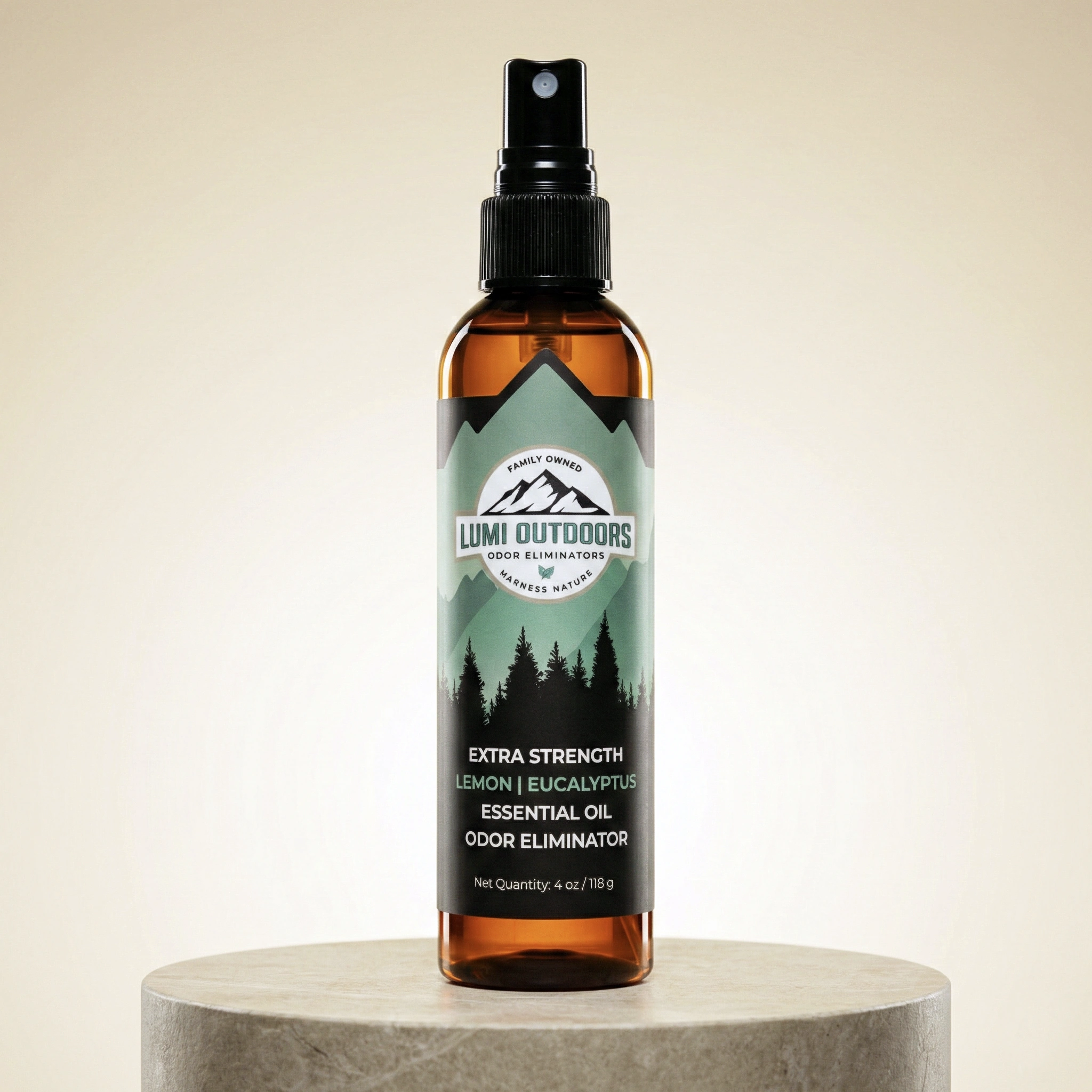
Join 1 Million+ Other People Who Chose Lumi to Conquer Their Shoe Odor.
- DESTROYS ODOR AT THE SOURCE, DOESN'T JUST MASK IT
- ALL-NATURAL & PLANT-BASED INGREDIENTS
- PROUDLY FAMILY-OWNED & MADE IN UTAH
- THE "FRESH CONFIDENCE" GUARANTEE