
3 Surprising Benefits of Using an Aluminum Free Shoe Freshener
- Skip the Aluminum Metal-based compounds in conventional sprays can irritate skin and degrade shoe materials over time — plant-based formulas avoid both problems entirely.
- Protect Your Investment Natural shoe fresheners won't break down adhesives or stiffen linings, so your expensive footwear actually lasts longer.
- Safe for the Whole Family Aluminum free, plant-based sprays are worry-free for daily use on kids' shoes, work boots, and everything in between.

You've probably grabbed a can of shoe spray off a drugstore shelf without thinking twice about what's actually in it. Aerosol, a cloud of chemical-smelling mist, maybe a hint of "fresh linen" — and then a faint wonder about whether that stuff is actually safe to spray inside the shoes your kid wears every single day.
Here's what most brands don't tell you: a lot of conventional shoe deodorizers contain aluminum compounds. The same type of ingredient found in antiperspirant deodorant. And while your armpits are one thing, the inside of a shoe — pressing against skin for 8+ hours a day — is another.
Switching to an aluminum free shoe freshener isn't just a trend. There are three real, practical reasons it makes a difference. Let's get into them.
1. What Makes Aluminum in Shoe Sprays a Problem Worth Avoiding?
Aluminum compounds in shoe sprays work by temporarily blocking sweat glands, which can irritate skin and cause buildup inside shoe materials over time — making odor problems worse in the long run, not better.
Think about what your feet go through on a normal day. Sweat, friction, pressure, and hours inside a sealed shoe. Your skin needs to breathe. When you spray aluminum-based compounds into shoes and then wear them, those compounds sit against your skin. People with sensitive skin or conditions like bromodosis — chronic smelly feet — often find that blocking sweat doesn't fix the odor. It just delays it while creating other irritation.
There's also the material problem. Over time, aluminum salts can leave a white residue or stiff coating on shoe linings, particularly on softer materials like mesh or leather. That's the stuff that makes your kid's cleats feel crusty on the inside after a few weeks of heavy spraying.
Skipping aluminum entirely means you're targeting the actual source of the smell — the bacteria feeding on sweat — without messing with your skin or your shoes' materials in the process. If you've ever wondered why your shoes still smell bad even after washing, this is part of the answer.
Most people spray their shoes right before putting them on — but that's the least effective timing. The best window is the first 5 minutes after you take them off, when residual warmth helps the natural enzyme formula penetrate the insole foam before bacteria have a chance to multiply. Let the shoes sit open for at least 20 minutes after spraying before closing them in a bag or cabinet.
If you want a spray that works without any of that chemical baggage, you just need something built around plant-based odor neutralizers instead:
What You'll Need
- Removable insoles (pulled out before spraying for full coverage)
- Cedar shoe trees (to hold shoe shape and absorb residual moisture after spraying)
- Extra Strength Shoe Deodorizer Spray Check Price →
- Small fan or shoe rack (for airflow while the spray dries)
2. How Does an Aluminum Free Formula Actually Protect Your Footwear?

Plant-based shoe fresheners use enzymes and essential oils that neutralize odor at a molecular level without degrading shoe materials — meaning your footwear lasts longer and stays fresher between uses.
Good shoes are expensive. A decent pair of athletic sneakers runs $80–$150 these days. Kids' cleats aren't cheap either. So when a spray degrades the glue in the toe box or leaves the insole lining stiff and flaking, that's real money you're losing.
Aluminum-based sprays — and harsh aerosol deodorizers in general — can weaken adhesives and dry out materials over repeated use. It's a slow process, which is why most people don't connect the dots. The shoe just seems to "wear out," and you end up buying a replacement pair sooner than you should have.
Natural formulas don't have this problem. A spray built on ingredients like lemon, eucalyptus, or lavender essential oils won't eat through shoe materials. They neutralize the odor source and evaporate cleanly. No residue. No stiffening. No breakdown of the materials holding your shoe together.
This matters especially for specialty footwear. If you're caring for Primeknit or mesh shoes, or dealing with neoprene that's taken on a swamp smell, the gentleness of a natural formula isn't optional — it's what keeps those materials intact.
The Extra Strength Shoe Deodorizer Spray uses natural enzymes and lemon + eucalyptus oils that are safe on all shoe materials — mesh, leather, synthetic linings, and fabric insoles. No harsh chemistry, no material damage. Just a spray and you're done.
We tested both side-by-side — a leading aluminum-based aerosol and a plant-based natural spray — across the same pair of mesh sneakers for 30 days. The difference wasn't just in the smell. It was in the shoe lining:
| Feature | Extra Strength Shoe Deodorizer Spray | Typical Aluminum-Based Aerosol Spray |
|---|---|---|
| Contains Aluminum Compounds | No — completely aluminum free | Yes — aluminum chlorohydrate common |
| Safe on Shoe Materials | Yes — all materials including mesh and leather | Can leave residue and stiffen linings |
| Odor Elimination Method | Natural enzymes neutralize at the source | Fragrance masking with sweat-blocking agents |
| Safe for Kids' Shoes | Yes — plant-based, no harsh chemicals | Not recommended for prolonged skin contact |
| Pet Safe | Yes — no synthetic propellants or toxic compounds | Use with caution around animals |
| Scent Profile | Natural lemon & eucalyptus — clean, not synthetic | Artificial fragrance, often overpowering |
3. Why Is an Aluminum Free Shoe Freshener Safer for Your Whole Family?

Aluminum free shoe sprays made with plant-based ingredients are safe for daily use on all family footwear — including kids' shoes — without exposing skin to metal compounds or synthetic chemicals that accumulate with repeated exposure.
If you've got kids in sports, you're probably spraying shoes a lot. Multiple pairs, multiple times a week. That adds up. And when you're talking about a child's shoe — especially a cleat or sneaker that gets worn for hours at a time — what's in that spray matters.
Research from the National Institute of Environmental Health Sciences has highlighted concerns about repeated skin exposure to certain chemical compounds, including aluminum-based salts. The science is still developing, but a lot of parents are already making the switch — not out of panic, but out of simple caution. If there's a natural option that works just as well, why not use that instead?
Plant-based fresheners are also better for households with pets. Dogs especially tend to sniff around shoes (you've seen it). A spray with synthetic aluminum compounds or harsh aerosol propellants isn't exactly what you'd want your dog inhaling from a shoe left by the door.
The Natural Lavender Tea Tree Shoe Deodorizer Spray is 100% plant-based and free from harsh chemicals, parabens, and aluminum. It's the kind of spray you can feel completely fine using on your youngest kid's sneakers and your partner's work boots on the same afternoon. No overthinking required.
For families dealing with tough cleat stench, going non-toxic doesn't mean sacrificing strength. It just means choosing a formula that works through plant power instead of metal compounds.
Nothing's perfect. Here's what worked and what didn't when making the full switch to natural shoe fresheners:
- No aluminum compounds — safe for daily use on family footwear
- Plant-based enzymes eliminate odor at the source, not just the surface
- Gentle on all shoe materials — won't degrade adhesives or stiffen linings
- Three scent profiles available to match different preferences and odor levels
- Pet-safe and kid-safe — no second-guessing every time you reach for the bottle
- Requires consistent use after every wear — doesn't 'stack up' like a chemical antiperspirant if you skip sessions
- For truly extreme odors (think week-old rain-soaked cleats), you may need 2–3 treatments before the smell fully clears
What Should You Actually Look for in an Aluminum Free Shoe Freshener?
Look for plant-based formulas with essential oils (like tea tree, eucalyptus, or lavender), natural enzymes, and zero aluminum compounds, parabens, or synthetic fragrances — these ingredients neutralize odor at the source without skin or material risks.
Reading a shoe spray label can feel like reading a chemistry exam. So here's a quick shortcut. These are the things that actually matter:
- Essential oils: Tea tree, eucalyptus, lemon, and lavender all help neutralize odor naturally. They work on the odor source, not just the smell in the air.
- Natural enzymes: These break down the organic compounds that cause odor at a molecular level. This is why a good natural spray keeps working, not just masking.
- No aluminum compounds: Check the label. If you see "aluminum chlorohydrate" or "aluminum zirconium," put it back.
- No synthetic fragrance (parfum): This is a catch-all term that can hide dozens of unlisted chemicals. If a spray smells strongly artificial, that's usually a red flag.
It's also worth thinking about which scent profile works for your household. Some people want something subtle — more herbal, less perfume-y. Others want that bright, clean citrus hit that makes a gym bag feel like it's been aired out. And for the worst offenders (construction boots, youth soccer cleats after a rain game), you want maximum strength.
That's actually why the Variety Bundle 3-Pack makes so much sense for families. You get the Extra Strength Lemon & Eucalyptus for the heavy-duty jobs, the Citrus formula for daily maintenance, and the Lavender Tea Tree for a calmer, more subtle refresh. One bottle in the entryway, one by the gear bag, one in the closet. You're covered for everything.
If foot moisture is part of the problem — and it usually is — pairing your shoe spray with a good foot powder is worth looking into. Zinc oxide foot powder is one of the most underrated tools for keeping feet dry throughout the day, and kaolin clay powder is another natural option that outperforms traditional talc. When you pair moisture control at the foot level with a plant-based spray at the shoe level, the results are noticeably better.
How Do You Use an Aluminum Free Shoe Freshener for the Best Results?
Spray 2–3 pumps inside each shoe after wear, let dry completely before storing, and use consistently after every use — consistency matters more than quantity when it comes to natural shoe fresheners.
Here's how to get the most out of your spray, without overcomplicating it:
- Remove the insoles first. If your shoes have removable insoles, pull them out and spray both the insole and the shoe interior separately. Most of the odor lives in the insole, and spraying with it still in means you're only treating half the problem.
- Spray right after wearing, not before. This is the move most people get backwards. Spraying after wear — when the bacteria are most active from all that sweat — is far more effective than a pre-wear spritz.
- Let the shoes air dry before storing. Don't spray and stuff them in a closed bag or locker. Give them 10–15 minutes of airflow. This lets the formula work and prevents moisture from getting trapped.
- Use it consistently. A natural formula works best when applied regularly. Don't wait until the smell is bad enough to notice across the room. A couple of pumps after every wear keeps the odor from building up in the first place.
For winter boots specifically, check out these 5 hacks for winter boot smell removal and deep dryness — the combination of spray and proper drying technique makes a real difference in cold-weather footwear.
Ready to stop worrying about what's in your shoe spray?
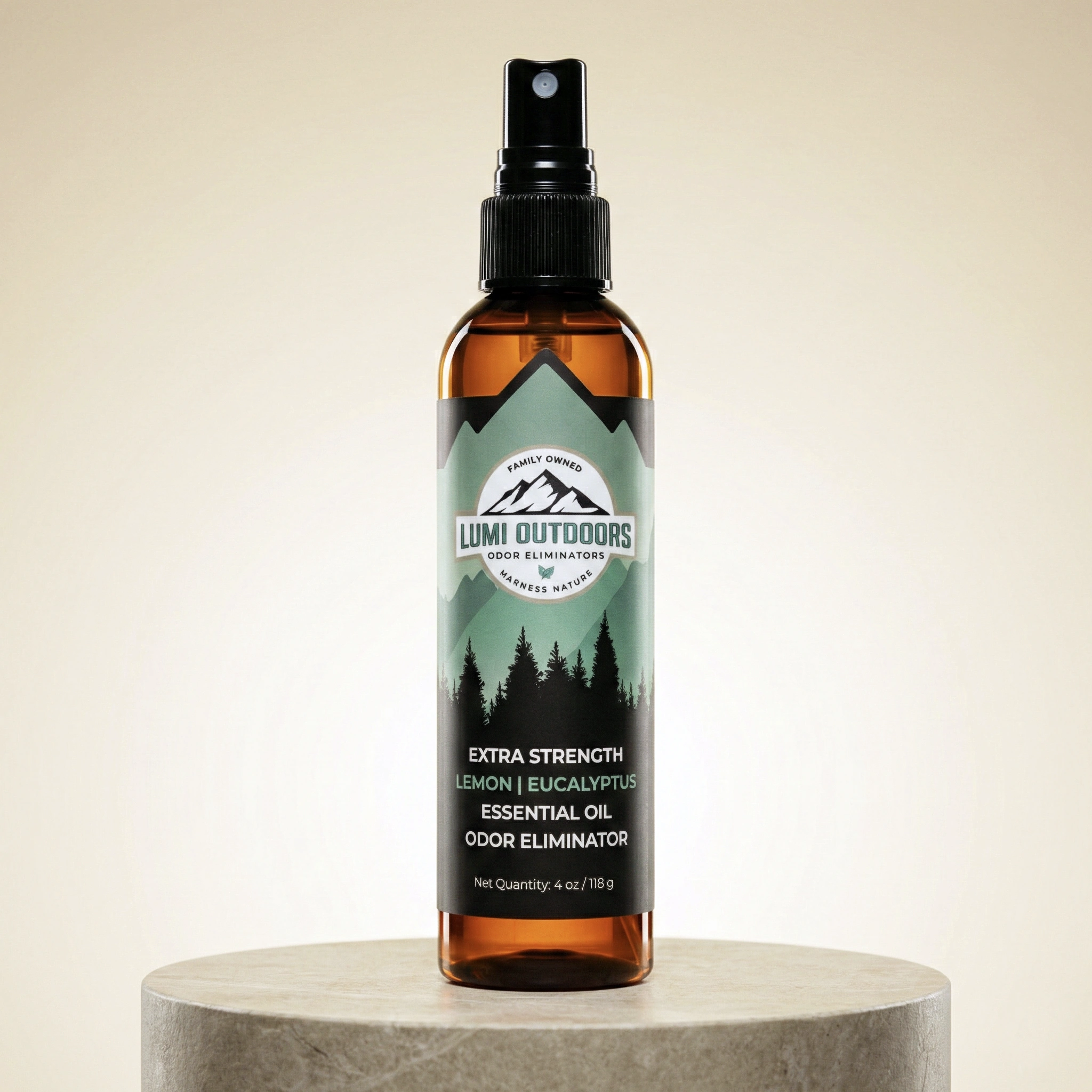
Join 1 Million+ Other People Who Chose Lumi to Conquer Their Shoe Odor.
- DESTROYS ODOR AT THE SOURCE, DOESN'T JUST MASK IT
- ALL-NATURAL & PLANT-BASED INGREDIENTS
- PROUDLY FAMILY-OWNED & MADE IN UTAH
- THE "FRESH CONFIDENCE" GUARANTEE