
Why Vinegar Ruins Smelly School Shoes (And The 1 Spray That Actually Works)
- Vinegar Damages Leather The acid in white vinegar strips leather's natural oils, causing school shoes to crack and peel—often within weeks of regular use.
- Home Remedies Don't Fix the Source Baking soda, essential oils, and freezing only mask odor temporarily because they never reach the bacteria living inside the insole foam.
- Enzymes Break Down the Actual Cause A plant-based enzyme spray targets and breaks apart the organic compounds causing the smell, so the odor doesn't come back the next day.

You know the smell. You open the front door after school pickup and it hits you before your kid even drops their bag. That warm, sour, locker-room wave rolling out of a pair of leather school shoes that were perfectly fine three weeks ago.
You're not alone in this. Parents of active teenagers deal with smelly school shoes constantly—and most of them have already reached for the same bottle of white vinegar sitting under the sink. It seems logical. Vinegar's acidic. It's natural. It works on drains and countertops. Surely it'll sort out a smelly shoe.
But here's where the logic falls apart.
Why Do School Shoes Smell So Bad So Fast?
School shoes smell because feet produce up to half a pint of sweat per day, and the enclosed, dark interior of a leather shoe traps that moisture with nowhere to go. The warm, damp environment is exactly where odor-causing bacteria thrive and multiply.
Your teenager's feet have somewhere between 250,000 and 300,000 sweat glands, according to the National Institutes of Health. That's a lot of output for a shoe that gets worn six to eight hours a day, five days a week, with zero recovery time between uses.
The odor itself isn't actually coming from the sweat. It's a byproduct of bacteria breaking down the organic compounds in that sweat—specifically, they produce isovaleric acid, which is that sharp, cheese-like smell you're trying to get rid of. The bacteria aren't going anywhere by themselves. They're embedded in the insole foam and the shoe lining, feeding and reproducing every time the shoe warms up again.
That's the root of the problem. Not surface dirt. Not a bad spray of perfume. A bacterial colony living inside a $60 to $100 pair of leather school shoes.
And vinegar? It doesn't touch that colony. Not in the way you'd hope.
Why Does Vinegar Damage Leather School Shoes?
White vinegar is acidic (pH around 2.5), and leather has a natural slightly acidic pH of around 3.5–4.5 that keeps it supple. Applying vinegar repeatedly strips the leather's protective finish and natural oils, causing it to dry out, crack, and peel—often within weeks of regular use.
This is the part nobody talks about when they share that "vinegar hack" on Facebook. Yes, the acid in vinegar can disrupt the surface bacteria temporarily. But it does so by also disrupting the leather itself.
Leather is a treated, tanned material with a carefully balanced chemistry. Pour acid on it regularly and you're accelerating the breakdown of that structure. The leather dries out, loses its flexibility, and starts to crack along the toe box and the heel—exactly where school shoes flex most. The color fades. The finish peels. And three months into the school year, you're buying a second pair of shoes.
That's not saving money. That's throwing it away.
The acetic acid in vinegar also only works while it's wet. Once it evaporates—usually within an hour—any bacteria that weren't directly hit by the liquid bounce right back. The odor returns within a day or two because the underlying source was never addressed. You masked it, briefly, while damaging the shoe in the process.
Most parents spray the insole and call it done—but the real odor reservoir in a school shoe is the heel lining, not the insole. Tilt the shoe back slightly and give one direct pump into the heel cup before spraying the insole. That curved pocket traps moisture from the Achilles area and almost never dries out fully between wears. Treating it directly cuts odor return time significantly.
Faux-leather and synthetic school shoes don't escape unscathed either. The bonded materials used in budget school shoes are even more vulnerable to repeated acid exposure, separating at the seams faster than genuine leather would.
So if vinegar is out—and it genuinely is—what about the other home remedies? Baking soda is next on most people's list.
Does Baking Soda Actually Fix Smelly School Shoes?

Baking soda absorbs some surface moisture and temporarily neutralizes odor molecules, but it doesn't address the bacteria causing the smell. The odor will return within 24 to 48 hours because the source hasn't been treated.
Baking soda is a deodorizer, not a disinfectant. There's a real difference. It works by absorbing acidic odor molecules—but it doesn't reach the bacteria living deep in the foam of the insole. It sits on top. The smell comes back.
And there's a secondary issue: baking soda left in a shoe can clump together with sweat residue and create a paste that's genuinely hard to get out. It can also clog the tiny perforations in breathable shoe linings, reducing airflow and making the moisture problem worse over time.
Essential oils, dryer sheets, freezing the shoes overnight—these are all versions of the same non-solution. They mask, they don't fix.
What actually fixes a smelly school shoe is something that can reach the bacteria inside the material, neutralize the compounds causing the odor, and do it without destroying the shoe in the process. That's where plant-based enzyme sprays do something none of these home remedies can.
If you want to stop the smell at its source without reaching for another vinegar bottle or scrubbing baking soda out of the toe box, you need a spray formulated specifically for this. This is the one we keep by the door:
What You'll Need
- Cedar shoe trees
- Removable insoles
- Extra Strength Shoe Deodorizer Spray Check Price →
- Soft shoe brush
How Does a Natural Enzyme Spray Work on School Shoe Odor?
Natural enzyme sprays contain plant-derived enzymes that break down the organic compounds—sweat proteins, bacteria byproducts—that cause odor at a molecular level. Unlike masking agents, enzymes eliminate the source of the smell rather than covering it up.
Here's the short version of the science: enzymes are biological catalysts. The ones used in odor-eliminating sprays are specifically chosen to target the organic molecules that bacteria produce as they break down sweat. The enzyme binds to those molecules and breaks them apart. No molecule, no smell.
This is how enzyme chemistry differs from acid-based approaches—acids disrupt broadly, often damaging whatever they touch. Enzymes are targeted. They work on the organic material causing the problem and leave the shoe material itself alone.
The natural citrus and tea tree oils in a spray like Lumi's Natural Citrus Tea Tree Shoe Deodorizer Spray add an extra layer of odor control through their natural compounds, while leaving a clean, energizing scent that isn't overwhelming. No synthetic perfume. No chemical fog. Just citrus and tea tree doing what they've done naturally for centuries.
For parents dealing with particularly stubborn smells—the kind that survive a full weekend of airing out—the Extra Strength Shoe Deodorizer Spray uses a more concentrated lemon and eucalyptus formula. It's the same plant-based, family-safe approach but with more firepower for the worst cases. It's also the one we'd recommend for sports cleats and athletic shoes that go through more intense daily abuse than a standard school shoe.
The key difference with any enzyme spray versus home remedies: you spray it in, let it sit overnight, and the odor doesn't come back the next afternoon. That's not because of a strong masking fragrance. It's because the source was treated.
We tested our natural spray against leading aerosol chemical fresheners over the course of a school week. The difference isn't just in the smell—it's in what's actually happening inside the shoe.
| Feature | Extra Strength Shoe Deodorizer Spray | Chemical Aerosol Freshener |
|---|---|---|
| Odor Source Treatment | Targets bacteria byproducts with plant enzymes | Masks odor with synthetic fragrance |
| Leather Safety | pH-balanced, safe on leather and all shoe materials | Propellants and solvents can dry out leather over time |
| Odor Return Time | Odor stays gone for days with consistent use | Smell typically returns within 12–24 hours |
| Ingredients | 100% plant-based, no parabens or harsh chemicals | Synthetic perfumes, propellants, chemical solvents |
| Safe Around Kids & Pets | Fully family-safe formula | Ventilation required; not recommended around young children |
| Scent After Treatment | Clean, natural lemon and eucalyptus | Strong artificial fragrance that fades to base odor |
What's the Best Way to Use Shoe Spray on Leather School Shoes?
Spray 2-3 pumps inside the shoe, targeting the insole and the toe box, then allow the shoe to air dry completely before wearing again. For leather uppers, never spray the outside of the shoe—apply only to the interior lining and insole.
This matters. Leather school shoes have two distinct zones: the exterior leather upper (which needs to be protected) and the interior lining and insole (where the odor actually lives). The spray goes inside, not outside. Always.
Here's a routine that works, and works consistently:
- Right after wearing: Remove the insoles if they're removable. Set them out separately to air. This is the single biggest ventilation improvement you can make.
- Before bed: Spray 2-3 pumps into each shoe and each insole. Set them in a well-ventilated spot overnight.
- Maintain the leather separately: Use a dedicated leather conditioner on the outside of the shoe once a month. This is completely separate from the interior odor routine and keeps the leather from drying out—something vinegar was causing to happen.
- Cedar shoe trees: Slide cedar shoe trees into the shoes once a week. Cedar absorbs residual moisture and helps the shoe hold its shape. This is a passive, no-effort addition to the routine that makes a real difference over the course of a school year.
- Sunday night reset: Make this the habit. Before the week starts, spray both shoes, reinsert the insoles, and let them sit overnight ready for Monday. Takes 30 seconds.
That last one is the real shift. Odor control isn't a one-time event. It's a maintenance habit—and a 30-second Sunday night spray is the lowest-effort version of that habit you're going to find. Parents who've read our guide on what the entryway is actually missing often say the Sunday routine is the single change that made the biggest difference in their home's smell overall.
The three things you need to make this routine work: removable insoles (or a shoe horn to access the interior fully), cedar shoe trees for passive moisture control, and a soft shoe brush to gently clean any debris from the insole surface before spraying. Keep all three near the shoe rack and the Sunday routine becomes automatic.
If your teenager has more than one pair of shoes in rotation—which most do, with PE trainers, school shoes, and weekend sneakers—it's worth considering the Variety Bundle 3-Pack to keep a bottle in the entryway, one in the gym bag, and one upstairs. You're not going to maintain the habit if the spray is in a different room every time you need it.
For a deeper read on how this works across different shoe types, the Red Wing Iron Ranger deodorizing guide walks through the same material-safe principles applied to heavy-duty leather work boots—same logic, higher stakes.
Nothing's perfect. Here's what worked and what didn't:
- Neutralizes deep-set odor rather than just masking it
- Completely safe on leather, synthetic, and fabric school shoes
- Plant-based formula with no harsh chemicals or synthetic perfumes
- Works overnight with zero scrubbing or rinsing required
- The Sunday prep routine takes under 30 seconds per pair
- Requires consistent weekly use—a single spray won't fix months of buildup overnight
- Won't repair leather that's already been cracked by repeated vinegar application
What Else Can Help With Smelly School Shoes Long-Term?

The most effective long-term strategy combines daily ventilation (removing shoes immediately after wearing), weekly enzyme spray treatment, and monthly leather conditioning. No single product fixes the problem without consistent habits to support it.
A few honest additions that are worth the small effort:
- Moisture-wicking socks matter more than most people realize. Cotton socks hold sweat against the foot. Merino wool or synthetic moisture-wicking socks move sweat away from the skin and reduce the total moisture load inside the shoe significantly.
- Rotate shoes. Wearing the same pair five days in a row gives them no recovery time. If your school allows it, having two pairs in rotation means each pair gets at least 48 hours of dry-out time between wears.
- Never dry shoes on a radiator or with a hair dryer. Heat accelerates the drying and cracking of leather. Let shoes dry naturally at room temperature.
- Check the insoles. Budget school shoes often come with very thin, non-removable insoles that saturate quickly and hold bacteria efficiently. Replacing them with aftermarket antimicrobial insoles is cheap and extends the useful life of the shoe considerably.
The reasons disc golfers abandoned DIY shoe sprays apply here too—the consistency of a purpose-built spray beats improvised home chemistry every time, and the cost per use is lower than most people expect.
And for the days when the school bag drops and the whole entryway smells—not just the shoes—the Lavender Vanilla Room Spray handles that ambient odor without the synthetic chemical fog of a store-bought air freshener. Plant-derived, safe around kids and pets, and it actually neutralizes odor molecules rather than just covering them.
Done letting smelly school shoes take over your hallway?
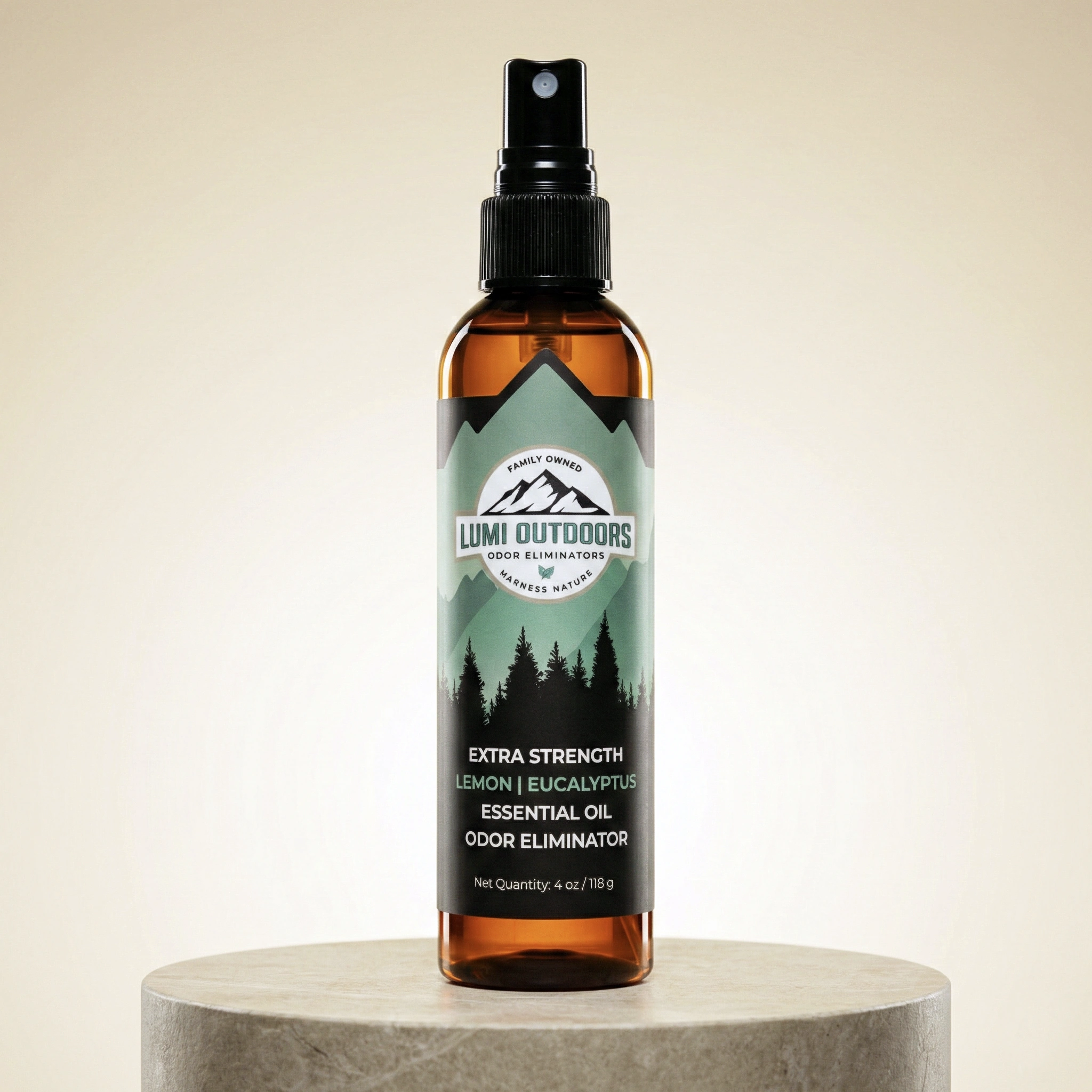
Join 1 Million+ Other People Who Chose Lumi to Conquer Their Shoe Odor.
- DESTROYS ODOR AT THE SOURCE, DOESN'T JUST MASK IT
- ALL-NATURAL & PLANT-BASED INGREDIENTS
- PROUDLY FAMILY-OWNED & MADE IN UTAH
- THE "FRESH CONFIDENCE" GUARANTEE