
Why Disc Golfers Are Ditching DIY Shoe Sprays for This $15 Natural Fix
- DIY Sprays Don't Go Deep Enough Vodka and baking soda fix the surface smell temporarily, but the bacteria living in your foam insole are completely untouched—so the stench always comes back.
- Morning Dew Is the Real Enemy Disc golf courses are wet environments, and your shoes absorb far more external moisture than regular athletic shoes do—creating the perfect conditions for rapid odor buildup.
- Timing Your Spray Changes Everything Applying a quality natural spray the night before a round—not the morning of—gives the active ingredients time to penetrate the insole and dry fully before you play.

What Actually Causes That "Wet Dog" Smell in Disc Golf Shoes?
The smell in disc golf shoes comes from odor-causing bacteria that thrive in the warm, moisture-rich environment inside your shoe. Morning dew, muddy fairways, and hours of walking on wet grass create the perfect conditions for that smell to build up fast—far faster than in regular athletic shoes.
You know that smell. You get back to the car after a round, kick off your shoes, and it hits everyone within a five-foot radius. It's not just sweat. It's something more—earthy, sour, and weirdly persistent.
Here's what's happening inside your shoe. Disc golf courses are brutal on footwear. You're walking 5–7 miles across dew-covered fairways, through muddy rough, and across wet concrete tee pads. According to research from the National Institutes of Health, the average foot produces about half a pint of sweat per day—and when you add external moisture from wet grass and mud, that number gets worse.
Disc golf shoes are also typically built with aggressive rubber outsoles and thick cushioning midsoles that trap heat. The inside of your shoe can hit temperatures warm enough to turn any lingering moisture into a full-on odor factory within a single round. That "wet dog" smell? That's what bacterial decomposition actually smells like when it has nowhere to go.
And if you're playing multiple rounds a week—which most serious disc golfers do—the odor compounds. It doesn't reset between sessions. It builds.
Most disc golfers spray their shoes and immediately stuff them back in their bag—and that's exactly why the spray underperforms. The insole foam needs airflow to let the active ingredients work and the moisture to evaporate. Try pulling the insoles out completely, propping the shoes open with the tongue folded back, and leaving both shoes and insoles on a rack overnight. That single change will make the same spray noticeably more effective.
Why Does a Homemade Vodka or Baking Soda Spray Fail After 18 Holes?

DIY disc golf shoe sprays—whether vodka-based or baking soda mixtures—fail because they neutralize surface odors temporarily but don't reach the bacteria embedded deep in the foam insole and shoe lining where the smell actually lives.
So you tried the vodka spray. Maybe you found it on a Reddit thread or a disc golf forum. Someone swore by it. You filled a little spritz bottle, gave your Keens or Merrells a good spraying, let them air out overnight, and... they smelled okay. For about two days.
Then you played another round. And the smell came back harder than before.
This is the part nobody talks about. Vodka contains roughly 40% ethanol, which does temporarily reduce surface odor. But your shoe's insole is like a sponge—it's layers of compressed foam that soak up months of sweat and external moisture. A surface spray doesn't penetrate that. The bacteria living deeper in the material are completely untouched.
Baking soda is even less effective for disc golf shoes specifically. It works as a passive deodorizer in dry environments—fine for a pair of dress shoes sitting in a closet. But your disc golf shoes aren't dry. They're soaked. Baking soda mixed with moisture creates a paste that can actually clog the small ventilation channels in modern athletic footwear. You're not fixing the problem. You're sealing it in.
White vinegar sprays? Same story. The acidic smell dissipates within a few hours and the underlying odor returns. And if you've got shoes with any leather components—like the toe cap on a lot of disc golf trail shoes—repeated vinegar exposure will dry and crack the material. You'll ruin a $130 pair of shoes trying to save them.
The DIY route isn't just ineffective. It's actually costing you money in the long run.
If you're already dealing with persistent gear odors beyond your shoes, the same moisture-bacteria cycle is probably affecting other parts of your home. We broke down exactly why that happens in this guide on why your basement smells and how to fix it naturally—the science is basically the same.
If the DIY route has already let you down and you're ready for something that actually reaches the source of the smell, this is the one we recommend:
What You'll Need
- Cedar shoe trees (for overnight moisture absorption)
- Removable insoles (treat them separately for best results)
- Extra Strength Shoe Deodorizer Spray Check Price →
- Breathable mesh laundry bag (for post-round storage and airflow)
How Does a Natural Enzyme-Based Spray Actually Work on Disc Golf Shoes?
Natural enzyme-based shoe sprays work by breaking down the odor-causing compounds at a molecular level—not just masking them. The active plant-derived enzymes target the proteins left behind by bacteria, which are the actual source of the smell.
This is where the chemistry gets genuinely interesting, and it's the reason commercial natural sprays outperform anything you can make at home.
Enzymes are biological molecules that accelerate chemical reactions. In a good shoe spray, they're specifically selected to break down the proteins and fatty acids that odor-causing bacteria leave behind. Think of it like a cleanup crew that actually removes the mess instead of just pushing it around.
Vodka doesn't do this. Neither does baking soda. Neither does vinegar. They all work on the surface level—changing the pH or temporarily inhibiting bacterial activity—but they don't break down the underlying compounds. The enzymatic breakdown process is fundamentally different from simple chemical neutralization, and it's why enzyme-based products produce lasting results where DIY sprays produce temporary ones.
A natural spray like the Extra Strength Shoe Deodorizer Spray from Lumi Outdoors pairs these enzymes with lemon and eucalyptus essential oils—not to cover up the smell, but because those plant compounds actively work against the conditions bacteria need to thrive. The result isn't a perfume cloud sitting on top of a stink. It's an actual elimination of the odor compounds.
And because the formula is plant-based with no harsh chemicals, it won't degrade the foam midsole, the rubber outsole, or any mesh panels on your shoes. That matters a lot for disc golf footwear, which takes a beating and needs to last multiple seasons.
We tested both approaches side-by-side—a homemade vodka spray versus the Lumi Extra Strength formula—across three consecutive rounds on a dewy morning course. Here's the honest breakdown:
| Feature | Extra Strength Shoe Deodorizer Spray | DIY Vodka Spray |
|---|---|---|
| Odor Elimination After 1 Round | Full elimination overnight | Partial—smell returns within 48 hours |
| Penetrates Foam Insole | Yes—enzyme formula reaches deep layers | No—alcohol evaporates at the surface |
| Safe for Mesh & Leather Materials | Yes—plant-based, non-damaging formula | No—alcohol dries and degrades materials over time |
| Cost Per Treatment | Approx. $0.50 per use | Approx. $0.30 per use (but needs daily reapplication) |
| Lasts Between Rounds | 2–4 days with a single overnight treatment | 1–2 days maximum before odor returns |
| Safe for Families & Pets | Yes—no harsh chemicals or fumes | Mostly—but ethanol fumes in enclosed spaces |
What's the Right Pre-Round Application Method for Maximum Freshness?

For best results, apply your shoe deodorizer spray the night before a round—not the morning of. This gives the active ingredients time to penetrate the insole foam fully and dry completely, so you start your round fresh instead of starting it damp.
Timing matters more than most people think. A lot of disc golfers grab their spray the morning of a round and give their shoes a quick spritz right before they leave. That's better than nothing—but it's not the best way to use it.
Here's a pre-round routine that actually works:
Step 1: Remove the Insoles
Pull the insoles out of your shoes after your last round. This is the single most underrated step. The insole holds the majority of the moisture and odor, and spraying over it while it's still inside the shoe means the spray only reaches the top layer. Take them out, set them aside, and treat them separately.
Step 2: Spray the Inside of the Shoe
Give the inside of each shoe 3–4 sprays of your Extra Strength Shoe Deodorizer Spray. Focus on the toe box and heel—those are the two zones that absorb the most sweat and external moisture during a round. Let the shoe sit open to air dry. Do not stuff them with newspaper yet.
Step 3: Spray the Insoles Directly
Lay your insoles flat and spray both sides—top and bottom. The bottom of the insole (the side that contacts the shoe interior) is almost always ignored, and it's often just as saturated as the top. Let them air dry completely before reinserting.
Step 4: Use Cedar Shoe Trees Overnight
Once the spray has had 20–30 minutes to work, insert cedar shoe trees into each shoe. Cedar naturally absorbs residual moisture and helps the shoe maintain its shape. This step makes a real difference for disc golf shoes that see repeated wet-weather use.
Step 5: Pack a Mesh Laundry Bag in Your Disc Golf Bag
After each round, put your shoes in a breathable mesh laundry bag instead of cramming them into a closed bag compartment. This lets air circulate during transport so moisture doesn't sit and compound. It's a small habit that dramatically slows odor buildup between treatments.
If you play multiple rounds a week or you're heading to a tournament, consider the Variety Bundle | 3-Pack (Lemon Eucalyptus, Citrus, Lavender). Keep one bottle at home for the overnight treatment, one in your disc golf bag for mid-round or post-round touch-ups, and one in your car or locker. It's a simple system that keeps your shoes genuinely fresh without requiring any extra effort.
Parents of younger disc golfers—or anyone dealing with stubborn youth cleat odor—will find the same pre-game routine works perfectly. We covered it in detail in this guide on stopping youth cleat stink with proactive tips.
Nothing in this routine is perfect for every situation. Here's the honest breakdown of what works well and where you might hit a wall:
- Eliminates deep-set disc golf shoe odor that DIY sprays can't reach
- Plant-based formula is safe for mesh, foam, rubber, and synthetic leather
- Lemon and eucalyptus scent is clean and pleasant, not overpowering
- Works as both a reactive treatment and a pre-round preventative
- One bottle lasts months with regular use—genuinely cost-effective
- Requires overnight application for best results—not an instant fix right before you tee off
- Strong eucalyptus scent isn't for everyone, though it dissipates as it dries
Are Natural Shoe Sprays Safe for All Disc Golf Shoe Materials?
Yes—plant-based natural shoe sprays are safe for all common disc golf shoe materials, including mesh uppers, rubber outsoles, synthetic leather overlays, and foam midsoles. Unlike vinegar or alcohol-based DIY sprays, they won't dry out, crack, or discolor shoe materials with repeated use.
Disc golf shoes are an investment. A solid pair of waterproof trail shoes or dedicated disc golf shoes can run $100–$180. You're not going to replace them every season if you're treating them right.
The risk with DIY sprays—especially vinegar and alcohol—is cumulative material damage. You might not notice it after the first few uses. But after two or three months of weekly treatments, the leather trim starts to look dry, the mesh starts to lose its flexibility, or the glue bonding the outsole begins to weaken. That's not a hypothetical—it's a known issue with repeated alcohol exposure on athletic footwear materials.
A plant-based formula with essential oils and enzymes doesn't carry that risk. The ingredients are designed to work with organic materials, not against them. Your shoes stay in better shape longer, which means you're getting more rounds out of a single pair.
If you've got other athletic footwear you're trying to preserve—running shoes, work boots, casual sneakers—the same logic applies. We've covered material-safe deodorizing for specific popular shoe models if you want to go deeper: how to safely deodorize Hoka Clifton 9s without damaging the foam midsole is a good starting point if you're dealing with foam-heavy athletic shoes.
Ready to try Extra Strength Shoe Deodorizer Spray?
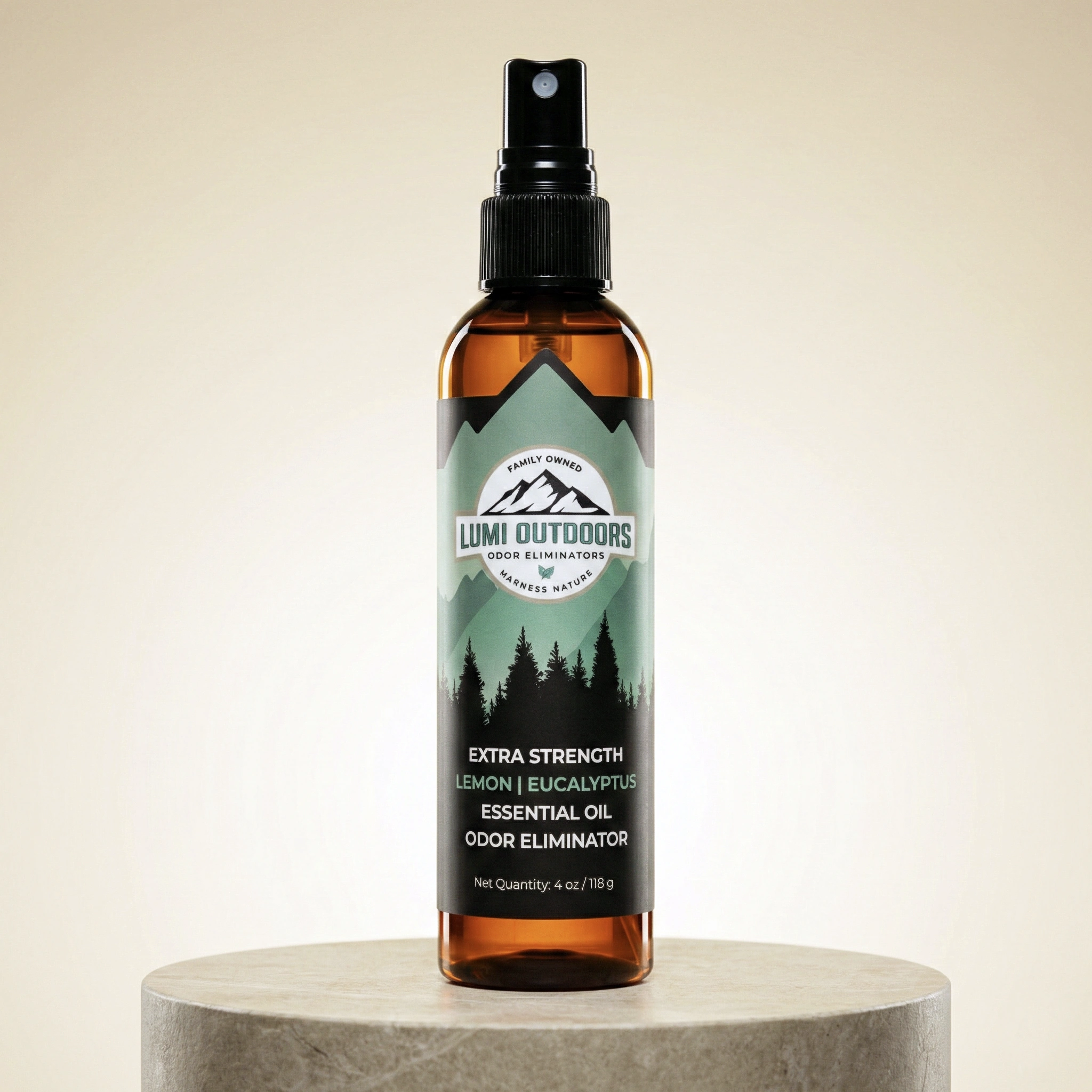
Join 1 Million+ Other People Who Chose Lumi to Conquer Their Shoe Odor.
- DESTROYS ODOR AT THE SOURCE, DOESN'T JUST MASK IT
- ALL-NATURAL & PLANT-BASED INGREDIENTS
- PROUDLY FAMILY-OWNED & MADE IN UTAH
- THE "FRESH CONFIDENCE" GUARANTEE