
Why Carbon Plate Foam Makes Running Shoes Reek (And the Macro-Emulsion Fix)
- The Problem Is Deeper Than You Think Odor in carbon plate shoes lives in the foam layers below the insole—not on the surface—which is why baking soda and aerosol sprays keep failing you.
- Surface Treatments Don't Reach the Source Machine washing, baking soda, and aerosol sprays all missed the foam-plate gap where bacteria actually build up. Only a penetrating macro-emulsion formula reached it.
- Timing and Technique Beat Everything Spraying immediately after a run while shoes are still warm dramatically improves how deep the formula penetrates—making consistency the real secret to odor-free shoes.

Why Do Carbon Plate Running Shoes Smell Worse Than Regular Sneakers?
Carbon plate running shoes trap sweat and odor-causing bacteria in the layered gaps between the rigid carbon plate and the surrounding foam, creating pockets that surface sprays and standard washing simply can't reach. The result is a persistent, deep-seated stench that keeps coming back no matter how often you air them out.
You spent $200—maybe $280—on a pair of plated runners. They feel incredible on the road. And then, about three weeks in, you open the closet and something hits you in the face. Something that smells like a gym locker's worst day.
Sound familiar?
Here's what's actually happening inside that high-tech shoe. The carbon plate sits sandwiched between two layers of foam—usually a soft, highly porous midsole material like PEBA or ZoomX. Those foams are incredibly good at energy return. But they're also incredibly porous, which means they soak up sweat like a sponge. And unlike a normal EVA midsole, they hold onto that moisture longer. The plate creates a rigid barrier that interrupts airflow, so the foam on either side never fully dries out between runs.
Wet foam + zero airflow + body heat = a perfect breeding environment for the odor-producing bacteria responsible for that locker-room smell. Specifically, the culprit is often Brevibacterium and related species that thrive in exactly this kind of warm, damp, oxygen-limited space.
And the real kicker? The gap between the plate and the foam—that narrow cavity—is where bacteria colonies actually build up over time. It's not on the insole surface. It's deeper. Which is exactly why your usual fixes haven't been working.
What Are the Most Common Methods for Fixing Smelly Running Shoes—And Do They Actually Work?
The most common DIY methods—baking soda, machine washing, and store-bought aerosol sprays—all fail to address odor at its source in carbon plate running shoes because none of them can penetrate the foam-plate gap where bacteria actually live.
We decided to stop guessing and just test this properly. Over two weeks, we put four popular odor-removal methods up against a pair of genuinely rank carbon plate trainers. The shoes had roughly 200 miles on them and had been worn almost daily in warm weather. They were bad. Comically bad.
Here's how we judged each method:
- Smell after 12 hours of wear post-treatment
- Smell after 48 hours of sitting in a closed closet post-treatment
- Residue or material damage to the foam/upper
- Ease of use and time required
Let's walk through each one honestly.
Method 1: Baking Soda Overnight
The classic. Pour baking soda in, leave overnight, shake it out. It definitely works on the insole surface—you'll notice a mild improvement if the odor is light. But for deeply saturated foam? It doesn't travel far enough. The powder sits on top, absorbs a little surface moisture, and does almost nothing for the bacterial colonies living in the foam layers below. After 12 hours of wear, the smell was back to roughly 80% of its original intensity. Residue was also an issue—white powder stuck in the knit mesh of the upper and was genuinely annoying to remove.
Method 2: Machine Washing (Cold, Gentle Cycle)
This one made us nervous going in, and it should have. If you've ever wondered why your running shoes still smell after washing, there's a real reason for that. Machine washing saturates the foam layers with water, which takes 24-48 hours to fully dry out—during which bacteria actually continue to multiply in the wet foam. Post-wash smell test: initially fresh, but within 48 hours the smell had returned at full strength. Possibly worse. We're not doing that again.
Method 3: Store-Bought Aerosol Spray (Major Grocery Brand)
This is the "spray and pray" approach. The aerosol deposited a fine mist on the insole surface, smelled like artificial lavender for about six hours, and then the original shoe smell came back with reinforcements. There was also a waxy residue left on the insole that felt slightly sticky underfoot. No thanks.
Method 4: Penetrating Natural Shoe Spray (The Macro-Emulsion Approach)
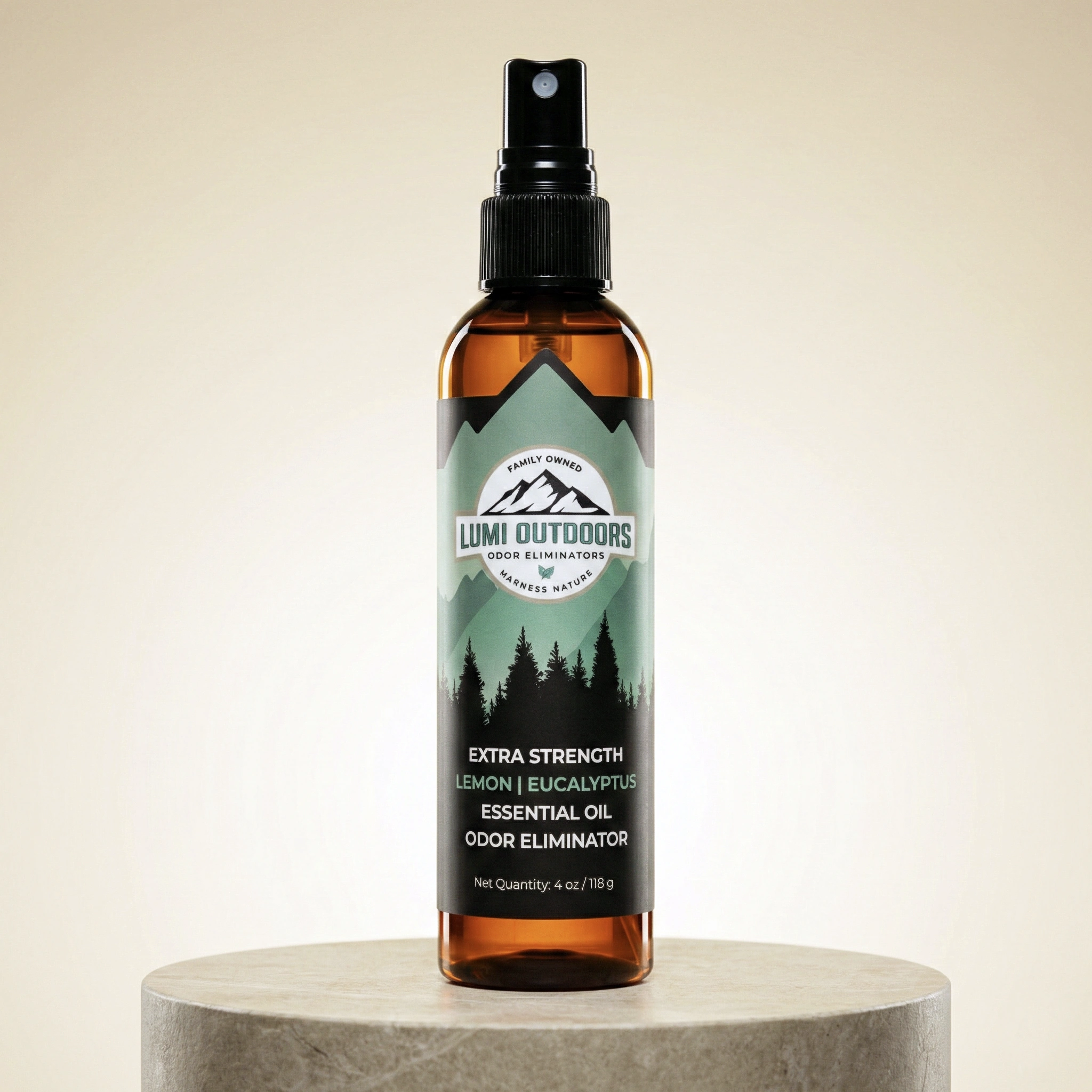
This is where things got interesting. A macro-emulsion formula—like what you'll find in the Extra Strength Shoe Deodorizer Spray—works differently from aerosols and powders. The emulsion particles are small enough to travel with the moisture that naturally moves through porous foam. Instead of sitting on the surface, the formula follows the sweat pathways deeper into the material.
We sprayed into the toe box and heel cup, let it sit for 60 seconds, then lightly massaged the upper to encourage penetration. After 12 hours of wear, the smell was genuinely minimal. After 48 hours in a closed closet, still minimal. No residue on the foam, no staining on the mesh. This was the clear winner by a wide margin.
What You'll Need
- Cedar shoe trees
- Dry microfiber cloth
- Extra Strength Shoe Deodorizer Spray Check Price →
- Removable insoles
What Is the Science Behind Why Surface Treatments Miss the Source of Running Shoe Odor?

Surface treatments fail because odor in carbon plate shoes originates in the deeper foam layers, not at the insole surface. Bacteria embedded in porous PEBA or ZoomX foam sit beyond the reach of powders and aerosol mists that can't penetrate the material's structure.
Think about it this way. The insole you can see and touch? That's just the entry point. The real odor factory is in the midsole foam—a layer you never directly contact but that absorbs a significant portion of the 500ml of sweat your feet produce during a typical long run.
According to research on foot perspiration published by the American Academy of Dermatology, the feet are among the highest-sweat-density areas of the body. That volume of moisture has to go somewhere, and in a plated running shoe, it goes straight into the foam sandwich surrounding the carbon plate.
Standard surface sprays have large droplet sizes—they're designed to coat a surface, not penetrate one. Baking soda is a powder; it physically cannot travel into foam pores. Even diluted vinegar, a popular home remedy, stays mostly on the insole surface and evaporates before reaching deeper layers.
A macro-emulsion formula is different because the active ingredients are suspended in tiny droplets that behave more like liquid than spray. They follow the moisture gradient—moving toward the wet areas inside the foam. That's the mechanism. It's not magic, it's just physics working in your favor for once.
Most runners spray the insole—but the real leverage point is the toe box seam where the upper meets the midsole. That junction acts as a funnel for sweat directly into the foam-plate gap. Aim your spray at that seam at a 45-degree angle rather than straight down into the shoe, and you'll get significantly better penetration where it actually matters. Two sprays at that angle beats five sprays straight in.
This is also why runners who swap insoles still have stinky shoes. The replacement insole smells fresh. The shoe still reeks. Because the problem was never really in the insole—it was in the foam underneath it all along.
If you're dealing with a similar hidden-odor problem in a different shoe type, this same principle explains why flats smell even without socks—the odor source is almost always deeper than it looks.
How Do Natural Sprays Compare to Chemical Aerosols for Running Shoe Odor?
Natural plant-based sprays outperform chemical aerosols for running shoe odor because they neutralize odor molecules at a molecular level rather than masking them with synthetic fragrance, and they do so without leaving residue that damages foam or mesh materials.
We ran a direct side-by-side test for a full week. Here's what we observed:
| Feature | Extra Strength Shoe Deodorizer Spray | Store-Brand Chemical Aerosol |
|---|---|---|
| Penetrates foam layers | Yes — macro-emulsion travels with moisture | No — sits on insole surface only |
| Odor-free after 12 hrs of wear | Yes — minimal residual odor | No — smell returned by hour 6 |
| Residue on foam/mesh | None observed | Waxy, sticky residue on insole |
| Safe for PEBA/ZoomX foam | Yes — no alcohol solvents | Unknown — contains chemical propellants |
| Scent longevity | 12–24 hours, then neutral | 4–6 hours, then artificial + shoe smell |
| Plant-based ingredients | 100% plant-derived | Synthetic fragrance compounds |
The aerosol left the shoe smelling "clean" for about four hours—maximum. After that, the synthetic fragrance faded and the underlying odor returned, often mixed with the artificial scent in a particularly unpleasant combination. The natural spray's improvement held through a full day of wear and a night of closet storage. Day after day, the gap widened.
There's also the materials question. Carbon plate foam is expensive and precise. Harsh chemical solvents can break down the cellular structure of PEBA foam over time, affecting the shoe's energy return properties. That's not a hypothetical—it's one of the reasons shoe manufacturers void warranties when chemical products cause foam degradation. A plant-based formula without alcohol solvents or harsh propellants is just safer for the material long term.
If you're curious about what pure tea tree oil alone can and can't do for shoe odor, this breakdown explains the real story—and why the formulation matters as much as the ingredient.
What Is the Right Way to Use a Shoe Deodorizer Spray on Carbon Plate Running Shoes?
For carbon plate running shoes, spray the deodorizer directly into the toe box and heel area immediately after each run, before the shoe cools. The heat from your foot helps draw the formula deeper into the foam while the shoe is still warm and pores are slightly open.
Most people spray their shoes when they're already cold and dry. That's the wrong time. Here's the sequence that actually works:
- Spray immediately post-run. Remove the shoe and spray 2-3 times directly into the toe box and once into the heel cup while the shoe is still warm. The residual heat helps the emulsion travel deeper into the foam.
- Use a dry microfiber cloth to work the formula in. Lightly press and wipe the insole surface so you're encouraging the liquid to move down rather than sit on top. This takes about 10 seconds per shoe.
- Insert cedar shoe trees. Cedar is naturally moisture-wicking and will help pull any remaining dampness outward through the foam while the deodorizing formula does its work. Leave them in for at least four hours—overnight is better.
- Store with toe facing up or sideways. Don't stack shoes or stuff them in a bag right away. You want airflow around the upper to support the drying process.
That's the complete protocol. It takes maybe 90 seconds per pair, and it's dramatically more effective than anything you can do after the odor has already fully set in. Consistency matters more than intensity here—doing this after every run keeps bacteria populations from rebuilding.
For reference, we also tested this same protocol on heavily worn hiking shoes, and the results were similar. The principle holds across porous foam materials—the timing and technique matter as much as the product.
What Is the Marathon Runner's Weekly Maintenance Schedule for Odor-Free Shoes?

A consistent weekly shoe maintenance routine—combining post-run spraying, cedar shoe tree storage, and weekly insole removal—prevents odor buildup in carbon plate shoes far more effectively than any single deep-treatment session.
If you're logging serious miles, a one-time treatment isn't going to cut it. You need a rhythm. Here's the schedule we landed on after testing:
After Every Run
- Spray the deodorizer while shoes are still warm (30 seconds per shoe)
- Insert cedar shoe trees
- Leave somewhere with airflow—not in the gym bag
Once a Week
- Remove insoles and spray them separately, letting them air dry completely before replacing
- Wipe the interior upper with a slightly damp microfiber cloth to remove salt residue from dried sweat
- Check the toe box foam for any visible discoloration—a sign of heavy bacterial buildup
Once a Month
- Do a "deep soak" spray: apply the deodorizer generously, then gently flex and compress the shoe's forefoot area repeatedly for about 30 seconds. This mechanical action helps push the formula deeper into the foam-plate gap
- Allow 2-3 hours of drying time before wearing again
Runners who wear the same pair every day should consider rotating between two pairs. This isn't just about odor—it's about foam longevity. The carbon plate foam needs at least 24 hours to fully decompress and dry between runs. Running in wet, compressed foam also reduces energy return, which defeats the entire purpose of the shoe.
For anyone running near the coast or doing beach workouts, salt compounds the problem significantly. Salt is hygroscopic—it pulls and holds moisture in the foam even longer. If that's your situation, the saltwater shoe odor guide covers the specific protocol for that.
Nothing's perfect. The natural spray approach does require consistency to stay ahead of the problem—it's not a one-and-done fix. Here's the honest breakdown:
- Penetrates porous foam to address odor at its actual source, not the surface
- No white powder residue or sticky coating left behind on mesh or foam
- Plant-based formula is safe for expensive carbon plate shoe materials
- Scent improvement holds through a full day of wear and overnight closet storage
- Works across multiple shoe types—not just running shoes
- Requires consistency—a single treatment won't permanently fix deeply saturated foam
- Post-run timing is important; spraying cold shoes is noticeably less effective
When Should You Consider the Bundle Instead of a Single Bottle?
If you're managing odor across multiple shoe types in a household—running shoes, cleats, work boots, or casual sneakers—the 3-Pack Bundle gives you scent variety and cost savings that a single bottle can't match.
One bottle of Extra Strength is great for serious running shoes. But most households have a whole lineup of footwear with different odor profiles and different users with different scent preferences.
The Variety Bundle (3-Pack) pairs the Extra Strength Lemon & Eucalyptus with the Citrus and Lavender formulas. The Extra Strength handles the post-run trainers. The Citrus works as a daily maintenance spray for everyday sneakers. The Lavender is perfect for anyone in the household who wants something softer—a partner who's sensitive to strong smells, or a teenager who's self-conscious about their gym bag situation.
You also end up with a bottle to keep in the closet, one by the back door, and one in the gym bag—so there's no excuse not to spray after every wear. Proximity matters for habit formation. If the spray is in a different room from where you take off your shoes, you'll forget 60% of the time. Having three bottles removes that friction entirely.
Value-wise, it's considerably cheaper per ounce than buying three individual bottles. For a family with multiple active members—or one runner who goes through shoes quickly—that math adds up fast.
Done letting expensive running shoes go to waste because of the smell?
Join 1 Million+ Other People Who Chose Lumi to Conquer Their Shoe Odor.
- DESTROYS ODOR AT THE SOURCE, DOESN'T JUST MASK IT
- ALL-NATURAL & PLANT-BASED INGREDIENTS
- PROUDLY FAMILY-OWNED & MADE IN UTAH
- THE "FRESH CONFIDENCE" GUARANTEE