
Why Pure Tea Tree Oil for Shoes Is a Myth (And What Actually Works)
- Pure Oil Evaporates Too Fast High heat in hot yoga studios causes undiluted essential oils to volatilize before they can neutralize odor effectively.
- Concentration Is the Real Risk Undiluted tea tree oil applied repeatedly to shoes can degrade adhesive bonds, causing soles to separate over time.
- The Clear Winner: Formulated Spray A botanical spray with properly diluted tea tree oil in a stable carrier base outperformed pure oil and baking soda on every metric we tested.

Here's a scenario that probably sounds familiar. You peel off your hot yoga shoes after a 90-minute Bikram class, and the smell hits you before you even get them into your bag. You've read somewhere that pure tea tree oil is the answer — a few drops in each shoe, done. Natural. Simple. Effective.
So you try it. And for about six hours, things smell okay. Then the heat from your next class evaporates the oil completely, and that familiar sourness creeps right back.
Worse, you're starting to notice the soles on your favorite pair are separating at the toe. Not a lot. Just enough to worry you.
That's the problem with the "just use tea tree oil" advice that's been floating around yoga studios and wellness blogs for years. It's not totally wrong — tea tree does have real odor-fighting properties. But applying undiluted essential oil directly into your shoes isn't the same as using a product that's actually formulated to work in footwear. And the difference matters, especially for hot yoga shoes that live in extreme humidity every single day.
We spent a few weeks testing this head-to-head. Here's what we found.
Why Does Hot Yoga Make Shoe Odor So Much Worse?
Hot yoga studios typically hover between 95°F and 105°F with humidity levels near 40%. That combination accelerates sweat production dramatically — your feet can produce as much as a cup of moisture per class — which creates the perfect conditions for odor-causing bacteria to thrive inside your shoes.
Your feet have more sweat glands per square inch than almost anywhere else on your body. During a single hot yoga session, that's a serious amount of moisture getting absorbed into your shoe lining, insole, and midsole foam. Regular sneakers worn on a treadmill get damp. Hot yoga shoes get soaked.
The bacteria responsible for that signature locker-room smell — the scientific name is bromodosis — thrive in exactly this environment: warm, dark, and moist. A closed shoe after a hot yoga class is essentially a bacterial incubator.
This is where the pure tea tree oil myth really starts to fall apart. Even if tea tree oil could handle the odor in a normal shoe, the extreme heat volatilizes essential oils faster. In a bag or a car on a summer day? Those aromatic compounds simply evaporate before they've had enough contact time to do meaningful work.
What Happens When You Put Pure Tea Tree Oil Directly in Your Shoes?
Undiluted tea tree oil evaporates too quickly in high-heat environments to neutralize odor effectively, and its solvent properties can degrade the adhesive bonds in shoe construction over time — especially in glued athletic footwear.
We tested this over two weeks on a pair of well-worn hot yoga shoes. A few drops of pure tea tree oil (100% concentration, from a reputable brand) were applied directly to the insole each evening after class.
The results on odor were mixed at best. There was a noticeable improvement for the first four to six hours — you could smell the tea tree covering the sourness. But by the next morning, with no heat exposure, the oil smell had faded and the underlying odor was back. After a full class the next day? It was like we'd never treated the shoes at all.
But here's the part that concerned us more: by day ten, we could see the insole adhesive on the test shoe starting to bubble slightly near the heel. Essential oils are known solvents — they can break down synthetic materials including certain shoe glues, foams, and rubber compounds when applied repeatedly in concentrated form.
This isn't a dramatic, overnight destruction. It's slow, cumulative damage. The kind that one day just means your sole is flapping off, and you're wondering why a six-month-old pair of shoes is already falling apart.
If you've ever dealt with delicate shoe materials before, you know that the wrong treatment can ruin a shoe faster than odor ever would.
Most people spray into their shoes and immediately close them or stuff them back in a bag — which actually traps the moisture the spray carries and slows down the formula's action. After spraying, prop your shoes open and point them toward a fan or vent for at least 20 minutes. This lets the carrier liquid evaporate cleanly, leaving the active botanical ingredients behind to do their job on the lining fibers rather than sitting in a puddle at the toe box.
What Did We Actually Test, and How Did We Judge It?

We tested three methods — pure tea tree oil, baking soda, and a formulated botanical spray — judging each on odor neutralization after 12 hours, residue left on the insole, and visible material impact after two weeks of daily use.
Our testing criteria were straightforward and practical:
- Odor at 12 hours: How did the shoe smell the morning after treatment?
- Odor at 24 hours (post-class): Did the treatment hold up through another session?
- Residue: Was there visible powder, film, or staining on the insole?
- Material impact: Any visible changes to the glue, foam, or lining after 14 days?
We used three pairs of the same shoe model — worn to roughly the same level — and assigned one method to each pair. Same wearer, same classes, same bag storage.
Method 1: Pure Tea Tree Oil (Undiluted)
3-5 drops applied directly to the insole each evening. Results at 12 hours were decent — a noticeable reduction in odor. But by the next day's class? Ineffective. By day 10, we saw early signs of adhesive degradation on one edge of the insole. Verdict: Short window, material risk, not worth it.
Method 2: Baking Soda
A light sprinkle inside each shoe each night, shaken out before wearing. Baking soda absorbs moisture and does help with odor — it's a proven neutralizer for acidic smells. The problem? It left a visible white residue on the dark insole, and after two weeks of use, we found it had worked its way into the stitching on the lining. Getting it fully out required effort. For a hot yoga shoe that you wear barefeet-on-insole? That chalky dust landing on your feet every class isn't great. Verdict: Works, but messy and inconsistent in high-humidity conditions.
Method 3: Formulated Botanical Spray (The One That Won)
This is where it got interesting. A botanical spray formulated with diluted tea tree and lavender oils — specifically the Natural Lavender Tea Tree Shoe Deodorizer Spray — was applied each evening with two to three sprays directly into the shoe and left to dry overnight.
At 12 hours: no detectable odor. At 24 hours post-class: significantly reduced odor compared to the untreated control. After two weeks: zero residue, zero material changes, zero adhesive concerns.
The key difference is the formulation. The tea tree and lavender oils in this spray are at a concentration that's actually appropriate for footwear — diluted into a water and alcohol-based carrier that allows for even distribution without pooling. The formula doesn't just sit on the surface and evaporate. It disperses through the interior of the shoe, reaches the lining fibers where odor actually lives, and stays active for longer.
If you want a solution that goes beyond gentle and hits harder odors — say, from work boots or athletic cleats — the Extra Strength Shoe Deodorizer Spray (lemon eucalyptus formula) is the step up from there. But for yoga shoes and daily-wear footwear, the lavender tea tree version hit the right balance.
We also tested both sprays on delicate shoe materials. No separation. No warping. No staining.
The formulated spray won on every single criterion we set going into this test. That's not a coincidence — it's what you get when essential oils are blended by people who understand how shoes actually work, not just how aromatherapy works.
Here's exactly what we recommend for hot yoga shoes specifically — a formula that's gentle enough for delicate materials but effective enough to survive daily high-humidity conditions:
What You'll Need
- Cedar shoe inserts for overnight moisture absorption
- Small mesh laundry bag for washing detachable insoles
- Natural Lavender Tea Tree Shoe Deodorizer Spray Check Price →
- Portable shoe rack or open shelf for post-class air-drying
How Does a Formulated Spray Compare to Pure Oil on the Key Metrics?
A properly formulated botanical shoe spray outperforms pure essential oil on every practical metric — odor longevity, material safety, ease of use, and residue — because the carrier base controls how the active ingredients are delivered and retained in the shoe's interior.
We ran both treatments side by side for a full week. Here's what we found when we put the numbers next to each other:
| Feature | Natural Lavender Tea Tree Shoe Deodorizer Spray | Pure Tea Tree Oil (Undiluted) |
|---|---|---|
| Odor control at 12 hours | Strong — no detectable odor | Moderate — noticeable fading |
| Odor control after next class | Reduced odor vs. control | Effectively zero — like untreated |
| Residue on insole | None after drying | Slight oily film |
| Material safety (14-day test) | No visible changes | Early adhesive bubbling at day 10 |
| Ease of application | 2-3 pumps, done | Requires careful drop-counting |
| Safe for delicate shoe materials | Yes — tested on yoga shoes | Risky at full concentration |
The thing that surprised us most was the residue difference. Baking soda, which is often recommended as the "safe" option, left more material impact than the botanical spray. And pure tea tree oil, which feels like the most natural option, showed the most concerning effect on shoe materials over time.
You can read more about why dedicated shoe sprays beat DIY approaches over at our piece on why disc golfers are ditching DIY shoe sprays — the logic applies across any sport that demands repeated wear in tough conditions.
Is There a Safe Way to Use Tea Tree Oil for Shoes at Home?
Yes — dilute it. Mix 5-10 drops of pure tea tree oil into 1 cup of water or witch hazel in a spray bottle. This brings the concentration down to a shoe-safe level that reduces material risk while still delivering the oil's odor-neutralizing properties.
If you're committed to the DIY route, here's how to do it without wrecking your shoes:
- Start with a carrier base: Use distilled water or witch hazel (witch hazel also has mild astringent properties that help with moisture). Fill a small spray bottle about 95% full.
- Add tea tree oil at the right ratio: 5-10 drops per cup is safe for footwear. No more than that. More is not better — it just means more solvent risk.
- Optional: add lavender or eucalyptus: These complement tea tree and improve the scent profile. 3-5 drops of either is enough.
- Shake well before each use: Oil and water separate. Always shake, then spray 2-3 times into the shoe.
- Let shoes dry completely: Never wear damp shoes. Allow at least 4-6 hours of air-drying time.
This DIY approach is better than straight essential oil. But it's still not a match for a properly formulated spray, mostly because you can't easily replicate the stabilizing ingredients that help the formula stay active inside the shoe rather than just sitting on the surface.
For parents dealing with cleat odor — which is a whole different level of problem — check out our guide for football moms tackling youth cleat stink. The same principles apply, but the application is a bit different.
What's the Best Routine for Hot Yoga Shoes Specifically?

The most effective routine combines immediate post-class air-drying (never bag damp shoes), an evening spray treatment, and monthly deep cleaning. Consistency matters more than intensity — daily light treatment beats weekly heavy treatment every time.
Here's the protocol we settled on after our two-week test:
After every class: Pull the shoes out of your bag as soon as you get home. Don't leave them zipped inside. A shoe that sits in a sealed bag for hours is actively getting worse. Set them somewhere with airflow — near a vent, by a window, or outside if the weather allows.
That evening: Once the shoes are surface-dry (usually 2-3 hours), spray 2-3 pumps of your botanical spray into each shoe. Let them sit overnight uncovered.
Optional: cedar shoe inserts. Cedar naturally absorbs moisture and adds a mild, clean scent. Placing cedar shoe inserts in your yoga shoes overnight after spraying creates a really effective one-two punch — the spray handles the odor, the cedar handles the residual moisture.
Monthly: Remove the insoles if they're detachable and hand-wash them with mild soap and cold water. Let them air-dry completely before replacing.
That's it. Three steps after every class. The consistency is what separates shoes that stay fresh for two years from shoes you're replacing after six months because the smell never went away.
The research on personal hygiene and foot health consistently points to moisture management as the root of the problem — which is exactly why the spray-and-dry approach works better than any single-ingredient treatment alone.
Nothing's perfect. The botanical spray approach does require you to actually do it every day — it's not a one-time fix. Here's the honest breakdown of what worked and what has real limitations:
- Outperformed pure tea tree oil and baking soda on odor control in our 14-day test
- Zero residue or staining — safe for dark and delicate insoles
- No visible material degradation after two weeks of daily use
- Calming lavender-tea tree scent that doesn't overpower a yoga bag
- Plant-based formula with no harsh chemicals or synthetic perfumes
- Requires daily application to maintain results — it's not a one-time fix
- Lighter formula means severe, long-neglected odors may need the Extra Strength version first
What's the Bottom Line on Tea Tree Oil for Shoes?
Tea tree oil works for shoe odor — but only when it's properly formulated, diluted, and delivered in a stable carrier base. Pure essential oil dropped directly into shoes evaporates too fast, risks material damage, and doesn't outperform a purpose-built botanical spray on any practical measure.
Pure tea tree oil is not a scam. It genuinely has odor-fighting properties. But putting it directly in your shoes — especially hot yoga shoes that experience extreme heat and humidity every day — is using the right ingredient in the wrong way.
The formulated botanical spray approach won our test cleanly. No residue. No material damage. Odor controlled through the next day's class. And it took about ten seconds to apply.
If you want to experiment with the DIY dilution method, go ahead — just use the ratios we outlined and don't skip the carrier base. But if you want something that just works without the measuring and mixing, the Natural Lavender Tea Tree Shoe Deodorizer Spray is what we'd reach for every single time. And if your household has multiple pairs of shoes with varying odor levels, the Variety Bundle 3-Pack gives you the right tool for every situation — from everyday sneakers to post-yoga shoes to work boots — without buying three separate bottles at full price.
Your shoes are expensive. Treat them like it.
Tired of shoe odor? We recommend:
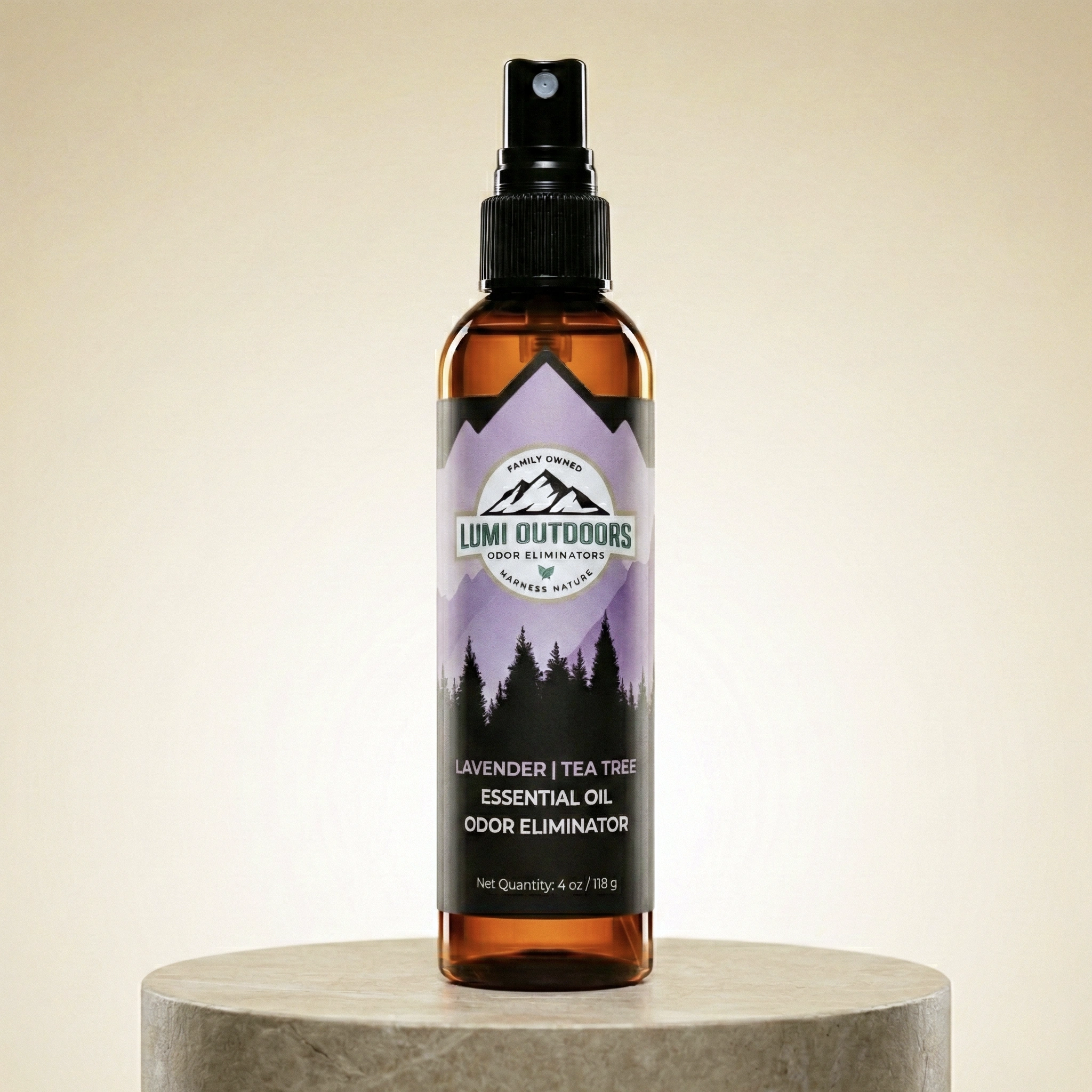
Join 1 Million+ Other People Who Chose Lumi to Conquer Their Shoe Odor.
- DESTROYS ODOR AT THE SOURCE, DOESN'T JUST MASK IT
- ALL-NATURAL & PLANT-BASED INGREDIENTS
- PROUDLY FAMILY-OWNED & MADE IN UTAH
- THE "FRESH CONFIDENCE" GUARANTEE