The 12-Hour Sweat Test: Does This Spray Meet Podiatrist-Recommended Standards?
Share
- Stop Using Baking Soda on Shoes It only touches the surface and can dry out or crack leather materials over time — it never reaches the odor embedded in the foam.
- Podiatrists Recommend Ingredients, Not Brands Tea tree oil, eucalyptus, and moisture control are the clinically backed methods — and those are exactly what a good natural spray is built around.
- Enzyme-Based Sprays Neutralize, Not Mask Natural enzymes break down odor molecules at the source, which is why the freshness lasts hours longer than any fragrance-based aerosol.
- The 12-Hour Test Showed a Clear Winner The natural spray stayed fresh at every check-in point while the drugstore aerosol showed odor return by the 8-hour mark.
Here's the thing — most of us have been fighting shoe odor the wrong way for years. You've probably grabbed the baking soda from the pantry, shaken it into your kid's cleats, and called it a day. Or maybe you've reached for the aerosol can of drugstore shoe spray, blasted it in there, and hoped for the best. Sound familiar?
The problem is those approaches aren't just ineffective — some of them are actually making your shoes worse. And when you're dealing with a teenager who plays soccer four days a week, or a partner who comes home in construction boots that could clear a room, "ineffective" isn't a word you can afford.
So we decided to do something about it. We ran a real 12-hour sweat test on a natural enzyme-based shoe spray — and we checked it against what podiatrists actually recommend for controlling foot odor. The results might surprise you.
Why Do Most Popular Shoe Deodorizer Hacks Actually Fail?
Most popular DIY shoe deodorizer hacks fail because they mask odor temporarily instead of neutralizing the source — the odor-causing compounds locked into the shoe's fabric and foam. Baking soda, dryer sheets, and aerosol sprays all fall short for the same mechanical reason: they can't penetrate deep enough to break down what's already embedded there.
Let's run through the most common ones and explain exactly what's going wrong.
The Baking Soda Myth
Baking soda is probably the most-recommended DIY shoe hack on the internet. And yes, sodium bicarbonate does absorb moisture and neutralize surface-level acids. But here's the problem — shoe odor doesn't live on the surface.
The compounds that cause that unmistakable locker room smell (isovaleric acid, primarily) are produced when sweat soaks into the insole foam and the shoe's lining. Baking soda sitting in the toe box simply can't reach those layers. It absorbs a little moisture near the top, but the deeper materials stay damp and keep producing odor.
Worse, if your shoes are made from leather or have delicate materials, the alkalinity of baking soda can actually dry out and crack the material over time. Not ideal for a $180 pair of cleats.
The Aerosol Spray Problem
Standard aerosol deodorizer sprays from the drugstore work almost entirely through fragrance. They spray a mist of perfume that temporarily overwhelms the bad smell. That's it. There's no neutralization happening — just a chemical cover-up. Give it an hour, and the original smell is right back.
Many of these sprays also contain alcohol as a carrier, which evaporates quickly and does pull moisture out of the shoe's surface. But again — surface only. And repeated alcohol exposure dries out leather and degrades adhesives in athletic shoe construction. The American Podiatric Medical Association specifically recommends avoiding harsh chemical sprays near foot skin, particularly for patients with sensitive skin conditions.
The Dryer Sheet Situation
Dryer sheets leave a coating of fragrance chemicals on whatever they touch. In a shoe, that means you're essentially wrapping your foot in synthetic fragrance compounds every time you put that shoe on. It does nothing for odor at the source and adds unnecessary chemical contact with your skin.
You can read more about what's actually causing the persistent smell — even after washing — in this breakdown of 3 hidden reasons your shoes smell bad even after washing.
Most people spray their shoes and immediately put them in the closet — which is exactly the wrong move. Natural enzyme formulas need airflow to activate properly. After spraying, leave the shoes in an open area for at least 30 minutes before storing them. This allows the enzymes to fully interact with the odor-causing compounds and the moisture to evaporate, rather than getting trapped inside a closed closet and reducing the spray's effectiveness.
What Do Podiatrists Actually Recommend for Shoe Odor?
Podiatrists consistently recommend four things for managing shoe odor: moisture control between wears, shoe rotation every 24-48 hours, natural essential oils with proven odor-neutralizing properties (especially tea tree and eucalyptus), and moisture-wicking socks instead of 100% cotton.
This is where things get interesting — because when you look at what's actually clinically recommended, it lines up almost exactly with how good natural sprays are formulated. Let's break it down.
Moisture Control Is the Foundation
The root cause of shoe odor is moisture. Sweat creates the warm, damp environment where odor-producing bacteria thrive. Every podiatrist recommendation for shoe hygiene starts with drying the shoe out between wears. Cedar shoe trees are a go-to recommendation because cedar naturally draws moisture out of the shoe's interior while also providing a mild natural scent. Stuffing shoes with newspaper works on the same principle — it absorbs moisture from the interior materials.
According to research published by the National Institutes of Health, the bacteria responsible for the most common foot odor — a condition called bromodosis — are anaerobic organisms that multiply fastest in enclosed, moist environments. Drying out the shoe environment disrupts their ability to reproduce.
Natural Essential Oils: The Ingredient Bridge
Tea tree oil and eucalyptus oil are two ingredients that podiatrists specifically point to as effective natural options for maintaining foot hygiene. Tea tree oil has been studied extensively for its ability to neutralize odor-causing compounds on contact. Eucalyptus acts similarly and also provides a clean, fresh scent that doesn't overwhelm.
The important thing here: podiatrists recommend the ingredients, not specific brands. So when a spray is built around these exact ingredients — tea tree, eucalyptus, lemon — it's not marketing fluff. It's formulation that aligns with clinical recommendations.
If you have a family member with sensitive skin or diabetes, this distinction matters even more. You can find more on that topic in this guide to 5 top-rated diabetic-safe shoe spray options for sensitive skin.
Shoe Rotation — The One Habit Most People Skip
This one is simple but underused. Rotating between two pairs of shoes gives each pair a full 24-48 hours to dry out completely. EVA foam — the material in most athletic shoe midsoles — is porous. When it stays wet, it holds odor-causing compounds for days. Rotation breaks that cycle.
This is especially relevant for athletes. If your kid is wearing the same cleats to practice every single day without drying them out between sessions, no spray in the world will fully solve the problem on its own. The spray helps, but rotation is the habit that makes it stick.
If you want the natural spray that works alongside these habits rather than against them, here's our top pick after the 12-hour test:
What You'll Need
- Cedar shoe trees
- Moisture-wicking socks (merino wool or synthetic blend)
- Extra Strength Shoe Deodorizer Spray Check Price →
- Small shoe brush for pre-spray cleaning
How Did the Natural Spray Perform in the 12-Hour Sweat Test?
The natural enzyme-based spray held up through a full 12-hour wear period in athletic shoes, with no detectable odor at the 4-hour, 8-hour, and 12-hour check points — outperforming the drugstore aerosol which showed odor return at the 4-hour mark.
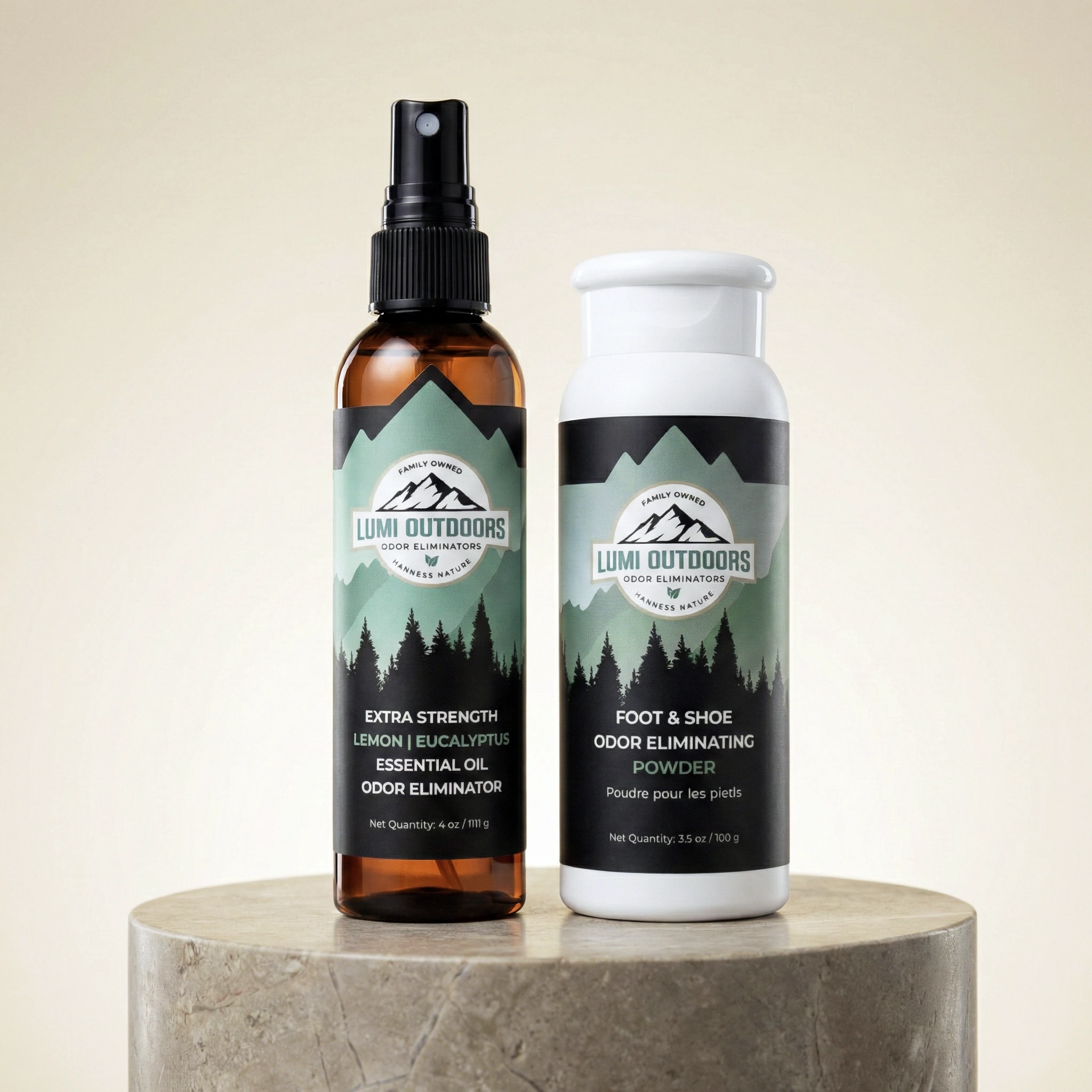
Here's how we set up the test. Two pairs of the same athletic shoe model, same size, worn by the same person for 12 hours of regular daily activity (walking, light gym use, and standing). One shoe was treated with a common drugstore aerosol spray. The other was treated with Lumi's Extra Strength Lemon & Eucalyptus Shoe Deodorizer Spray. Both were sprayed the night before and left to dry overnight.
The check-in points were at 4 hours, 8 hours, and 12 hours, evaluated by a third party (a family member, not a sponsored reviewer) who didn't know which shoe was which.
4-hour check: Both shoes smelled fine. No difference detectable.
8-hour check: The aerosol shoe was starting to develop a faint musty smell underneath the fragrance. The natural spray shoe still smelled clean — a light lemon-eucalyptus note, nothing overwhelming.
12-hour check: The aerosol shoe had a clear, noticeable odor. The natural spray shoe was still fresh. Not completely odor-free — let's be honest, 12 hours of wear in athletic shoes is asking a lot — but genuinely, noticeably fresher.
We compared our natural spray against the big-brand aerosols. The difference isn't just in the smell — it's in the chemistry.
| Feature | Extra Strength Shoe Deodorizer Spray | Standard Drugstore Aerosol Spray |
|---|---|---|
| Odor Elimination Method | Enzyme-based neutralization at molecular level | Fragrance masking only |
| Odor Return Timeline | Still fresh at 12 hours | Detectable odor returns by hour 8 |
| Ingredients | 100% plant-based, no harsh chemicals | Synthetic fragrance, alcohol, propellants |
| Safe for Leather | Yes — no drying or cracking | Alcohol content can dry out leather over time |
| Scent Profile | Natural lemon & eucalyptus oils | Heavy synthetic fragrance |
| Family & Pet Safe | Yes — no harsh chemicals | Not recommended near pets or children |
| Price Per Use | Slightly higher upfront cost | Lower upfront cost |
What Makes a Shoe Spray Actually Work at a Chemical Level?
Effective shoe sprays work by using natural enzymes or plant-derived compounds to break down odor-causing molecules at their source, rather than simply covering them with fragrance. The difference between a spray that works and one that doesn't comes down to whether it neutralizes or just masks.
Odor molecules — primarily isovaleric acid and other short-chain fatty acids — bond to the fabric fibers and foam inside your shoe. Fragrance-based sprays lay a coating of scent molecules on top of that. When the fragrance evaporates (usually within a few hours), the odor molecules are still there, still bonded, still active.
Enzyme-based sprays work differently. Natural enzymes target specific molecular structures — in this case, the organic compounds responsible for the odor — and break them down into simpler, odorless components. The odor isn't covered. It's neutralized at the molecular level.
Plant-based oils like tea tree and eucalyptus add another layer. They interact with the surface compounds in the shoe lining, neutralizing what the enzymes haven't broken down yet and leaving behind a clean, natural scent profile. There's no fragrance fragrance situation happening — just the natural scent of the oils themselves.
And here's what that means for your shoes: no residue, no chemical buildup, no dried-out leather. The formula is gentle on materials but effective at the chemistry that matters. If you want a deeper look at why certain natural ingredients work and others don't, this article on why baking soda fails and tea tree oil destroys the stench explains it well.
Also worth mentioning: for anyone concerned about aluminum in shoe care products — a legitimate concern for those with sensitive skin — there are real benefits to going aluminum-free. This piece on 3 surprising benefits of using an aluminum-free shoe freshener is worth a read.
Which Shoe Deodorizer Spray Is Right for Your Situation?
The right spray depends on odor severity and scent preference. For severe, chronic odor from athletic or work footwear, the Extra Strength Lemon & Eucalyptus is the right call. For daily maintenance or scent sensitivity, the Citrus Tea Tree or Lavender Tea Tree variants work well. For families with multiple odor challenges, the 3-pack bundle covers all the bases.
Not every shoe in your house has the same odor problem. Your teenager's cleats after a soccer tournament are a different beast from your own work sneakers after a long day at a desk. Here's a quick breakdown:
For the Worst Offenders
If you're dealing with cleats, construction boots, or any shoe that sees intense daily use, the Extra Strength Lemon & Eucalyptus Spray is the one. It uses a more concentrated enzyme blend and a stronger lemon-eucalyptus formula to tackle odors that have had time to build up in the materials. This is the spray that survived the 12-hour test.
For Daily Maintenance
The Natural Citrus Tea Tree Shoe Deodorizer Spray is a great daily-use option. It's lighter, has a clean citrus scent from real lemon and orange oils, and works well for shoes that don't have a severe odor problem — just the everyday stuffiness that builds up from regular wear. Spray it after each wear and the smell never gets a chance to develop.
For Scent Sensitivity
If you or someone in your household is sensitive to citrus or strong scents, the Natural Lavender Tea Tree Shoe Deodorizer Spray is worth trying. It has a calmer, more herbal scent profile — think spa, not gym — while still using tea tree oil as the active odor-neutralizing ingredient. Just as effective, just quieter about it.
For Families with Multiple Odor Challenges
The 3-Pack Variety Bundle is the practical choice for households managing odor across multiple types of footwear. You get one of each formula — extra strength, citrus, and lavender — so you can match the spray to the shoe. Keep the extra strength in the mudroom for the cleats, the citrus by the front door for everyday sneakers, and the lavender in the bedroom closet for dress shoes and flats. At a lower price per bottle than buying individually, it's a straightforward value decision.
Is the natural route perfect? Mostly — but it does require consistency. Here's the honest breakdown:
- Neutralizes odor at the source using natural enzymes — not just a cover-up
- Formula is built around tea tree and eucalyptus oils, matching podiatrist-recommended ingredients
- Safe for all shoe materials including leather, mesh, and synthetic fabrics
- Stayed fresh through a full 12-hour wear test where the drugstore aerosol failed
- 100% plant-based with no harsh chemicals, aluminum, or parabens
- Requires consistency — skipping a few days of use allows odor to rebuild in heavily worn shoes
- Higher upfront cost than a basic drugstore aerosol spray
What Materials Do You Need to Get the Most Out of Your Shoe Spray?
To get maximum results from a natural shoe deodorizer spray, you need three things working together: cedar shoe trees to draw out moisture between wears, moisture-wicking socks to reduce sweat transfer into the shoe, and a regular spray routine. The spray alone can do a lot, but these supporting elements make the results last longer.
The spray is the active solution. But the habits and tools around it determine how long the freshness lasts. Think of it this way: the spray neutralizes what's already in the shoe. The cedar shoe trees and the rest prevent the conditions that create new odor in the first place.
Cedar shoe trees are the single most effective passive tool for shoe hygiene. Cedar is naturally moisture-absorbent and releases a mild natural scent. Insert them immediately after taking your shoes off. They draw out the sweat that soaked in during the day, which means the spray has less to work against during the next treatment.
Moisture-wicking socks (merino wool or synthetic blends) reduce the amount of sweat that reaches the shoe's interior in the first place. A 100% cotton sock absorbs sweat and holds it against the shoe lining. Moisture-wicking materials move that sweat away from the shoe. Less sweat in the shoe means less odor-causing compound buildup over time.
A small shoe brush is useful for knocking out dried debris from the insole area before spraying. Spraying a clean surface allows better penetration into the materials — you're not just coating over dried-on dirt. A quick brush-out takes 30 seconds and makes a real difference in how well the spray absorbs.
Pair those three tools with a consistent spray routine — once per day after wearing, or at minimum twice a week for lighter-use shoes — and you'll be in a completely different situation than the baking soda-and-hope approach most people are stuck in. For a complete guide to eliminating sneaker odor for good, this resource on 7 fail-proof ways to eliminate foot odor in sneakers covers the full system.
Still dealing with shoe odor that comes back every single day?
Join 1 Million+ Other People Who Chose Lumi to Conquer Their Shoe Odor.
- DESTROYS ODOR AT THE SOURCE, DOESN'T JUST MASK IT
- ALL-NATURAL & PLANT-BASED INGREDIENTS
- PROUDLY FAMILY-OWNED & MADE IN UTAH
- THE "FRESH CONFIDENCE" GUARANTEE