
5 Pro Hacks to Eliminate Triathlon Running Shoe Odor After Your Next Race
- Pull Insoles Immediately The insole is the biggest moisture trap in the shoe — removing it right after your race stops odor from setting into the foam.
- Cold Water Rinse First Barefoot running leaves biological residue in the lining — a cold rinse removes it without bonding it deeper into the fabric.
- Absorb Deep Moisture Newspaper or silica packets pull dampness from the midsole foam, which stays wet long after the surface feels dry.
- Spray After Every Race A heavy-duty natural spray neutralizes odor compounds at the source and prevents seasonal stench buildup across a full race calendar.

You know that smell. You crossed the finish line, you're exhausted and proud, and then you pull off your running shoes — and it hits you. It's not just regular post-run funk. It's something more aggressive. Something that makes your training partners take a half-step back.
Triathlon running shoe odor is a different beast entirely. Think about what those shoes go through: you're running barefoot or in thin socks right out of T2, often with wet feet from the bike leg. Your feet have been sweating inside cycling shoes for an hour or two. Then you peel them off, shove your bare, wet feet into your running shoes, and sprint off for a 10K. The moisture, the heat, the biological fluids — it's a perfect recipe for the kind of odor that doesn't respond to basic sprays or a day on the porch.
Standard running shoe care just doesn't cut it for multi-sport extremes. Airing them out works for your Tuesday easy run. It doesn't work after an Ironman. These five hacks will. And if you've ever wondered why washing smelly gym shoes is actually making them stink more, the same principle applies here — and hack #3 will make a lot of sense.
1. Pull the Insoles Out the Second You Finish
Removing insoles immediately after your race is the single most impactful thing you can do — the insole traps the most sweat of any part of the shoe, and leaving it in contact with the midsole for even a few hours turns mild odor into a permanent problem.
Most triathletes drop their running shoes in a gear bag and forget about them for a day. By the time you get home and unpack, the damage is already done. Moisture has soaked from the insole into the foam, and the odor-causing bacteria have had hours to set up shop.
Get into the habit of pulling those insoles the moment you sit down post-race. Prop the insoles separately — flat against your gear bag, not curled up inside the shoe. And open the tongue of the shoe as wide as it goes. More airflow, faster drying, less stench. It takes 10 seconds and it's the cheapest hack on this list.
2. Rinse Barefoot Residue With Cold Water (Not Hot)
Cold water rinsing removes the biological residue left by barefoot running — sweat, skin cells, and transition-zone debris — without setting odor into the fabric the way hot water does.
Running barefoot in your race shoes means there's no sock acting as a barrier. Skin cells, sweat, and other residue go straight into the shoe lining. This is the source of that deep, sour odor that won't quit no matter how long you air them out.
After removing the insoles, hold the shoes under cold running water and gently work the water into the interior. A soft brush helps work through the heel cup and toe box. Hot water might feel more "cleansing," but heat actually bonds organic residue to fabric fibers — the same chemistry that browns food can set stains and odors at elevated temperatures. Cold water flushes without setting. Then let them dry upright somewhere with good airflow — never in a closed gear bag or a hot car.
Most triathletes spray inside the shoe, but the biggest odor reservoir is often the heel counter — the rigid cup at the back that presses directly against bare skin for the entire run. Give an extra spray specifically into the heel cup and press the material lightly so it absorbs before drying. That one targeted spot makes a bigger difference than coating the whole toe box.
3. Pack Newspaper or Silica Packets to Absorb Deep Moisture

Stuffing your shoes with newspaper or silica gel packets after rinsing pulls residual moisture from the foam midsole and lining — the layers that stay damp long after the surface feels dry and continue generating odor for days.
Here's the thing most athletes miss: even after you rinse and air the shoes, the foam midsole stays wet for a long time. That foam is dense enough to hold moisture for 24-48 hours. And wet foam is where odor compounds really take hold. This is also why, as we've explored in our guide on why your Ultraboosts still stink after washing, the problem is often deeper than the surface.
Crumple newspaper and pack it tightly into the toe box and heel. The paper wicks moisture out of the foam — replace it after a few hours if the shoes were really soaked. No newspaper? A couple of silica gel packets (the kind that come in shoe boxes) work beautifully. Tuck them right under the toe box where moisture pools most.
This is where your three key materials come into play:
- Crumpled newspaper: Stuff tightly into the toe box and heel; replace after 2-3 hours if shoes were heavily soaked.
- Silica gel packets: Tuck under the insole cavity or where the tongue meets the toe box for ongoing moisture absorption.
- Soft-bristle brush: Use during the cold-water rinse step to work into the heel cup and around the inner toe box seam where residue collects.
4. Use Baking Soda for an Overnight Odor Reset
Baking soda neutralizes the acidic compounds in sweat that create that sharp, sour odor — sprinkling it into dry shoes overnight is one of the most effective low-cost methods for resetting shoes after a hard race.
Once your shoes are dry from the rinse-and-stuff step, baking soda is a solid overnight treatment. Sprinkle about a tablespoon into each shoe, tip them so the powder coats the entire insole bed, and leave them overnight. In the morning, shake the powder out thoroughly before you put your insoles back in.
One honest note: baking soda is a neutralizer, not an eliminator. It manages the odor that's already there, but it doesn't address the source. For casual training shoes, that's usually enough. For triathlon shoes that have been through race-day conditions — barefoot contact, prolonged moisture, heat — you're going to need something stronger. That's what hack #5 is for.
According to research on bromodosis (the clinical term for foot odor), the smell comes from bacteria on the skin metabolizing sweat — and those bacteria leave behind acidic byproducts that cling to porous shoe materials. Baking soda buffers those acids, which is why it works. But it doesn't address the bacteria themselves.
We compared our natural spray against the big-brand aerosols. The difference isn't just in the smell — it's in the chemistry.
| Feature | Extra Strength Shoe Deodorizer Spray | Standard Chemical Aerosol Spray |
|---|---|---|
| Odor Source Neutralization | Plant-based enzymes target odor compounds directly | Masking fragrance covers smell temporarily |
| Safe on Shoe Materials | Safe on mesh, foam, synthetics, and adhesives | Harsh solvents can degrade glues and fabric over time |
| Scent After Drying | Clean lemon & eucalyptus; fades naturally | Heavy artificial fragrance can linger uncomfortably |
| Ingredient Safety | 100% plant-based, paraben-free, family-safe | Contains synthetic chemicals and propellants |
| Effectiveness on Race-Level Odor | Formulated for extreme athletic shoe odor | Designed for mild, everyday freshening |
5. Spray a Heavy-Duty Natural Deodorizer After Every Race
A plant-based, extra-strength deodorizer spray — applied to dry shoes after race day — neutralizes odor at the source and prevents the deep stench from building up across a full race season.
This is the hack that ties everything else together. The first four steps handle the acute problem — the immediate post-race cleanup. But triathlon running shoes take repeated abuse across an entire season. Every race, every brick workout, every long training run adds another layer. Without a spray that actually neutralizes the source, the odor compounds stack up over time and eventually become permanent.
You don't need a cabinet full of chemicals to fix this. You just need the Extra Strength Shoe Deodorizer Spray — our most potent formula, built specifically for the kind of extreme shoe odor that casual daily-use sprays can't touch. It's a lemon and eucalyptus blend with natural enzymes that neutralize odor compounds rather than just masking them with a scent. And because it's 100% plant-based, it's safe on all shoe materials — mesh, synthetics, foam linings — with no risk of breaking down the adhesives or degrading the upper like some chemical-heavy sprays can.
The routine is simple: after your shoes are fully dry from steps 1-4, give each shoe 2-3 sprays inside, replace the insoles, and leave them overnight. Do this consistently after every race and every long brick session. If you've also been dealing with saltwater exposure after open-water swim legs, there are over 31,000 reviewers who can tell you exactly how well this works — why they trust this extra-strength spray for saltwater shoe odor is worth a read before your next race.
If you want to go a level further — especially if you're racing multiple events across a season — the Natural Foot Powder and Extra Strength Shoe Deodorizer Spray bundle is the full system. Use the powder before you put your cycling shoes on at T1, and use the spray on your running shoes post-race. You're attacking moisture before it starts and neutralizing odor after the fact. It's the approach serious multi-sport athletes use when they want results that actually last.
Nothing's perfect. Here's what worked and what didn't when we put these methods to the test:
- Tackles extreme triathlon shoe odor that daily-use sprays can't handle
- Plant-based formula is safe on all shoe materials including delicate mesh uppers
- Natural enzymes neutralize odor compounds rather than just masking them
- Works as a consistent post-race protocol to prevent seasonal buildup
- Pairs perfectly with foot powder for a full moisture-prevention system
- DIY steps (rinsing, newspaper stuffing, baking soda) require consistent effort after every race — easy to skip when you're exhausted post-finish
- For chronic or deeply embedded odor, you may need several treatment cycles before results feel permanent
Your Post-Race Transition Gear Care Checklist

A consistent post-race gear protocol — applied to all your transition equipment, not just your running shoes — prevents cross-contamination of odor between bike gear, helmets, and footwear stored together in a gear bag.
One thing that catches triathletes off guard: your gear bag is an odor ecosystem. You throw wet cycling shoes, a soaked helmet pad, damp socks, and your running shoes all into one bag — and they share moisture and bacteria. Your running shoes can smell fine on their own and still come out of a closed gear bag reeking because of what they were stored with.
Here's a quick post-race checklist to keep your whole kit fresh:
- Pull insoles from both running shoes AND cycling shoes immediately.
- Leave your gear bag fully open in a ventilated area — never zip it closed while anything is still damp.
- Spray the interior of your running shoes and let them air dry before they go back into any bag.
- Replace helmet pad inserts regularly — they absorb enormous amounts of sweat and often go ignored.
- Store shoes outside the gear bag overnight whenever possible.
If you're curious about how different spray formulas compare for different types of athletes and needs, the truth about pure tea tree oil for shoes is a helpful read — particularly if you've been tempted by DIY essential oil solutions that sound great but don't deliver in practice.
Ready to stop dreading the post-race unpack?
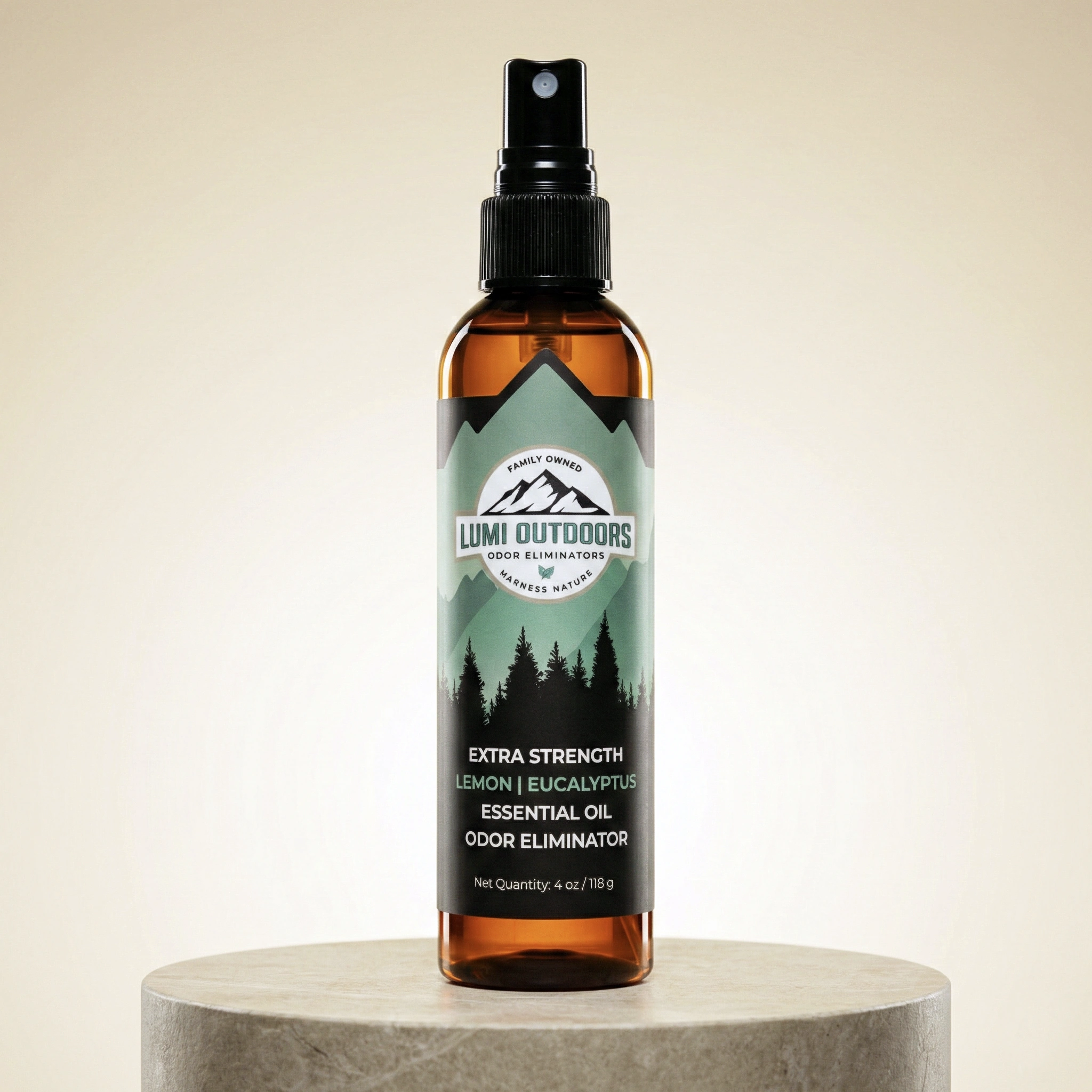
Join 1 Million+ Other People Who Chose Lumi to Conquer Their Shoe Odor.
- DESTROYS ODOR AT THE SOURCE, DOESN'T JUST MASK IT
- ALL-NATURAL & PLANT-BASED INGREDIENTS
- PROUDLY FAMILY-OWNED & MADE IN UTAH
- THE "FRESH CONFIDENCE" GUARANTEE