
Why Your Ultraboosts Still Stink After Washing (And the Primeknit Fix)
- The Machine Is the Problem Washing Ultraboosts drives bacteria deeper into the Primeknit weave and traps moisture in the Boost midsole — making the smell return faster than before.
- Baking Soda Only Masks It neutralizes surface odor for about 18 hours, then the smell returns — and the powder leaves residue trapped inside the knit fibers.
- The Spray Won the Test A plant-based enzyme spray applied after every wear kept odor gone past the 7-day testing window without affecting the Primeknit material.

So you threw your Ultraboosts in the washing machine. You used the delicate cycle, cold water, a mesh bag — you did everything "right." And they came out looking clean. But two days later, that same sour, locker-room smell crept back in.
Sound familiar? You're not alone, and you're not imagining it. The problem isn't your washing habits. The problem is Primeknit itself — and what happens to it inside that drum.
We wanted to find out once and for all what actually works on Ultraboost odor. So we grabbed three pairs with genuine, persistent stink and put the most popular methods to the test. Here's what happened.
Why Does Primeknit Trap Odor So Stubbornly?
Primeknit's woven, sock-like construction creates thousands of tiny fiber channels that pull moisture inward during activity. Once sweat is locked inside those channels, it feeds odor-causing bacteria in a dark, warm environment that's very hard to flush out — even with a full wash cycle.
Think of Primeknit like a thick wool sweater. Pull it apart and you'll see it's not a flat surface — it's a three-dimensional weave with actual depth to it. That depth is exactly what makes the shoe feel so good on your foot. But it's also exactly why odor is so hard to get rid of.
During a run or a long day on your feet, your foot can produce up to a quarter-liter of sweat. Most of that moisture wicks away through the Boost sole or evaporates. But a significant portion gets drawn into the Primeknit weave and stays there. The bacteria that cause that distinctive sour smell — primarily Brevibacterium and Staphylococcus species — thrive in that warm, moist environment. They colonize the inner layers of the knit structure, not just the surface.
A surface-level clean won't reach them. That's the core problem.
What You'll Need
- Cedar shoe trees
- Soft-bristled shoe brush
- Extra Strength Shoe Deodorizer Spray Check Price →
- Removable insoles (pulled out for separate treatment)
Does Washing an Ultraboost in the Machine Actually Make the Smell Worse?
Yes — machine washing Ultraboosts can make persistent odor worse over time by driving bacteria deeper into the Primeknit weave, distorting the knit tension, and trapping residual moisture inside the Boost midsole where it can't fully dry.
This was the most surprising part of our testing. We expected the machine-washed pair to come out neutral — maybe not perfect, but at least temporarily better. What we actually found was more complicated.
Here's what the washing machine does to a Primeknit upper:
- The agitation, even on a gentle cycle, stretches and relaxes the individual knit loops unevenly. You may not notice it visually right away, but over time the upper loses its structured shape. The heel cage starts to feel looser. The midfoot wrap softens in the wrong places.
- Hot or even warm water causes the adhesive bonds between the Primeknit upper and the Boost midsole to weaken. Adidas themselves recommend avoiding machine washing for this reason.
- The biggest issue: the Boost foam. That glorious, responsive white midsole is full of tiny expanded TPU beads. Water gets in. It does not get out quickly. We let our machine-washed pair dry for 48 hours in a warm room and the midsole was still retaining moisture — which means the conditions for bacterial growth were still very much active.
The smell came back within 72 hours of the machine wash. Every time.
Here's something most sneaker care guides completely skip: the smell usually isn't coming from the insole surface — it's coming from the footbed underneath. Pull your Ultraboost insoles out and smell the bare interior of the shoe. That foam footbed beneath the insole is often the primary bacterial zone, and it never gets treated if you always spray over the insole. Spray both surfaces separately, let them fully dry for at least two hours, then reassemble. That one step alone makes a bigger difference than a full wash cycle.
What Methods Did We Actually Test?

We tested three common methods head-to-head over two weeks: baking soda packing, machine washing on a delicate cycle, and a targeted natural spray. Each method was judged on odor elimination at 24 hours, impact on the Primeknit material, and whether the smell returned within 7 days.
Method 1: Baking Soda (The Classic "Grandma" Fix)
We packed the inside of one pair with baking soda overnight — a generous amount, the way most guides recommend. Shook it out in the morning. The shoes smelled noticeably better for about 18 hours. Then the smell came back, and it came back with a slightly musty undertone that wasn't there before.
The issue with baking soda on Primeknit is two-fold. First, the fine powder works its way into the weave and is nearly impossible to fully remove. A few days later, if the shoe got even slightly damp from normal wear, that trapped baking soda activated into a paste inside the fibers. Second, baking soda is a surface absorber. It doesn't reach the deeper layers of the knit where the bacteria are actually living. It neutralizes what's on the surface, gives you a false sense of victory, and that's it.
Result: Short-term improvement. No lasting fix. Residue left in knit structure.
Method 2: Machine Wash (Delicate Cycle, Cold Water, Mesh Bag)
We already covered why this is a trap, but the testing confirmed it clearly. The washed pair did smell cleaner immediately after drying. That's real. But the Boost midsole retained moisture for longer than expected, the smell returned by day three, and after two wash cycles we could already see slight distortion in the heel knit pattern — the loops were less uniform than before.
If you care about your Ultraboosts lasting, this is not a regular maintenance strategy. It's a one-way ticket to a worn-out upper faster than you paid for.
Result: Temporary fix. Material damage risk. Smell returned within 72 hours.
Method 3: Targeted Natural Spray (The One We Actually Recommend)
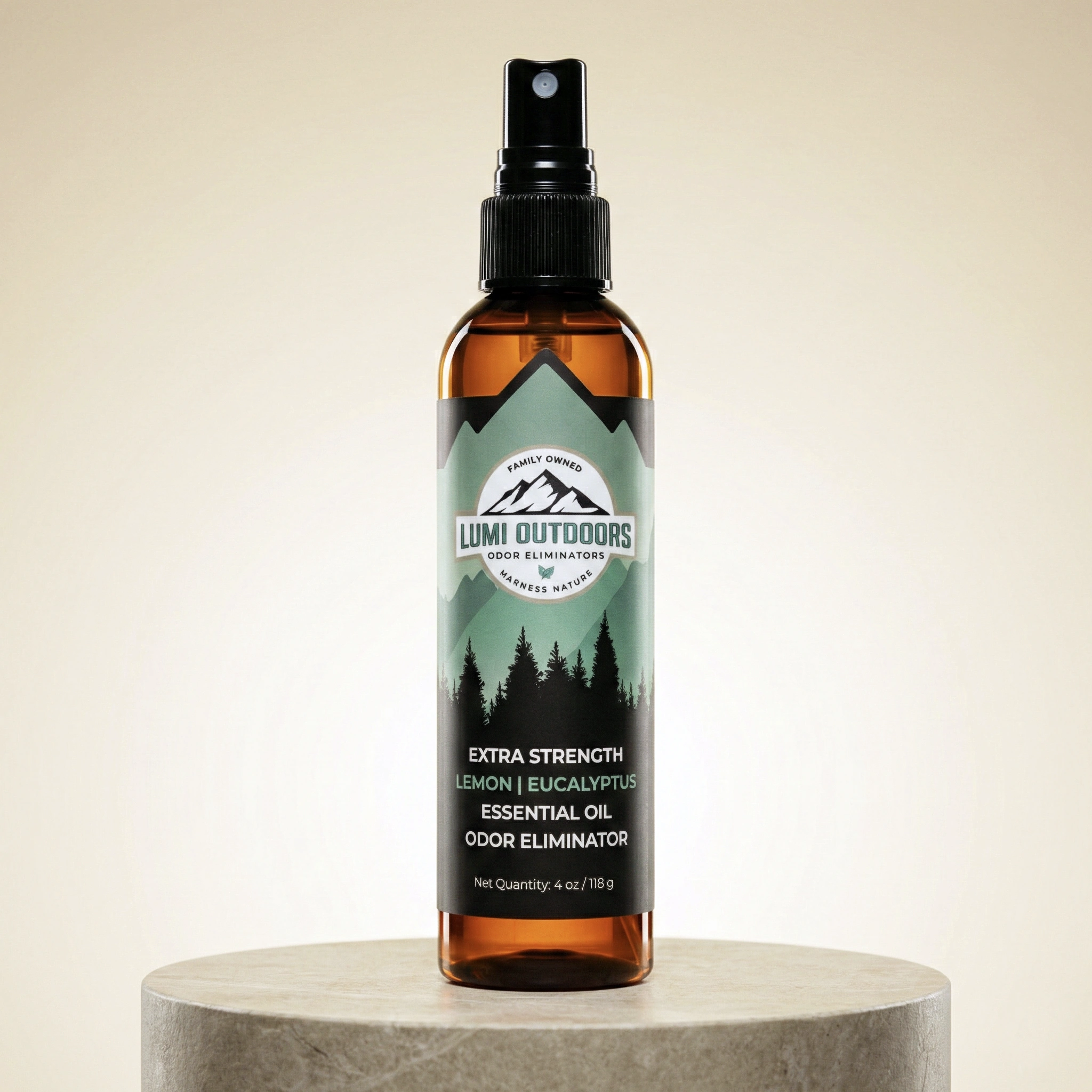
We used Lumi Outdoors' Extra Strength Shoe Deodorizer Spray on the third pair. Two sprays inside each shoe after every wear for seven days. No washing. No baking soda. Just spray, leave them to air out, and go.
By day two, the odor was noticeably reduced. By day five, both shoes smelled genuinely neutral — not masked by a strong fragrance, just clean. The Lemon & Eucalyptus scent is present right after spraying but fades within an hour. What's left is just... no smell. That's the goal.
The natural enzyme formula reaches into the fibers because it's a liquid that penetrates the same way sweat does — but instead of feeding bacteria, it breaks down the organic compounds that cause the odor in the first place. And because you're not introducing agitation or heat, the Primeknit structure stays exactly as it should.
We also tested it against smellier-than-average kicks. If you're dealing with serious entryway-level stench, the extra strength formula holds up. It's our best-selling option for a reason.
Result: Lasting odor elimination. Zero material impact. Smell stayed gone past the 7-day testing window.
We tested our natural spray head-to-head against the other methods for a week. The difference wasn't just in the smell — it was in whether the smell came back at all:
| Feature | Extra Strength Shoe Deodorizer Spray | Baking Soda / Machine Wash |
|---|---|---|
| Odor gone after 24 hours | Yes — noticeably reduced | Temporarily (baking soda) / Yes (wash) |
| Smell returns within 7 days | No — stayed neutral past 7 days | Yes — back within 72 hours |
| Safe for Primeknit fibers | Yes — no distortion or residue | No — baking soda leaves residue; washing distorts knit tension |
| Safe for Boost midsole | Yes — no discoloration | No — machine washing traps moisture in Boost foam |
| Effort required | 2 pumps after each wear | Full wash cycle or messy powder cleanup |
| Plant-based / natural ingredients | Yes — 100% plant-based formula | Baking soda: yes. Detergent: often synthetic chemicals |
What's the Proper Primeknit Care Routine to Prevent Odor?

The best Primeknit maintenance routine combines immediate post-wear spraying, proper air drying with the tongue pulled open, and a weekly cedar shoe tree rotation — avoiding any machine washing or heat drying entirely.
You don't need to overthink this. Here's the routine that actually works:
The Post-Wear Protocol (Daily)
Pull the tongue forward and open the shoe up as wide as possible after you take it off. This is more important than most people realize. Primeknit collapses when the shoe is unlaced loosely, which traps warm air and moisture inside. Opening it up lets airflow do its job.
Spray two pumps of the Extra Strength Shoe Deodorizer directly inside, aiming toward the toe box and the heel cup. Don't over-saturate. Two pumps per shoe is enough to coat the interior and penetrate the insole.
Insert Cedar Shoe Trees After Spraying
Once you've sprayed, insert cedar shoe trees. Cedar is a natural moisture absorber — it pulls residual dampness from the interior while simultaneously maintaining the shape of the Primeknit upper. This is especially important for the heel counter, which can start to collapse with repeated wear if it's always stored flat.
Cedar shoe trees work by drawing moisture out passively. They're not a substitute for the spray (they don't address odor-causing bacteria directly), but used together the combination is powerful. The spray neutralizes the source; the cedar manages ongoing moisture.
Surface Cleaning (Weekly)
Use a soft-bristled shoe brush and a tiny amount of mild soap diluted in water. Apply it with the brush to the exterior knit surface only — never scrub the Boost midsole aggressively, as it can yellow with certain soaps. Wipe off with a damp cloth. Let air dry completely before wearing again.
This keeps the upper looking clean without the risks of full submersion.
For runners also dealing with odor issues in other performance shoes, our testing on Saucony Ride freshness covers similar principles that apply across most knit-upper running shoes.
Nothing's perfect, and we want to be straight with you about what the spray can and can't do. Here's the honest breakdown:
- Odor stayed eliminated past the full 7-day test — not just masked
- Zero impact on Primeknit texture, color, or knit tension
- No residue left in fibers unlike baking soda
- Lemon & Eucalyptus scent fades cleanly — leaves neutrality, not perfume
- Safe for Boost foam, knit uppers, and rubber outsoles
- Requires daily consistency — skipping days after heavy wear lets odor rebuild
- Deeply set odor from years of neglect needs a multi-day reset before the routine kicks in
What If the Smell Is Already Deeply Set In?
For deeply embedded odor in Ultraboosts, a targeted "reset" protocol — removing and separately treating the insoles, applying extra strength spray to both the bare shoe interior and the insole surface, and allowing 24 hours of open-air drying — is the most effective first step before switching to a daily maintenance routine.
If you're reading this because your Ultraboosts already smell bad — like, properly offensive — the daily spray routine alone might take a few days longer to fully work. Here's the accelerated version:
- Pull the insoles out. Most Ultraboost insoles are removable. The underside of the insole and the bare footbed beneath it are often the primary bacterial zones, but they're the parts that never get treated in a normal cleaning routine. Treat them separately.
- Spray both surfaces directly. Give the bare interior of the shoe two good pumps. Give the underside of the insole one pump. Let both dry completely — minimum two hours, ideally overnight.
- Open-air drying in a ventilated space. A sunny windowsill works well. UV light has a natural neutralizing effect on surface bacteria. Don't use a direct heat source like a radiator or a shoe dryer — heat can warp both the Boost foam and the Primeknit upper.
- Reassemble and switch to daily maintenance. After the reset, go to two pumps per shoe after every wear. Most users see fully neutral results within 5-7 days of consistent use.
The science behind why this works is straightforward. According to research on bacterial foot odor, the compounds that cause the worst smells — isovaleric acid and methanethiol — are byproducts of bacterial metabolism of sweat components. Natural enzyme-based sprays break down these organic molecules directly, rather than covering them with fragrance. That's the difference between a real fix and a temporary mask.
If you've been going the DIY route — vinegar, baking soda, freezer tricks — and none of it stuck, you might also want to read about why so many people are moving away from DIY fixes entirely. The conclusion might not surprise you after reading this far.
Is the Lumi Natural Spray Safe for the Primeknit Upper and Boost Midsole?
Yes — the plant-based, enzyme formula in Lumi's Extra Strength Shoe Deodorizer Spray is safe for Primeknit uppers, Boost foam, and rubber outsoles. It contains no bleach, no harsh solvents, and no alcohol concentrations that would dry out or discolor knit fibers.
This was a real concern going into testing. Primeknit is a delicate material. We've seen people ruin the texture of their uppers with spray-on products that contain high concentrations of alcohol or aggressive surfactants. The fibers go stiff. The color fades unevenly. You end up with fresh-smelling shoes that look terrible.
The Lumi spray is 100% plant-based with no parabens, no aluminum, and no synthetic fragrance compounds. We sprayed it on a white pair and a dark pair. No discoloration on either. No stiffening of the knit. The Boost midsole stayed pristine.
For anyone curious about how this approach works on leather and premium materials too, our Red Wing Iron Ranger testing covers the material-safety angle in depth. The principles are the same: the right formula won't hurt what it touches.
If you want to tackle both shoes and the surrounding air in your mudroom or entryway — because let's be honest, the smell doesn't always stay in the shoe — the Lavender Vanilla Room Spray pairs really well with the shoe spray. It uses the same plant-derived approach to neutralize odor molecules in the air rather than just masking them with a synthetic fog.
Still fighting the same smell that comes back two days after washing?
Join 1 Million+ Other People Who Chose Lumi to Conquer Their Shoe Odor.
- DESTROYS ODOR AT THE SOURCE, DOESN'T JUST MASK IT
- ALL-NATURAL & PLANT-BASED INGREDIENTS
- PROUDLY FAMILY-OWNED & MADE IN UTAH
- THE "FRESH CONFIDENCE" GUARANTEE