

3 Easy Steps to Deodorize Slippers for Gamers Without Using the Wash
- Skip the wash Washing machines damage slipper materials and require 24 hours of drying time—neither of which you need when a spray takes two minutes.
- The insole is the problem Pulling out the insole and treating it separately is the step most people skip, and it's the reason their slippers never smell fully fresh.
- Spray is the zero-downtime winner A fast-evaporating plant-based spray eliminates odor at the source and dries in under 90 seconds, so slippers go right back on.

You know the smell. It creeps in around hour three of a gaming session. The slippers that started out soft and comfortable have been quietly marinating in warm, trapped sweat since the last time someone aired this room out. Nobody wants to say anything. But everyone in the house knows.
Here's the thing about gamer slippers specifically: they're worn for longer, more sedentary stretches than almost any other footwear. Your kid's cleats take a beating during a two-hour soccer practice, but then they come off. Gaming slippers? Those can be on for six, eight, ten hours straight—sometimes every single day. That continuous warmth and moisture creates a perfect environment for odor to build up deep inside the lining, not just on the surface.
Tossing them in the wash feels like the obvious answer, but it's actually the worst move for most slippers. Memory foam insoles can crumble. Soft linings pill or shrink. And the drying time alone—24 hours minimum if you want them fully dry—means your gamer is either playing barefoot or wearing damp slippers, which just makes the smell worse. Here's why washing smelly shoes often backfires entirely.
So what actually works? These three steps. They're fast, they're wash-free, and you can do them right at the desk.
1. Pull Out the Insoles and Let Them Breathe
Removing the insoles and airing them separately for 15–30 minutes before treating them is the single most effective prep step, because the insole holds 80% of the sweat and odor and can't be reached by surface-level sprays when it's still seated in the shoe.
Most gamer slippers have a removable insole—that thick, cushioned layer at the bottom. Pull it out. You'll probably notice the smell gets significantly stronger the moment you do. That's normal. That's just where most of it has been living.
Set the insoles face-up on a hard surface. If there's visible moisture, pat them down with a dry cloth. Then just let them sit while you move through the next steps. Air exposure alone breaks the cycle of trapped humidity. You don't need to do anything fancy here—the goal is simply to separate the insole from the shoe body so both surfaces can be treated and dried independently.
Here's something most guides won't tell you: cedar shoe inserts placed inside slippers overnight aren't just for storage—the cedar actively draws out residual moisture left behind after a spray treatment, which is what causes odor to return faster than it should. Use the spray after your session, then slip a pair of cedar inserts in before bed. You'll notice the next-day freshness is dramatically better than spray alone.
2. Sprinkle Baking Soda Into the Slipper Shell

A light dusting of baking soda inside the empty slipper shell absorbs residual moisture and neutralizes acid-based odor compounds while the insoles are out—no water required, no drying time needed.
With the insoles removed, you're left with the shell of the slipper—that inner lining that your foot has been pressing against for hours. Shake a small amount of baking soda directly into the slipper. You don't need much. A teaspoon or so per slipper is plenty. Tip it around so the powder coats the toe box and heel area, then let it sit for at least 10–15 minutes.
Baking soda works by acting as a pH buffer, pulling acidic odor molecules out of the fabric and neutralizing them rather than just covering them up. After the 10–15 minutes are up, shake the baking soda out over a trash can and give the inside a quick wipe with a dry cloth. The interior will smell noticeably fresher before you even get to the next step.
One note: skip this step if the insoles are made of gel or coated foam—baking soda can leave a fine residue that's hard to fully remove from those materials. Plain foam or fabric-lined insoles are fine.
3. Spray a Fast-Evaporating Shoe Deodorizer—This Is the Zero-Downtime Winner
A plant-based spray deodorizer applied to both the insole and the interior shell eliminates odor at the source and dries within minutes, making it the only method that lets slippers go back on immediately after treatment.
This is the step that actually solves the problem long-term. Baking soda absorbs and neutralizes, but a quality spray gets into the fabric fibers and addresses the root cause of the odor. And unlike washing, it takes two minutes and doesn't require any drying time.
If you want to skip the DIY steps entirely and just go straight to this, we don't blame you. A good spray does everything the previous steps do, faster and with less effort.
You just need one that actually works on fabric and foam without leaving a sticky residue or an overwhelming chemical smell—something that matters a lot in an enclosed gaming space where the scent lingers. Gamers and the people who share a home with them often prefer something calming over something aggressively citrusy.
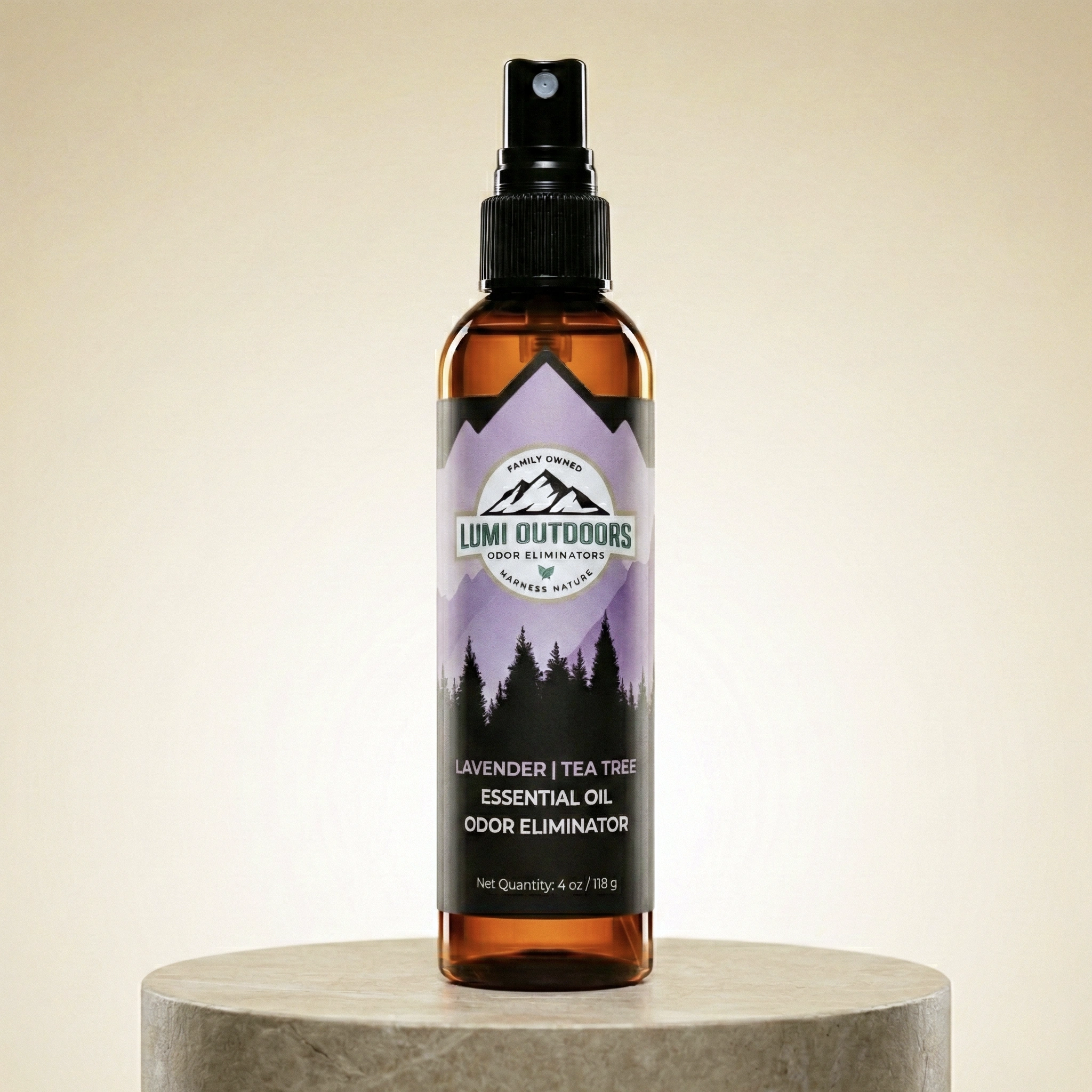
If your gamer is sensitive to strong scents, or if you just want something that doesn't smell like a cleaning supply closet, the Natural Lavender Tea Tree Shoe Deodorizer Spray is worth keeping right at the desk. The lavender cuts the odor without announcing itself from across the room. Two or three sprays inside each slipper, let it sit for 60 seconds, then replace the insoles. Done.
For tougher situations—slippers that have been worn hard for weeks without treatment, or any footwear with really stubborn odor—the Extra Strength Shoe Deodorizer Spray is the one to reach for. It uses a lemon eucalyptus formula and is the best-selling option for a reason. It's safe on all materials, plant-based, and built for cases where gentle just won't cut it.
If you want the zero-effort, zero-downtime solution that handles both daily maintenance and deep odor without any of the prep work above, this is what we recommend:
What You'll Need
- Baking soda
- Dry cloth or paper towel
- Natural Lavender Tea Tree Shoe Deodorizer Spray Check Price →
- Cedar shoe inserts (for overnight storage)
We tested natural sprays against the common aerosol brands you find at the drugstore. The chemistry isn't even close—plant-based formulas work on the actual odor compounds, not just the air around the shoe.
| Feature | Natural Lavender Tea Tree Shoe Deodorizer Spray | Drugstore Aerosol Spray |
|---|---|---|
| Ready to wear after treatment | 60–90 seconds | 5–10 minutes (wet residue) |
| Odor elimination method | Neutralizes odor at the source | Masks with synthetic fragrance |
| Safe on foam & fabric linings | Yes—all materials | Can degrade foam over time |
| Scent profile | Calming lavender & tea tree | Synthetic floral or chemical |
| Plant-based ingredients | 100% plant-derived | Synthetic chemicals |
| Price per bottle | Slightly higher upfront | Cheaper per can |
How to Apply the Spray Correctly at the Desk (The Application Guide)
For best results, hold the spray bottle 6–8 inches from the opening of the slipper, apply 2–3 pumps to the interior shell and 1–2 pumps directly onto the insole surface, then allow 60–90 seconds before replacing the insole and wearing.
A lot of people spray once on top of the insole and wonder why it didn't work. Application technique actually matters here. Here's the desk-side routine:
- Remove the insoles and lay them face-up on your desk or a nearby surface
- Hold the bottle upright and spray 2–3 pumps into the interior shell, angling toward the toe box and heel where odor concentrates
- Spray 1–2 pumps directly onto the top surface of each insole
- Let everything air for 60–90 seconds—this is when the fast-evaporating formula is doing its work
- Replace the insoles and you're ready to go
The whole process takes about three minutes. You don't need to leave the room. You don't need gloves. You don't need to wait until laundry day. And you can do it every day without worrying about damaging the slipper materials, because plant-based sprays are safe for foam, fabric, and synthetic linings.
For anyone curious about whether washing ever makes sense for other types of footwear, this guide on gym shoes explains why the washing machine often creates more problems than it solves.
Why Do Gaming Slippers Smell So Much Worse Than Regular Shoes?

Gaming slippers smell worse than most shoes because they're worn in warm, sedentary conditions for extended periods without air exposure—this creates a humid microenvironment inside the slipper that accelerates odor buildup significantly faster than active footwear worn outdoors.
Most outdoor shoes get natural air exposure just by being outside. The movement pumps fresh air through the shoe with every step. Gaming slippers get none of that. They sit still in a warm room, often in a space with limited air circulation, and they don't come off for hours at a time.
The sweat itself is also different. Active sweat from running or playing sports is more dilute. The kind of sweat produced during long, sedentary periods in a warm room tends to be more concentrated, and it pools at the heel and toe areas instead of being distributed through movement. That's why the smell in gaming slippers is often more intense and more localized than in athletic shoes.
The medical term for foot odor is bromodosis, and it's caused by bacteria that thrive in warm, moist environments—exactly what a worn slipper provides. The good news is that breaking that moisture cycle, which is exactly what these three steps do, stops the process at the source rather than just covering it up.
You might also want to check out why shoes worn without socks develop odor so much faster—the same principle applies to slippers worn directly on bare feet.
Nothing about this is perfect, and the DIY methods do take a bit of consistency to maintain. Here's an honest look at what works well and what has limitations:
- Works in under 90 seconds with zero drying time
- Safe on all slipper materials including memory foam and soft linings
- Calming scent won't overwhelm a small gaming space
- Plant-based formula is safe for the whole family
- Can be used daily without material degradation
- The DIY baking soda steps require consistency—skipping them means slower results on heavily soiled slippers
- Slightly higher upfront cost than generic drugstore aerosols
How Often Should You Deodorize Gaming Slippers?
For slippers worn during daily gaming sessions of 3+ hours, a quick spray treatment every 2–3 days prevents odor from building up to the point where it becomes embedded in the material. Once a week at minimum is needed to stay ahead of the smell.
Think of it like brushing your teeth. You don't wait until your mouth feels bad to brush—you do it regularly to prevent the problem. The same idea applies here. A 2-minute spray session every couple of days takes almost no effort and keeps the slippers genuinely fresh rather than just temporarily masked.
If the slippers are already at the point where the smell is strong and noticeable, start with the full three-step process: insoles out, baking soda treatment, then spray. After that initial reset, the regular spray routine is enough for maintenance.
Keep a bottle somewhere visible in the gaming space—on the desk, on a shelf nearby, or next to the charging station. Out of sight means out of mind, and the whole system only works if it's easy to reach.
Tired of shoe odor? We recommend:
Join 1 Million+ Other People Who Chose Lumi to Conquer Their Shoe Odor.
- DESTROYS ODOR AT THE SOURCE, DOESN'T JUST MASK IT
- ALL-NATURAL & PLANT-BASED INGREDIENTS
- PROUDLY FAMILY-OWNED & MADE IN UTAH
- THE "FRESH CONFIDENCE" GUARANTEE