
Why Does My Shoe Odor Keep Coming Back After Treatment?
- It's not the product — it's the depth Most sprays only reach the top few millimeters of your insole foam. Bacteria survive deeper in biofilm colonies and reactivate the moment your shoe warms up.
- Moisture triggers the comeback Dormant bacteria don't die when shoes dry out — they wait. Sweat from your next wear rehydrates the colony and restarts odor production within minutes.
- Fix both sides or fix neither You need to eliminate existing colonies and cut off their moisture supply simultaneously. Treating one without the other is why the smell always returns.

Shoe odor keeps coming back because most treatments only reach surface-level bacteria — the colonies buried deep in your insole foam and mesh survive, go dormant when dry, and reactivate the moment you put your shoes back on. It's not that the spray or powder "stopped working." It's that it never reached the actual problem in the first place.
Here's what actually stops the rebound cycle — and why the fix is less about which product you use and more about how you use it.
Why Does Shoe Odor Come Back After Treatment?
Shoe odor returns because bacteria form protective biofilms inside porous shoe materials that standard sprays and powders can't fully penetrate. When your shoe dries out, those colonies become dormant — not dead — and reactivate within minutes of warmth and moisture returning.
The bacteria responsible for that signature foot smell — primarily Brevibacterium and Staphylococcus epidermidis — don't just sit on the surface waiting to be wiped away. According to research published in the NIH's PubMed database, bacteria in moist, protein-rich environments (like shoes, which get soaked in sweat that contains amino acids) rapidly form biofilms: structured communities encased in a sticky, self-produced matrix. That matrix acts like a force field. It deflects mild cleaners, essential oils, and the brief contact time of a shoe spray.
That's the real problem.
The biofilm isn't just a shield — it's a survival mechanism. When the environment dries out (say, overnight after you spray), the outer cells of the biofilm die off. But the inner colony enters a dormant, spore-like state. The moment you slide your foot back in and your shoe warms up to 98°F while your sweat glands get going, those dormant bacteria rehydrate and resume producing isovaleric acid — the compound responsible for that classic "stale locker room" smell — within about 15 minutes. This is why the odor often seems to come back before you've even finished your commute.
Porous materials make this dramatically worse. Foam midsoles, mesh uppers, and fabric liners are basically bacterial condominiums — lots of surface area, lots of hidden pockets, poor airflow. A surface spray applied at arm's length might saturate the top 2-3mm of an insole. A thick foam insole is often 10-15mm deep. The math doesn't favor the spray.
Why Do Common "Fixes" Like Freezing or Baking Soda Fail to Last?
Freezing shoes slows bacterial metabolism but doesn't kill the colonies — they resume activity once the shoe warms back up. Baking soda neutralizes the acidic odor compounds already present but doesn't reach the bacteria still producing them. Both are surface interventions against a deep-tissue problem.
The freezing method gets a lot of attention online, and it does work — briefly. Cold temperatures suppress bacterial activity, and the 24-hour freeze feels satisfying. But the science on freezing shoes shows that most odor-causing bacteria are not killed by household freezer temperatures (around 0°F / -18°C). They're paused. Once your shoe returns to room temperature, the biofilm picks up exactly where it left off.
Baking soda is genuinely useful for fresh shoes with mild smells. It's alkaline (pH ~8.3), which neutralizes the acidic isovaleric acid sitting on the insole surface. But it doesn't penetrate the foam, it doesn't disrupt biofilms, and it doesn't address bacterial metabolism. You're treating the symptom, not the source.
Vinegar gets recommended a lot too — but it can actually make things worse in some cases. The acidic pH disrupts some surface bacteria, but the chemical reaction between vinegar and sweat residue can produce new odor compounds that are harder to clear than the original smell. Worth knowing before you reach for the bottle.
Most people spray their shoes and immediately put them back in a closed closet or gym bag — that's the worst possible move. A closed, dark space maintains the humidity the spray is trying to eliminate. After treating shoes, leave them open-side-up in a ventilated area for a minimum of 4 hours before storing. Better yet, point a small fan at them for 30 minutes. The airflow does more work than the spray in terms of actual biofilm disruption.
How Do You Actually Break the Rebound Cycle?

Breaking the rebound cycle requires two things happening simultaneously: neutralizing odor with something that can penetrate into the foam, and removing the moisture that triggers bacterial reactivation. Neither step works reliably without the other.
The key is the "double-down" approach — treating the shoe from the inside out while also cutting off the moisture supply that bacteria need to reactivate. Here's what that looks like in practice:
- Pull the insoles out and treat them separately. This is the single most overlooked step. Most people spray the inside of their shoe with the insole still in, which means the insole's underside — where biofilm is densest — never gets treated.
- Apply powder before wearing to create a moisture-hostile environment from the start. If bacteria can't access sweat, they can't metabolize it into odor compounds. A foot powder applied directly to clean, dry feet (not just the shoe) intercepts the moisture before it saturates the foam.
- Allow 24 hours of true drying time between wears. This is the rotation principle — and rotating two pairs of boots or shoes really does work, specifically because foam needs a full 24 hours to release moisture, not the 8-12 hours most people give it between wearing and re-wearing.
- Use cedar shoe trees overnight, not just for shape. Cedar is hygroscopic — it actively draws moisture out of the foam, dropping the humidity inside the shoe to a level where bacterial reactivation slows dramatically.
For a spray-and-powder system that handles both sides of this — neutralizing active odor and blocking moisture before it starts — the Lumi Natural Foot Powder and Extra Strength Shoe Deodorizer Spray bundle is what I'd point someone toward if they've already burned through three other products and nothing stuck.
That said, the cedar + rotation approach above is a genuine standalone solution for mild-to-moderate cases. No purchase required.
When Should You Just Throw the Shoes Away?
If your shoes have a persistent damp feeling even after 48+ hours of drying, visible dark staining on the insole that won't lift, or a smell that returns within 10 minutes of treatment, the bacterial colonization has likely reached the structural foam — and no surface treatment will fix that.
There's a point of diminishing returns with heavily colonized shoes, and most people hit it long before they're willing to admit it. The telltale signs aren't just smell — they're structural. Foam that's been repeatedly saturated with sweat and re-dried starts to break down, creating more porous channels for bacteria to colonize. The EVA foam in most running shoes typically has a functional life of 300-500 miles of use anyway; a shoe that's been worn daily for two years in a sweaty environment has probably hit that wall physically, not just odor-wise.
If you've done the full protocol — pulled insoles, treated separately, used powder consistently, rotated pairs, used cedar — and the smell is still back within an hour of wearing, that's your sign.
Starting fresh with a preventative routine from day one is far easier than trying to rehabilitate a shoe that's been colonized for months. Apply foot powder before the first wear of new shoes, store them with cedar shoe trees, and rotate pairs if you're wearing them more than 3-4 days per week. The advanced hacks for "unfixable" footwear are worth bookmarking for when a favorite pair is on the edge — but prevention beats rescue every time.
One final thing most people skip: replace insoles before the shoes smell, not after. A fresh insole every 6-12 months in heavily worn shoes gives bacteria nowhere to establish a foothold — the new foam hasn't been broken down into the porous, sweat-saturated material that biofilms love.
Tired of shoe odor that comes back before noon?
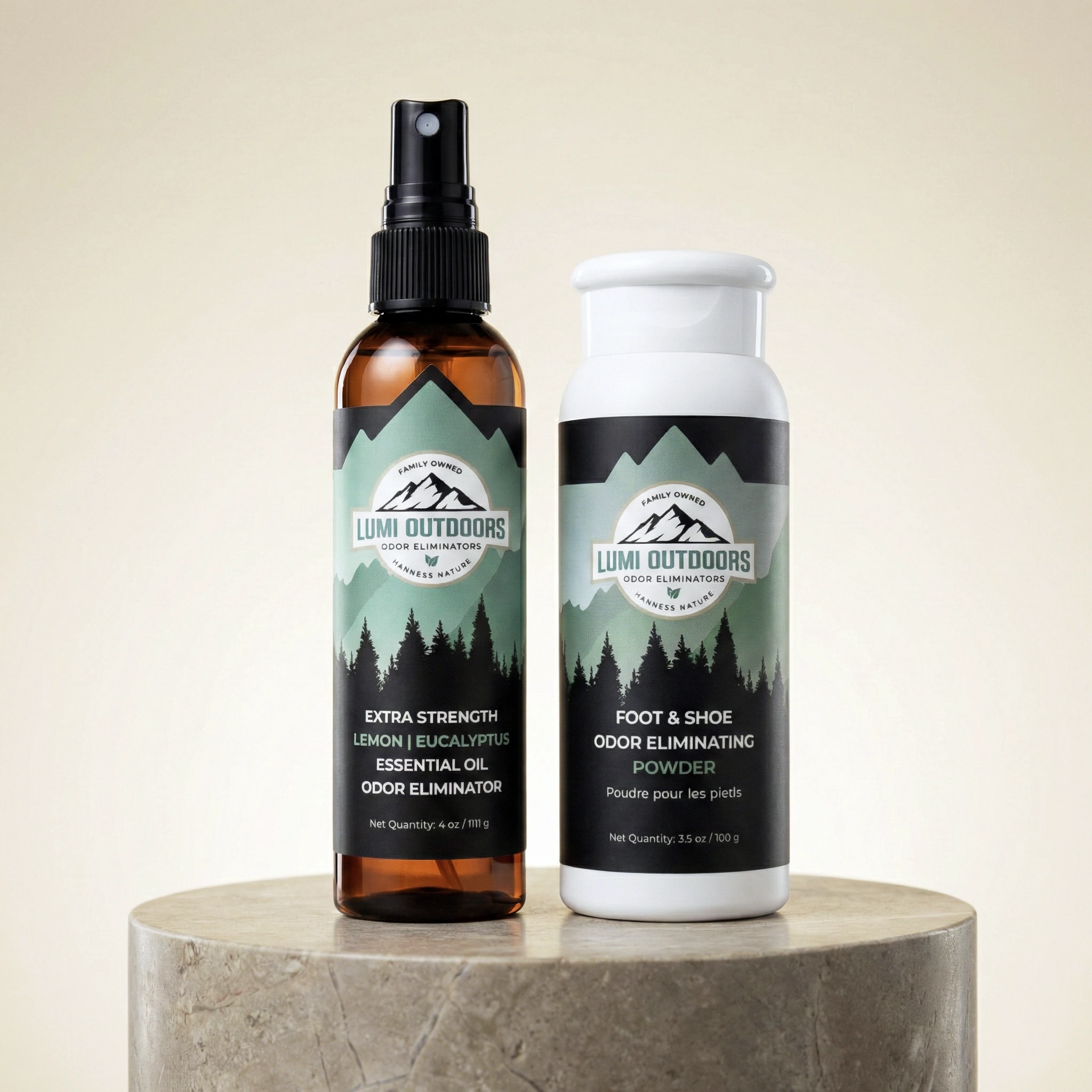
Join 1 Million+ Other People Who Chose Lumi to Conquer Their Shoe Odor.
- THE ULTIMATE 1-2 PUNCH AGAINST ODOR
- A COMPLETE KIT FOR SHOES, BAGS & GEAR
- PROUDLY FAMILY-OWNED & MADE IN UTAH
- THE "FRESH CONFIDENCE" GUARANTEE