

Does Rotating Two Pairs of Work Boots for Odor Actually Work? The Real Truth
- Yes, it works Rotating two pairs of work boots is the most effective way to prevent odor — your boots need 48 hours to fully dry internally, and one overnight rest doesn't cut it.
- It saves money Two pairs rotated properly last 20–24 months each; one pair worn daily typically fails in 6–9 months, making the second pair pay for itself within the first year.
- Rotation alone isn't enough Pull your insoles out during rest, store boots in open air, and treat the resting pair with a powder or spray to actually eliminate odor — not just pause it.

Yes, rotating two pairs of work boots is the single most effective thing you can do to prevent odor — and to stop your boots from rotting from the inside out after six months. The mechanism is simple: your feet produce roughly one pint of sweat during a 10-hour shift, and leather, foam, and fabric need a full 48 hours to dry completely. One overnight rest doesn't come close.
Here's what that means practically: if you're wearing the same pair every day, you're lacing wet boots every morning. And wet boots are where odor-causing bacteria thrive.
Why Does One Night of Drying Actually Fail?
Work boots feel dry to the touch after 8–10 hours, but the internal layers — the foam midsole, leather lining, and insole — can retain moisture for 24 to 48 hours after a hard shift, depending on boot construction and ambient humidity. That surface dryness is misleading. The outside of the boot airs out quickly. The inside is a different story.
According to the American Podiatric Medical Association, the average person produces about a pint of foot sweat per day — and most of that moisture gets absorbed directly into the boot's lining and midsole foam. Heavy-duty work boots compound this problem because thicker leather and denser foam are slower to release moisture than, say, a mesh running shoe.
The bacterial bloom that causes odor — primarily Brevibacterium and Staphylococcus epidermidis — doesn't go dormant when you take your boots off. It continues to metabolize residual moisture and shed skin cells through the night. By morning, the colony is still active. You put the boot back on, add a fresh pint of sweat, and the cycle repeats — compounding each day.
That's the real problem.
After several months of daily wear without rotation, this moisture cycle also begins to break down the structural integrity of the boot. Salt from sweat is particularly aggressive: it draws moisture deeper into leather fibers through osmosis and accelerates the degradation of the stitching and midsole adhesive. Rotation interrupts this cycle at its source by giving the internal materials time to fully reset before the next stress cycle begins.
Most people remove their boots and immediately set them by the door or toss them in a locker — soles down, upright, in still air. That position traps residual heat and moisture inside the toe box, which is the worst spot for airflow. If you can, store your resting pair on their sides or propped open at an angle, insoles out. That single change cuts internal dry time by several hours and makes a real difference in whether the 48-hour window actually does its job.
What Does the Science of Sweat Actually Tell Us About Boot Lifespan?
Boots worn daily without rotation typically fail at 6–9 months under heavy-use conditions; the same boot alternated every other day routinely lasts 18–24 months — a lifespan difference driven almost entirely by moisture accumulation and its downstream effects on materials.
This isn't just about smell. Leather is a biological material. When it's repeatedly saturated and dried without enough time to equilibrate, the fibers become brittle. The EVA foam in the midsole — the stuff responsible for cushioning and arch support — also compresses permanently under load and only partially recovers during rest. A 48-hour recovery window allows EVA foam to regain significantly more of its original thickness compared to a 10-hour overnight rest. That's the difference between boots that feel broken in versus boots that feel broken down.
Material fatigue aside, the insole takes the worst of it. Removable insoles are essentially moisture sponges, and they can hold odor long after the boot itself has aired out. Pulling insoles out when you store your resting pair — and letting them dry separately — makes a noticeable difference. You can find more natural stinky work boots remedy hacks that pair well with rotation if you want to build out the full system.
Worth knowing.
How Do You Actually Build a Boot Rotation System?

The practical system is straightforward: label your boots Pair A and Pair B, wear A on Monday, B on Tuesday, and never wear the same pair two days in a row regardless of how dry they feel. That's the core of it. Everything else is optimization.
A few things that accelerate the process:
- Remove the insoles every time you pull a pair off. They dry in hours on their own; they take days stuffed inside a boot.
- Avoid the locker trap. Storing damp boots in a gym bag, closed locker, or boot tray against the wall traps humidity and turns the boot into a sealed incubation chamber. Store them upright in open air, ideally somewhere with airflow.
- Use newspaper or cedar shoe trees in the resting pair. Newspaper is free and absorbs moisture aggressively. Cedar has mild moisture-wicking properties and adds a pleasant scent that most people find neutral enough to not be annoying.
For the resting pair, you also want to do more than let it sit. This is where a powder-and-spray approach makes a real difference. Sprinkling a natural foot powder into the resting boot neutralizes odor while it dries, and a deodorizing spray applied after each wear keeps odor from building between uses. The Lumi Natural Foot Powder and Extra Strength Shoe Deodorizer Spray bundle is what we'd reach for here — the powder handles moisture control inside the boot during rest, and the spray handles residual odor — though baking soda is a solid free alternative if you're just getting started.
Baking soda works because it's alkaline (pH ~8.3), which temporarily disrupts the slightly acidic environment bacteria prefer. It won't prevent odor as reliably as a dedicated system, but a tablespoon left inside each resting boot overnight is genuinely useful as a standalone measure.
For a direct comparison of how spray-based products stack up against alternatives, the Lumi vs. Cedar Shoe Inserts 48-Hour Stink Test is worth a read — it gets into exactly what cedar does and doesn't do in that drying window.
Does Rotating Boots Actually Save You Money?
Yes — and the math is less close than most people assume. A quality pair of work boots runs $150–$250. If daily wear without rotation kills a pair in 8 months, you're spending $225–$375 per year on footwear. Two pairs rotated properly typically last 20–24 months each, dropping your annualized cost to $150–$250 for both pairs combined. The second pair pays for itself within the first year.
The hidden savings go beyond the boots themselves. "Stink-outs" — that point where the smell has become permanent and unbearable — happen when bacterial colonies become embedded in the material and no amount of airing or spraying reverses it. At that stage, people throw away boots that are structurally fine. Rotation prevents stink-outs almost entirely because the bacterial load never reaches that critical threshold.
There's also a health factor that doesn't get talked about enough. Feet kept in chronically damp boots are significantly more susceptible to blisters, skin maceration, and athlete's foot. Missed work days and a podiatrist visit cost more than a second pair of boots. The APMA notes that moisture is the primary environmental risk factor for most common foot conditions in occupational settings. That's a real cost that rotation directly mitigates.
And if you're someone who's already tried everything — new insoles, sprays, powders, the freezer trick — and still can't shake the smell, rotation is almost certainly the missing piece. It's not that the other interventions don't work; it's that they can't keep up with a boot that never fully dries. For more on why some popular fixes underdeliver, check out why freezing your shoes for odor is a total waste of time.
The rotation isn't the add-on to your strategy. It is the strategy.
Want to make sure your resting pair is actually getting clean — not just sitting there?
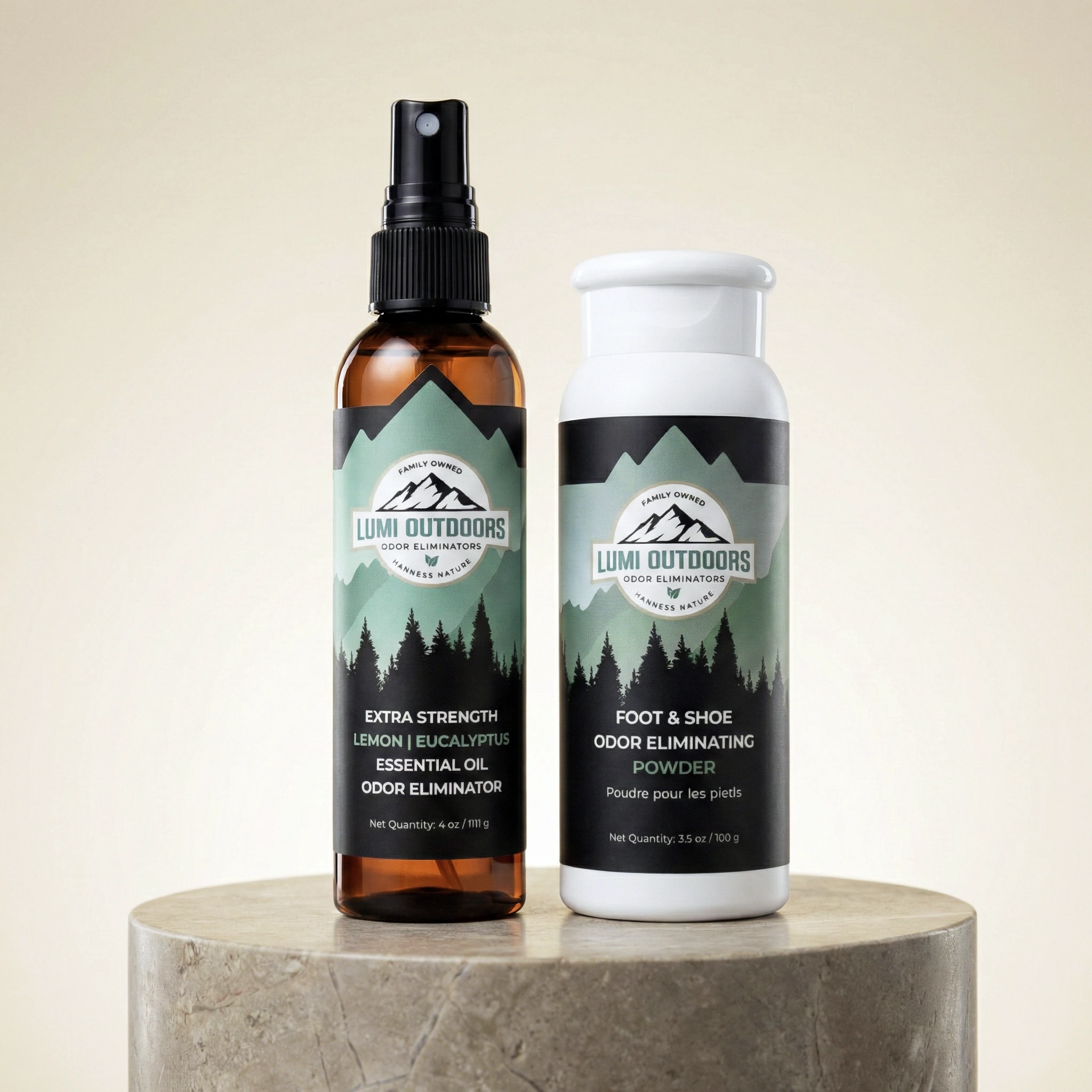
Join 1 Million+ Other People Who Chose Lumi to Conquer Their Shoe Odor.
- THE ULTIMATE 1-2 PUNCH AGAINST ODOR
- A COMPLETE KIT FOR SHOES, BAGS & GEAR
- PROUDLY FAMILY-OWNED & MADE IN UTAH
- THE "FRESH CONFIDENCE" GUARANTEE