
Does Freezing Shoes Actually Get Rid of Smell? Here Is the Science
- Freezing Does Not Work Home freezers pause bacterial activity but don't kill the bacteria — the smell returns within one wear.
- Moisture Is the Real Enemy Controlling moisture with powder or shoe rotation is the only long-term fix that actually prevents odor from forming.
- Freezing Can Damage Your Shoes Repeated freezing makes midsoles brittle and weakens adhesive bonds, shortening the life of expensive footwear.

Freezing your shoes does not eliminate odor. It temporarily slows the bacteria causing the smell — but the moment your shoes warm back up, those same bacteria wake up and get right back to work. The odor returns within 10–20 minutes of wear. You haven't fixed anything; you've just hit pause.
The freezing hack has been floating around the internet for years, shared by well-meaning people who noticed a short-lived improvement. That brief freshness is real. But it's not what you think it is. Here's what's actually happening — and what permanently works instead.
Does Freezing Your Shoes Actually Work to Remove Odor?
No — freezing shoes does not remove shoe odor. It creates a temporary dormancy in odor-causing bacteria, but does not eliminate them. Once your shoes return to room temperature, bacterial activity resumes and the smell returns, often within one wear. Freezing is a pause button, not a solution.
The confusion is understandable. Pull your shoes out of the freezer and they genuinely smell better — for a while. That's because bacterial metabolism halts below roughly 32°F (0°C). No metabolic activity means no new odor compounds being produced. So yes, frozen shoes smell temporarily fresher. But the bacteria responsible — primarily Brevibacterium and Staphylococcus epidermidis — are still very much alive in there.
Here's the kicker: most home freezers sit right at 0°F (-18°C). To actually destroy odor-causing bacteria, you'd need temperatures below -94°F (-70°C) for an extended period — conditions you'd find in a laboratory cryogenic freezer, not next to your frozen peas.
So the bacteria survive. They go dormant. And the moment your foot warms the shoe back up, they defrost right alongside it and resume producing the isovaleric acid and methanethiol compounds that create that distinctive, deeply unpleasant smell. You didn't kill the colony — you gave it a nap.
Why Do Bacteria Survive the Freezer? (The Science of Dormancy)
Odor-causing shoe bacteria are dormant-state survivors — they've evolved to withstand temperature extremes that would kill less adapted microbes. Standard household freezer temperatures (0°F / -18°C) fall far short of the threshold needed to rupture bacterial cell walls or destroy the proteins keeping them alive.
Brevibacterium linens — the main culprit behind that sharp, cheese-like foot odor — is the same genus of bacteria used to age Limburger and Muenster cheese. These organisms thrive in exactly the kind of warm, moist, protein-rich environments that exist inside a worn shoe. They're remarkably resilient to cold, entering a metabolically inactive state rather than dying when temperatures drop.
According to microbiological research cited by the American Society for Microbiology, many bacteria can survive freezing indefinitely when the freezing happens gradually — which is exactly what happens in a home freezer. Rapid, deep freezing can damage cell membranes, but slow freezing allows bacteria to protect themselves with cryoprotective compounds.
There's also the moisture problem. When you pull frozen shoes out of the freezer, condensation forms immediately as cold surfaces meet warm air. That moisture — sitting inside the shoe's fabric and foam — creates a freshly humidified environment. Perfect conditions for a bacterial population that just woke up from a long sleep.
The smell isn't just bacteria, either. It's the byproducts bacteria leave behind: dead skin cells, sweat residue, and organic compounds already embedded in the shoe's material. Freezing doesn't touch any of those. They stay put, providing a ready food source the moment temperatures rise.
That's the real problem.
Most people treat the shoe — but the real reset happens at the sock level. Switching from 100% cotton socks to a merino wool or moisture-wicking synthetic blend can reduce in-shoe moisture by up to 40%, according to textile research. Cotton holds sweat against your skin; merino pulls it away. If you're fighting chronic shoe odor and haven't changed your socks, that's the first fix, not a spray.
Does Freezing Shoes Actually Damage the Material?
Yes — repeated freezing can damage certain shoe materials, particularly those with adhesive bonds, rubber midsoles, or natural leather uppers. The risk varies by shoe construction, but it's real enough that it's not worth the zero odor benefit you're getting in return.
EVA foam midsoles — the cushioning layer in most athletic shoes — become brittle when repeatedly frozen and thawed. The material loses elasticity over time, which means reduced cushioning and a shorter lifespan for your shoes. For running shoes or cleats that cost $100–$200, this matters.
Adhesive bonds are the bigger concern. Most shoes are held together with heat-activated glues that don't respond well to repeated temperature extremes. Cold makes adhesives contract; warmth expands them. Cycle this enough times and you'll start to see delamination at the toe box or sole — the tell-tale gap where the upper separates from the outsole.
Leather and suede are a different issue entirely. Natural materials rely on retained moisture and conditioning oils for structural integrity. Freezing dries them out. If you're trying to preserve expensive leather boots or suede sneakers, the freezer is working directly against you.
For a deeper look at why this hack consistently disappoints, this breakdown covers every angle of the freezing myth — including the shoe types most vulnerable to cold damage.
What Actually Neutralizes Shoe Odor for Good?

Permanent odor elimination requires two things: removing the organic material bacteria feed on (sweat residue and dead skin cells) and reducing the moisture environment that allows them to thrive. Targeting either one helps; targeting both actually solves the problem.
Here's what works in practice:
Step 1: Remove the food source. Bacteria need organic compounds to produce odor. A wipe-down of the shoe's interior with a slightly damp cloth removes the surface layer of dead skin and sweat residue. For seriously neglected shoes, a small amount of white vinegar (5% acidity) on a cloth will break down the protein compounds bacteria feed on. Let the shoe air dry completely — at least 8 hours — before wearing again.
Step 2: Control moisture aggressively. This is the single most effective long-term strategy, and most people skip it entirely. A moisture-absorbing powder applied inside the shoe after each wear creates an environment where bacteria can't multiply efficiently. Lumi's Natural Foot & Shoe Powder uses arrowroot powder, kaolin clay, and bentonite clay to pull moisture out of the shoe material — and it can go on your feet too. Apply it to your feet before putting shoes on and you're absorbing sweat at the source rather than chasing the smell afterward.
Step 3: The 24-hour rule. Never wear the same pair of shoes on consecutive days. Shoe materials — especially EVA foam — need a full 24 hours to off-gas moisture and return to their resting state. Rotating between two pairs cuts bacterial load dramatically, because bacteria need sustained warmth and moisture to multiply. Cedar shoe trees accelerate this process by drawing moisture out of the material while the shoes rest.
For shoes already past the point of powder prevention — work boots that have been going hard for months, or athletic cleats that have seen a full season — an essential oil-based spray applied after cleaning is the most efficient reset. Look for formulas with lemon eucalyptus oil, which neutralizes odor compounds. The fastest approach for already-smelly shoes walks through the full reset process step by step.
One honest note on sprays: they need about 15 minutes to fully dry before you put the shoe on. If you spray and immediately wear, you're trapping the solution in a warm, sealed environment — not ideal. Spray the night before, let the shoes sit open, and you'll get the full effect.
Worth knowing: baking soda stuffed into an old sock and left inside the shoe overnight is a genuinely effective free option for mild odor. It won't touch a serious bacterial colony, but for everyday maintenance on lightly-worn shoes, it works — and it costs almost nothing.
Dr. Scholl's Odor-X insoles use activated charcoal, which does solid work for passive overnight deodorizing. The charcoal absorbs odor molecules rather than addressing the bacteria producing them, so it's a good supplement but not a standalone fix for serious cases.
The smell always comes back if you only treat the symptom.
So What's the Fastest Way to Fix Already-Smelly Shoes?
The fastest effective method is a two-step same-night treatment: wipe the interior with a white vinegar solution, let it air dry for 30 minutes, then apply an essential oil-based deodorizer spray and leave the shoes open overnight. Morning-fresh results in under an hour of active effort.
If you're dealing with work boots or athletic footwear with serious, persistent odor — the kind that survives normal washing — check this guide specifically on why reactive fixes keep failing and what the long-term fix actually looks like.
The lemon eucalyptus scent in a quality deodorizer spray is noticeable for the first 10 minutes after application, then fades to neutral as it dries. That scent isn't the active ingredient — it's a signal the formula is working. Once it fades, the treatment has done its job.
Start the rotation habit tonight. Pull out a second pair before bed, and you'll notice a difference within a week without buying a single thing.
Done chasing a smell that keeps coming back?
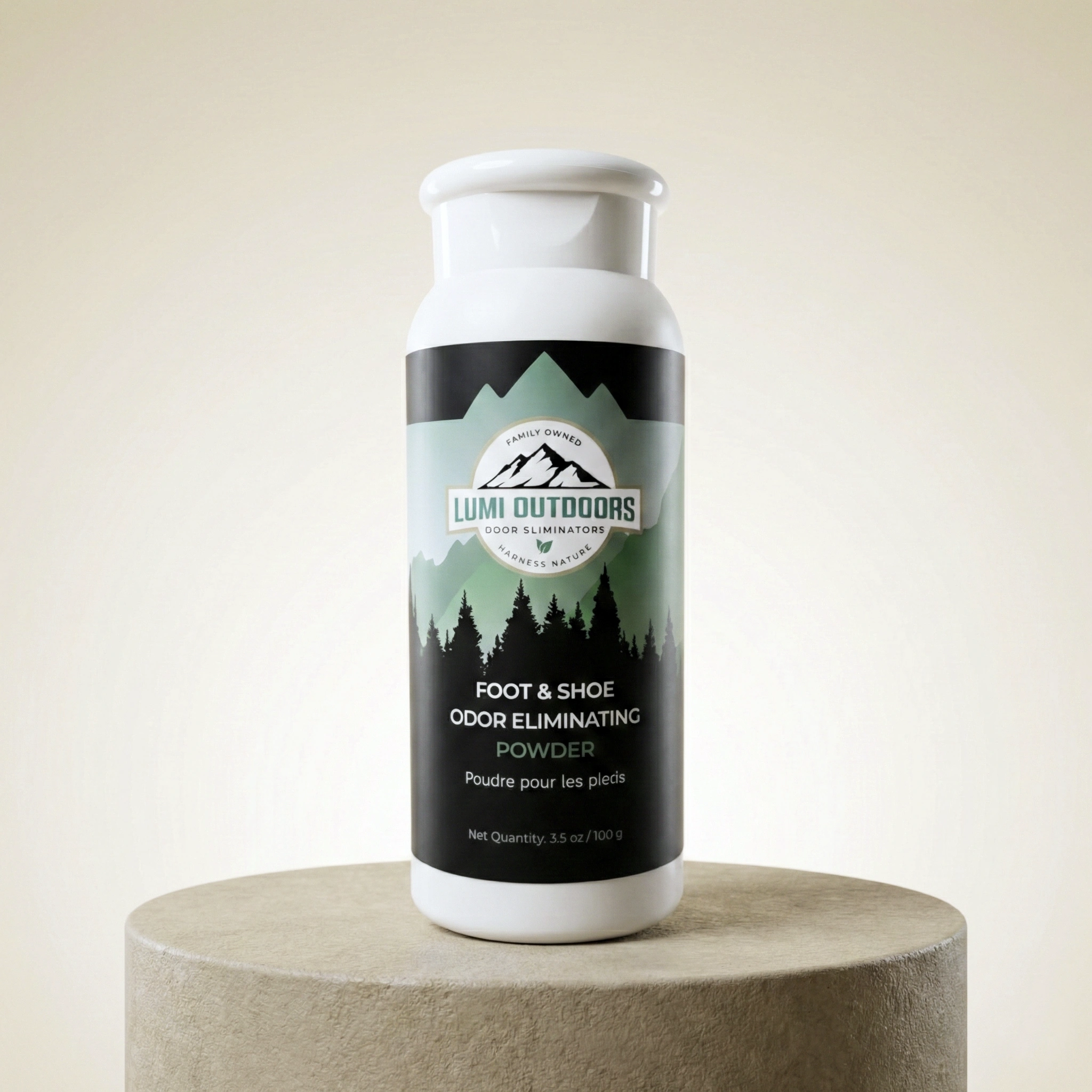
The best way to fight odor is to stop it before it starts. Our all-natural, talc-free foot powder is your first line of defense against mois...
- ABSORBS SWEAT & NEUTRALIZES ODOR
- ALL-NATURAL & TALC-FREE FORMULA
- PROUDLY FAMILY-OWNED & MADE IN UTAH
- THE "FRESH CONFIDENCE" GUARANTEE