

Why Cats Sleep on Shoes: 5 Real Reasons They Crave Your Scent
- It's about scent, not comfort Your shoes hold the most concentrated deposit of your unique biological scent in the entire house — sweat, oils, and pheromones that signal safety to your cat's brain.
- The behavior is social bonding When cats rub and sleep on your shoes, they're merging their own scent with yours to create a shared 'colony scent' — a deeply rooted feline signal that you're family.
- Watch your deodorizers Most shoe sprays contain essential oils that are toxic to cats. Use mineral-based powders or baking soda instead — they control odor without the risk.

Cats sleep on shoes because your footwear is a concentrated reservoir of your unique scent — sweat, sebaceous oils, and pheromones that signal "safe person" to your cat's brain. It's not random, and it's not gross (well, not to them). Your shoes carry more biological information per square inch than almost anything else in your home.
Here's the deeper picture: why shoes specifically, what your cat is actually doing when they knead or rub against them, whether it signals anxiety, and what to do if the habit is creating a odor management problem in your home.
Why Do Cats Sleep on Shoes? The Direct Answer
Cats sleep on shoes because shoes hold the highest concentration of your scent in the home — a mix of sweat-based pheromones, skin cells, and sebaceous oils that your cat's brain interprets as a direct biological signal of your presence, safety, and identity. The behavior is rooted in feline social bonding, not quirk.
Your cat isn't being weird. They're doing exactly what a wild cat would do — seeking out the strongest scent marker from a trusted colony member and using it as a comfort anchor. Your sneakers just happen to be the world's most potent "you smell."
What Is the Science Behind Feline Scent Processing?
Cats process scent through two systems simultaneously: the standard olfactory epithelium (which already has roughly 200 million scent receptors, compared to a human's 5 million) and the vomeronasal organ, also called Jacobson's Organ, which detects complex chemical signals like pheromones that are completely invisible to human senses.
The vomeronasal organ sits at the roof of the mouth, connected to the nasal cavity. When a cat pauses with their mouth slightly open — that glazed, almost disgusted look — they're actually performing a behavior called the Flehmen response, pulling scent molecules directly into this secondary organ for deep analysis. You'll often see it right after they've been sniffing your shoes.
What your shoes contain, from your cat's perspective, is extraordinary. Every hour of wear deposits sweat (primarily water, sodium, and trace organic compounds), sebaceous oil secretions from your skin, and species-specific pheromones. The American Chemical Society has documented that human foot sweat contains over 250 volatile chemical compounds — each one a data point your cat's vomeronasal organ reads like a biological ID card.
Shoes amplify this. The enclosed, warm, slightly damp interior of a sneaker or boot concentrates these compounds over hours of wear. A clean dress shoe you wore once carries a fraction of the scent load of a pair of well-worn running shoes. That's not coincidence — it's exactly why cats almost always prefer the sneakers over the loafers.
Most cat owners try to discourage shoe-sleeping by moving the shoes — but the more effective redirect is to give your cat a scent anchor they're allowed to have. Wear an old cotton T-shirt for a few hours, then place it in a cat bed near where your shoes live. Cats want your scent, not your footwear specifically, and they'll almost always adopt the designated item within a few days. This works especially well before a trip or any schedule change that might trigger scent-seeking anxiety.
How Do Cats Use Scent to Bond With Their Owners?

When a cat rubs their face on your shoes, curls up on top of them, or kneads them with their paws, they're actively merging their own scent with yours — a behavior called bunting or allorubbing that creates a shared "colony scent" that reduces feline stress and signals social belonging.
Cats have scent glands concentrated in specific areas: the cheeks, the forehead, the chin, and the paw pads. When they rub against your shoes, they're not just smelling you — they're leaving a signature of their own. The result is a layered scent that smells like both of you, which in feline social terms means "we are the same group. This is safe."
Research published in Applied Animal Behaviour Science has consistently shown that olfactory enrichment — specifically access to familiar human scents — measurably reduces cortisol markers in domestic cats. Your shoes aren't just comfortable to sleep on. They're actively calming.
The timing matters, too. Cats most often gravitate to shoes right after you come home (when the scent is freshest and strongest) or when you've been gone for several hours. That face-rubbing sprint to your sneakers the moment you walk in the door? That's scent refreshing — your cat is updating their mental model of "you" with the newest scent data before they settle.
How Do You Keep Shoes Fresh Without Harming Your Cat?
The biggest risk isn't your cat sleeping on your shoes — it's the products you use to deodorize them. Most conventional shoe sprays contain concentrated essential oils (tea tree, eucalyptus, peppermint, citrus) that are genuinely dangerous to cats, whose livers lack the glucuronyl transferase enzyme needed to metabolize these compounds.
This isn't a minor concern. The ASPCA Animal Poison Control Center lists tea tree oil as a feline toxin even at low concentrations, and repeated exposure in a closet or entryway — where a cat is regularly pressing their face — creates a meaningful cumulative risk. We've written more about this in detail in our piece on why your shoe deodorizer could be toxic for your cat.
The safer approach is moisture control at the source. Odor in shoes comes from bacterial activity on sweat — eliminate the moisture and you interrupt the cycle before it starts. A few practical options that are genuinely cat-safe:
- Baking soda: Sprinkle inside shoes overnight, shake out in the morning. Absorbs moisture and neutralizes acidic odor compounds. Zero toxicity risk.
- Cedar shoe trees: Cedar naturally absorbs moisture and has a mild scent that doesn't harm cats at ambient levels. Also maintains shoe shape.
- Mineral-based foot powder: Applied to feet before wearing, this stops moisture from accumulating in the shoe in the first place.
For the powder route specifically, Lumi's Natural Foot Powder is what we'd recommend in a pet household — it's mineral and plant-based (arrowroot, kaolin clay, zinc oxide, baking soda), with lemongrass oil at 0.5%, a concentration that's considered safe around cats, and it works preventatively rather than masking odor after the fact. If you want to understand why aerosol sprays specifically are a problem beyond just essential oils, this breakdown on natural alternatives to chemical deodorizers is worth a read.
The baking soda method is genuinely effective for casual use. The powder approach is better for people whose shoes get heavy daily wear — the prevention happens before the bacteria have anything to work with.
Is Shoe-Sleeping a Sign of Separation Anxiety in Cats?
Shoe-sleeping is normal feline behavior in the vast majority of cases, but it can escalate into a stress signal when paired with other behaviors — particularly if it intensifies when your schedule changes, or if your cat begins chewing, scratching, or urinating on shoes rather than just resting near them.
The key distinction is whether the behavior is passive or compulsive. A cat who naps on your shoes occasionally and then goes about their day is doing what cats do. A cat who camps on your shoes for hours, vocalizes when moved away from them, or shows signs of distress when you leave is using scent-seeking as a coping mechanism for separation anxiety.
Signs that warrant a closer look:
- Escalating intensity when your routine changes (new job, travel, new baby)
- Chewing or destructive behavior on or near shoes
- Urinating on shoes — this is scent marking under stress, not affection
- Excessive vocalization before or after you leave
The practical fix for mild cases is environmental enrichment — give your cat an alternative scent anchor. An old T-shirt you've worn recently, placed in a cat bed near the entryway, often redirects the behavior effectively. Your cat wants your scent, not specifically your shoes. Give them a designated scent-soaker and most cats will adopt it readily.
For more serious cases — particularly if you're also noticing your dog showing similar shoe-fixation behaviors — it's worth a conversation with your vet about environmental anxiety management. (And yes, dogs do the exact same thing for nearly identical reasons.)
If the behavior involves urination, that's a veterinary conversation, not a training issue — it's often linked to a medical problem or significant stress that goes beyond simple attachment.
Want to keep your shoes fresh without putting your cat at risk?
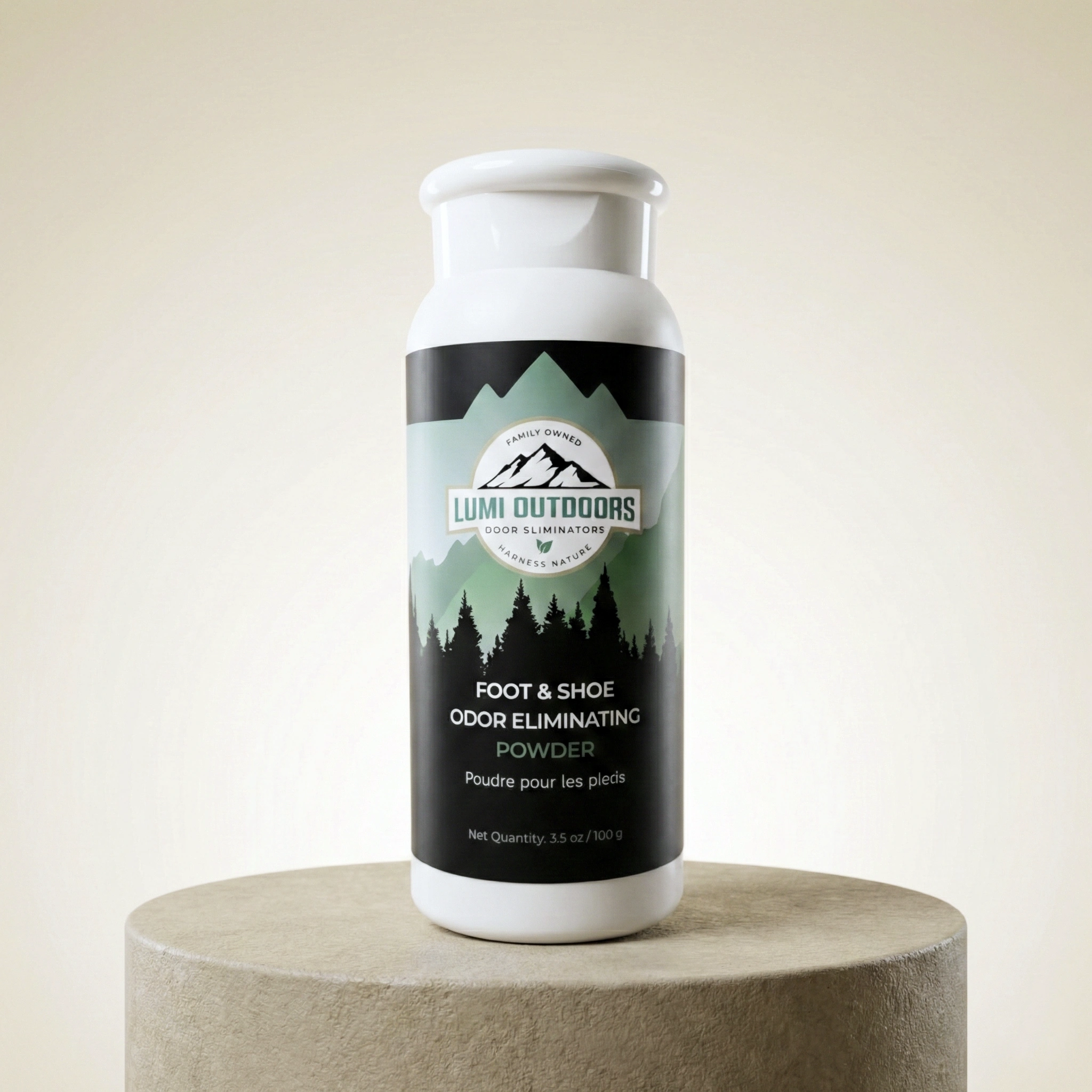
The best way to fight odor is to stop it before it starts. Our all-natural, talc-free foot powder is your first line of defense against mois...
- ABSORBS SWEAT & NEUTRALIZES ODOR
- ALL-NATURAL & TALC-FREE FORMULA
- PROUDLY FAMILY-OWNED & MADE IN UTAH
- THE "FRESH CONFIDENCE" GUARANTEE