

Dog Ignores Toys? 3 Surprising Reasons They Prefer Your Stinky Shoes Instead
- It's about scent, not stubbornness Your shoes hold the highest concentration of your biological scent in the entire house, making them more comforting and interesting to your dog than any store-bought toy.
- Texture and novelty keep them coming back Shoes offer multiple textures to forage through and pick up new smells daily, while toys stay static and boring after the first sniff.
- Reduce the scent to reduce the attraction Using a pet-safe, talc-free moisture-absorbing powder cuts down the sweat and odor buildup that makes your shoes a daily target.

You spent $40 on a squeaky toy your dog sniffed once and walked away from. Meanwhile, your favorite running shoes — the ones you've had for two years — are being systematically disassembled in the hallway. Sound familiar?
Your dog isn't being difficult. They're actually being completely logical, at least by dog standards. Shoes smell like you, and that's the most interesting thing in the house. But here's the part most pet advice skips over: the more your shoes smell, the harder it is to break this habit. So yes, this is partly a training problem — but it's also a shoe odor problem. And the odor part? That one's actually fixable.
Why Do Dogs Choose Shoes Over Toys in the First Place?
Dogs are scent-driven animals, and well-worn shoes carry a highly concentrated profile of your unique biological scent — pheromones, sweat residue, and outdoor smells — that makes them far more stimulating than any factory-manufactured toy. Shoes don't just smell like you; they smell like everything you did that day.
Think about it from your dog's perspective. A rubber chew toy smells like rubber. Maybe some chemical from the factory. That's it. Your shoe? Your shoe smells like the coffee shop, the parking lot, the grass you walked through, and most importantly — you. Every single day it gets a new scent update. It's essentially a live newsfeed your dog can chew on.
1. The "Safety Scent" Factor: Why Your Shoes Are a Pheromone Buffet for Your Dog
Your feet have over 250,000 sweat glands — more per square inch than almost anywhere else on your body — which means your shoes become one of the most scent-rich objects in your entire home. For dogs, especially those with separation anxiety, chewing that shoe is a self-soothing behavior, not a destructive one.
Dogs experience the world almost entirely through smell. Their olfactory system is estimated to be 10,000 to 100,000 times more sensitive than a human's — which means that faint whiff of foot sweat you've stopped noticing? To your dog, it's basically a neon sign that says "HOME."
When you leave the house, your anxious dog goes looking for comfort. They don't grab your pillow (though some do). They go for the shoes. Shoes hold the highest concentration of your scent, and chewing releases more of it. It's genuinely calming for them. The problem is that the more the shoe smells, the more powerful the pull. You're essentially leaving a scent-soaked security blanket right by the front door.
A new squeaky toy from the pet store doesn't stand a chance against that kind of biological draw. The toy smells sterile. Manufactured. Safe, maybe, but not comforting. Your worn-in sneaker smells like safety to your dog.
Most people try to redirect their dog away from shoes using scent deterrents on the shoe itself — but the real move is to scent-transfer your smell onto an approved toy instead. Rub the toy between your palms for 60 seconds, then store it near your shoes (not in them) overnight so it picks up a trace of the shoe environment. You're not removing the scent appeal — you're redirecting it. Dogs trained this way tend to bond with a specific toy much faster than those given brand-new, factory-fresh alternatives.
2. The Texture Paradox: Why Does Your Dog Target Leather and Mesh Over a Chew Toy?
High-quality shoe materials — leather, woven mesh, rubber soles, braided laces — offer a variety of textures and structural layers that most generic chew toys simply don't replicate. Dogs aren't just chewing; they're foraging through your shoe like it's a multi-stage puzzle.
Ever notice which part of the shoe your dog goes for first? Some dogs attack the laces. Others peel back the insole. Some gnaw on the rubber sole. This isn't random. It's a behavior called destructive foraging — the dog is working through layers, which is mentally engaging in a way a single-material toy isn't.
Most pet store toys are either too hard (solid rubber) or too soft (plush fabric) and offer one texture throughout. A shoe has four or five distinct zones with completely different feels and resistance levels. The leather upper gives. The laces shred satisfyingly. The insole peels away. For a dog that needs mental stimulation, this is genuinely exciting.
The fix here is texture-matching. If your dog always goes for the laces, they probably want something rope-like or braided. If they target the insole, they want something with a little give and a flat shape. Matching the toy texture to what your dog actually seeks out makes a real difference — much more than just buying the most expensive toy on the shelf.
3. The Boredom-Odor Connection: Why Toys Go Stale But Shoes Never Do
A toy's scent stays static from the moment it leaves the factory. Your shoes, on the other hand, accumulate new smells every single day — fresh outdoor scents, new sweat, different environments — which makes them perpetually novel and interesting to a dog's nose.
Dogs get bored of toys fast, and the biggest reason is scent novelty (or the lack of it). Once a dog has thoroughly sniffed a toy, catalogued it, and decided it holds no new information, that toy becomes furniture. Invisible. Irrelevant.
Your shoes never hit that wall. Every time you wear them, they absorb new smells from your environment. New outdoor locations. New bacteria from sweat. New trace scents from surfaces you walked on. To your dog, you've essentially refreshed the content every single day.
And there's a third layer to this: the "forbidden fruit" effect. When your dog chews a toy, you probably don't react much. When they grab your shoe? You react immediately. You move fast, you use an urgent voice, you make direct eye contact. For a dog starved for engagement, that reaction is rewarding. Shoe chewing accidentally becomes a reliable game to get your attention.
This is why purely corrective training often fails on its own. The shoe is winning on three fronts: scent, texture, and engagement. You need to reduce the reward on the scent side, because that's the one you can actually control. You can't out-compete your own biological scent — but you can reduce the intensity of it by managing shoe odor proactively. If you're curious why some of the most popular DIY methods fall short, this breakdown of why baking soda fails is worth a read before you try anything on your dog's favorite target shoes.
What's the Safest Way to Neutralize the Scent That Attracts Your Dog to Shoes?

The most effective and pet-safe approach is to absorb moisture and reduce the biological scent at the source — inside the shoe — using a talc-free, mineral-based powder. This directly addresses what draws your dog in, without using harsh sprays or essential oil concentrations that could irritate a dog's sensitive nose.
Bitter apple sprays are often recommended for shoe chewing, and they can help — but they're addressing the symptom (chewing) rather than the draw (smell). If your shoe still smells powerfully of you, your dog will often work around the bitter spray or simply wait until it fades. The scent attraction is the root issue.
This is where a good moisture-absorbing shoe powder does something no spray can: it stops the sweat from building up in the first place. No sweat accumulation means the shoe's scent profile stays lower and less magnetic to your dog's nose. It also means less odor overall, which matters for your home — and for your pet, whose nose is processing every molecule of air in that hallway where the shoes sit.
The product we keep by our own door is Lumi's Natural Foot & Shoe Powder — it's talc-free, made with arrowroot powder, kaolin clay, baking soda, and a very small amount of lemongrass oil (just 0.5%). That lemongrass concentration is low enough to be safe around pets while still doing real work on moisture and odor. Sprinkle some inside the shoes after each wear. It's not a magic training tool, but it removes one of the biggest reasons your dog keeps coming back to those shoes. For more proactive tactics, this guide on natural shoe odor remedy hacks covers several approaches worth combining.
One thing worth knowing about pet safety: the ingredients in a quality mineral-based powder — zinc oxide, kaolin clay, bentonite clay, arrowroot — are not only non-toxic, they're actually used in products applied directly to skin and even in wound care. If your dog sniffs a treated shoe or licks a tiny residue, you're not looking at a medical emergency. That said, always store shoes somewhere your dog can't access unsupervised while you're working on the training side.
The Practical Plan: Combining Scent Reduction With Training
Here's a simple routine that addresses both sides of the problem:
- After every wear: Sprinkle a moisture-absorbing powder inside the shoe. This reduces the scent buildup that makes the shoe irresistible over time.
- Store shoes out of reach: A closed closet, a shoe bench with a lid, or even a hanging organizer. Don't just leave them by the door.
- Rotate toys with new scents: Rub a toy between your hands for a minute before giving it to your dog. Your scent on the toy makes it genuinely more interesting.
- Use a cedar shoe tree: Cedar naturally absorbs moisture and has a scent that dogs don't find particularly appealing. Place them in shoes left in accessible spots.
Newspaper stuffed in shoes after wear also helps pull moisture out before it can build up into a strong odor. These aren't complicated interventions — they're just consistent ones. And consistency is what actually breaks the cycle.
The bigger picture is this: your dog isn't broken, and they don't need to be punished for doing something that makes complete biological sense to them. They need the reward to be lower (less intensely scented shoes) and the alternatives to be better (toys that actually engage them). Tackle both, and most dogs will shift their attention within a few weeks.
If you want to go deeper on the shoe care side of this, there's a solid breakdown of why washing your sneakers fails and what actually works for getting post-wear odor under control — which matters a lot if your shoes are coming home from the gym or the field before your dog gets to them.
Want to stop being your dog's favorite chew toy source?
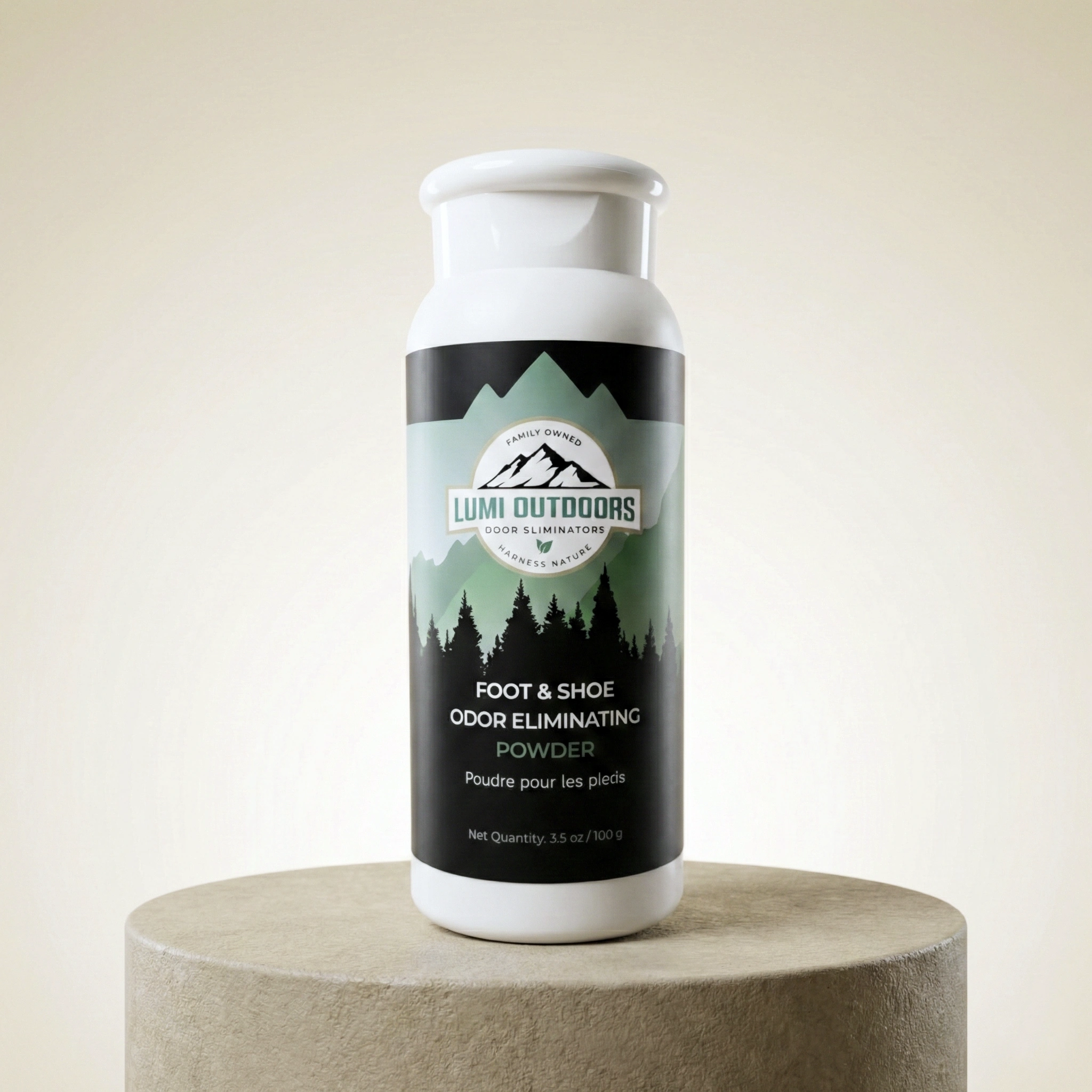
The best way to fight odor is to stop it before it starts. Our all-natural, talc-free foot powder is your first line of defense against mois...
- ABSORBS SWEAT & NEUTRALIZES ODOR
- ALL-NATURAL & TALC-FREE FORMULA
- PROUDLY FAMILY-OWNED & MADE IN UTAH
- THE "FRESH CONFIDENCE" GUARANTEE