

Stop Spraying! Why Your Shoe Deodorizer Could Be Toxic for Your Cat
- Most shoe sprays are toxic for cats Common deodorizing ingredients like tea tree, eucalyptus, and citrus oils are genuinely dangerous to felines and should be kept away from them.
- Cats can't process these compounds Feline livers lack the enzyme needed to break down the phenols and terpenes found in most shoe sprays, so the chemicals build up in their system.
- Safe alternatives exist Switching to a water-based room spray without high-concentration essential oils, combined with good ventilation, eliminates the risk without sacrificing freshness.

Most standard shoe deodorizer sprays are NOT safe for cats. The majority contain concentrated essential oils — tea tree, eucalyptus, peppermint, citrus — that are genuinely dangerous to felines. Cats cannot process these compounds the way humans or even dogs can, and repeated exposure in an enclosed space like a closet or mudroom can cause serious harm over time.
If your cat wanders around your shoe rack or sleeps near the entryway, this matters. The good news is that you don't have to choose between fresh-smelling shoes and a healthy pet. But you do need to understand why the risk is real before you decide it doesn't apply to your household.
Why Are Shoe Sprays Dangerous to Cats Specifically?
Cats are uniquely vulnerable to the volatile organic compounds found in most shoe sprays because their livers lack a key enzyme — glucuronyl transferase — needed to break down phenols and terpenes. Without it, these compounds accumulate in their system instead of being safely processed and eliminated.
This is called glucuronidation — a liver detox pathway that humans and dogs use constantly to handle plant compounds, medications, and environmental chemicals. Cats are genetically deficient in it. So while a spritz of tea tree oil-based shoe spray might smell refreshing to you, your cat's body has almost no way to clear it out.
And here's where aerosol sprays make things worse. Fine mist particles don't just land inside the shoe. They settle on surrounding surfaces — the floor, the doormat, the shoe rack shelf, even your cat's fur if they're nearby. When your cat grooms itself, which cats do constantly, it ingests whatever landed on its coat. That single spray in the hallway becomes something your cat is actively consuming throughout the day.
The ASPCA Animal Poison Control Center lists tea tree oil, eucalyptus, peppermint, and citrus oils among the most common causes of essential oil toxicity in cats. These aren't obscure specialty ingredients — they're the active deodorizing agents in almost every "natural" shoe spray on the market. Worth knowing if you've been buying something labeled "botanical" or "plant-based" and assuming that means safe for pets.
Which Specific Ingredients Should You Watch For?

The highest-risk ingredients in shoe deodorizer sprays for cats are tea tree oil (also listed as melaleuca), eucalyptus oil, peppermint oil, and any citrus-derived oils like limonene or lemon oil. Even in small concentrations, these can cause liver stress with repeated exposure.
Tea tree oil is probably the biggest offender, partly because it's in so many products and partly because people associate it with "natural" and therefore assume it's gentle. For cats, it's the opposite. Even diluted concentrations applied to a cat's skin or ingested through grooming can cause tremors, ataxia, and liver failure in severe cases.
Peppermint is another one people underestimate. It's in a huge number of shoe deodorizers because it smells clean and masks odor well. But peppermint oil contains menthol and other terpenes that cats cannot metabolize safely. Same story with citrus — limonene is a common ingredient in "fresh" sprays that's directly toxic to cats.
The cumulative effect is what makes this sneaky. One accidental exposure might not cause a visible reaction. But if you're spraying shoes twice a week in a coat closet where your cat naps, you're building up low-level exposure over weeks and months. By the time symptoms appear, the damage has been happening quietly for a while. This is why so many cat owners are caught off guard — there's no single dramatic incident, just a slow decline that's easy to miss until it isn't.
If you're curious about the broader picture of how chemical sprays affect air quality in your home — for pets and humans alike — this piece on why you need a natural alternative to chemical deodorizers is worth a read.
Most people spray shoes and immediately put them back in a closed closet — that's actually the worst thing you can do in a home with cats. A sealed space traps volatile compounds at their highest concentration, right where your cat is most likely to wander. Instead, spray shoes and leave them outside the closet in a ventilated area for at least 30 minutes before storing them. Even the safest sprays benefit from full airflow before going back into an enclosed space.
How Do You Safely Fight Shoe Odor Without Risking Your Cat?
The safest approach in a home with cats is a two-step protocol: treat shoes in an isolated, ventilated space away from your cat, and replace aerosol sprays with lower-risk alternatives that don't contain high concentrations of cat-toxic essential oils.
If you're using a powerful spray — even one you're planning to keep using — treat the shoes in the garage, a bathroom with the door closed, or outside. Let them dry completely before bringing them back indoors. Volatile compounds dissipate as the product dries, and full drying significantly reduces the amount of residue that can transfer to surfaces your cat touches. "Spray and toss the shoes back in the closet" is the move that creates the most risk.
Ventilation also helps more than people realize. A fan running in the room where you spray, or an open window, gives those volatile particles somewhere to go besides your cat's lungs and fur. This isn't a complete fix, but it meaningfully reduces the concentration your cat is exposed to in the minutes right after spraying.
For an everyday freshener that handles the ambient shoe smell in your entryway or mudroom without putting your cat at risk, a water-based room spray with a balanced essential oil concentration is a smarter swap than a direct shoe spray. Lumi's Lavender Vanilla Room Spray is specifically designed to neutralize odor molecules rather than just mask them, and it's formulated without the high-concentration essential oils that make most shoe sprays a problem in pet households — it's the one I'd reach for when the mudroom starts to smell like a soccer locker room.
There are also good non-spray options for tackling odor at the source: baking soda inside the shoe, cedar shoe inserts, or crumpled newspaper to absorb moisture overnight. These natural shoe odor hacks don't carry any inhalation or grooming risk for your cat and work surprisingly well when used consistently.
What Are the Warning Signs That Your Cat Has Been Exposed?
The most common early signs of essential oil toxicity in cats are drooling, watery eyes, sneezing, and labored breathing. More severe reactions include lethargy, loss of coordination (wobbling or stumbling), and muscle tremors — these require immediate veterinary care.
The tricky thing about mild exposure is that these early signs can look like a lot of other things. A sneezing cat or a cat that's a little quieter than usual might not immediately read as "poisoning." But if these symptoms appear shortly after you've sprayed something near the shoe area, don't wait to see if it passes. Contact your vet or the ASPCA Poison Control hotline (888-426-4435) right away.
If you know or strongly suspect your cat got into direct contact with a shoe spray — walked through a puddle of it, rubbed against a freshly sprayed shoe, or you noticed them grooming themselves right after you sprayed — the first step is washing the affected fur gently with mild soap and water to remove as much surface residue as possible. Then call your vet. Don't try to induce vomiting unless a vet specifically tells you to.
It also doesn't hurt to flip over every shoe spray in your house right now and check the ingredient list. If you see tea tree, melaleuca, eucalyptus, peppermint, limonene, or any citrus oil listed, treat it as a cat hazard. And if you've been applying shoe sprays like these regularly and your cat seems "off" in ways that are hard to pin down — decreased appetite, unusual lethargy, sensitivity to touch — mention it to your vet at your next visit. It's exactly the kind of connection that's easy to miss without knowing to look for it. For more on how these chemical sprays can affect not just pets but your own skin and health, see this piece on why air fresheners cause chemical rashes.
Ready to try Natural Foot Powder?
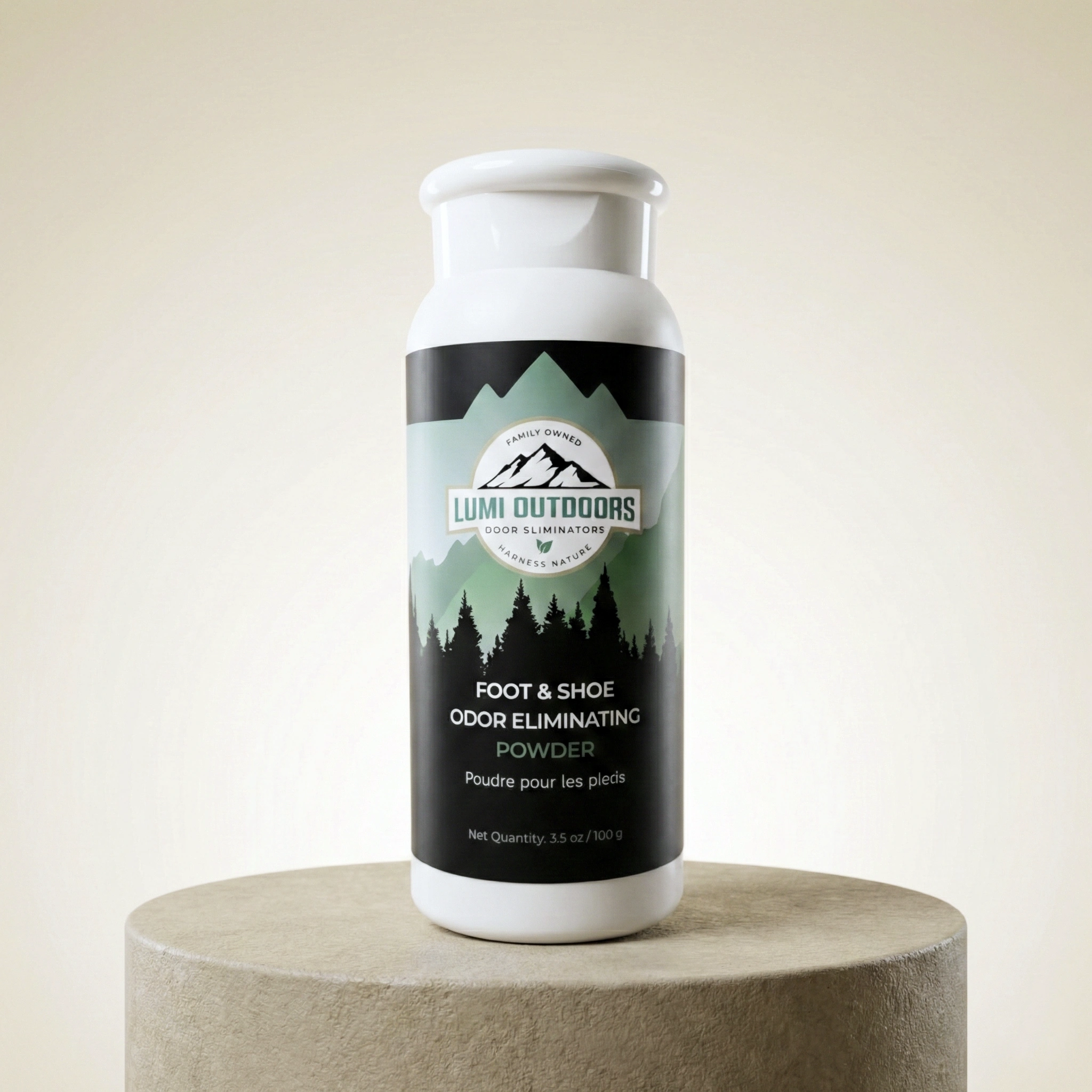
The best way to fight odor is to stop it before it starts. Our all-natural, talc-free foot powder is your first line of defense against mois...
- ABSORBS SWEAT & NEUTRALIZES ODOR
- ALL-NATURAL & TALC-FREE FORMULA
- PROUDLY FAMILY-OWNED & MADE IN UTAH
- THE "FRESH CONFIDENCE" GUARANTEE