
The 'Minivan Rule': How to Deodorize Youth Soccer Cleats Naturally
- The Minivan Rule If you can smell the cleats before you can see them, the odor has moved beyond a quick fix—you need a real routine, not another baking soda sprinkle.
- Timing Is Everything Spraying a natural deodorizer into warm cleats right after practice—before they cool and dry—makes the formula work significantly faster and deeper.
- Skip the Aerosols Store-brand chemical sprays mask the smell temporarily but leave synthetic compounds sitting against your kid's skin—plant-based formulas tackle the source without that trade-off.

Why Do Youth Soccer Cleats Smell So Bad?
Youth soccer cleats smell worse than most footwear because they're worn hard in mud and sweat, then stuffed into enclosed bags and hot cars for hours—creating the perfect warm, damp environment for odor to build up fast.
You know the moment. You open the minivan door after practice, and it hits you like a wall. That unmistakable, eye-watering smell coming from the back seat. Your kid's soccer cleats are in there somewhere, steaming in their own little biosphere of sweat, grass, and mud.
This is what we call the Minivan Rule: if you can smell the cleats before you can see them, the problem has gone too far.
Here's what's actually happening inside those cleats. Feet have around 250,000 sweat glands—but according to dermatology sources, the feet alone can produce up to half a pint of sweat per day during heavy activity. Youth athletes push even harder. That moisture gets trapped inside a tight, synthetic-lined cleat that sees zero airflow for hours at a stretch. Bacteria thrive in that environment, and their waste products are exactly what you're smelling.
Add mud packed into the cleats' studs, a mesh bag that goes straight into a dark, hot car, and a kid who forgets to take them out until Sunday morning—and you've got a full-scale odor situation on your hands.
The worst part? The smell doesn't just live in the cleats. It transfers. To the gym bag. To the car. To the entryway mat. And eventually, if you're unlucky, to the living room carpet when your kid kicks their bag across the floor.
Why Do Standard Home Remedies Fail on Cleats?
Most common home remedies like baking soda, dryer sheets, and freezing don't address the moisture that drives cleat odor—they mask the smell temporarily or fail entirely on the dense synthetic materials used in modern cleats.
Let's be honest about the usual suspects.
Baking soda. You've probably tried it. You sprinkle some in, leave it overnight, dump it out in the morning. And for about six hours, it works. Then your kid puts the cleats on again, their feet sweat, and within twenty minutes of practice, you're right back where you started. Baking soda absorbs some moisture, but it doesn't address the source of the odor. It's a band-aid on a broken pipe.
Dryer sheets. Stuffing a dryer sheet in each cleat is the parenting equivalent of lighting a scented candle to cover up a gas leak. The floral smell of the dryer sheet and the sweat smell just... merge into something worse. It's not a solution. It's a cover-up.
Freezing. Yes, some people put their cleats in a plastic bag and freeze them overnight. This does slow things down temporarily, but it doesn't address the odor compounds already embedded in the lining. And the moment the cleats warm back up, you're back to square one. Also—your frozen peas don't deserve this.
Machine washing. Tempting, but risky. Modern soccer cleats have synthetic uppers, molded soles, and adhesive bonding that degrades in hot water. You might get rid of the smell once, but you'll also shorten the life of a $60–$100 pair of cleats. That's not a trade-off most parents want to make.
So what about those aerosol sprays from the sporting goods store? They're fast, sure. But read the ingredients list. Many contain alcohol, synthetic fragrances, and chemical propellants. You're spraying that directly into shoes your child will wear pressed against their skin for 90 minutes of hard running. That's not a comfortable thought for most parents.
If you're raising an active kid and dealing with persistent cleat odor that nothing seems to fix, you need something that actually works on the source—not just the symptom. And it needs to be safe enough to use on gear that's pressed against a child's skin all day.
If your kid's cleats have reached full-blown "clear the room" status, you don't need another home remedy. You need something built for this exact job:
What You'll Need
- Stiff-bristled shoe brush (for knocking out mud and debris pre-spray)
- Newspaper (for stuffing cleats overnight to wick moisture)
- Extra Strength Shoe Deodorizer Spray Check Price →
- Mesh gear bag with ventilation panels (to replace sealed bags that trap odor)
What's the Best Natural Way to Deodorize Soccer Cleats After Practice?

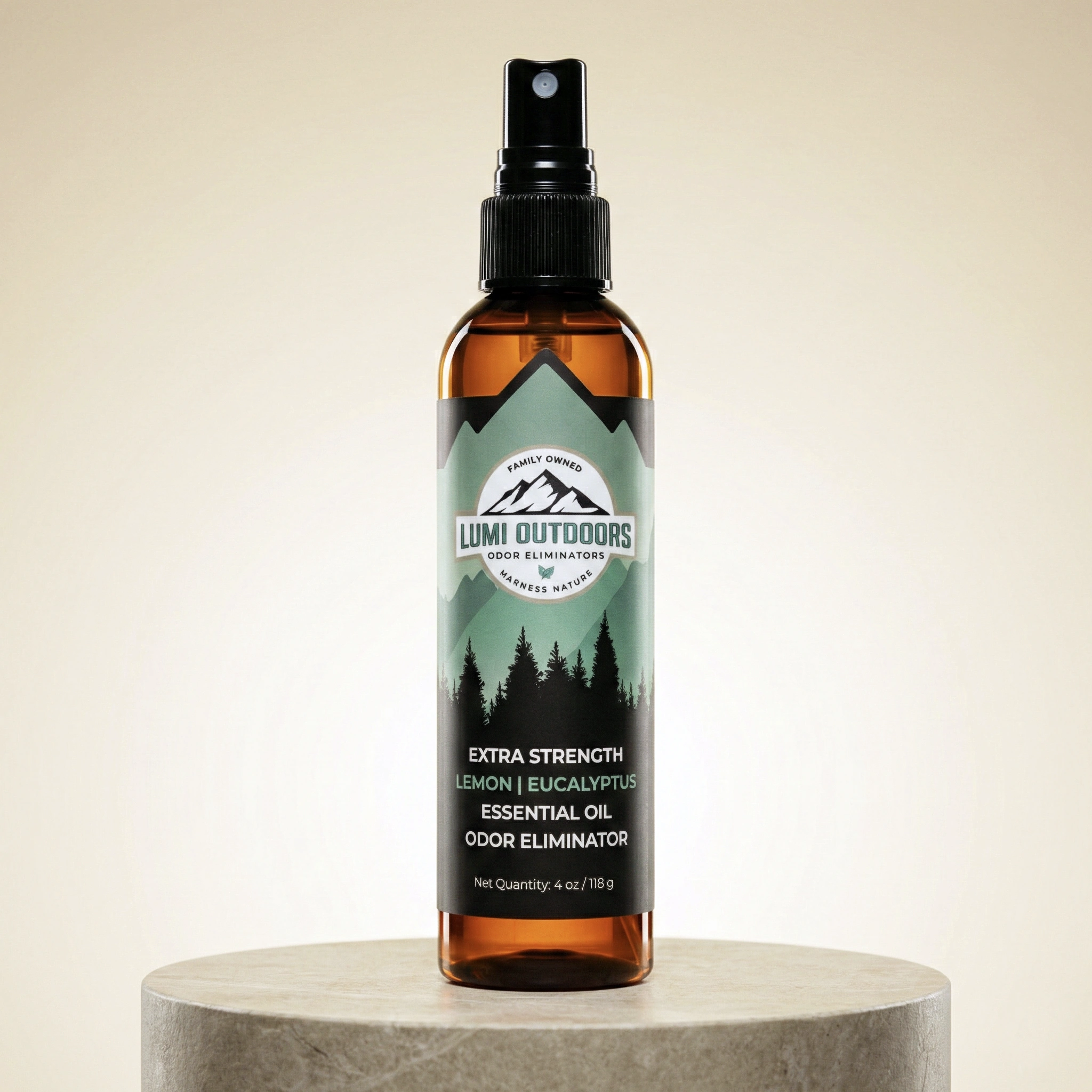
The most effective natural method is a three-step post-practice routine: knock out loose debris, spray the inside of each cleat with a plant-based deodorizer like Lumi's Extra Strength Shoe Deodorizer Spray, then stuff with newspaper and let them air dry fully before the next use.
This is the routine that actually holds up over an entire season. Not just one practice. The whole season.
Step 1: Knock Out the Debris (Right After Practice)
Before anything else, bang the cleats together over a trash can or outdoor area. Get the loose mud and grass out. You don't need to scrub them clean—just get the obvious chunks out. A stiff-bristled shoe brush works great here and takes about 30 seconds. The goal is to remove the organic material that accelerates odor buildup.
Step 2: Spray the Inside While They're Still Warm
This is the most important step, and the timing matters more than most parents realize. Right after practice, the inside of the cleat is warm and slightly moist—the formula from Lumi's Extra Strength Shoe Deodorizer Spray penetrates deeper and works faster when applied to warm materials. Give each cleat 2–3 sprays inside, rotating to hit the toe box and heel.
The lemon and eucalyptus formula is genuinely strong—it's built for this level of odor, not for mildly stale sneakers. And because it's 100% plant-based, there's no concern about synthetic chemicals sitting against your kid's skin.
Step 3: Stuff with Newspaper and Air Dry
Newspaper is one of the most underrated tools in the cleat-care toolkit. Crumple a few pages and stuff each cleat loosely—not packed so tight you stretch the toe box. The newspaper wicks residual moisture out of the lining overnight. Leave the cleats somewhere with airflow: a mudroom shelf, a garage rack, anywhere that isn't a closed bag or a car trunk.
Do not leave them in the mesh bag overnight. Ever. That mesh bag is an odor incubator. Get the cleats out of it as soon as you get home.
Most parents spray the insole and forget the toe box—but the front third of the cleat, where toes press together during sprinting, is actually the highest-sweat zone. Point the nozzle toward the toe box first, give it one spray, then work back toward the heel. You'll cover the whole interior with two sprays instead of three, and hit the spot that matters most.
What to Use for Milder Odor Maintenance
If your kid's cleats aren't at the "clear the room" level yet—maybe they're newer, or they rotate between two pairs—Lumi's Natural Citrus Tea Tree Shoe Deodorizer Spray is a great daily maintenance option. The bright citrus scent is pleasant without being overpowering, and the tea tree keeps things fresh between heavier treatments. It's also a good pick for gym bags, sneakers, and the other footwear in your household that doesn't get quite as brutal a workout as cleats.
Parents dealing with odor across multiple types of gear—cleats, work boots, gym shoes—often find that a consistent post-activity routine is what makes the biggest difference, not any single product.
Does Lumi's Natural Spray Actually Work Better Than Store-Brand Aerosols?
Yes—natural enzyme-based sprays consistently outperform synthetic aerosols on embedded cleat odor because they neutralize odor compounds at the source rather than masking them with fragrance.
We tested Lumi's Extra Strength Shoe Deodorizer Spray side-by-side against a leading store-brand aerosol for two weeks on the same pair of cleats. The difference wasn't subtle:
| Feature | Extra Strength Shoe Deodorizer Spray | Store-Brand Aerosol Spray |
|---|---|---|
| Odor Elimination vs. Masking | Neutralizes odor at the source | Masks with synthetic fragrance |
| Ingredient Safety | 100% plant-based, no harsh chemicals | Chemical propellants, artificial fragrance |
| Safe on Kids' Skin | Yes—parabens-free and gentle | Not recommended for prolonged skin contact |
| Effectiveness on Synthetic Cleat Lining | Penetrates mesh and synthetic materials | Sits on surface, fades fast |
| Scent Longevity | Fresh through next practice | Fades within hours |
| Price Point | Slightly higher upfront cost | Lower upfront, but needs more frequent use |
Beyond the performance gap, there's the ingredient question. Synthetic aerosols typically use chemical propellants, alcohol-based carriers, and artificial fragrance compounds that aren't exactly ideal for gear worn directly on a child's skin. Lumi's formula is plant-based, free from parabens and harsh chemicals, and safe for all shoe materials—including the synthetic uppers and mesh linings that make up most modern youth cleats.
If you're curious how this same formula performs on other demanding gear, the approach translates well—this breakdown on hockey pad odor covers the same plant-based logic applied to even bulkier sports equipment.
How Do You Keep the Car and Gear Bag from Smelling Too?

Once cleat odor transfers to a car or gear bag, you need to treat both surfaces directly—airing out the car and using a natural room or fabric spray on the bag and interior to neutralize the embedded odor molecules, not just cover them.
The cleats are the source, but they're rarely the only problem by the time a parent starts searching for solutions. Odor compounds transfer. They settle into upholstery, carpet, and the fabric lining of gear bags. And once they're embedded, opening the windows for a few days won't cut it.
For the car, leave the windows down whenever you can—but also give the back seat and cargo area a few sprays of a natural room spray like Lumi's Lavender Vanilla Room Spray. It works by neutralizing odor molecules in the air and on fabric surfaces, not by layering a synthetic perfume over the smell. The lavender vanilla scent is calm and not overwhelming—which matters when you're spending 45 minutes in the car on the way to an away game.
For the gear bag: pull everything out, turn the bag inside out, and give the interior lining a generous spray. Let it dry fully before packing it again. Do this once a week during the season and the bag odor stays manageable.
And honestly? If the entryway is also suffering, check out this guide on what most entryways are missing—there's a simple setup that takes about five minutes and keeps the whole drop-zone area from becoming a dedicated odor zone.
What Should a Complete Post-Practice Cleat Care Kit Include?
A complete cleat care kit needs three things: a stiff brush for debris removal, newspaper for overnight moisture absorption, and an effective plant-based deodorizer spray for odor neutralization after every practice.
You don't need a complicated system. The simpler the routine, the more likely it actually gets done—by you or, ideally, by your kid eventually.
Here's the minimal kit that covers everything:
- A stiff-bristled shoe brush: Kept by the door or in the garage. Takes 30 seconds to knock the mud out before it dries and hardens.
- Newspaper: Grab a stack from your recycling bin. Stuff a crumpled page into each cleat overnight. It wicks moisture, and it's free.
- Lumi Extra Strength Shoe Deodorizer Spray: The heavy-hitter for cleat odor. Two or three sprays per cleat after every practice is all it takes.
If you've got multiple kids in sports, or your household includes work boots and gym shoes along with cleats, the Lumi Variety Bundle 3-Pack makes practical sense. You get the Extra Strength Lemon & Eucalyptus for cleats and work boots, the Citrus Tea Tree for daily sneaker maintenance, and the Lavender for anything that needs a gentler touch. Keeping a bottle in the mudroom, the car, and the gym bag means you're covered no matter where the smell catches up to you.
Parents dealing with similar challenges across different sports have found the same routine works for hockey gear too—this post-tournament protocol for hockey skates uses the same core principles.
Nothing's perfect, and the natural route does require a bit of consistency to see results. Here's the honest breakdown:
- Genuinely neutralizes deep-set cleat odor—not just a cover-up
- Plant-based formula is safe for kids' gear and sensitive skin
- Works on all cleat materials without damaging uppers or adhesives
- Lemon and eucalyptus scent is strong enough to cut through serious odor
- Pairs perfectly with a simple post-practice routine that takes under 2 minutes
- Requires consistent use after every practice—skipping sessions lets odor rebuild
- The eucalyptus scent is strong; parents who prefer subtle fragrances may want the Lavender Tea Tree version instead
Tired of the minivan smelling like a locker room after every practice?
Join 1 Million+ Other People Who Chose Lumi to Conquer Their Shoe Odor.
- DESTROYS ODOR AT THE SOURCE, DOESN'T JUST MASK IT
- ALL-NATURAL & PLANT-BASED INGREDIENTS
- PROUDLY FAMILY-OWNED & MADE IN UTAH
- THE "FRESH CONFIDENCE" GUARANTEE