
The 60-Second Reset: How Do Pro Sports Locker Rooms Smell So Clean?
- It's a system, not luck Pro locker rooms smell clean because equipment staff neutralize odor at the gear level within 30 minutes of activity ending — before bacteria produce isovaleric acid, the compound that causes that locker room stench.
- Timing is everything You have a 30–60 minute window after a workout to stop odor from setting into shoe foam and bag lining. Miss that window and no amount of spraying later fully fixes it.
- Room sprays won't cut it Standard air fresheners layer scent over bacteria — they don't eliminate odor. Gear needs contact-surface neutralization with plant-based essential oils, not ambient fragrance.

Pro locker rooms smell clean because of a deliberate, three-part system: rapid moisture removal, targeted odor neutralization at the gear level, and controlled airflow — not because professional athletes sweat less or use magic aerosols. Equipment managers treat every bag, cleat, and pad as a potential odor source the moment it comes through the door. The whole process takes under 60 seconds per player's gear.
Here's exactly why that system works — and how to copy it at home.
Why Does a Pro Locker Room Smell Different From a High School Gym?
The difference comes down to timing. Pro facilities neutralize odor at the source — the gear itself — within minutes of the final whistle, before bacteria have a chance to colonize damp fabric. High school gyms smell because wet gear sits in bags for hours, sometimes days, giving bacteria the time and moisture they need to produce isovaleric acid — the specific compound responsible for that unmistakable locker room stench.
Isovaleric acid is produced when Staphylococcus epidermidis — a bacteria that lives naturally on your skin — breaks down leucine, an amino acid found in sweat. It takes roughly 30–60 minutes for bacterial colonies on damp fabric to start producing it at detectable levels. That's your window. Miss it, and the smell sets into the foam, the leather, and the fabric lining of your bag.
Pro equipment rooms don't miss it. They have a protocol. And the protocol isn't complicated — it's just consistent.
That's the real problem for most people: not knowing, not having a routine.
The "high school gym" smell also gets worse because of a second factor: ventilation. Industrial dehumidifiers in professional facilities pull moisture out of the air continuously, which means even the ambient humidity that feeds bacterial growth gets managed. At home, a closed mudroom or gear closet does the opposite — it traps warm, damp air and accelerates colonization. According to the EPA's indoor air quality guidelines, keeping indoor humidity below 50% is the threshold at which bacterial and mold growth slows significantly. Most mudrooms run well above that after a soccer practice.
Why Do Standard Air Fresheners Fail on Athletic Gear?
Standard aerosol air fresheners don't eliminate odor on gear — they layer synthetic fragrance compounds over organic bacterial waste, which creates a worse composite smell within a few hours. The fragrance fades; the isovaleric acid doesn't.
This is the "gym-floral" problem. You've smelled it — that strange combination of artificial lavender and something deeply athletic underneath. It happens because conventional sprays are designed for ambient air, not contact surfaces. They're not formulated to penetrate fabric weave or bond with the specific volatile compounds that bacteria produce.
Pro equipment managers largely skip retail aerosols for this reason. Plant-based essential oils — particularly eucalyptus, lemon, and tea tree — work differently. They interact directly with the organic compounds on the surface, breaking them down rather than covering them. This is also why switching from chemical aerosols to natural alternatives makes a measurable difference for gear that sees heavy, repeated use.
The other failure mode of retail sprays: skin contact. Cleats, gloves, and shin guards touch your skin every workout. A spray formulated for room air — loaded with synthetic fragrance and alcohol — can cause irritation when it's absorbed by foam padding that then presses against your skin for two hours. Not ideal.
Most people spray their gear and immediately zip the bag closed — that's the one move that undoes everything. The spray needs airflow to work: it has to evaporate, taking the odor compounds with it. Close the bag too early and you've just created a warm, slightly fragrant humidity chamber. Leave everything unzipped and open for at least 15 minutes before storing, even if it's inconvenient.
What Is the 60-Second Gear Reset — and How Do You Do It at Home?

The 60-second reset is a three-step immediate post-workout routine: pull all gear out of the bag, open every zipper and vent, and spray contact surfaces before anything goes back in. Done within 20–30 minutes of finishing activity, it prevents bacterial colonization from ever getting started.
Here's what it looks like in practice when you or your kid walks through the door:
- Step 1 — Immediate extraction: Pull everything out of the bag. Shoes, shin guards, gloves, socks — all of it. Don't leave damp gear bunched together. Open the bag fully and let air reach the lining.
- Step 2 — Targeted spray: Two or three sprays inside each shoe, one on gloves or pads, a quick mist inside the bag itself. This is where a lemon eucalyptus shoe deodorizer spray earns its place — it hits the odor compounds in that critical 30-minute window before they set. You don't need much. Let everything air-dry for 10–15 minutes before storing.
- Step 3 — Open storage: Don't close the bag or closet door while gear is still warm. Give it 15–20 minutes of open airflow first. This single step eliminates the humid microclimate that bacteria thrive in.
That's the whole system. Under 60 seconds of active effort.
For the weekly reset — which handles the deeper, accumulated odor that builds in shoe foam over time — stuff shoes with newspaper overnight once a week. Newspaper absorbs residual moisture from the midsole and upper lining that spray alone doesn't reach. It's free, it works, and it's what a lot of equipment trainers do between games when industrial drying equipment isn't available. For more on fast, targeted shoe odor fixes, the approach is the same: moisture first, neutralization second.
The spray handles the bacteria. The newspaper handles the moisture. Together, they replicate what professional facilities do with much more expensive equipment.
Can You Use Regular Room Spray on Athletic Gear?
No — room sprays aren't formulated for contact surfaces, and using them on gear that touches your skin can cause irritation. The difference between ambient freshening and contact deodorizing is a formulation issue, not just a concentration one.
Room sprays are designed to disperse fine droplets into the air, where they interact with odor molecules in open space. They dry quickly and leave minimal residue — which is exactly what you want on a couch or curtain. On shoe foam or synthetic fabric, that same fast-dry formula sits on the surface without penetrating the material where the bacteria actually live.
Gear that touches your skin — cleats, gloves, helmet padding — needs a spray formulated for contact use. Look for water-based formulas with essential oils as the active component, and check that they're free of synthetic fragrance compounds and alcohol, which can degrade adhesives in composite shoe construction over time. The reason washing alone doesn't fix shoe odor is the same reason room spray doesn't fix it — neither addresses the bacteria embedded in the foam at depth.
Use a dedicated gear spray for the heavy work. If you want a room-level finishing touch after gear is stored — something to make the mudroom itself smell better — a natural room spray works fine for that ambient layer. Just don't use it as a substitute for treating the gear directly.
One practical note: if your gear is already past the point of a quick reset — the smell has set into the foam and it's been building for weeks — give the spray more contact time. Spray, let it sit for five minutes, then let it air-dry fully before wearing. That dwell time makes a significant difference on older odor.
Want your gear bag to stop announcing itself when you walk in the door?
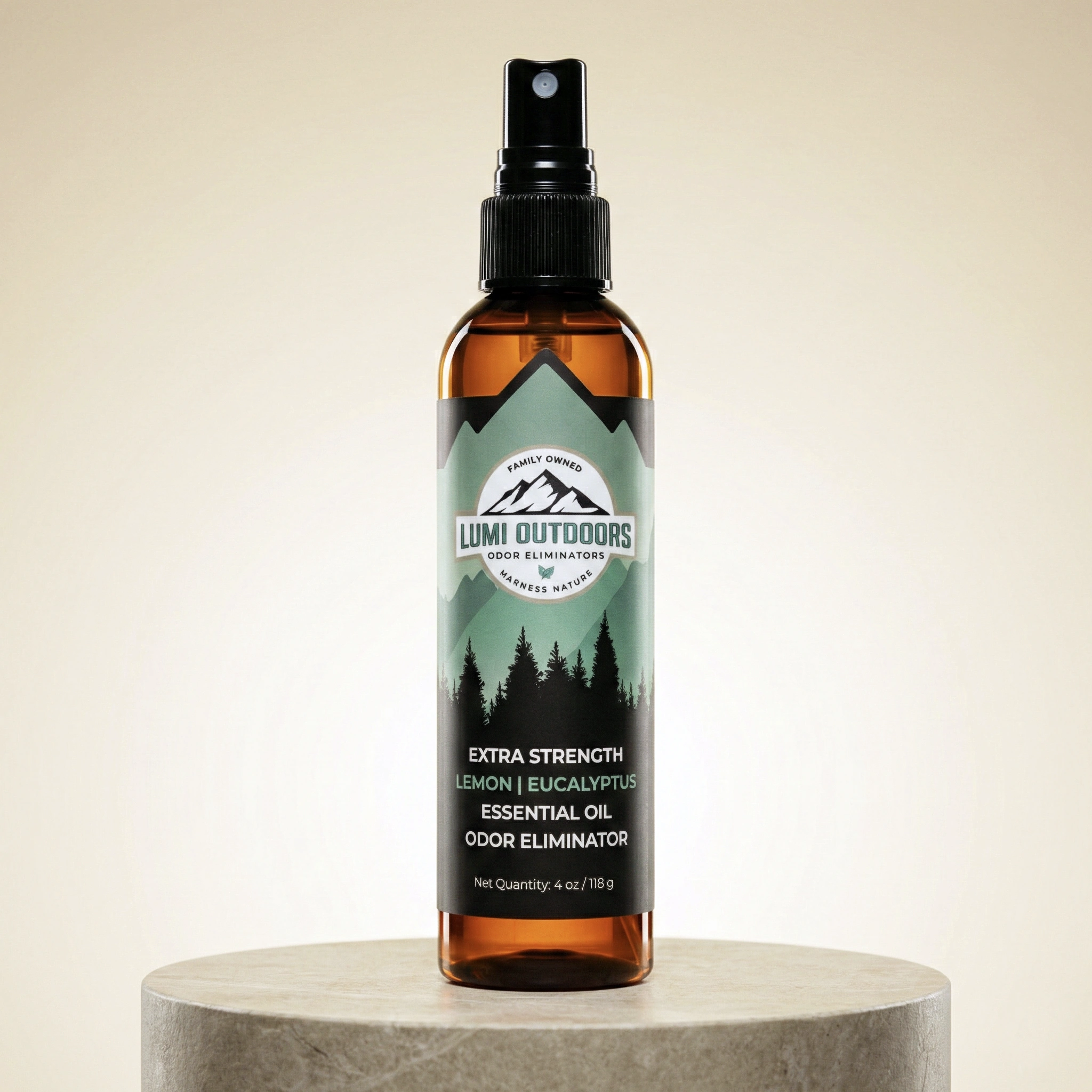
Join 1 Million+ Other People Who Chose Lumi to Conquer Their Shoe Odor.
- DESTROYS ODOR AT THE SOURCE, DOESN'T JUST MASK IT
- ALL-NATURAL & PLANT-BASED INGREDIENTS
- PROUDLY FAMILY-OWNED & MADE IN UTAH
- THE "FRESH CONFIDENCE" GUARANTEE