

The 1 Big Reason Why Chemicals in Room Spray Irritate the Skin on Your Feet
- The core problem is occlusion Room sprays are made for open air — when trapped inside a shoe, their chemicals concentrate against your skin and cause a rash.
- Sweat makes it worse Moisture from your feet reactivates dried chemical residues throughout the day, keeping the irritation cycle going even after the initial spray.
- The fix is the right product A deodorizer formulated specifically for shoe interiors uses skin-compatible ingredients that won't cause a reaction under occlusion.

Yes, that rash on your feet is likely coming from your shoes — and yes, the room spray you've been misting inside them is probably why. The core problem is occlusion: room sprays are engineered to disperse into open air, not sit trapped between your foot, a sock, and the inside of a shoe. When those chemicals have nowhere to go, they become concentrated irritants pressed directly against your skin for hours at a time. That's the short answer, and it's the whole story.
This isn't a rare allergy. It's a straightforward cause-and-effect that shows up in dermatology offices more than you'd think. Grab a can of Glade or Febreze, spray it inside a sneaker, slip your foot in, and you've essentially created a small chemical chamber against your skin. The compounds in those sprays were never tested for that kind of sustained skin contact — because they were never meant for it.
Why Does Air Freshener Cause a Shoe Rash?
Room sprays cause foot rashes because their chemical ingredients are formulated for airborne dispersion, not prolonged contact with skin. When trapped inside a shoe, these compounds concentrate against the skin and trigger irritant contact dermatitis — a direct chemical reaction that doesn't require an allergy.
Picture what happens the moment you slip on a freshly sprayed shoe. The spray residue — still wet or barely dried — coats the interior fabric. Your foot compresses against it. Your sock absorbs some, but your skin absorbs the rest. And then you walk around for eight hours.
That's occlusion. It's the same principle that makes certain workplace chemicals hazardous when they get on skin — even chemicals that are perfectly safe to smell from a distance. The CDC's National Institute for Occupational Safety and Health has documented for years how skin absorption of chemicals increases dramatically under occlusive conditions (like a shoe). Distance and concentration are everything. Room sprays are designed for one; your shoe creates the exact opposite of the other.
And here's something worth knowing: even after a spray dries, the residue doesn't just disappear. It sits in the fabric of your shoe liner. The moment your foot starts to sweat, that moisture reactivates the dried residue and drives it back into your skin. So the exposure isn't just when you put the shoe on — it cycles throughout the entire day. We go deeper on this exact mechanism in our piece on why air freshener causes a chemical rash if you want the full breakdown.
What's Actually in Room Spray That Irritates Skin?
The most common culprits are phthalates (used as fragrance carriers), synthetic musks, and formaldehyde-releasing preservatives. These are safe at the low concentrations found floating through a room, but they become concentrated skin irritants when trapped against your foot under a shoe.
Let's be specific, because "chemicals are bad" isn't useful to anyone.
Phthalates are used to make fragrances last longer. They're in most mass-market air fresheners. When dispersed in a room, you're exposed to tiny amounts. Trapped in a shoe against your skin? The exposure is orders of magnitude higher. The National Institute of Environmental Health Sciences has flagged phthalates as endocrine disruptors at elevated exposures — and skin absorption is a real route of entry.
Synthetic musks — the compounds that give air fresheners that "clean laundry" or "fresh linen" smell — are similarly designed to linger in air. On skin, especially skin that's warm and sweating, they can cause contact dermatitis, which is just the medical term for a skin reaction caused by something touching you.
Formaldehyde-releasers are preservatives used to keep products shelf-stable. Brands aren't required to list them by name — they hide under ingredient names like DMDM hydantoin or quaternium-15. These are known skin sensitizers even at low concentrations.
Sweat makes all of this worse. Your feet produce more sweat per square inch than almost any other part of your body. That warm, moist environment doesn't just reactivate dried residues — it also opens your pores and softens the skin barrier, making it easier for chemicals to penetrate. A dry foot on a dry shoe liner is bad enough. A sweaty foot on a damp, chemical-coated liner is a recipe for a rash.
This is also why "natural" room sprays aren't automatically safe for shoe use. Even plant-based fragrance compounds can irritate skin when they're concentrated and occluded. The issue isn't always the specific chemical — it's the environment. You can read more about why chemical deodorizers cause problems even when they smell fine in this piece on natural alternatives to chemical deodorizers.
If you've already sprayed room freshener inside your shoes, don't just air them out and hope for the best — the residue is still in the liner fabric. Before wearing them again, stuff the inside with newspaper, press it firmly against the liner, and leave it overnight. Newspaper is surprisingly effective at drawing chemical residue and moisture out of fabric. Replace it the next morning with fresh sheets, and give it another 24 hours before wearing. This two-stage draw method removes far more residue than simply airing the shoe out.
How Do You Heal the Rash and Safely Refresh Your Shoes?

Stop using the room spray immediately, wash your feet gently with mild soap, and let your skin breathe. For the shoes, you'll need to decontaminate the liner before wearing them again — otherwise the irritant source is still there, waiting to restart the cycle.
Here's the practical sequence:
For your feet: Wash with a gentle, fragrance-free soap. Don't scrub — the skin is already irritated. Pat dry completely, especially between the toes. If the rash involves small blisters, significant swelling, or isn't improving in a few days, see a doctor. That could be allergic contact dermatitis, which sometimes needs a short course of prescription treatment.
For the shoes: You have two options. If the shoes are washable (canvas sneakers, fabric-lined shoes), run them through a gentle cycle with fragrance-free detergent and let them air dry completely. For shoes that can't be washed, wipe down the interior liner with a damp cloth and allow them to fully air out for 48 hours before wearing again. Stuffing them with newspaper helps pull moisture and residue out of the fabric as they dry.
For the future: Use a deodorizer that's actually formulated for shoe interiors and skin contact. The Lumi Extra Strength Shoe Deodorizer Spray uses plant-based essential oils specifically chosen for dermal compatibility — no synthetic musks, no phthalates, no formaldehyde-releasers. It's built for the inside of a shoe, which is exactly the environment your Glade can was not. If you want a broader look at what actually works, our guide to neutralizing shoe stench fast walks through the full toolkit.
Is It Irritant or Allergic Contact Dermatitis — Does It Matter?
It matters because the treatment timeline differs, but both types can be caused by air freshener in shoes. Irritant contact dermatitis shows up quickly (within hours) at the contact site. Allergic contact dermatitis is a delayed immune response that can appear 12–72 hours after exposure and can spread beyond the original contact area.
Most air freshener shoe rashes are irritant reactions. Your skin is simply reacting to a chemical that is too concentrated for prolonged contact. Stop the exposure, calm the skin, and it resolves. No allergy required — anyone's skin would react under those conditions.
Allergic contact dermatitis is less common but trickier. It means your immune system has developed a specific sensitivity to an ingredient — often a fragrance compound or preservative. Once that sensitivity exists, even tiny future exposures can trigger a reaction. If you've had multiple shoe rashes from different products, or if your rash is spreading and intensifying rather than calming down after removing the source, get a patch test from a dermatologist. They can identify the specific compound causing the reaction.
Common symptoms that show up in both types: redness, itching, skin that feels warm to the touch, and small fluid-filled blisters in severe cases. The rash usually appears on the tops of the feet, the sides, or the soles — wherever the shoe liner makes the closest contact.
One thing worth knowing: people with diabetes or circulation issues have skin that's already more vulnerable to irritants and slower to heal. If that's you, the stakes for getting this right are higher. Our article on diabetic-safe shoe spray options is specifically written for sensitive-skin situations like this.
The bottom line is simple: room sprays belong in rooms. Your shoes need something formulated for the closed, warm, sweaty, high-contact environment they actually are. Swapping out one product for the right one is the only real fix here.
Still dealing with smelly shoes but afraid of another rash?
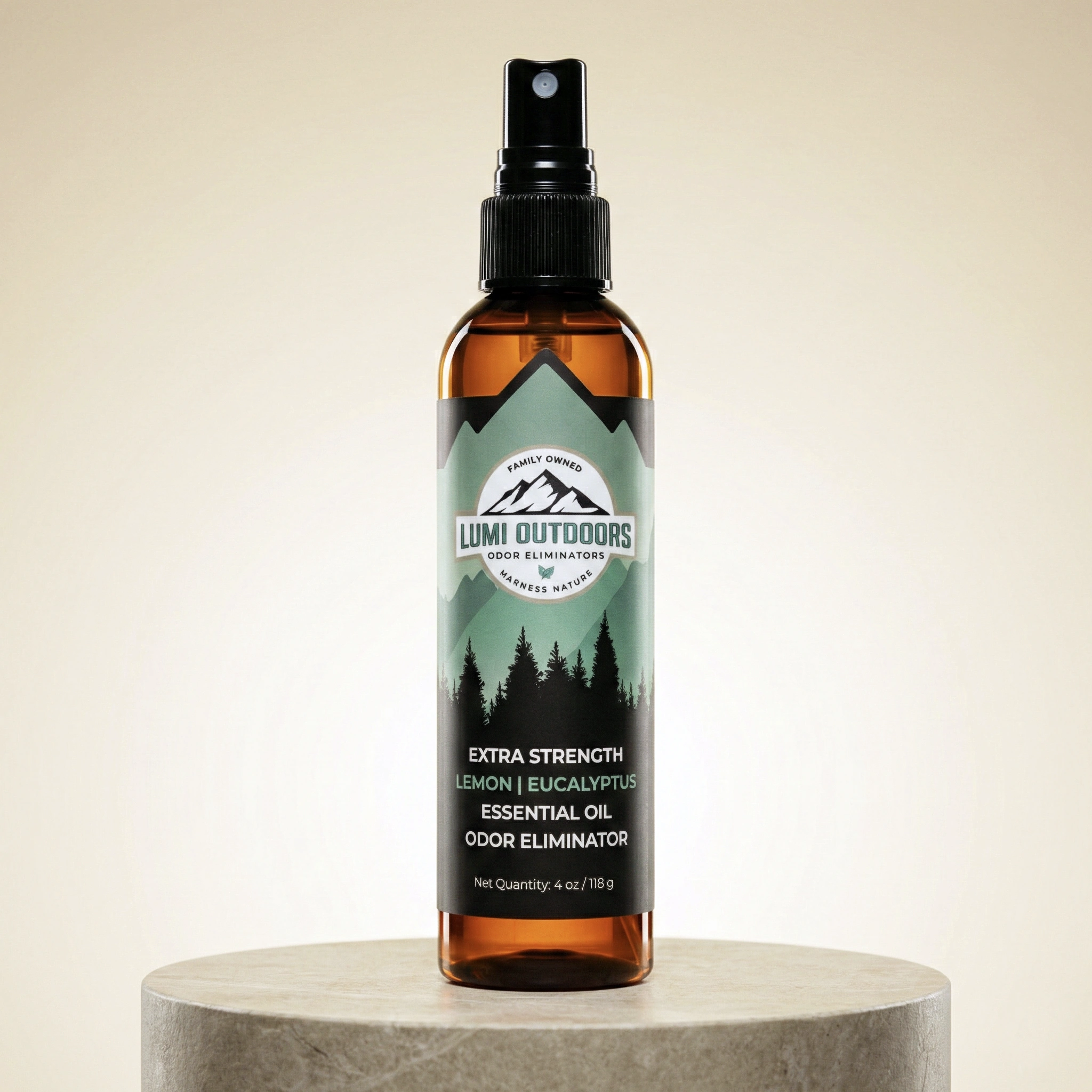
Join 1 Million+ Other People Who Chose Lumi to Conquer Their Shoe Odor.
- DESTROYS ODOR AT THE SOURCE, DOESN'T JUST MASK IT
- ALL-NATURAL & PLANT-BASED INGREDIENTS
- PROUDLY FAMILY-OWNED & MADE IN UTAH
- THE "FRESH CONFIDENCE" GUARANTEE