
Smelly "Swamp Feet?" Why Arrowroot Foot Powder for Children Actually Works
- Moisture Is the Real Problem Foot odor in kids starts with sweat trapped inside shoes, not the smell itself—so you have to stop moisture first.
- Arrowroot Outperforms Baking Soda Unlike reactive remedies, arrowroot powder creates a dry environment before odor ever forms, working proactively all day.
- Talc-Free Matters for Kids Plant-based arrowroot powder is safe for daily use on children's sensitive skin with no harsh chemicals or synthetic fragrances.
- Apply Before the Shoe Goes On The 45-second pre-school powder routine—feet first, then inside the shoe—is what actually prevents swamp foot from forming.

You know the smell. Your kid kicks off their cleats in the mudroom—or worse, in the car—and suddenly you're questioning every life decision that led to this moment. It's not just "a little sweaty." It's a wall of odor that follows them from the soccer field to the couch. And if you've got a kid in sports, you probably also have a pair of shoes you're secretly afraid to pick up.
You're not alone. Parents of active kids deal with this every single day, and the search for a fix that actually works can feel exhausting. Baking soda? Tried it. Dryer sheets stuffed in the shoes? Yep. Leaving them in the garage? The garage now smells bad. So let's actually talk about what's going on and what makes arrowroot foot powder for children a real solution—not just another short-term mask.
Why Do Kids' Feet Smell So Much Worse Than Adults'?
Children's feet sweat at a higher rate than adults' because they have more sweat glands per square inch of skin, and they're often far more physically active for their body size. That combination creates the warm, wet environment inside a shoe where odor-causing bacteria thrive.
Here's the basic biology: your child's feet have roughly 250,000 sweat glands. When they're running sprints at soccer practice or spending six hours in school shoes, those glands are working overtime. The sweat itself is odorless—the problem is what happens when it gets trapped inside a closed shoe. Bacteria that naturally live on skin break down sweat compounds, and that process produces the smell. Specifically, bromodosis, the clinical term for foot odor, is directly tied to moisture and bacteria working together.
Kids also tend to wear synthetic-material shoes—think plastic cleats, foam sneakers, rubber-soled athletic shoes—that don't breathe well at all. The foot sweats, the shoe traps it, and the cycle repeats all day. By the time they get home, the damage is done. And if those shoes don't fully dry overnight? Tomorrow's practice just makes it worse.
Active kids also tend to wear the same shoes repeatedly. A soccer player wears their cleats to practice four times a week. A basketball kid lives in the same high-tops Monday through Saturday. There's no real recovery time for the shoe, so odor builds up layer by layer until no amount of airing-out fixes it.
Most parents apply powder in the morning and call it done—but the overnight step matters just as much. After practice, remove the insoles from your child's shoes and lightly dust powder inside the empty shoe before bed. This gives the arrowroot 8+ hours to absorb residual moisture while the shoe dries, so you're not starting each morning with a shoe that's already halfway saturated. It takes five seconds and makes a noticeable difference within a week.
Why Doesn't Baking Soda Actually Fix the Problem?

Baking soda neutralizes surface odors temporarily but does almost nothing to control the moisture inside a shoe—which means the conditions that cause odor return within hours.
Baking soda gets recommended everywhere, and to be fair, it does work a little. But here's the real issue: it addresses the symptom, not the source. You sprinkle it in the shoe, it absorbs some of the smell, you dump it out in the morning. Great. But the moisture that caused the odor in the first place? Still there. The bacteria that fed on that moisture? Still there. You've just temporarily masked the output.
The same goes for scented sprays, fabric softener sheets, and cedar inserts. These approaches are reactive—they respond to odor after it's already formed. And for kids who are in their shoes six to ten hours a day, reactive isn't enough. You need something that works before the odor cycle even starts.
Talc-based powders have been used for moisture control for decades, but they come with legitimate safety concerns, especially for children. The FDA has raised ongoing questions about talc safety, and parents who already scrutinize food labels don't exactly love the idea of a potentially problematic mineral going into their kid's shoe every morning. That's part of what's driving the shift toward plant-based alternatives.
And that's where arrowroot comes in.
If you've tried everything and still can't get ahead of shoe odor, you might find some useful context in this piece on why washing smelly gym shoes is actually making them stink more—the same principle applies to kids' athletic footwear.
If your child's feet are sweating through everything and leaving odor in every pair they own, you need a moisture absorber working on their feet before the shoe even goes on. Here's the one we keep by the door:
What You'll Need
- Cotton socks (breathable, moisture-wicking)
- Removable shoe insoles
- Natural Foot Powder Check Price →
- Soft towel for drying feet before application
What Makes Arrowroot Powder So Good at Controlling Moisture?
Arrowroot powder is a fine, starchy plant extract that absorbs moisture on contact, keeps skin dry, and doesn't cause irritation—making it one of the safest and most effective natural moisture controllers for children's skin.
Arrowroot (Maranta arundinacea) has been used in natural body care for a long time, but it's earned real attention as a talc replacement because of how well it performs. It's an ultra-fine powder derived from a tropical plant, and its starch granules are exceptionally good at absorbing liquid. When applied to the feet before putting on socks, it creates a dry barrier that slows down the sweat saturation cycle inside the shoe.
Unlike talc, arrowroot is non-irritating and gentle enough for sensitive skin—something that matters a lot when you're using it on a child every single day. It also doesn't clump or cake the way cheaper powders do, so you don't end up with white residue balled up in the toe of the sock. It just works quietly in the background.
The NIH's research on foot hygiene and skin microbiome balance supports the idea that moisture control is the most effective strategy for reducing foot odor—more than topical deodorizers applied after the fact. That science is exactly why arrowroot-based foot powders outperform scented alternatives in real-world use.
When you combine arrowroot with other natural moisture-managing ingredients like lemongrass (which adds a clean, fresh scent naturally) and mineral-based absorption agents, you get a powder that does two things at once: keeps feet dry and neutralizes the conditions where odor develops. That's a meaningful difference from sprinkling baking soda in a shoe and hoping for the best.
We tested Lumi's Natural Foot Powder side-by-side against a generic baking soda powder and a major drugstore talc product. The arrowroot formula stayed dry and odor-free through a full school day and a one-hour soccer practice. The others? Not so much. Here's how the comparison broke down:
| Feature | Natural Foot Powder | Generic Baking Soda Powder |
|---|---|---|
| Moisture Absorption | Deep absorption via arrowroot starch—works all day | Surface-level, dissipates within 1-2 hours |
| Safe for Kids' Skin | Talc-free, plant-based, no synthetic fragrances | Often contains talc or synthetic perfume agents |
| Chafing Prevention | Reduces friction by keeping skin dry throughout activity | Minimal—clumps when wet, can increase friction |
| Scent Source | Natural lemongrass—fresh and clean | Synthetic fragrance that masks rather than neutralizes |
| Texture in Shoe | Silky and smooth, no residue buildup | Can cake and clump, especially when wet |
| Price Per Use | Moderate—one bottle lasts months with proper use | Cheap upfront, but requires frequent reapplication |
How Does Arrowroot Powder Help With Chafing, Too?
Arrowroot powder reduces friction between skin and sock by keeping the surface dry, which directly prevents the heat and rubbing that cause chafing—a common problem for kids in cleats and tight athletic shoes.
Here's something that doesn't get talked about enough: swamp foot isn't just about smell. It's also about comfort. Kids who are running in wet, slippery socks inside a shoe are dealing with friction, hot spots, and blisters. Soccer players, in particular, feel this acutely because cleats are tight-fitting, often have minimal padding, and are designed for performance over breathability.
When moisture builds up between the sock and the foot, every step creates a small amount of friction. Over a two-hour practice, that adds up. Blisters form at friction points. Skin gets raw. And then your kid comes home and tells you their feet hurt, and you're buying blister bandages on top of trying to deal with the odor.
A dry powder applied before the sock goes on acts as a buffer. It absorbs the initial sweat, reduces skin-to-sock friction, and keeps the foot more stable inside the shoe. This is actually why arrowroot foot powder was a natural choice for dancers and athletes long before it became a mainstream foot care product.
If your child is in dance or other performance activities with tight-fitting footwear, the connection between moisture control and shoe integrity is explored in this piece on the hidden link between pointe shoe odor and broken shoe boxes—the same moisture problem, different shoe type.
What's the Best Morning Routine for Applying Foot Powder to Kids Before School?

Apply arrowroot foot powder to clean, dry feet before socks go on—covering the entire sole, between the toes, and the heel. A light dusting inside the shoe itself adds an extra layer of moisture protection throughout the day.
The key word is "before." Most parents think of foot powder as something you use after noticing a smell—but the real benefit comes from using it as a daily preventative step. Here's a simple pre-school routine that takes about 45 seconds:
Step 1: Start With Clean, Dry Feet
This sounds obvious, but it matters. Wet feet from the shower or bath will dilute the powder and reduce its effectiveness. Pat feet fully dry, especially between the toes, before applying. If your child showers at night, their feet are already dry in the morning—this step takes zero extra time.
Step 2: Apply Powder to the Foot Directly
Shake a light, even amount of powder onto your palm or directly onto the bottom of the foot. Work it across the whole sole and between each toe. Between the toes is where moisture accumulates first, so don't skip that part. You don't need a thick coating—a fine, even dusting is all you need. With younger kids, you can do this while they sit on the edge of the bed.
Step 3: Dust the Inside of the Shoe
Shake a small amount of powder directly into the shoe and tap it around to coat the insole. This gives you a second layer of moisture absorption working from the bottom of the shoe up. Use a cotton sock liner or let the powder settle for 30 seconds before the shoe goes on. This extra step is especially worth it for cleats and boots that trap heat.
Step 4: Let the Shoe Air Overnight
After school or practice, pull out the insoles if they're removable and let the shoe dry in open air—not in a closed bag or locker. A dry shoe going into the next morning means the powder starts fresh instead of fighting an already-saturated environment.
For kids with especially persistent odor in their shoes even after consistent powder use, the Natural Foot Powder and Extra Strength Shoe Deodorizer Spray bundle gives you both angles covered: prevention on the foot and a reset for the shoe. It's the system that makes sense for athletes who are in their shoes five-plus days a week.
Also, if you've got other footwear in the house developing a mystery smell, this guide on why your flats smell without socks explains the same moisture science at work.
Is Natural Foot Powder Safe for Kids to Use Every Day?
Yes—arrowroot-based, talc-free foot powders are safe for daily use on children. They contain no synthetic fragrances, no harsh chemicals, and no talc, making them appropriate for sensitive skin and everyday application.
This is usually the first question parents ask once they start thinking about a daily foot powder routine. And it's a fair one. The answer depends entirely on what's in the formula.
Talc-free formulas built around plant starch (like arrowroot) and mineral bases are generally recognized as safe for regular skin contact. There are no known sensitizing agents, no bleaching agents, and no synthetic fragrances that could irritate young skin. The lemongrass scent in natural versions comes from plant-derived sources, not artificial perfume compounds.
For kids who have sensitive skin or eczema-prone feet, it's always reasonable to test on a small patch of skin first. But for the vast majority of children, daily arrowroot foot powder is no more concerning than a natural body lotion—and considerably safer than many conventional alternatives.
Nothing's perfect, though. Here's the honest breakdown:
- Stops odor at the source by controlling moisture before it builds up
- Talc-free formula is safe for children's skin and daily use
- Reduces chafing and blisters in tight athletic footwear like cleats
- Natural lemongrass scent without synthetic fragrance irritants
- Works on feet and inside shoes for double moisture protection
- Requires a consistent daily routine to see the best results—occasional use won't fix chronic odor
- Won't fully reset shoes that already have deep-set odor built up over months; pair with a spray for those cases
Tired of Your Kid's Shoes Clearing the Room?
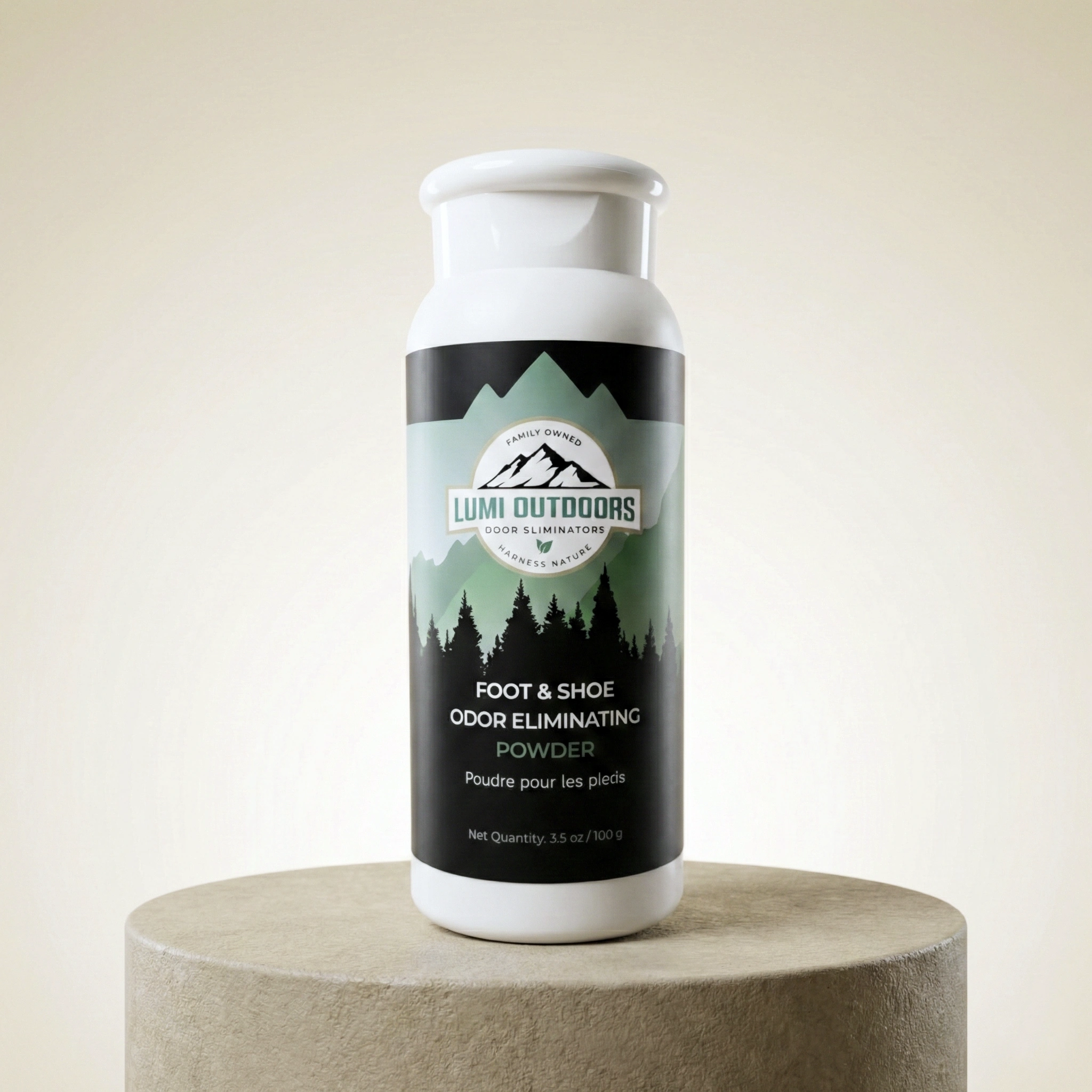
The best way to fight odor is to stop it before it starts. Our all-natural, talc-free foot powder is your first line of defense against mois...
- ABSORBS SWEAT & NEUTRALIZES ODOR
- ALL-NATURAL & TALC-FREE FORMULA
- PROUDLY FAMILY-OWNED & MADE IN UTAH
- THE "FRESH CONFIDENCE" GUARANTEE