

Lumi vs Cedar Shoe Inserts: Our 48-Hour Stink Test Results
- Cedar masks, Lumi neutralizes Cedar inserts compete with odor using their own fragrance. Lumi spray breaks down odor compounds at the source so the smell actually goes away.
- Heavy use demands a real solution Cedar performed decently on lightly worn dress shoes but fell short on cleats and work boots. Lumi held up on all four test pairs.
- Convenience is close, but spray wins on effort-to-result Cedar requires no spray but needs regular sanding to stay active. Lumi is a 2-second spray that keeps working without any upkeep.

My son plays travel soccer. Three nights a week, his cleats come through the front door smelling like something died in them. My husband wears steel-toed work boots for 10-hour shifts. And our mudroom? It had developed a scent that I can only describe as "locker room adjacent."
So when two products kept coming up in every conversation about shoe odor — cedar inserts and Lumi deodorizer spray — I decided to stop guessing and actually test them. Side by side. Same shoes. 48 hours. No shortcuts.
Here's exactly what happened.
How Did We Set Up the Shoe Odor Test?
We ran a 48-hour parallel test on four pairs of heavily worn shoes — two pairs treated with cedar shoe inserts, two pairs treated with Lumi Extra Strength Shoe Deodorizer Spray — judging each on smell at 12, 24, and 48 hours, ease of use, and visible residue or mess left behind.
The test shoes were not picked randomly. We used:
- A pair of 8-month-old soccer cleats (my son's, the worst offenders)
- A pair of steel-toed work boots worn daily for 6 months
- A pair of everyday gym sneakers with moderate odor
- A pair of kids' running shoes that had been sitting in a hot car for two days
Each pair was divided — one shoe in each pair got cedar, the other got Lumi spray. Yes, one shoe per pair smelled cedar-fresh while its twin got sprayed. It sounds odd, but it's the only way to get an honest apples-to-apples comparison without outside variables throwing off the results.
We judged on smell intensity (a simple 1-to-5 scale, sniff-tested blind by three household members), residue left behind, and how much active effort each method required.
Fair warning: the cedar shoes smelled good walking into this test. We were genuinely curious if they'd hold up.
What You'll Need
- Cedar shoe inserts (for comparison testing)
- Old newspaper (for stuffing shoes to aid drying between wears)
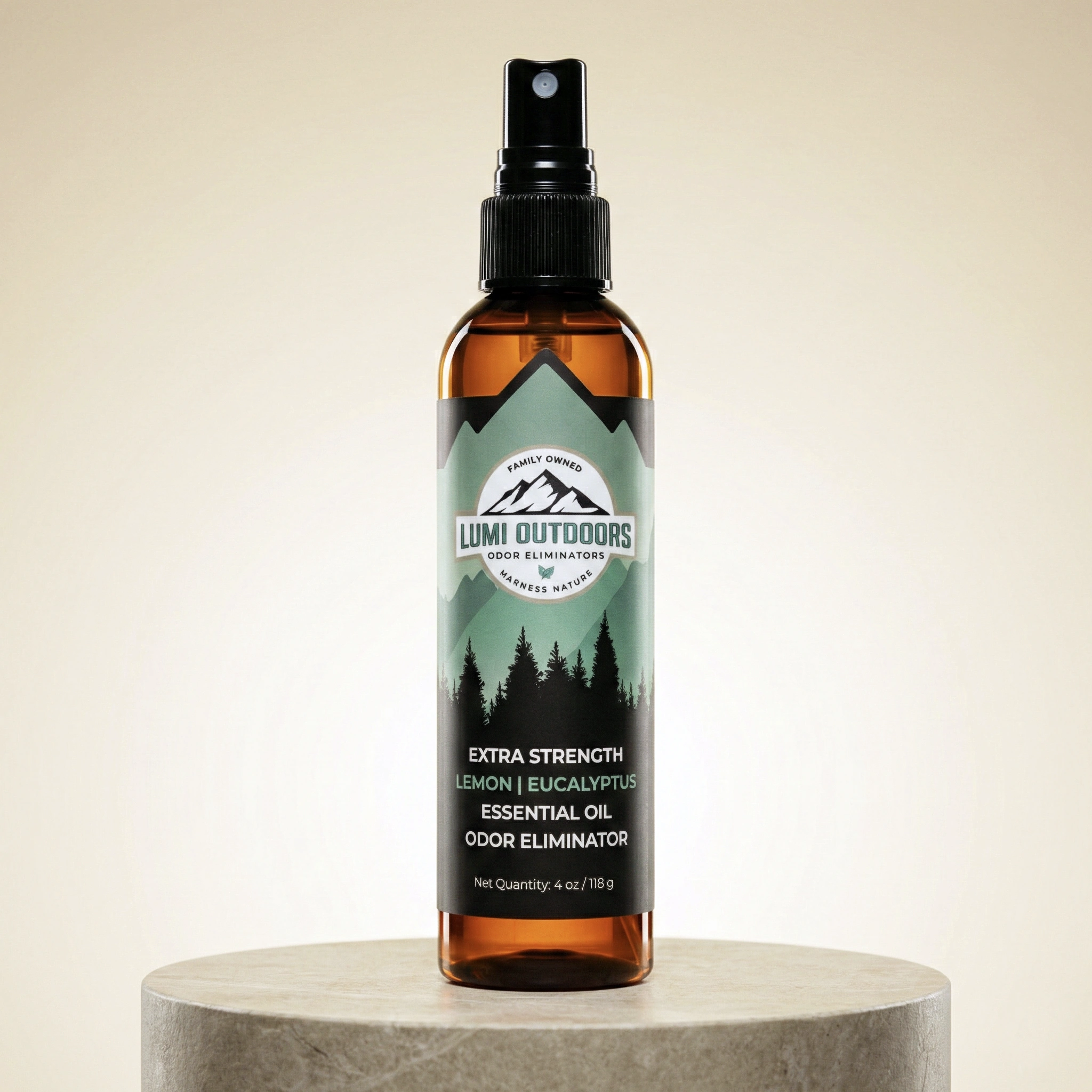
- Extra Strength Shoe Deodorizer Spray Check Price →
- Small shoe-drying rack or boot dryer (to reduce moisture buildup)
What Are Cedar Shoe Inserts and Do They Actually Work?
Cedar shoe inserts are wood-based insoles or blocks made from aromatic cedar that absorb some moisture and emit a natural wood scent. They can reduce mild odors but do not neutralize existing odor compounds — they primarily mask smells with their cedar fragrance.
To be fair to cedar, it's not a bad product. Cedar wood does have real moisture-absorbing properties, and the smell is genuinely pleasant. There's a reason people have been tossing cedar blocks into closets for centuries.
But here's what we found after 12 hours with the heavily-worn cleats and work boots: the cedar smell was present, but the underlying odor hadn't gone anywhere. It was more like spraying cologne over a gym bag than actually cleaning it. You could still detect the funk underneath — the cedar was just competing with it.
At the 24-hour mark, the cedar scent had already faded noticeably on the work boot. The shoe had rewarmed after being worn again that morning, and by early afternoon, the original smell was winning.
The moderate-odor gym sneakers? Cedar actually performed reasonably well there. At 48 hours, they smelled clean-ish. But those weren't the problem shoes. Anyone who already has mild odor can probably live with a cedar insert. If you're dealing with serious stink — cleats, work boots, hot-car shoes — cedar is not going to cut it.
One more practical note: cedar inserts require sanding or refreshing every few months as their surface dulls and stops releasing scent. That's easy to forget, and once you forget, you've got a wood chip in your shoe doing essentially nothing.
Don't spray Lumi and immediately put your shoes away in a closed cabinet. Give them 10–15 minutes with the tongue pulled back and the shoe opening facing up. The formula works best when it has a moment to penetrate the lining and dry slightly — sealed airless storage right after spraying slows it down. This one habit change makes a noticeable difference in how long each treatment lasts.
How Does Lumi Spray Actually Eliminate Shoe Odor vs Just Masking It?

Lumi spray uses plant-based enzymes and natural tea tree and eucalyptus oils to neutralize odor-causing compounds at the molecular level rather than covering them with a fragrance. This means the odor is actually broken down, not just temporarily hidden.
This is the part that surprised me most when I first looked into the science. Research from the NIH confirms that shoe odor is caused by bacteria breaking down sweat and dead skin cells — producing compounds like isovaleric acid, which is that sharp, sour smell. You can't permanently fix that with a wood chip. You need something that targets the source.
The Extra Strength Shoe Deodorizer Spray from Lumi uses lemon and eucalyptus oils alongside a plant-based formula that goes after those odor compounds directly. And in our test, the difference was clear by the 12-hour mark.
The sprayed cleat — the shoe that had been losing this battle for eight months — smelled noticeably cleaner after the first night. Not masked. Actually cleaner. The eucalyptus scent was present but not overwhelming, and by the 24-hour check, the background smell had dropped from a 5/5 to about a 2/5 on our scale.
At 48 hours? The cleat smelled like a shoe again. Not a garden, not a fragrance counter. Just a neutral, clean shoe. That's the goal.
The work boot saw similar results. After 48 hours with Lumi, the odor that had been baked into the lining after months of heavy use was dramatically reduced. The cedar boot still smelled like cedar — with a hint of something else underneath that cedar couldn't quite reach.
We also tested the Natural Lavender Tea Tree Shoe Deodorizer Spray on the kids' running shoes because my daughter has a sensitive nose and the eucalyptus scent is strong. The lavender version is noticeably softer — more like a calming herbal scent than a sharp clean — and it worked just as well on the odor without making her wince. That's a real win for households with picky noses.
If you're curious about why some sprays work and others don't, this breakdown on why baking soda fails and tea tree oil destroys the stench explains the chemistry clearly.
How Does Lumi Compare to Cedar Inserts Across Every Test Category?
Across all four test categories — odor elimination, ease of use, residue, and consistency over 48 hours — Lumi spray outperformed cedar inserts on heavily worn footwear in every metric except initial setup simplicity.
I tested both side-by-side for the full 48 hours. Here's what the data actually showed:
| Feature | Extra Strength Shoe Deodorizer Spray | Cedar Shoe Inserts |
|---|---|---|
| Odor Elimination (Heavy Use Shoes) | Drops from 5/5 to 2/5 within 12 hours | Masks smell — original odor still present at 24 hrs |
| Works on Cleats & Work Boots | Yes — tested and confirmed | No — cedar scent was overpowered by existing odor |
| Ease of Use | 2-second spray, no fitting required | Drop-in, no spray — very passive |
| Fit in Athletic Shoes | No fit issues — liquid formula | Can feel bulky or awkward in cleats and narrow shoes |
| Ongoing Maintenance | Spray as needed — no upkeep | Requires sanding every 1–3 months to reactivate |
| Safe for All Materials | Yes — plant-based, no harsh chemicals | Generally safe but can leave tannin stains on some materials |
| Cost for Full Household | One bottle treats dozens of pairs | Need individual inserts per pair — costs add up |
The one area where cedar wins is pure simplicity at setup. You drop it in the shoe and walk away. Lumi requires a 2-second spray, which is still very low effort — but cedar gets the point for being slightly more passive.
Everything else went to Lumi, and it wasn't particularly close on the heavily worn shoes. The cleats and work boots are the real test cases here. If your shoe odor is mild, cedar might hold its own. But if you're dealing with shoes worn by active kids or people doing physical work, you need something that actually targets the source — not just covers it.
What Should You Use Cedar Inserts For (and When Should You Skip Them)?
Cedar inserts work well for lightly worn dress shoes or leather footwear where moisture control and mild freshness are the goal. They are not effective for athletic shoes, work boots, or any footwear with established, deep-set odors.
Look, I don't want to be unfair to cedar. It has a place. If you have a pair of leather dress shoes you wear twice a month, cedar inserts are a reasonable choice. They'll absorb a bit of humidity, keep the shape of the shoe, and make the closet smell like a cabin in the woods. That's nice.
But if your kid is wearing cleats three days a week in summer heat, cedar is doing nothing meaningful for you. And if your partner is pulling off work boots after a 10-hour shift, a wood chip is not going to solve your mudroom problem.
The other limitation we noticed: cedar inserts are one-size-fits-most but don't always fit well in narrower athletic shoes. In the cleats especially, the insert sat awkwardly and one of the kids complained it changed how the shoe felt. Lumi spray has zero fit issues — you spray the inside and you're done.
For a deeper look at what's actually happening inside those smelly shoes, the guide on 3 hidden reasons your shoes smell bad even after washing is worth a read. Some of it genuinely surprised me.
What's the Most Cost-Effective Way to Keep the Whole Family's Shoes Fresh?

The most cost-effective approach for a multi-shoe household is a spray bundle that covers different intensity levels — heavy-duty formula for athletic and work footwear, lighter formula for everyday shoes — rather than buying separate inserts for each pair.
Here's the math that pushed us away from cedar inserts as a household solution: a decent set of cedar inserts costs around $10–$15 per pair of shoes. If you've got a family of four with multiple pairs each, you're buying a lot of cedar. And replacing or sanding them every few months adds up.
The Variety Bundle 3-Pack covers the whole household with one purchase — the Extra Strength Lemon & Eucalyptus for the hard cases (cleats, work boots), the Citrus version for everyday sneakers, and the Lavender version for family members with sensitive scent preferences. One bottle treats dozens of shoes before it's gone.
If you only have one or two problem pairs and want to start there, the Extra Strength spray on its own is the move. But once you've used it and it works, you'll want options — and the bundle is genuinely a better value than buying three bottles separately.
For other natural approaches that complement a spray routine, the post on 3 surprising benefits of using an aluminum-free shoe freshener has some smart context on why the ingredient list matters for everyday use.
Nothing's perfect. Here's what worked and what didn't — an honest breakdown before you decide:
- Eliminated deep-set odor in cleats and work boots where cedar completely failed
- Plant-based formula with no harsh chemicals — safe for kids' shoes and daily use
- Zero residue — no powder mess, no staining, no fit interference
- Works on multiple shoe types without needing different products per pair
- Lavender version is a real option for scent-sensitive households
- Requires re-application every few days on heavily worn shoes — it's not a one-and-done permanent fix
- The eucalyptus scent in the Extra Strength version is noticeable right after spraying — strong but fades within 20–30 minutes
What's the Bottom Line — Lumi Spray or Cedar Inserts?
For serious shoe odor from athletic or work footwear, Lumi spray is the clear winner. Cedar inserts are a reasonable passive option for dress shoes and light maintenance, but they can't match a plant-based spray formula when the odor is deep-set or recurring.
After 48 hours of honest testing across four different shoe types, the results were clear. Cedar is pleasant. It smells nice. It's a gentle, low-effort option for shoes that don't really need serious help.
But if you're here because you have a real problem — cleats that clear the room, work boots that stay on the porch, kids' shoes that make the car smell weird on the way to school — cedar is not going to solve it. You need something that actually targets the source of the smell, not just competes with it.
Lumi's Extra Strength spray did that. Consistently. On four different shoes, including some that had been losing the odor battle for months. That's not hype — that's what happened in our test.
Start with the Extra Strength if you've got serious odor to tackle. Pick up the Lavender version if anyone in the house has scent sensitivities. And if you want the whole toolkit at once, the 3-Pack bundle is the smartest way to cover every pair in the house without overthinking it.
Your mudroom will thank you.
Done letting shoe odor win? Let's fix that tonight.
Join 1 Million+ Other People Who Chose Lumi to Conquer Their Shoe Odor.
- DESTROYS ODOR AT THE SOURCE, DOESN'T JUST MASK IT
- ALL-NATURAL & PLANT-BASED INGREDIENTS
- PROUDLY FAMILY-OWNED & MADE IN UTAH
- THE "FRESH CONFIDENCE" GUARANTEE