
Got Smelly Flats? 3 Steps to Neutralize Odor at Formal Events
- Flats Are Odor Traps by Design No socks, no ventilation, and thin linings mean sweat goes straight into the shoe — and stays there.
- Air Them Out First Stuff with newspaper and leave in a ventilated space for at least 24 hours before the event to pull out residual moisture.
- Spray Two Days Out, Then Again the Morning Of A botanical deodorizing spray applied in two rounds — 48 hours before and on the day — handles most of the problem before it starts.

You're standing in the receiving line at a summer wedding. The venue is gorgeous. You're dressed perfectly. And then someone slips off their flats to rest their feet during cocktail hour — and suddenly everyone around the table knows about it.
It happens more than people talk about. Flats are worn barefoot (or nearly barefoot) by design, which means every drop of sweat, every warm venue, every hour of standing goes directly into the shoe's lining. No sock. No barrier. Just skin and leather — or fabric, or synthetic material — getting acquainted all day long.
Here's what actually happens inside a flat during a four-hour event: your feet produce moisture, that moisture gets trapped in a warm, enclosed space, and the bacteria naturally present on skin multiply rapidly under those conditions. The byproduct of that process is the smell. And the longer you're on your feet, the worse it gets.
The good news? You don't have to just live with it. These three steps — done in the right order — can stop the problem before it starts. The best part is that step three handles most of the heavy lifting on its own.
1. What Causes Flats to Smell So Much Worse Than Other Shoes?
Flats trap odor faster than most footwear because they're worn without socks against bare skin, which means sweat soaks directly into the lining — and without proper ventilation, bacteria multiply quickly in the warm, moist environment left behind.
Think about a sneaker for a second. It has a sock absorbing moisture. It has ventilation panels. It often has a removable insole you can air out. Flats have almost none of that. The lining is thin, often glued directly to the sole, and there's no airflow designed into the structure. It's essentially a warm, dark, slightly damp pocket — which is exactly where odor-causing bacteria thrive most.
If you want to dig deeper into why flats specifically are such a problem, this piece on why your flats smell without socks lays it out clearly. The short version: going sockless accelerates odor buildup by a significant margin, and formal flats — which are often made with synthetic linings to hit a price point — tend to hold onto that smell long after the event is over.
And if you've ever made the mistake of tossing smelly shoes into the washing machine thinking that would fix it, it usually doesn't. Machine washing can actually make things worse over time, especially with certain materials. More on that problem in this guide about why washing shoes backfires.
Most people spray the insole area only — but the real odor source in flats is usually the toe box lining, where the ball of your foot makes the most contact. Angle the nozzle toward the front third of the shoe and hold it there for 2-3 pumps before finishing with 1 pump at the heel. This targets the highest-contact zone first, which is where moisture and bacteria concentrate most in a flat's design.
2. How Do You Air Out Flats Properly Before a Formal Event?

The most effective way to air out flats before a formal event is to remove any inner cushion pads, stuff the shoes loosely with newspaper to absorb residual moisture, and leave them in a cool, ventilated space — not a closet — for at least 24 hours before wearing them.
Most people leave their shoes in a box or a closet right up until the morning of. That's one of the biggest mistakes you can make if your flats already have some odor history. Enclosed spaces keep any existing moisture locked in, which gives bacteria more time to do their thing overnight.
Here's what to do instead:
- Pull out any peel-and-stick cushion inserts you've added. These hold moisture like a sponge and need to dry separately.
- Ball up a couple of sheets of newspaper and stuff each shoe loosely. Newspaper is genuinely good at pulling moisture out of the interior lining — it's not just an old wives' tale.
- Leave the shoes somewhere with actual airflow. Near an open window, or in a room with a fan running. Not a closed closet.
Give them at least 24 hours. If your event is tomorrow and you're reading this tonight, skip ahead to Step 3 — that's where the real work happens anyway.
One more thing worth mentioning here: if you use insole pads or heel grips inside your flats (which a lot of people do for comfort), rinse them with cool water, pat them dry, and let them air out separately. Don't just leave them inside the shoe. They trap odor even more efficiently than the shoe lining itself.
What You'll Need
- Newspaper (for moisture absorption stuffing)
- Removable insole cushion pads (to air out separately)
- Natural Lavender Tea Tree Shoe Deodorizer Spray Check Price →
- Small handheld fan or access to open window (for ventilation drying)
3. What's the Best Spray to Use on Flats Before a Formal Event?
A natural botanical spray — specifically one formulated with tea tree oil and lavender — is the best option for formal flats because it neutralizes odor at the source, dries without leaving residue, and won't damage delicate shoe materials like satin, fabric, or soft leather.
This is the step that does the most work. And it's also the easiest one.
The Natural Lavender Tea Tree Shoe Deodorizer Spray is what we recommend for formal shoes specifically. Here's why it makes sense for this context: the lavender scent is subtle, not sharp. You're not going to end up smelling like a locker room product at a wedding reception. It's genuinely pleasant — more spa than sports bag — and the scent dissipates to a neutral fresh within a few minutes of application.
The formula is plant-based, which matters for formal shoes. Satin, soft leather, fabric — these materials can react badly to harsh chemical sprays. A natural spray won't leave a stain, won't break down adhesives, and won't leave the kind of white residue you might see with some powder-based products.
We also tested our natural spray against a leading synthetic aerosol deodorizer. The results weren't even close — and the difference isn't just how they smell. It's what's actually in them:
| Feature | Natural Lavender Tea Tree Shoe Deodorizer Spray | Synthetic Aerosol Deodorizer |
|---|---|---|
| Safe for Satin & Fabric Flats | Yes — plant-based, no staining | Risk of discoloration on delicate materials |
| Scent Profile | Subtle lavender — fades to neutral | Strong synthetic fragrance that lingers |
| Odor Neutralization | Targets odor at the source | Masks odor with fragrance overlay |
| Ingredient Safety | 100% plant-based, no harsh chemicals | Synthetic propellants, parabens, phthalates |
| Residue After Drying | Dries clean, no white marks | Can leave visible residue on dark fabrics |
How to Apply It: The Pre-Wedding Protocol
Timing and technique matter more than people realize. Here's the exact application sequence to follow:
- 48 hours before the event: Spray the inside of each flat with 2-3 pumps of the Natural Lavender Tea Tree Spray. Hold the nozzle about 6 inches from the shoe interior. Let them dry completely — don't rush this step by putting them somewhere warm. Room temperature is fine.
- 24 hours before: Do the newspaper stuffing step from Step 2. This pulls out any remaining moisture from the first application and keeps the interior fresh.
- Morning of the event: One final light spray — just 1-2 pumps — and let the shoes air for 30 minutes before putting them on. By the time you're wearing them, the scent will be present but subtle.
That's genuinely it. Three applications over two days, and your flats go into the event in the best possible condition. No last-minute scrambling. No backup shoes taking up space in your bag.
Speaking of which — let's talk about the backup shoe strategy, because it's one of the most common pieces of advice people give, and it's largely impractical.
Nothing's perfect. Here's what worked and what didn't:
- Works on delicate formal shoe materials without damage
- Subtle scent profile — appropriate for formal events
- Plant-based and free from harsh chemicals
- Two-round application is easy to fit into pre-event prep
- Genuinely neutralizes odor rather than just masking it
- Requires planning ahead — not a last-minute fix if odor is already severe
- Heavily embedded odor in old or unworn flats may need the Extra Strength formula first
Why Carrying Backup Shoes to a Formal Event Is Usually a Bad Idea

Backup shoes sound sensible in theory, but at formal events — where you're already managing a bag, gifts, drinks, and a packed schedule — they're a logistical burden that most people abandon within the first hour.
The advice seems reasonable: "Just bring a second pair of flats in case the first ones get bad." But here's what actually happens at a wedding or formal dinner: you arrive, you find your seat, you set your bag down somewhere, and you don't see it again until the end of the night. Changing shoes mid-event requires finding a quiet bathroom, carrying the extra pair to said bathroom, and then figuring out what to do with the pair you took off.
And if both pairs haven't been treated properly beforehand, you're just rotating the same problem.
The cleaner solution — and the one that actually holds up in real-world conditions — is to handle the issue before you ever leave the house. A proper pre-event treatment means you only need one pair of shoes, and you're not spending any mental energy on it during the event itself.
For anyone curious about how tea tree oil actually works in these formulas (and why pure tea tree oil on its own isn't the answer), this is a solid read: why pure tea tree oil for shoes is a myth.
What's the Best Pre-Event Application Guide for Smelly Flats?
The most effective pre-event routine combines ventilation (24-48 hours of open-air drying), moisture absorption (newspaper stuffing), and a botanical deodorizing spray applied in two rounds — 48 hours before and again on the morning of the event.
Let's put the full timeline together in one place so it's easy to follow:
- 72 hours out: Take your flats out of storage. Remove any insole cushions. Check the interior lining for any existing staining or strong odor. If the smell is already significant at this point, do an initial spray treatment now — use a heavier hand, 3-4 pumps per shoe.
- 48 hours out: Standard spray treatment (2-3 pumps per shoe). Let dry completely. Do not stuff with newspaper yet — let the spray work first.
- 24 hours out: Newspaper stuffing. Leave overnight in a ventilated area. Remove newspaper in the morning.
- Morning of: One final light spray. Air for 30 minutes. Wear with confidence.
If your flats have a more stubborn odor situation — the kind that's been building up over multiple wears — the Extra Strength Shoe Deodorizer Spray is worth having on hand for that initial treatment. It's formulated for tougher jobs, and using it for the 72-hour step while switching to the lavender formula for the morning-of application is a smart combination.
This two-step approach — heavy treatment first, lighter maintenance close to the event — gives the formula time to work thoroughly without overwhelming the scent profile right before you wear the shoes.
Tired of shoe odor? We recommend:
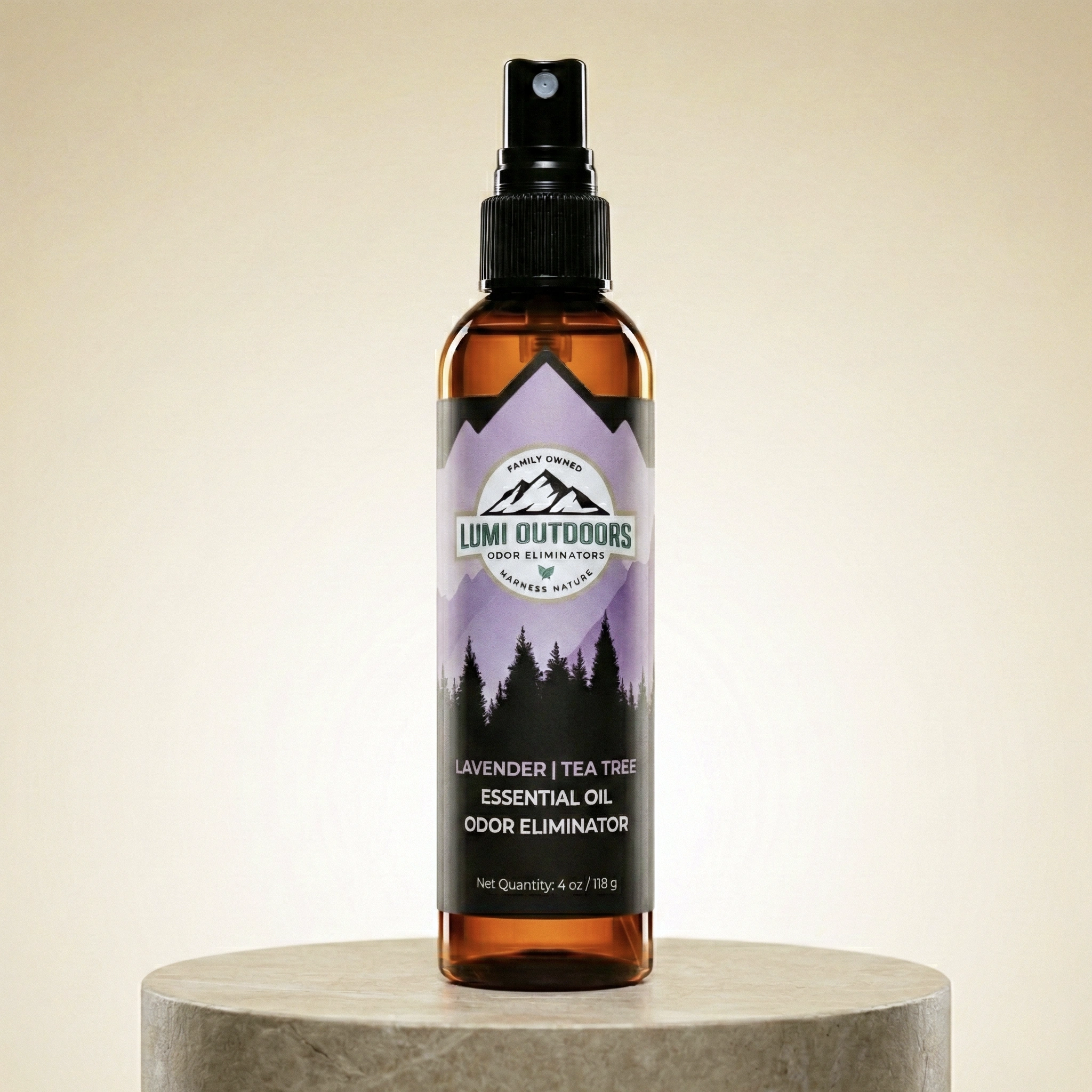
Join 1 Million+ Other People Who Chose Lumi to Conquer Their Shoe Odor.
- DESTROYS ODOR AT THE SOURCE, DOESN'T JUST MASK IT
- ALL-NATURAL & PLANT-BASED INGREDIENTS
- PROUDLY FAMILY-OWNED & MADE IN UTAH
- THE "FRESH CONFIDENCE" GUARANTEE