
Is there a running shoes odor eliminator that works for synthetic mesh?
- Yes, but one product won't cut it Synthetic mesh needs both moisture absorption before a run and bacterial odor neutralization after — a single spray alone can't keep up with daily use.
- Standard sprays usually just mask Fragrance-heavy sprays cover the smell temporarily but leave bacteria alive in the weave — plant-based formulas with essential oils actually neutralize the source.
- The freezer and baking soda don't really work Freezing puts bacteria into hibernation, not death — and baking soda is too abrasive and difficult to remove from fine mesh knits to be a reliable long-term fix.
- Consistency beats intensity Spraying after every run — not every few days — is the single habit that breaks the bacterial cycle in high-mileage synthetic running shoes.

Why do synthetic mesh running shoes smell so bad?
Synthetic mesh traps odor more aggressively than leather or canvas because the interlocking polyester and nylon fibers create thousands of tiny pockets where sweat, skin cells, and odor-causing bacteria — primarily Brevibacterium and Staphylococcus epidermidis — become deeply embedded and nearly impossible to remove with surface-level cleaning.
That's the real problem. It's not just sweat sitting on the surface — it's a bacterial colony living inside the weave.
Synthetic mesh was engineered for breathability, not hygiene. The same open-knit structure that keeps your foot cool during a 10K run acts like a net that catches and holds everything your foot sheds during exercise. The average foot produces about half a cup of sweat per day, and during a hard run that number climbs fast. Polyester and nylon don't absorb moisture the way natural fibers do — they wick it, which means sweat moves through the fabric quickly but bacteria stays behind.
Air-drying alone won't solve it. Once bacteria colonize the fiber structure, drying just puts them into a dormant state. The second your foot goes back in — and warm, moist conditions return — those bacteria wake up and start producing the isovaleric acid compounds that create that unmistakable ammonia-and-locker-room funk.
This is the same reason Rothy's and other plastic-knit shoes develop a specific, persistent odor — plastic-based fibers resist natural decomposition but love hosting bacteria. High-performance running shoes share this same structural vulnerability, and it gets worse the more you run in them. According to the American Podiatric Medical Association, moisture control is one of the primary factors in preventing foot odor — and for mesh shoes, that means addressing the moisture problem before it becomes a bacterial one.
Is there a running shoes odor eliminator that works for synthetic mesh?
Yes — but a single product almost never works long-term on synthetic mesh. The fiber structure requires a dual-action approach: something that absorbs moisture before it feeds bacteria, and something that neutralizes the bacteria already living in the weave. Used together, these two steps break the odor cycle instead of just masking it.
Think of it like this: a spray alone is reactive. It handles what's already there. But if you're running five days a week, bacteria are regenerating faster than any single application can keep up with. You need a proactive layer too.
This is what professionals in athletic footwear care call the "Expert System" approach — prevention plus reaction, running simultaneously. If you want a starting point that covers both angles, the Natural Foot Powder and Extra Strength Shoe Deodorizer Spray bundle is built exactly for this: the powder intercepts moisture before a run, and the spray neutralizes odor-causing bacteria after. Two different jobs. Two targeted tools.
That said, let's talk about whether your current spray is actually working — or just covering things up.
What You'll Need
- Moisture-wicking socks (merino wool or synthetic blend)
- Cedar shoe inserts or newspaper for passive drying
- Natural Foot Powder and Extra Strength Shoe Deodorizer Spray Check Price →
- Well-ventilated shoe rack or open storage area
Does standard shoe spray work on synthetic mesh?
Most standard shoe sprays don't work well on synthetic mesh because they rely on heavy fragrance to mask odor rather than neutralizing the bacteria embedded in the fibers — and the chemical residue from low-quality aerosols can actually build up inside the knit over time, making the problem worse.
Most people spray the insole and call it done — but the toe box is where odor-causing bacteria concentrate most heavily, because it's the warmest, least-ventilated part of the shoe. When you spray, pull the insole out completely, tilt the shoe toward you, and direct the spray into the toe box first with a slow 3-second pass. Then work backward toward the heel. You'll get dramatically better penetration into the mesh where the problem actually lives.
There's a meaningful difference between masking and neutralizing. A fragrance-forward spray floods the shoe with a scent that overwhelms your nose temporarily, but the bacteria are still there, still producing isovaleric acid compounds. Give it two hours of wear and the original smell is back — now layered with something floral or "mountain fresh."
Plant-based essential oils work differently. Eucalyptus and tea tree oil contain compounds like cineole and terpinen-4-ol that interact with bacterial cell membranes at the molecular level, disrupting the odor-producing process rather than covering it. The scent from a eucalyptus-based spray is noticeable for about the first 10 minutes, then fades to neutral — because it's not there to smell good, it's there to work.
The chemical buildup issue is real and underappreciated. Synthetic mesh has limited ability to "off-gas" the way leather does. Propellant-based aerosol deodorizers leave a film inside fine-knit synthetics after repeated use. That film can stiffen the mesh, trap more debris, and over time create a surface that's even harder to clean. For $150+ running shoes, that's a serious concern.
For high-performance mesh, you want a formula that penetrates the fiber rather than coating it. Look specifically for water-based sprays with essential oil active ingredients — not alcohol-heavy aerosols that evaporate before reaching the deeper layers of the knit.
Here's how the formulations compare across common approaches:
| Feature | Lumi Spray + Powder | Standard Aerosol Spray | Baking Soda (DIY) |
|---|---|---|---|
| Neutralizes embedded mesh odor | Yes — essential oils penetrate fiber structure | Partial — fragrance masks, doesn't neutralize | Partial — absorbs surface acid compounds only |
| Safe for white/light synthetic mesh | Yes — water-based, no residue | Risk of yellowing with alcohol-based formulas | Risk of white powdery residue in fine knit |
| Proactive moisture prevention | Yes — talc-free powder absorbs sweat before activity | No — sprays are reactive only | Yes — absorbs moisture passively overnight |
| Cost per use | Low with bundle pricing | Low per can | Near-zero — $1 for a full box |
| Ease of use | Two steps: powder before, spray after | One step: spray after | One step: pour in, wait, shake out |
| Long-term residue buildup in mesh | None — water-based formula | Yes — propellant film builds up over time | Yes — can cake inside fine-knit mesh |
How do you stop mesh running shoes from smelling? (The 2-Step System)

The most effective system for synthetic mesh combines moisture absorption before activity with targeted odor neutralization after — applied consistently. Done right, this breaks the bacterial cycle within 3-5 days and keeps shoes fresh indefinitely, even with daily use.
Here's what you'll need for the full system:
- Moisture-wicking socks (merino wool or synthetic blend — skip 100% cotton, which holds sweat against the foot)
- A well-ventilated storage area (never a gym bag or closet — airflow matters after every run)
- Newspaper or cedar shoe inserts (for passive moisture absorption between uses)
And if you want to combine those basics with a targeted approach, the Natural Foot Powder and Extra Strength Shoe Deodorizer Spray slots into both steps of the routine.
Step 1: Proactive Defense (Before the Run)
Apply a talc-free foot powder directly to clean, dry feet — and a light dusting inside the shoe — before putting them on. Talc-free formulas using plant-based absorbents are safer for daily use and won't cake inside fine mesh the way talc-based powders can. The goal here is intercepting moisture before bacteria can use it as fuel. No moisture, no bacterial growth — it's that straightforward.
Step 2: Reactive Strike (After the Run)
Within 30 minutes of finishing your run — before the shoe fully cools down — spray the interior of both shoes with an extra-strength deodorizer. Warm mesh is actually more receptive to a water-based spray: the fibers are slightly expanded from heat and sweat, which lets the formula penetrate deeper into the knit. Hold the shoe open and spray in a slow pass from toe to heel, about 6 inches away. Let them dry for at least 15 minutes before storing.
Don't skip the drying window. Sealing damp shoes in a bag or cabinet traps the residual moisture you just worked to remove.
Step 3: Smart Storage
The gym bag is where odor control goes to die. A closed, dark, airless environment is exactly what bacteria need to thrive between wears. After your post-run spray dries, store shoes in an open area — a shoe rack near a window, or at minimum a ventilated shelf. If you run daily, consider rotating between two pairs. Podiatrists generally recommend at least 24-48 hours of rest between wears for athletic shoes, which gives the EVA foam time to decompress and the mesh time to fully dry.
That rotation habit alone can cut odor intensity in half.
Is baking soda or the freezer hack safe for synthetic mesh shoes?
Baking soda is safe but largely ineffective for embedded mesh odor, and the freezer hack doesn't eliminate bacteria — it just puts them into hibernation. Both methods are fine for occasional mild odor, but neither addresses the chronic bacterial colonies living in high-mileage synthetic running shoes.
The freezer myth is worth unpacking specifically. The idea is that cold temperatures kill odor-causing bacteria. But the freezer hack doesn't actually work the way people think — most shoe-odor bacteria are psychrotolerant, meaning they survive and remain viable at freezing temperatures. You're not killing anything. You're pausing it. The moment the shoe warms back up, bacterial activity resumes exactly where it left off.
Baking soda has a genuine use case as a passive overnight odor absorber — it neutralizes acidic odor compounds reasonably well. But it's abrasive, and fine mesh knits are harder to clean than smooth liners. Getting baking soda fully out of a tightly-woven mesh upper without leaving a white residue takes real effort. For a $150+ pair of running shoes, that's unnecessary risk for a marginal benefit.
Not even close to a long-term fix.
If you want a free DIY method that actually works, stuff damp shoes with crumpled newspaper immediately after a run. Newsprint is surprisingly effective at drawing moisture out of the interior — more so than just air-drying — and it costs nothing. Replace it after 30 minutes if the shoes were very wet. This won't address the bacteria already present, but it starves them of the moisture they need to multiply.
Rapid-Fire Q&A: Your Mesh Odor Questions Answered
Here are the four most common follow-up questions — answered directly, without the runaround.
How often should I spray my running shoes?
After every run, ideally. For synthetic mesh, one application every few wears isn't enough — the bacterial cycle in a porous knit is faster than in leather or canvas. If you're running five days a week, spray five days a week. It takes about 10 seconds per shoe. The consistency is what breaks the cycle.
Can I use the powder and spray together?
Yes — they're designed to work as a system, not compete with each other. The powder goes on your feet (or lightly inside the shoe) before wearing. The spray goes inside the shoe after wearing, once you've removed the insole. They target different stages of the odor process: the powder handles moisture and prevention, the spray handles active bacterial odor after the fact. Whether to treat your foot or your shoe first is a legitimate question — the honest answer is both, for persistent problems.
Will the spray stain white synthetic mesh?
No. A water-based, plant-derived formula is clear and won't leave color transfer or residue on white or light-colored mesh. Alcohol-heavy aerosols are the ones to watch — they can cause yellowing on white synthetics over repeated use. Always check that the formula is water-based before applying to anything you care about.
What if my shoes already smell really bad?
An extra-strength formula is specifically designed for chronic, embedded odor — the kind that survives a regular spray and comes back within an hour of wearing. For shoes that are already deeply saturated, do a heavier initial treatment: remove the insoles, spray generously into the toe box and heel, let it fully dry overnight (not just 15 minutes), and then start the daily maintenance routine from that clean baseline.
Give it three consecutive uses before judging whether it's working.
Here's an honest reality check before we wrap up — no system works if you skip steps. The two most common failure modes are storing shoes before they're fully dry and going too long between applications. Fix those two habits and most chronic mesh odor problems resolve within a week.
- Addresses both moisture (root cause) and active odor (symptom) in one system
- Plant-based essential oil formula is safe for synthetic mesh — no fiber damage or residue buildup
- Extra-strength formula handles chronic, embedded odor in high-mileage shoes
- Bundle pricing is meaningfully lower than buying the spray and powder separately
- Talc-free powder is safe for daily use directly on skin
- The spray needs at least 15 minutes to dry before wearing — not ideal if you're in a rush between workouts
- Requires consistent daily use to break a chronic odor cycle — occasional applications won't deliver lasting results
One last thing worth knowing: the insole is almost always the primary odor source, not the mesh upper itself. If you haven't replaced your running shoe insoles in the last 6 months of regular use, do that first — a $20 replacement insole can do more for shoe odor than any spray applied on top of a saturated foam base. The spray handles the mesh; the insole replacement handles the foam layer underneath. Together, that's a full reset.
Ready to stop fighting mesh odor one run at a time?
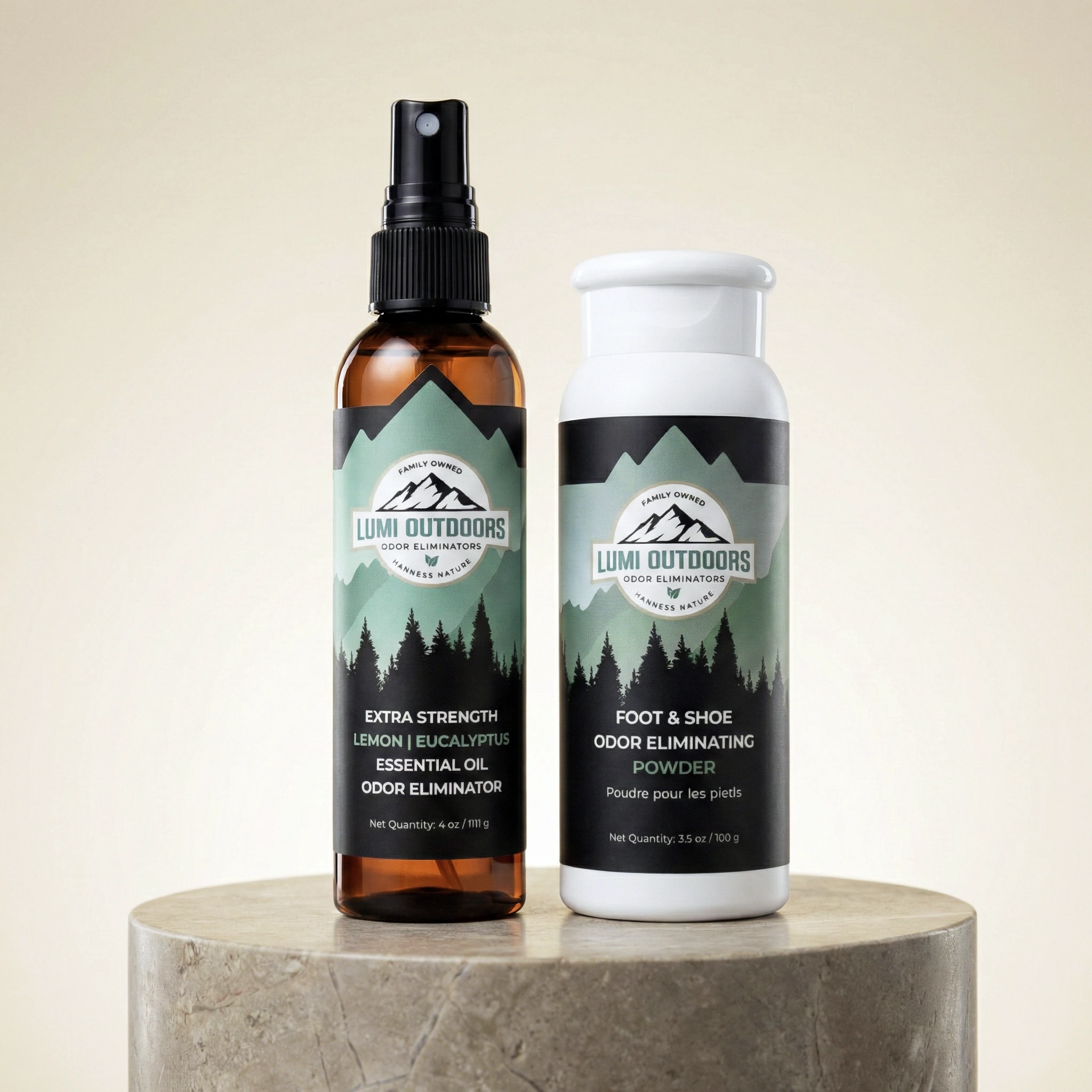
Join 1 Million+ Other People Who Chose Lumi to Conquer Their Shoe Odor.
- THE ULTIMATE 1-2 PUNCH AGAINST ODOR
- A COMPLETE KIT FOR SHOES, BAGS & GEAR
- PROUDLY FAMILY-OWNED & MADE IN UTAH
- THE "FRESH CONFIDENCE" GUARANTEE