
Does the shoe freezer hack work? The truth about this myth
- Stop Freezing Your Shoes Home freezers reach -18°C — cold enough to make bacteria dormant, not dead. The smell returns within hours of thawing.
- Baking Soda Has a Time Limit It absorbs moisture and briefly disrupts surface bacteria, but sweat neutralizes its alkaline pH within 4-6 hours of wear.
- What Actually Works Essential oil sprays with lemon eucalyptus neutralize odor and keep it from returning.
- The Hidden Damage Risk Freeze-thaw cycles degrade shoe adhesives and EVA foam over time — the freezer hack can shorten the life of expensive footwear.

Freezing your shoes does not kill odor-causing bacteria. It puts them to sleep. The moment your shoes warm back up to room temperature, those bacteria wake up and get right back to work — and the smell returns within a few hours. The freezer hack has been shared millions of times on TikTok, Reddit, and Pinterest, and it's convincing precisely because it's partially correct. But partially correct isn't the same as actually working.
Why Did the Freezer Hack Go Viral in the First Place?
The freezer hack spread because the underlying logic is genuinely reasonable: cold temperatures slow or stop bacterial activity, and most people have watched leftovers stay "fresh" in the freezer for weeks. If freezing preserves food by halting bacterial growth, why wouldn't it do the same thing to the bacteria making your shoes smell?
The advice started appearing in lifestyle blogs around 2012, got picked up by a wave of "life hacks" accounts, and never really went away. Some versions say to leave shoes in the freezer overnight. Others recommend 24 hours in a sealed plastic bag. A few even suggest this is a trick "dry cleaners don't want you to know." None of them explain what actually happens at the cellular level when bacteria get cold — because the explanation would immediately undermine the advice.
Confirmation bias keeps the myth alive. You freeze your shoes, they come out smelling better, and you credit the freezer. What you're actually smelling is the temporary absence of active bacterial metabolism. The bacteria are still there. They're just waiting.
What Actually Happens to Bacteria When You Freeze Shoes?
Most odor-causing bacteria enter a dormant state at freezer temperatures — they don't die. Home freezers typically run at around -18°C (0°F). The primary bacteria responsible for shoe odor, including Brevibacterium and Staphylococcus epidermidis, can survive well below this threshold. According to food safety research from the USDA, freezing stops bacterial reproduction but does not eliminate bacteria — which is exactly why you're instructed to cook food to safe internal temperatures rather than just freeze it.
The distinction between dormant and dead matters enormously here. A dormant bacterium is a suspended bacterium. Its metabolic processes — including the conversion of amino acids in sweat into isovaleric acid, the compound primarily responsible for foot odor — simply pause. No metabolism, no odor production. That's why frozen shoes smell better temporarily. But "temporarily" is doing a lot of work in that sentence.
The moment your shoes hit room temperature, the bacteria reactivate. There's no recovery period. There's no weakened state after the cold exposure. They resume metabolizing the residual sweat and organic matter in your shoe lining exactly where they left off. If you wore those shoes for even 20 minutes after taking them out of the freezer, the smell would return before you got home.
That's the real problem.
To actually eliminate odor-causing bacteria through temperature alone, you'd need temperatures well below what any household freezer produces — and you'd need sustained exposure at those temperatures to rupture bacterial cell membranes. Liquid nitrogen territory. Your kitchen freezer is not in the same conversation.
Most people spray the opening of the shoe and call it done — but odor-causing bacteria concentrate in the toe box and the heel, the areas with the highest sweat contact and the least airflow. Angle the nozzle toward the toe box and give it a 2-3 second spray aimed inward. That's where the treatment needs to reach, and that's where most applications miss entirely.
Does Freezing Shoes Cause Any Other Problems?

Beyond not working, freezing can actively damage shoe materials in ways that shorten the life of expensive footwear. Most athletic shoes, work boots, and cleats rely on adhesives to bond the midsole to the upper. Repeated freeze-thaw cycles cause those adhesives to contract and expand, degrading the bond over time. EVA foam — the material in most running shoe midsoles — becomes brittle when frozen and can micro-crack with repeated cold exposure.
There's also a moisture problem that almost no one mentions. When you pull cold shoes out of the freezer and they warm up in room-temperature air, condensation forms on the interior surfaces. That moisture creates exactly the environment odor-causing bacteria love most. So you've not only failed to eliminate the bacteria — you may have handed them a better environment to thrive in.
For shoes with leather uppers or natural fiber linings, the freeze-thaw cycle can cause cracking, stiffening, and premature wear. If you own expensive cleats, quality work boots, or leather dress shoes, the freezer hack isn't just ineffective — it's genuinely risky.
What Other Viral Shoe Odor Hacks Don't Actually Work?
Several popular shoe odor remedies share the same core problem as the freezer hack: they address symptoms without touching the source. Here's an honest breakdown of the most widely shared ones.
Baking Soda: Partial Credit, Real Limits
Baking soda is the most recommended DIY shoe deodorizer on the internet, and it deserves more credit than freezing gets. Its alkaline pH (around 8.3) does temporarily disrupt surface bacterial activity, and it genuinely absorbs some moisture from shoe linings. The problem is duration. As sweat neutralizes baking soda's alkaline pH, the effect reverses within 4–6 hours of wear. Worse, baking soda mixed with the fatty acids in sweat can produce a sour, slightly cheesy smell of its own — so you may end up trading one bad odor for a different one. Use it as an overnight absorber between wears, not as a treatment.
Dryer Sheets: Masking, Not Treating
Dryer sheets stuff into shoes and come out smelling fresh, so it feels like something happened. Nothing happened. The fragrance compounds coat the interior surfaces, temporarily overpowering the odor. The bacteria causing the smell are unaffected. Dryer sheets contain no ingredients that disrupt bacterial metabolism or absorb the isovaleric acid already present. The "freshness" lasts about as long as the scent — usually one wearing.
Vodka Spray: Interesting Idea, Wrong Concentration
The theory here is sound: alcohol disrupts bacterial cell membranes. The execution falls apart on concentration. Standard vodka is 40% ethanol. Effective alcohol-based disinfection requires a minimum of 60–70% ethanol, according to the CDC. At 40%, vodka's alcohol evaporates before it can do meaningful work against bacteria embedded in fabric and foam. There's also the moisture issue — you're introducing liquid into an environment that already has a moisture problem. And your shoes will smell faintly like a bar until they dry out completely.
None of these hacks are stupid ideas. They all have some logical foundation. But logic and mechanism are different things, and the mechanism is what determines whether a shoe actually comes out smelling fresh or just slightly less bad.
The smell always comes back.
If you've been wondering why shoe odor keeps returning after treatment, the answer is almost always the same: the treatment addressed the odor signal without touching the bacteria producing it.
What Criteria Does an Effective Shoe Odor Solution Actually Need to Meet?
Based on what we've learned from the teardowns above, any solution that actually eliminates shoe odor needs to meet four specific requirements.
These aren't arbitrary standards — each one maps directly to a mechanism that the popular hacks fail on:
- Neutralize odor at the source, not just slow it temporarily (the freezer fails here)
- Alter the chemical environment inside the shoe long enough to matter — ideally 24+ hours (baking soda fails here)
- Work within enclosed, fabric-lined spaces where bacteria live deepest (dryer sheets fail here)
- Address existing organic compounds (dried sweat, skin cells) that bacteria feed on — not just the odor signal (vodka spray fails here)
That mental checklist is useful for evaluating any solution, including DIY approaches and commercial products. A solution that hits all four of those criteria will produce lasting results. One that hits two or three will produce temporary results. This is worth knowing before you spend money on anything.
Here's how the most common approaches compare against those criteria:
| Feature | Lumi Spray | Freezer Hack | Baking Soda | Dr. Scholl's Odor-X |
|---|---|---|---|---|
| Neutralizes odor at the source | Yes — essential oils neutralize odor compounds | No — bacteria enter dormancy and reactivate at room temperature | Partially — alkaline pH effect reverses within 4-6 hours of wear | No — activated charcoal absorbs moisture but doesn't disrupt bacteria |
| Lasts through a full day of wear | Yes — essential oil compounds bind to fabric for 24+ hours | No — effect ends as soon as shoes reach room temperature | No — effect neutralized by sweat within hours | No — charcoal works passively overnight, not during active wear |
| Overnight passive moisture absorption | Moderate — spray dries into fabric but does not physically absorb moisture | Poor — condensation during thawing can increase moisture | Good — baking soda absorbs moisture effectively overnight | Excellent — activated charcoal reduces moisture by roughly 40% over 8 hours |
| Safe for shoe materials (adhesives, leather, EVA foam) | Yes — no water saturation, no freeze-thaw stress | No — freeze-thaw cycles degrade adhesives and can micro-crack EVA foam | Yes — no material damage | Yes — insert format causes no material stress |
| Cost and availability | Requires purchase — $12-15 per bottle | Free — uses existing appliance | Free — baking soda costs pennies per use | Low cost — $6-10 per pack at most pharmacies |
| Effective for severe, treatment-resistant odor | Yes — concentrated formula designed for worst-case odor | No — dormancy does not address embedded odor compounds | No — not strong enough for severe cases | Partial — reduces moisture component but not bacterial activity |
What Approach Actually Meets All Four Criteria?
The most effective shoe odor solutions combine a pH-lowering agent with natural essential oils that neutralize odor at the surface level, applied as a fine mist that penetrates fabric linings. This goes after the odor directly rather than masking or temporarily suspending it.
Essential oils like eucalyptus oil and lemon oil neutralize the odor compounds produced by bacteria like Staphylococcus epidermidis. Unlike alcohol, which evaporates rapidly, the essential oil compounds linger in the fabric, extending the effective window beyond a single wear.
Dr. Scholl's Odor-X is worth mentioning here. It uses activated charcoal as its primary absorption agent, which is genuinely effective for passive overnight deodorizing — charcoal's porous structure can reduce moisture in a shoe by a meaningful amount over 8 hours. The limitation is that it's primarily an absorber, not a bacterial disruptor. It's a solid overnight maintenance tool, but it won't address active odor production during a full day of wear.
For persistent or severe cases — the kind that come from cleats worn three times a week, work boots with 10-hour days, or teenage athletes who seem to generate odor as a renewable energy source — you need something that hits all four criteria. That means a targeted essential oil spray like Lumi's Extra Strength formula, which uses concentrated lemon eucalyptus to neutralize odor at the source, not just cover it.
One honest trade-off worth knowing: the lemon eucalyptus scent is noticeable for the first 10–15 minutes after application, then fades to neutral. If you're spraying right before putting shoes on, you'll notice it. If you're spraying after taking them off and letting them sit overnight, it's a non-issue.
If you're dealing with a pair of shoes that have already absorbed months of odor — the kind where you can smell them from across the room — it also helps to understand why shoes suddenly stink even with good hygiene habits before treating them, so you're addressing the right layer of the problem.
If you want to tackle the worst odors with a proven approach, here's what actually works:
What You'll Need
- Soft-bristled shoe brush
- Newspaper or cedar shoe trees
- Extra Strength Shoe Deodorizer Spray Check Price →
- Foot powder
How Do You Actually Eliminate Shoe Odor Step by Step?

The most effective approach takes about 5 minutes and involves three stages: remove organic buildup, neutralize odor with a targeted spray, and control moisture going forward. None of this requires expensive equipment or complicated routines.
Start by removing the insoles. Most insoles can be rinsed under cold water, scrubbed lightly with a soft-bristled shoe brush, and left to air dry. This step matters because insoles absorb the bulk of sweat and skin cells — the organic compounds that bacteria feed on. Skipping this and just spraying the shoe interior is like wiping a counter without removing the food first.
Next, spray the interior of the shoe thoroughly — not just a quick spritz at the opening, but a spray aimed at the toe box and heel where bacterial concentration is highest. Two to three seconds of spray is enough. Let the shoes dry for at least 15 minutes before wearing. This dry time isn't optional: the essential oil compounds need to bind to the fabric surface to be effective. Spraying and immediately jamming your foot in defeats most of the benefit.
For ongoing moisture control, use newspaper stuffed into shoes overnight after heavy wear. A standard broadsheet page absorbs a surprising amount of residual moisture and costs nothing. Cedar shoe trees do the same job with the added benefit of maintaining shoe shape — worth it for leather footwear, overkill for gym sneakers.
Here's what you'll need to do this right:
- Soft-bristled shoe brush — for scrubbing insoles and interior fabric without damaging materials
- Newspaper or cedar shoe trees — for overnight moisture absorption between wears
- Foot powder — applied to feet before wearing, not just into shoes, to absorb sweat at the source
One detail most guides miss: rotate your shoes. Wearing the same pair every day doesn't give the EVA foam enough time to fully off-gas the moisture it absorbed during wear. Even a single-day rotation — alternating between two pairs — reduces bacterial recolonization significantly because the bacteria run out of moisture and organic material to feed on before the next wear cycle.
Most people never check this, but it's one of the highest-leverage habits you can build for long-term odor control.
- Neutralizes odor directly using lemon eucalyptus oil — addresses the root cause the freezer hack and baking soda miss
- Essential oil compounds bind to fabric and remain active for 24+ hours, not just until the next wear
- Plant-based formula safe for all shoe materials including leather, EVA foam, and synthetic linings
- Works on the worst-case scenarios — cleats, work boots, and athletic shoes with embedded, long-term odor
- Lemon eucalyptus scent is noticeable for the first 10-15 minutes after application — spray after removing shoes, not right before wearing
- Requires a 15-minute dry time before wearing for full effectiveness — not a last-second fix
Stop freezing your shoes. The bacteria will outlast your patience, your freezer space, and the structural integrity of your adhesives. The one habit worth adding tonight: spray the shoes after you take them off, not before you put them on — that's when the essential oils have the longest contact time to do their work.
Done with hacks that just postpone the smell?
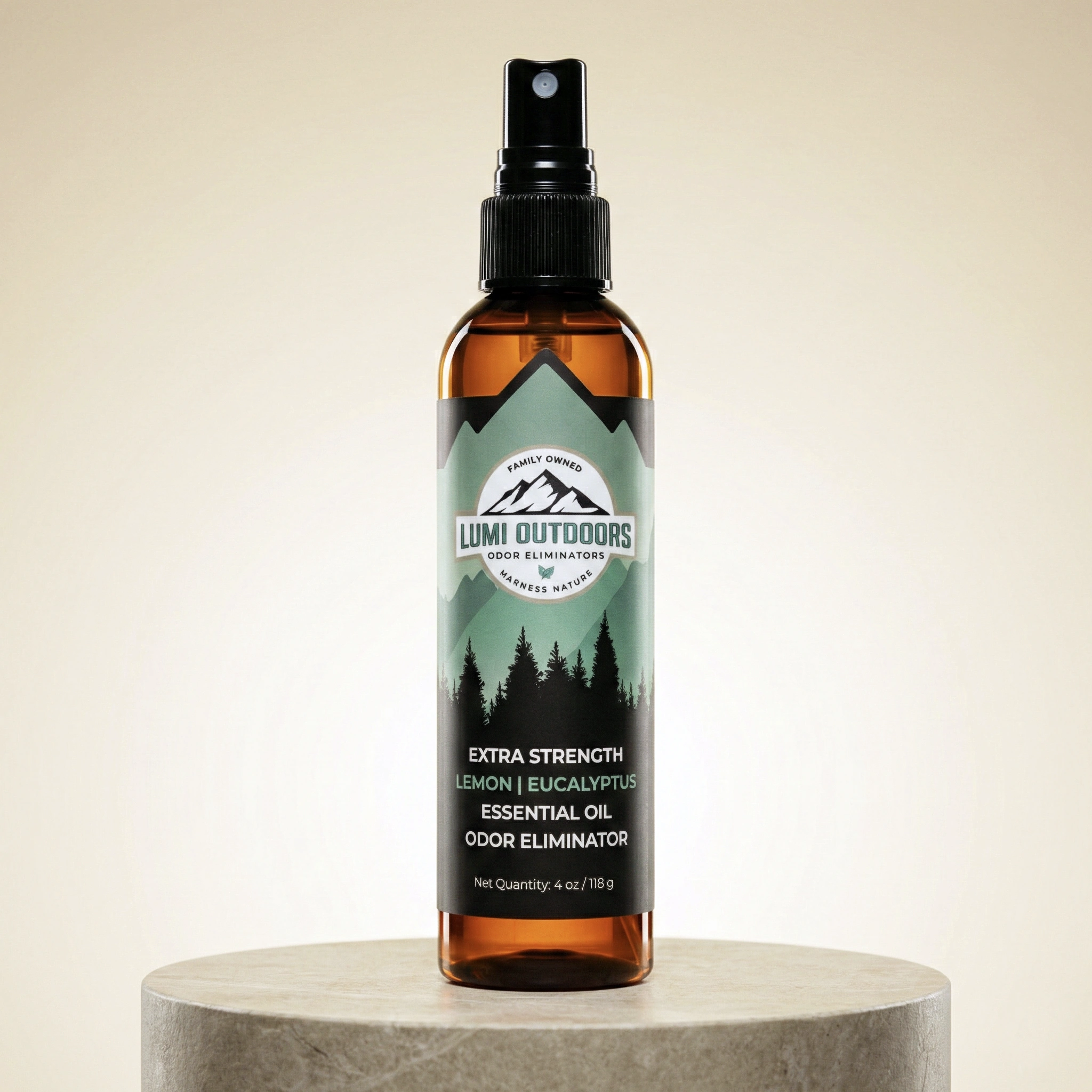
Join 1 Million+ Other People Who Chose Lumi to Conquer Their Shoe Odor.
- DESTROYS ODOR AT THE SOURCE, DOESN'T JUST MASK IT
- ALL-NATURAL & PLANT-BASED INGREDIENTS
- PROUDLY FAMILY-OWNED & MADE IN UTAH
- THE "FRESH CONFIDENCE" GUARANTEE