

Exactly How to Tell Your Roommate Their Shoes Smell Bad Effortlessly
- Lead with the fix, not the problem Frame the conversation around a solution you found, not an odor you noticed — it removes the personal sting entirely.
- They genuinely can't smell it Sensory adaptation means the brain suppresses constant background smells, so your roommate isn't being oblivious on purpose.
- A shared shoe station beats a repeated conversation Setting up a deodorizing spray and ventilated rack by the door solves the problem structurally so you never have to bring it up again.

The fastest way to tell your roommate their shoes smell is to make it about the shoes, not the person. Frame it as a discovery — "I found something that actually works on that shoe smell by the door" — and the conversation shifts from a critique to a fix. Keep it casual, keep it brief, and hand them a solution in the same breath.
Here's why that works — and what to do when it doesn't.
What's the Quickest Way to Tell Your Roommate Their Shoes Smell (Scripts Included)?
The fastest approach is the "solution gift" script: lead with the fix, not the problem. Say something like "Hey, I grabbed this shoe spray — our entryway was getting a little funky and it actually works great." You've addressed the odor without ever targeting them personally.
Different roommate dynamics call for different scripts. Here are three that work in the real world:
The Best Friend Script
"Okay, I have to tell you because I'd want you to tell me — your shoes by the door are really ripe. I grabbed a spray that handles it overnight. Want to try it?"
Why it works: Close friends can handle directness. The "I'd want you to tell me" line immediately removes the sting.
The Casual Acquaintance Script
"I've been trying to figure out what that smell in the entryway was — turns out it's shoes in general, mine included. I picked up something that works. You're welcome to use it."
Why it works: You take shared ownership of the problem. They save face completely.
The Defensive Roommate Script
"The landlord's coming by next week and I want the place to smell good. I picked up a shoe spray — would you mind using it on anything by the door?"
Why it works: The external pressure (landlord, guest, significant other) moves the reason for the ask off of you entirely.
Timing matters almost as much as the words. Never bring it up right as they're leaving for work or right when they get home exhausted. Those are the two worst possible moments — you'll get a defensive reaction and zero follow-through. A Saturday morning when you're both already chatting is the ideal window.
Why Doesn't Your Roommate Know Their Shoes Stink? (The Science of Nose Blindness)
Your roommate genuinely cannot smell it. The brain's olfactory system suppresses constant background smells through a process called sensory adaptation — the same neural filtering that makes you stop noticing your own perfume within minutes of applying it.
This isn't rudeness or denial. It's neuroscience. The olfactory cortex essentially turns down the signal on any odor that's present continuously, which means the person wearing the shoes is the last one who can objectively assess them. According to research published in the journal Chemical Senses, repeated odor exposure can reduce perceived intensity by up to 70% within the first minute of exposure.
That's the real problem.
The biology of the smell itself is also worth understanding, because it arms you with a non-accusatory explanation. Shoe odor is primarily produced by Brevibacterium and Staphylococcus epidermidis — bacteria that thrive in the warm, moist environment inside a shoe. They digest dead skin cells and sweat, releasing isovaleric acid as a byproduct. That's the sharp, sour smell. It has nothing to do with general cleanliness — synthetic shoe liners and athletic foam are particularly good at trapping moisture, which is why a brand-new pair of sneakers can develop serious odor within weeks of regular use.
Framing it this way in conversation is genuinely useful. "It's those synthetic liners — they trap everything" is not a deflection. It's accurate. And it lets your roommate mentally separate "my shoes smell" from "I am a dirty person," which is the mental leap that causes defensiveness in the first place.
You're doing them a favor by saying something before they wear those shoes on a date or to a job interview.
The single most effective move is placing the spray at eye level on the shoe rack — not tucked in a cabinet. People use what they see. If the spray is visible and within arm's reach, roommates (and guests) will use it automatically without any prompting. A fix that requires zero conversation is always better than a fix that requires a perfect one.
How Do You Set Up a "Shoe Refresh Zone" That Solves the Problem Permanently?

The most low-drama long-term fix is creating a shared shoe care station by the front door — a small basket or shelf with a deodorizing spray that belongs to everyone. Nobody is targeted, everyone benefits, and the problem gradually disappears without any ongoing awkward conversations.
This is the "integration over confrontation" approach, and it works for one simple reason: you're changing the environment, not trying to change a person's habits through willpower alone.
Here's what a functional shoe refresh station actually needs:
- Cedar shoe inserts or small cedar blocks — cedar absorbs residual moisture passively overnight. Drop one in each pair left by the door. This is a completely free-feeling addition most people appreciate.
- A deodorizing spray — something that can be used quickly before or after wearing. For a shared setup, Lumi's Extra Strength Shoe Deodorizer Spray is worth keeping in the basket — it takes about 30 seconds to apply and the lemon eucalyptus scent fades to neutral within 10 minutes, so shoes don't smell medicinal.
- A small ventilated shoe rack — airflow alone makes a significant difference. Shoes piled in a closed bin stay wet and get worse; a rack lets them dry between wears.
Present the whole setup as a house upgrade, not a targeted intervention. "I wanted to make the entryway less chaotic — I got a little rack and some stuff for the shoes" is a completely neutral announcement. If your roommate asks what prompted it, you can say honestly that you noticed the entryway was getting a bit stale after rainy days. Nobody can argue with that.
If you want a longer-term comparison of shoe deodorizing methods and what actually works on seriously embedded odor, this breakdown of advanced hacks for unfixable footwear covers methods beyond standard spraying.
The DIY version of this same setup — baking soda in an open container near the shoe rack and dryer sheets tucked into each pair — genuinely helps with ambient odor and costs almost nothing. It won't eliminate embedded bacterial odor the way a targeted spray does, but for mild cases or as a supplement, it's a legitimate standalone option.
What Do You Do If Your Roommate Gets Defensive?
If your roommate pushes back, redirect the blame immediately — away from them and onto the materials. "It's the synthetic liner in those shoes, they're notorious for this" is a factually accurate and face-saving pivot that almost always de-escalates the conversation.
If that doesn't work, a household rule is your cleanest option. A "shoes stay by the door" policy is easy to propose as a cleanliness preference — and it naturally contains the odor to one manageable, ventilated zone rather than letting it migrate into bedrooms and living spaces. You can read about how to frame a shoe rule without creating roommate drama here — the framing matters more than the rule itself.
Most people, once they actually smell their own shoes (hold the shoe directly under their nose for three seconds — the olfactory cortex can't suppress a sudden close-range exposure), are immediately motivated to fix it. That little trick is genuinely useful if you need them to understand the severity without a full argument.
In rare cases where the smell is genuinely affecting your quality of life and your roommate refuses to engage, it's reasonable to mention it to a landlord as a habitability concern — but that's a last resort, and it's worth being honest with yourself about whether the situation is truly at that level before escalating.
Most shoe odor situations resolve with one calm conversation and one good product left within easy reach. The goal was never a perfect roommate. It was just a better-smelling entryway.
One thing worth knowing: if their shoes have reached the point where spraying isn't cutting it anymore, the odor is likely embedded in the foam midsole — which requires an overnight soak-style treatment, not a quick spritz. The polite conversation guide here includes a note on how to suggest that level of intervention without it feeling like a lecture.
For households dealing with multiple pairs of seriously smelly shoes — think work boots, cleats, gym sneakers all living in the same space — a 3-pack variety bundle is worth considering as a shared house resource. Different shoes really do respond differently to scents and formulations.
Want the shoe conversation to be the last one you ever have to have?
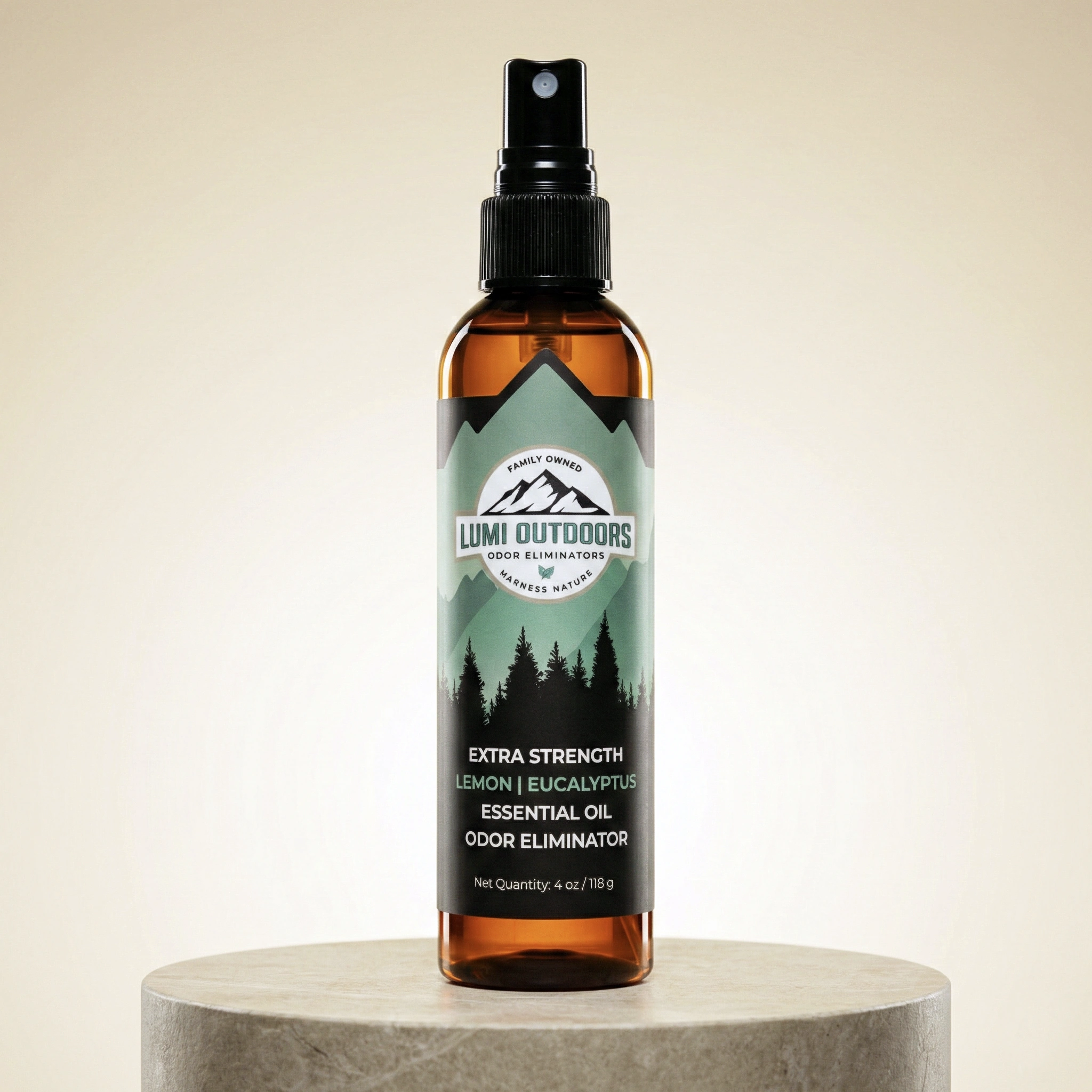
Join 1 Million+ Other People Who Chose Lumi to Conquer Their Shoe Odor.
- DESTROYS ODOR AT THE SOURCE, DOESN'T JUST MASK IT
- ALL-NATURAL & PLANT-BASED INGREDIENTS
- PROUDLY FAMILY-OWNED & MADE IN UTAH
- THE "FRESH CONFIDENCE" GUARANTEE