

5 Polite Ways to Tell Someone Their Shoes Smell Without Ruining the Night
- Use the Me Too technique Lead with your own shoes before mentioning theirs — shared struggle removes the shame and keeps the conversation casual.
- Masking makes it worse Synthetic fragrance sprays mix with bacterial odor and create something worse — use an essential oil-based spray that neutralizes at the source.
- Group rituals protect dignity Making shoe-freshening a group activity — before leaving the house or as a host refresh — means no one gets singled out.
- Private + solution in hand wins For close friends, one-on-one delivery with a fix already in your hand turns an awkward moment into a genuinely helpful one.

The Social Minefield: Why This Is Actually a Kindness Problem
Staying silent when someone's shoes smell isn't kindness — it's avoidance. The person with the odor problem almost certainly doesn't know, and they'll carry that problem with them to every future social situation until someone says something.
There's a real physiological reason for that. Olfactory fatigue — commonly called "nose blindness" — means the brain stops registering a scent it's constantly exposed to, usually within 2 to 5 minutes. The person wearing those shoes genuinely cannot smell what you're smelling. They're not being rude. They're just nose-blind to something they live with every day.
The odor itself comes from Brevibacterium and Staphylococcus species feeding on sweat and dead skin cells inside the shoe, producing isovaleric acid as a byproduct. That's the compound responsible for the classic "gym locker" smell. A single pair of sneakers worn without rotation can host those bacteria for weeks before the smell becomes noticeable to others.
So the goal here isn't to embarrass anyone. It's to give a friend, family member, or colleague a heads-up in a way that preserves their dignity — and yours.
Most people reach for a spray after the smell is already noticeable — but the more effective window is immediately after the shoes come off, while they're still warm. Warm foam absorbs spray more efficiently than cool, compressed material, so a post-wear spritz penetrates deeper into the liner than an overnight pre-wear treatment. Two seconds right when the shoes hit the entryway beats five seconds the next morning.
1. The "Me Too" Technique: Make It a Shared Struggle
Lead with your own shoes — real or invented — before ever mentioning theirs. Framing the moment as a shared, relatable human experience removes the shame entirely and makes the conversation feel collaborative instead of accusatory.
This works because it short-circuits the defensive response. The moment someone feels singled out, their brain shifts into self-protection mode and they stop hearing what you're saying. But if you open with your own "problem," they relax. You're not pointing a finger — you're commiserating.
Try something like: "Ugh, I wore these all day and I feel like they're starting to do their own thing — do you ever get that with those sneakers?" That's it. You've opened the door without pushing anyone through it. From here, you can naturally offer a solution — a spritz of something you "just happen to have" — without the conversation ever feeling like an intervention.
The key is keeping your tone light and self-deprecating. If you look apologetic or uncomfortable, they'll feel called out. Casual and unbothered is the move.
This is the gentlest approach on the list, which makes it best for acquaintances, new friendships, or any situation where the relationship is still finding its footing.
2. The "New Discovery" Strategy: Share the Wealth
Frame the conversation around an exciting product you found — not around their specific odor problem. This shifts the dynamic from "you have an issue" to "I found something cool and thought of you," which is a fundamentally different social transaction.
People love getting genuine recommendations. It signals that you're thinking of them in a positive way. So instead of addressing the smell directly, you redirect to your enthusiasm for a solution.
"I just started using this natural spray in my gym bag and honestly it's kind of a revelation — it's got eucalyptus and lemon in it and it actually works. You want to try a spritz on your shoes?" That's a complete, socially smooth interaction. No accusation. No awkwardness. Just a friendly offer.
The product positioning matters here. A spray with a distinct, pleasant scent — like the eucalyptus and lemon in Lumi's Extra Strength Shoe Deodorizer — actually makes this approach easier, because you're genuinely offering something that smells good, not just a clinical fix. The lemon eucalyptus scent is noticeable for the first few minutes, then fades to neutral as it dries. That makes it a product you can hand someone without it feeling medical.
Keep the tone enthusiastic and discovery-focused. You found a thing. You love the thing. You want to share the thing. That's it.
3. The "Hostess Refresh" Maneuver: Help the Room, Not the Person
If you're the host, a general "room refresh" near the entryway solves the odor problem without singling anyone out — everyone's shoes get treated, the air improves, and the social moment passes without anyone feeling targeted.
This is the most elegant option when you need to address the smell in a group setting without creating a spotlight moment. As the host, you have natural authority over the environment. Use it.
Walk to the entryway where shoes are piled up, pull out a natural deodorizer spray, and narrate casually: "I'm doing a quick shoe refresh — I love this eucalyptus spray, it keeps the entryway from turning into a locker room." Then spray a few pairs. Including the offending pair. Done.
One practical note: choose a spray that smells genuinely pleasant, not clinical. Synthetic "fresh linen" scents can mix with existing odors and create something worse — what you might charitably call "swamp floral." A natural essential oil spray gives you a clean, identifiable scent that reads as intentional rather than medicinal. That's a meaningful difference when guests are watching.
If you want to add a line, something like "Cedar and eucalyptus are so much better than those aerosol things" keeps the conversation on you and your preferences — not on anyone's shoes specifically.
Here's what makes this work at a practical level. When you treat multiple pairs of shoes, no one can be sure whose triggered the refresh. That ambiguity is a gift.
What You'll Need
- Newspaper (for stuffing shoes overnight to absorb moisture)
- Baking soda (light dusting inside shoes before spraying)
- Extra Strength Shoe Deodorizer Spray Check Price →
- Cedar shoe trees (for maintaining shape and absorbing residual dampness)
4. The Private Sidebar: Direct but Gentle

For close friends or people you care about, a brief one-on-one moment — away from the group — with a solution already in hand is the most respectful approach. The privacy removes embarrassment; the immediate solution removes helplessness.
This is the highest-effort approach on the list, but it's also the one that protects the relationship most effectively when the smell is genuinely significant. A quiet moment — walking to the kitchen, stepping outside, heading to the car — is all the cover you need.
The structure that works best is sometimes called the "Compliment Sandwich," but in this context, it's really just good delivery: lead with something positive, state the issue neutrally, offer the fix immediately. "Hey — I love those boots, but I think the material might be trapping some moisture. I've got a spray that fixes that instantly if you want."
Three things matter here. Keep your voice low. Keep your body language relaxed — if you look like you're delivering bad news, they'll receive it that way. And have the solution physically in your hand when you bring it up. The moment someone can see the fix, the problem feels 80% smaller.
According to the American Podiatric Medical Association, persistent shoe odor is often a moisture management problem rather than a hygiene problem — and most people respond well when that framing is offered. It shifts the conversation from "you're dirty" to "here's a solvable mechanical issue."
That reframe is your job in this moment. You're not delivering bad news. You're troubleshooting together.
For odor that's persistent and embedded deep in shoe materials — the kind that doesn't respond to a single spray — the fastest approach combines moisture removal with a targeted deodorizer. Worth mentioning if they seem interested in actually fixing it long-term.
Here's a comparison of the main approaches based on their social mechanics and effectiveness:
| Feature | Natural Spray | Synthetic Aerosol | Baking Soda (DIY) |
|---|---|---|---|
| Odor neutralization | Targets bacterial source with essential oils | Masks odor with synthetic fragrance only | Absorbs some odor on contact, surface-level only |
| Social usability | Pleasant scent, safe to use around guests | Can trigger headaches or respiratory sensitivity | Odorless, invisible — no sensory disruption |
| Cost | ~$14.97 per bottle | ~$6–$10 per can | Free (pantry staple) |
| Residual freshness | 24–48 hours after application | 1–3 hours before odor returns | 2–4 hours, varies by moisture level |
| Safe for foam liners | Yes — no solvent damage | Can degrade foam over time with repeated use | Yes, but leaves powder residue |
| Effort required | 2-second spritz | 2-second spritz | Sprinkle + shake out + let sit overnight |
5. The "I'm Heading Out" Ritual: Make It a Group Thing
When transitioning locations — house to restaurant, indoor to outdoor — make a quick shoe-freshening ritual part of the group send-off. Spray your own shoes first, then hold it out. "Want a hit of this? It's basically a spa day for your feet." Group activity = no individual spotlight.
This approach is low-pressure by design. You're not asking anyone to acknowledge a problem. You're just offering a pleasant sensory experience as part of leaving the house — which, when you frame it right, sounds less like an intervention and more like a good host habit.
Pull the spray out, do your own shoes visibly, then make the offer to the group. A light, genuine line lands better than anything too scripted. "This thing smells like a spa — seriously, try it" works. The lemon eucalyptus scent helps sell that line without any effort on your part.
This works especially well for parents managing the chaos of kids' sports gear or a household with multiple active people. Spray becomes a household ritual, not a social surgery.
How to Choose a Deodorizer That Doesn't Make Things Worse
The biggest mistake people make is choosing a spray that masks odor with synthetic fragrance rather than neutralizing it at the source. Mixing a floral aerosol with active bacterial odor typically creates something worse than either smell alone — a "swamp floral" effect that's harder to ignore than the original problem.
The mechanism matters. Shoe odor is caused by bacterial byproducts, specifically isovaleric acid and other volatile fatty acids, not by dirt or general uncleanliness. Sprays that only add fragrance leave the bacteria and their byproducts completely intact. The smell returns within hours because nothing changed underneath.
Essential oil-based sprays — particularly those using eucalyptus, lemon, and tea tree — disrupt the bacterial environment rather than covering it. Eucalyptus oil, for example, contains cineole (also called eucalyptol), which has documented activity against odor-causing bacteria in footwear materials, including foam and fabric liners.
Natural options also tend to be safer in shared social contexts. Synthetic fragrance aerosols can trigger headaches and respiratory sensitivity in some people — not ideal when you're trying to help a situation, not complicate it.
The Lumi 3-Pack Bundle (Lemon Eucalyptus, Citrus, and Lavender) is worth considering if you're the household manager type who wants a spray stationed in every location — entryway, gym bag, car — without restocking constantly. Different scents for different situations, and enough supply to actually use the product generously instead of rationing it.
One honest limitation: the spray needs about 10 to 15 minutes to fully dry before wearing the shoes again. That's not a problem for the overnight treatment, but it's worth knowing if you're doing a quick pre-departure spritz and planning to leave in five minutes. Spray, then do something else while it dries.
- Plant-based formula neutralizes bacterial odor rather than masking it
- Lemon eucalyptus scent is socially pleasant — not clinical or medicinal
- Works across every shoe type: sneakers, cleats, boots, dress shoes
- No harsh chemicals — safe for daily use around kids and pets (dogs)
- Needs 10–15 minutes to fully dry before wearing — not ideal for a 2-minute prep
- Use with caution in cat households — eucalyptus and citrus essential oils can be irritating to cats; store sprayed shoes in a closed room until fully dry
The one thing most people never think to do: keep a small spray in your car's glove compartment, not just at home. That's where the "I'm heading out" ritual actually needs to happen — not in your front hallway where you remembered it on the way out, but in the parking lot before you walk into the restaurant. Five seconds of spraying in the car beats nothing at all.
Ready to try Extra Strength Shoe Deodorizer Spray?
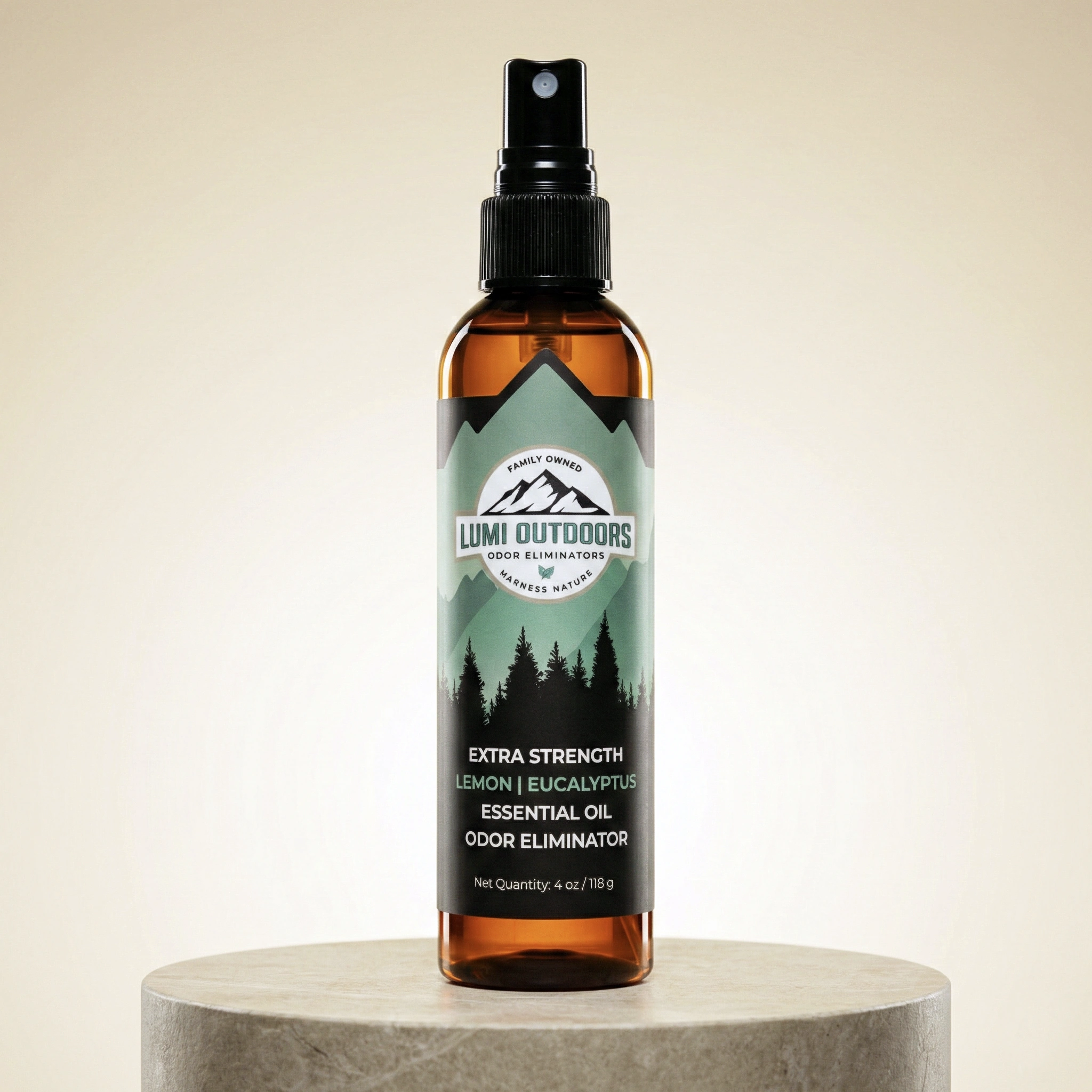
Join 1 Million+ Other People Who Chose Lumi to Conquer Their Shoe Odor.
- DESTROYS ODOR AT THE SOURCE, DOESN'T JUST MASK IT
- ALL-NATURAL & PLANT-BASED INGREDIENTS
- PROUDLY FAMILY-OWNED & MADE IN UTAH
- THE "FRESH CONFIDENCE" GUARANTEE