

Roommate's Shoes Smell So Bad? How to Make a Rule Without Drama
- Your Roommate Isn't Being Gross on Purpose Olfactory adaptation means they genuinely cannot smell what you smell — their brain has filtered it out as background noise.
- Common Fixes Don't Actually Work Baking soda, open windows, and freezing shoes all fail to eliminate the bacteria living inside porous shoe materials — the smell always comes back.
- Frame It as a Shared Upgrade The conversation goes smoothly when you lead with a solution — a spray bottle on the counter and a simple entryway rule — rather than a complaint about hygiene.
- Consistency Beats Intensity A quick spray every time shoes come off, tied to an existing habit like hanging up your keys, outperforms any occasional deep-clean routine.

Why Does Roommate Shoe Odor Feel Like Such a Big Deal?
Shoe odor in shared living spaces feels disproportionately awful because it is — the bacteria responsible for that locker-room smell, primarily Brevibacterium linens and Staphylococcus epidermidis, produce volatile sulfur compounds that cling to soft surfaces like carpet, upholstery, and even curtains, meaning the odor radiates far beyond the entryway where the shoes actually live.
So you walk in after a long day, groceries in hand, ready to decompress — and you hit a wall. Not a metaphorical wall. A physical, sensory wall of sour, warm, locker-room air that hits you before you've even closed the door behind you. It's not just unpleasant. It's the kind of smell that makes you not want to be in your own home.
The social math here is brutal. You're paying rent for this space. You keep it clean. And yet you can't invite anyone over without quietly panicking about what they'll smell the second they step inside. That's a real quality-of-life problem — and it's one that a surprising number of roommate situations share.
The reason scent hits so hard emotionally is physiological: smell bypasses the thalamus and connects directly to the limbic system, the part of your brain that handles memory and emotion, according to research from the National Institutes of Health. That's why a bad smell doesn't just annoy you — it gradually breeds low-grade resentment toward whoever's responsible, even if you're too polite to say anything.
And ignoring it genuinely makes things worse. Odor-causing bacteria transfer to carpets and upholstery within days, which means the problem eventually stops being "the shoes by the door" and starts being "the whole apartment."
That's the real problem.
Why Doesn't Your Roommate Notice It — and Why Do Your Current Fixes Keep Failing?
Your roommate almost certainly can't smell their own shoes because of olfactory adaptation — the brain literally stops registering a persistent background odor within minutes of exposure, a phenomenon sometimes called "nose blindness." Meanwhile, the fixes most people try (open windows, baking soda, freezing shoes) don't address the living bacteria producing the smell — they just temporarily mask or suppress it.
This is the part that trips everyone up. Your roommate isn't being cavalier or gross. They genuinely don't smell what you smell. The olfactory adaptation process is automatic and involuntary — their nose has essentially decided the smell is "normal background." So before you have the conversation, understanding this is worth it. They're not ignoring the problem. They don't know there is one.
Now for the fixes that don't work — and why.
Opening a window moves air around. It does not remove bacteria from shoe materials. The same bacterial colonies are still in there, still feeding on foot sweat, still producing isovaleric acid (the compound responsible for that sharp, vinegary smell), the moment the fresh air stops flowing. You've bought yourself maybe 20 minutes of relief.
Baking soda is more interesting. It genuinely absorbs moisture and raises pH temporarily, which slows bacterial activity. But as our breakdown in "The Baking Soda Trap" explains, the bacteria recolonize as soon as the shoe warms back up and moisture returns — usually within 24 hours. You haven't eliminated anything. You've just hit pause.
Freezing shoes is even less effective than it sounds. Here's the honest science on that one: most odor-causing bacteria are psychrotrophic, meaning they survive — and in some cases thrive — at refrigerator and freezer temperatures. The smell returns completely within a few hours of the shoe warming up.
Not even close to a real fix.
Most people spray the toe box and call it done — but the highest bacterial concentration in any shoe is in the heel and midfoot zones of the insole, where pressure and sweat output are greatest. When treating a severely odorous shoe, flip the insole out entirely if it's removable, spray both sides, and leave it outside the shoe to dry. This single step gets you dramatically better results than spraying a closed shoe ever will.
The deeper issue is that shoe materials — foam insoles, fabric linings, rubber midsoles — are porous. Once bacteria colonize those layers, surface-level treatment doesn't reach them. You need something that penetrates the material and neutralizes the odor compounds at the source, not just on the surface.
If you're dealing with roommate-level odor — meaning it's severe enough to affect your daily life — you need a targeted approach. Here's what actually works, starting with what you can do for free right now.
What You'll Need
- Cedar shoe trees (for leather or dress shoes)
- Newspaper (for stuffing wet shoes overnight)
- Extra Strength Shoe Deodorizer Spray Check Price →
- Shoe tray or small entryway shelf (for the treatment zone)
How Do You Have the Shoe Smell Conversation Without It Becoming a Fight?
The most effective approach is to frame the conversation around a shared household upgrade rather than a personal hygiene critique — bring a solution to the table before you bring up the problem, and time the talk for a calm, neutral moment (not immediately after they walk in from work).
Timing is everything. The worst moment to raise this is when your roommate just walked through the door, still in their shoes, still decompressing from their day. That's when the conversation becomes a greeting-as-accusation, and it almost always goes sideways. Give it an hour. Do it over dinner or during a low-key evening at home.
Lead with "we." Not "your shoes smell" — try "I've been thinking about doing a freshen-up of the entryway area, like a house rule for both of us." This is not dishonest. You probably do want a cleaner-smelling entryway. The framing just keeps their defenses down long enough for them to actually hear you.
Bring a prop. Seriously. Having a spray bottle on the counter — something you can say "I grabbed this for both of us to use" — shifts the conversation from accusation to solution. You're not pointing a finger; you're presenting a plan. The Extra Strength Shoe Deodorizer Spray works well here because it's a shared household item, not something that reads as a personal gift implying they have a problem.
You can also lean on external sources. This article, for example, exists. Shoe odor is a documented bacterial issue affecting millions of people in shared living situations. It's not a hygiene failure — it's a chemistry problem. Framing it that way takes the shame out of it for both of you.
One more thing: if you share this article with your roommate, you're doing them a favor. Most people genuinely don't know that their go-to fixes (baking soda, spraying Febreze at their shoes) don't address the actual bacteria. That information is useful — and receiving useful information feels different than receiving a complaint.
What's the Best Way to Set Up a Shoe Treatment Routine Both Roommates Will Actually Follow?

The most sustainable approach is creating a designated "treatment zone" at the entryway — a small shelf or tray where shoes go after spraying — and scheduling a weekly deep-clean session for high-odor footwear like gym shoes and work boots. Routines stick when they're tied to existing habits, like hanging up your keys.
A treatment zone sounds fancier than it is. It's a shelf, a tray, maybe a small basket. The point is that shoes go there — after being treated — and not just dumped anywhere. This small piece of spatial design removes the decision-making from the routine. The shoe spray lives on the shelf. You spray when you put shoes away. Done.
For genuinely high-odor shoes — work boots, gym sneakers, cleats — a weekly deep-treatment session is worth building into your schedule. The American Podiatric Medical Association recommends rotating footwear every 24-48 hours to allow insole materials to dry completely between uses. If your roommate wears the same pair every day (common with work boots), the insole never fully dries out, and bacteria have an uninterrupted feeding window.
Here's how the main deodorizing approaches compare for a shared living situation:
| Feature | Lumi Extra Strength Spray | Dr. Scholl's Odor-X | Baking Soda (DIY) |
|---|---|---|---|
| Penetrates insole foam | Yes — liquid formula soaks into porous materials | Partial — powder sits on surface layer | No — powder stays on surface only |
| Odor relief duration | 24–48 hours per application | 12–24 hours per application | 4–8 hours before rebound |
| Cost per use | Moderate — ~$0.30–0.50 per spray | Low — bulk powder is inexpensive | Near zero — pantry staple |
| Effort required | Low — 2-second spray, 15 min dry time | Low — pour and leave overnight | Very low — sprinkle and ignore |
| Works on severe embedded odor | Yes — designed for worst-case scenarios | Moderate — good for mild to moderate odor | No — ineffective on established bacterial colonies |
| Passive overnight absorption | Not designed for passive use | Yes — best used as an overnight treatment | Yes — works passively while shoes sit |
| Safe formula (no harsh chemicals) | Yes — plant-based essential oils | Contains synthetic fragrance compounds | Yes — single natural ingredient |
A few practical additions to the system:
- Cedar shoe trees for leather or dress shoes — cedar is hygroscopic, meaning it pulls moisture out of the shoe material passively overnight
- Newspaper stuffing for wet shoes after rain or a workout — newspaper absorbs moisture faster than most people realize and costs nothing
- A "shoes in your room" policy as a backup rule if the entryway situation becomes a recurring flashpoint
Consistency matters more than intensity here. One spray every few days, every time you put a shoe away, outperforms a monthly deep-clean followed by nothing. Make it small. Make it automatic.
What's the Most Effective Product for Eliminating Severe Shared-Space Shoe Odor?
For roommate-level odor — the kind that hits you when you walk in the door — you need a spray formulated with concentrated essential oils that penetrate porous insole and lining materials, not just a surface deodorizer. The Extra Strength Lemon & Eucalyptus formula is specifically designed for this tier of problem.
Most shoe sprays on the market are essentially scented water with a low-concentration fragrance. They make shoes smell different for about an hour. What you actually need for a severe, established odor problem is a formula with enough essential oil concentration to reach the bacteria living in the foam layers of the insole — not just coat the surface.
The Extra Strength Shoe Deodorizer Spray uses lemon eucalyptus oil as its active agent — the same compound found in EPA-approved natural repellent formulas, which gives you a sense of how concentrated it actually is. The lemon eucalyptus scent is noticeable for about the first 10 minutes after application, then fades to neutral as it dries. No perfume smell hanging around. Just treated shoes.
Application matters. Spray the entire insole surface, not just a quick mist at the toe box. Hold the bottle about 6 inches from the shoe, do two passes, and let the shoe dry open for at least 15 minutes before closing it up or storing it. Sealing a wet shoe traps the moisture you're trying to eliminate.
For a shared living situation, the Variety Bundle 3-Pack makes a lot of practical sense. You keep the Extra Strength Lemon & Eucalyptus by the entryway for the heavy-duty shoe treatment, the Citrus in the bathroom for foot freshness, and the Lavender in a bedroom closet for lighter daily use. Three bottles means three locations — and no one's hunting around for the spray when they need it.
Worth knowing: if your roommate has cats, check the full guidance on essential oil safety for cats before using any eucalyptus or citrus formula near them. Let treated shoes dry fully in a closed closet before cats have access to the entryway.
What If the Smell Keeps Coming Back Even After Treating the Shoes?

Persistent odor after repeated treatment usually points to one of three issues: the source shoe hasn't been treated deeply enough (work boots and old sneakers often need 3-5 applications over two weeks before the embedded odor is fully neutralized), socks and foot hygiene are contributing to recontamination, or the shoe itself is past the point of salvage.
Work boots are the worst offenders here, and for a specific reason: their thick foam midsoles and heavy fabric linings hold significantly more moisture than a standard sneaker. If your roommate wears the same pair of boots five days a week, those boots are essentially never fully dry. One spray won't cut it. For deeply embedded work boot odor, plan for daily treatment over 5-7 days before you start evaluating results.
Socks are the silent variable. Cotton socks absorb sweat but don't wick it — the moisture sits against the skin, which accelerates bacterial growth on the foot itself, and that transfers directly into the shoe. Moisture-wicking socks (merino wool or a synthetic blend) reduce the bacterial load going into the shoe by a meaningful margin. This is worth raising — gently — as part of the household conversation. Frame it as something you're both doing.
And yes: sometimes a shoe is just done. If the insole has turned dark, if the foam is visibly compressed and crumbling at the edges, no spray will fully reverse that. The material itself has become a bacterial habitat. At that point, the conversation shifts to replacement — and that's a different kind of talk.
For the lingering airborne component, washing the shoes themselves is sometimes the right move — but not in a machine, which damages bonding materials and speeds up shoe breakdown. Hand-washing the insole and lining with warm water and a small amount of dish soap, then air-drying fully for 24 hours, can reset the bacterial population in a way that spraying alone can't always match. Use that as the "nuclear option" for a particularly stubborn pair.
A natural essential oil room spray — used in the entryway after shoes have been put away — handles any residual airborne molecules without introducing harsh chemicals into a shared living space. It's a safety net, not a primary fix, but it makes the apartment feel fresher while the shoe treatment does its work over the first week.
Here's an honest take on what to expect:
- Concentrated formula reaches bacteria in porous insole and lining materials, not just the surface
- Lemon eucalyptus scent fades to neutral within 10–15 minutes — no lingering perfume
- Works on the toughest footwear: work boots, gym shoes, cleats
- Plant-based and free from parabens, aluminum, or harsh aerosol propellants
- Available in a 3-pack bundle for multi-room placement in shared living spaces
- Needs at least 15 minutes to dry before the shoe is worn or stored — can't spray and immediately leave
- For deeply embedded odors in old work boots, expect 3–5 applications over a week before the smell fully clears
One thing most guides skip entirely: the floor mat at the entryway. If shoes have been sitting on the same mat for months, the mat itself has absorbed bacterial residue and is actively recontaminating the air in the entryway even when the shoes aren't there. Washing the mat — or replacing it — as part of your household reset is an underrated step that most people never think to take.
Ready to try Extra Strength Shoe Deodorizer Spray?
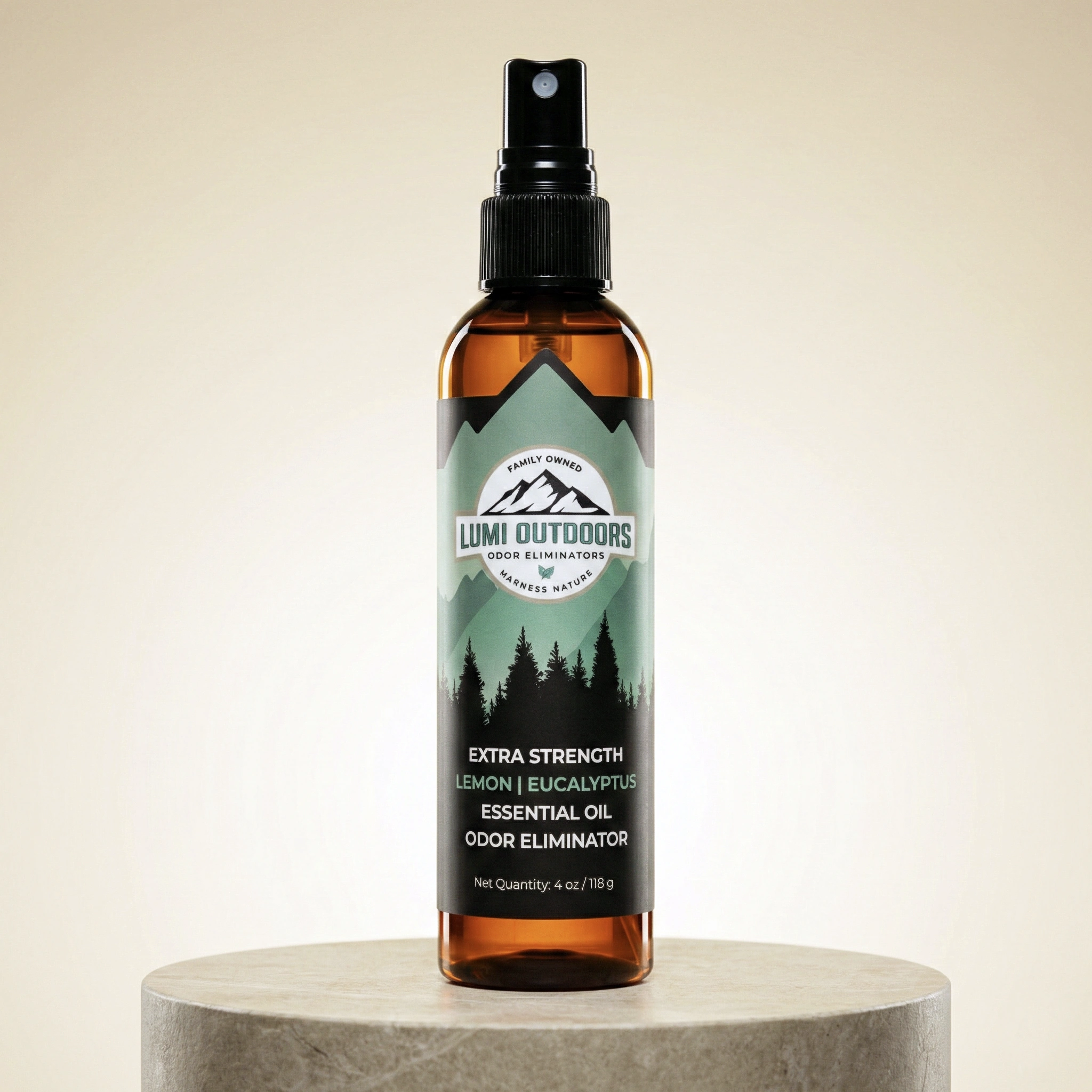
Join 1 Million+ Other People Who Chose Lumi to Conquer Their Shoe Odor.
- DESTROYS ODOR AT THE SOURCE, DOESN'T JUST MASK IT
- ALL-NATURAL & PLANT-BASED INGREDIENTS
- PROUDLY FAMILY-OWNED & MADE IN UTAH
- THE "FRESH CONFIDENCE" GUARANTEE