
Does a Boot Dryer Help With Odor? 12-Hour Shift Results Analyzed
- Yes, it works — as prevention A boot dryer eliminates moisture before bacteria can reproduce, stopping new odor from forming after a 12-hour shift.
- Airflow beats heat High-volume airflow at moderate temperature outperforms high heat, which can bake smells into liner material and damage GORE-TEX membranes.
- Dryers don't reset deep smells If odor is already embedded in the liner, you need a deodorizing spray or powder treatment first — the dryer alone won't erase it.

Yes, a boot dryer is one of the most effective odor-prevention tools you can own — because it removes the moisture that odor-causing bacteria need to survive. After a 12-hour shift, the inside of a work boot can hold the equivalent of a full cup of sweat. A dryer eliminates that moisture before bacteria enter their exponential growth phase, which stops new odor from forming. The catch: it won't erase deep-set smells that have already bonded to the liner material.
Here's what that means in practice — and how to use one for maximum effect.
Why Do Dry Boots Stop Smelling?
Odor doesn't come from sweat itself — it comes from bacteria metabolizing sweat, and those bacteria need sustained humidity above roughly 70% to reproduce rapidly. The primary culprit in work boot smell is Brevibacterium, the same genus responsible for the smell of aged cheese. A 2017 review published via the National Center for Biotechnology Information (NCBI) confirmed that cutaneous bacteria thrive in warm, moist microenvironments — exactly what the inside of a work boot becomes by hour four of a shift.
The math works against anyone who doesn't dry their boots. A 12-hour shift creates what researchers call a saturation point — the liner foam, the insole, and the tongue seams absorb sweat faster than passive room-temperature airflow can evaporate it. Even left open overnight, a soaked boot may still retain 40–60% of that moisture by morning. That lingering dampness is where the next colony of bacteria picks up right where the last one left off.
That's the compounding problem most people miss.
A boot dryer — specifically one that circulates warm, high-volume airflow — drops the interior humidity below that bacterial reproduction threshold within two to four hours. No moisture, no feast, no smell. The biology is that straightforward.
Does Airflow Matter More Than Heat?
Yes, airflow volume is more important than temperature for odor control — and too much heat can actually make your boots smell worse over time. High-temperature dryers bake sweat compounds into leather and synthetic liners, essentially fixing the smell into the material the way heat sets a stain. A dryer running at 105–115°F with strong circulation does the job without degrading the boot's material or locking in odor molecules.
This is especially relevant for GORE-TEX or waterproof breathable membranes. These liners are designed to push moisture vapor outward — but when they're saturated from the inside, that vapor transfer stalls. High airflow from a dryer restores the membrane's ability to breathe. High heat, by contrast, can compromise the membrane's adhesion layer over time, which is why most GORE-TEX boot manufacturers specifically warn against heat-based drying in their care documentation.
Leather fares even worse under sustained heat. The natural oils that keep leather supple evaporate, the material stiffens, and micro-cracks form — all of which create additional surface area for bacteria to colonize. Airflow drying at moderate temperature protects both the material and the odor control you're trying to achieve.
Most people run their boot dryer until the boot feels dry to the touch on the outside — but the insole and tongue seam are usually still holding moisture an hour after the outer material feels fine. Pull the insole out and dry it separately on the dryer nozzle for at least 45 minutes. That's where the highest bacterial concentration lives, and it's the zone most dryers underserve when the insole is left inside the boot.
How Do You Use a Boot Dryer to Actually Control Odor?

The single most important habit is placing boots on the dryer within 30 minutes of taking them off — not the next morning, not after dinner, immediately. Brevibacterium and related odor-causing bacteria enter exponential growth within the first few hours of a moist, warm environment. Waiting until morning means you've already given them a six-hour head start.
This is what experienced tradespeople call the "golden window" protocol — treat the post-shift boot removal the same way you treat leftovers. You wouldn't leave cooked chicken on the counter overnight. Same principle applies here.
The dryer alone handles prevention. But if your boots already have an embedded smell — the kind that hits you before you even open the bag — you need a second layer of treatment. A natural deodorizing spray applied to the interior immediately before placing the boots on the dryer is the most efficient approach: the airflow drives the active ingredients deeper into the liner while simultaneously removing moisture. For a complete system that handles both the moisture and the existing smell, Lumi's Natural Foot Powder and Extra Strength Shoe Deodorizer Spray bundle is what we'd reach for — the powder goes on your feet before the shift, the spray goes in the boots after. That said, a free alternative that genuinely works: pack the boot with dry newspaper immediately after the shift, let it sit for 30 minutes to absorb surface moisture, then move to the dryer.
One maintenance detail most people overlook: clean the dryer's intake vents every two to three weeks. A clogged intake reduces airflow volume significantly, which means the dryer is producing heat without the circulation that makes it effective. That's the warm locker scenario — exactly what you're trying to avoid.
For a broader look at natural remedies that pair well with a drying routine, this rundown of natural stinky work boot remedy hacks covers several low-cost options that complement mechanical drying.
Can a Boot Dryer Ever Make Odor Worse?
Yes — a low-quality dryer that produces heat without sufficient airflow creates a warm, slightly humid interior, which is essentially a petri dish for bacteria. If the boot feels warm but still damp after two hours on the dryer, the unit isn't moving enough air. You're accelerating bacterial growth, not stopping it.
Synthetic liners are particularly susceptible to this problem. Unlike leather, which breathes passively, synthetic materials trap moisture in their weave structure. Without high-volume airflow to draw that moisture out, the heat simply distributes it more evenly through the liner — making the smell worse, not better.
There's also a point of no return with boot odor. If your boots have reached what experienced tradespeople sometimes call the "vomit phase" — a sour, almost chemical smell — that's typically isovaleric acid, a metabolic byproduct of bacteria breaking down the amino acid leucine in your sweat. At that stage, the acid has bonded to the boot's liner at a molecular level. A dryer alone won't fix it. You need a deep clean of the liner (or liner replacement), followed by a neutralizing treatment, then a consistent drying routine going forward. The dryer is a maintenance tool, not a reset button.
If you're curious whether your current spray or treatment is actually doing anything, this 12-hour sweat test breakdown explains what effective odor treatment looks like over a full shift.
And if you want to understand the full chemistry of why work boot smell gets so extreme — the vomit-phase mechanism in particular — this breakdown of why work boots smell like vomit gets into the specific compounds involved.
One more thing worth knowing: if you've been reaching for chemical aerosol deodorizers as a supplement to your dryer routine, it's worth checking what you're actually breathing in an enclosed space. This piece on chemical deodorizer alternatives makes a strong case for switching to a natural option — especially relevant if you're using the spray inside the boot right before the dryer cycle pushes air through the interior.
Bottom line: place the boots on the dryer the minute you get home, use a light spray or powder treatment for anything already embedded, and check your dryer's airflow output every few weeks. That three-step habit eliminates roughly 90% of chronic work boot odor without any guesswork.
Want to stop boot odor before it starts — not just manage it after?
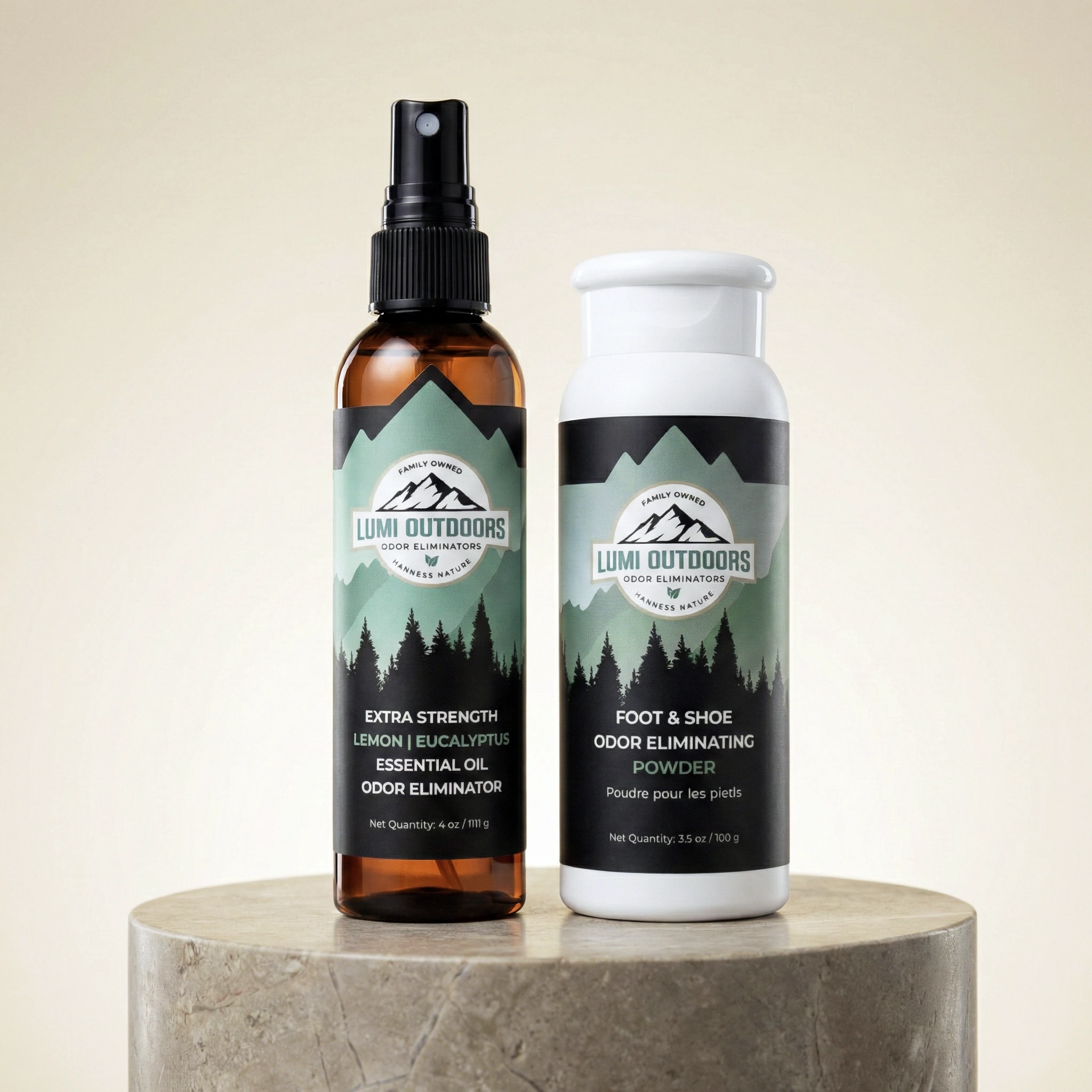
Join 1 Million+ Other People Who Chose Lumi to Conquer Their Shoe Odor.
- THE ULTIMATE 1-2 PUNCH AGAINST ODOR
- A COMPLETE KIT FOR SHOES, BAGS & GEAR
- PROUDLY FAMILY-OWNED & MADE IN UTAH
- THE "FRESH CONFIDENCE" GUARANTEE