

Why Do Your Work Boots Smell Like Vomit? The Real Reason Revealed
- It's isovaleric acid The same compound found in human vomit is produced when bacteria break down the amino acid leucine in your sweat — inside your boot lining.
- Masking sprays won't cut it Generic deodorizers target sour odors, not putrid ones. You need something that breaks down the acid itself and stops future moisture from feeding the bacteria.
- Rotation is non-negotiable Wearing the same boots daily keeps the lining perpetually damp, which means bacterial activity never stops — no treatment will hold without a 24-hour dry cycle between wears.

Your work boots smell like vomit because they contain isovaleric acid — the exact same compound that gives human vomit its distinctive, stomach-turning stench. Bacteria called Staphylococcus epidermidis, which live naturally on your skin, break down the amino acid leucine in your sweat and produce isovaleric acid as a byproduct. The odor isn't a coincidence. It's chemistry.
Work boots make this dramatically worse than regular shoes. Ten-hour shifts inside insulated, waterproof leather create a sealed, humid environment where bacterial colonies grow fast and produce acid in concentration. Here's exactly what's happening — and how to stop it.
Why Do Work Boots Specifically Produce That Vomit-Like Smell?
Work boots create the worst-case conditions for isovaleric acid production: sustained heat, zero airflow, and constant moisture from sweat — a combination that accelerates bacterial activity far beyond what a regular sneaker experiences.
Your feet have roughly 250,000 sweat glands — more per square inch than anywhere else on your body. During a long shift, a single foot can produce over 200ml of sweat. In a running shoe with mesh panels, that moisture evaporates. In a steel-toed leather boot with a waterproof membrane? It has nowhere to go.
The moisture saturates your sock, soaks into the insole, and gets absorbed by the leather and fabric lining. When you take the boot off at the end of the day and leave it in a warm locker or truck cab, Staphylococcus epidermidis gets to work on that trapped sweat. The bacteria convert leucine — an amino acid abundant in human perspiration — into isovaleric acid. According to published biochemical references, isovaleric acid (3-methylbutanoic acid) is structurally similar to the short-chain fatty acids present in emesis. Your nose isn't being dramatic. The molecules are genuinely alike.
That's the real problem.
And it compounds over time. Each day's sweat adds more acid to the lining. The leather becomes saturated. Eventually the smell is present even when the boots are bone dry, because the acid is embedded in the material itself — not just sitting on the surface waiting to evaporate.
How Is This Different From Normal Shoe Odor?
The "vomit" smell from isovaleric acid is chemically distinct from the vinegar or sour odors that most shoe deodorizing advice targets — which is why generic sprays often fail to fix it.
Most foot odor is a mix of compounds. Acetic acid produces a sharp vinegar note. Propionic acid creates a sour, slightly cheesy smell — the one most people recognize from gym bags. But isovaleric acid has a profile that the human nose reads as putrid rather than just sour. That distinction matters when you're picking a fix.
The Journal of the American Academy of Dermatology has noted that S. epidermidis is the primary driver of the most severe foot odor profiles — not the more commonly blamed Brevibacterium species. Brevibacterium produces the classic "cheesy" odor. S. epidermidis and leucine metabolism produces the vomit one. Two different bacterial pathways, two different smells, two different solutions.
This is why masking sprays don't work on your specific problem. If you've tried a generic foot spray and come back an hour later to the same smell, that's not a product failure — it's a targeting failure. You were treating a sour problem when you had a putrid one.
The worst thing you can do after treating your boots is lace them back up and store them in a closed bag or locker. Isovaleric acid production actually spikes in the first two hours after you take boots off, when residual heat and trapped moisture hit peak bacterial activity. Leave boots unlaced, tongue pulled open, in open air for at least two hours before putting them away — even if you're using a treatment spray. The spray needs airflow to work, not a sealed environment.
What Actually Gets Rid of the Vomit Smell in Work Boots?

Effective treatment requires two things done in sequence: neutralizing the existing acid buildup in the lining, then cutting off the moisture supply that feeds future bacterial activity. Doing only one of these will get you temporary results at best.
Start with the boot itself. Remove the insoles and wash them separately — they hold the highest concentration of sweat residue and acid. Stuff the boots loosely with newspaper and let them sit in a ventilated space for a minimum of 24 hours before treatment. The newspaper absorbs residual moisture from the lining; skipping this step means you're spraying a still-damp boot, which dilutes anything you apply and lets bacteria keep working.
For the lining, you need something that breaks down the acid molecules rather than covering them. Essential oils like tea tree and eucalyptus don't just add scent — they disrupt the bacterial environment that keeps producing isovaleric acid. Lumi's Natural Foot Powder and Extra Strength Shoe Deodorizer Spray bundle addresses both angles: the spray targets the existing odor in the lining, and the powder goes on your feet before the next shift to absorb sweat before it ever soaks into the leather. If you want a free alternative, a tablespoon of baking soda left inside the boot overnight can neutralize surface acid — check out why baking soda alone often falls short on severe cases, though.
Boot rotation matters more than most people realize. A 24-hour dry cycle between wears is the minimum; 48 hours is better for heavily insulated boots. If you're wearing the same pair five days a week, you're re-introducing moisture before the previous session's acid production has stopped. Two pairs of boots, alternated, will outlast three pairs worn consecutively. Cedar shoe trees are also worth keeping inside the boot overnight — cedar absorbs moisture and has a mild deodorizing effect without leaving residue on the leather.
One more thing: don't bother putting your boots in the freezer. Freezing slows bacteria but doesn't kill the existing acid that's already embedded in the lining. The smell comes straight back when they warm up.
Can You Actually Save Leather Boots That Smell This Bad?
Most leather work boots can be salvaged even with severe isovaleric acid buildup, unless the lining has physically deteriorated — cracked, delaminating, or permanently salt-stained through multiple layers.
Leather itself is porous but durable. The problem is usually the fabric lining and the compressed foam insole, not the outer leather. If you pull the insole out and the foam is visibly degraded or the lining fabric has separated from the boot wall, replacement insoles (around $20–$30) and a deep treatment of the remaining lining is a better path than buying new boots.
A practical test: treat the boot thoroughly, dry it completely over 48 hours, and then smell the unlaced boot with your face inside before your next wear. If the odor is gone cold, the leather is salvageable. If the smell persists in a completely dry boot, the acid has saturated the lining beyond what surface treatment can reach. At that point, check whether the manufacturer offers replacement liner kits — many work boot brands do for their higher-end models.
Salt staining on the exterior leather is a separate issue. White tide marks from dried sweat salts don't indicate lining damage on their own — a leather conditioner handles those. For more on cleaning without damaging the leather, this piece on rubbing alcohol and leather covers what's safe and what isn't.
If you're dealing with cracked, delaminating fabric, no spray will fix that. But if the boot is structurally sound? The acid problem is solvable. Most people throw away boots that could have been saved with a two-week treatment protocol and a second pair to rotate.
Start tonight: pull the insoles, stuff with newspaper, and let them breathe.
Ready to stop dreading taking your boots off at the end of the day?
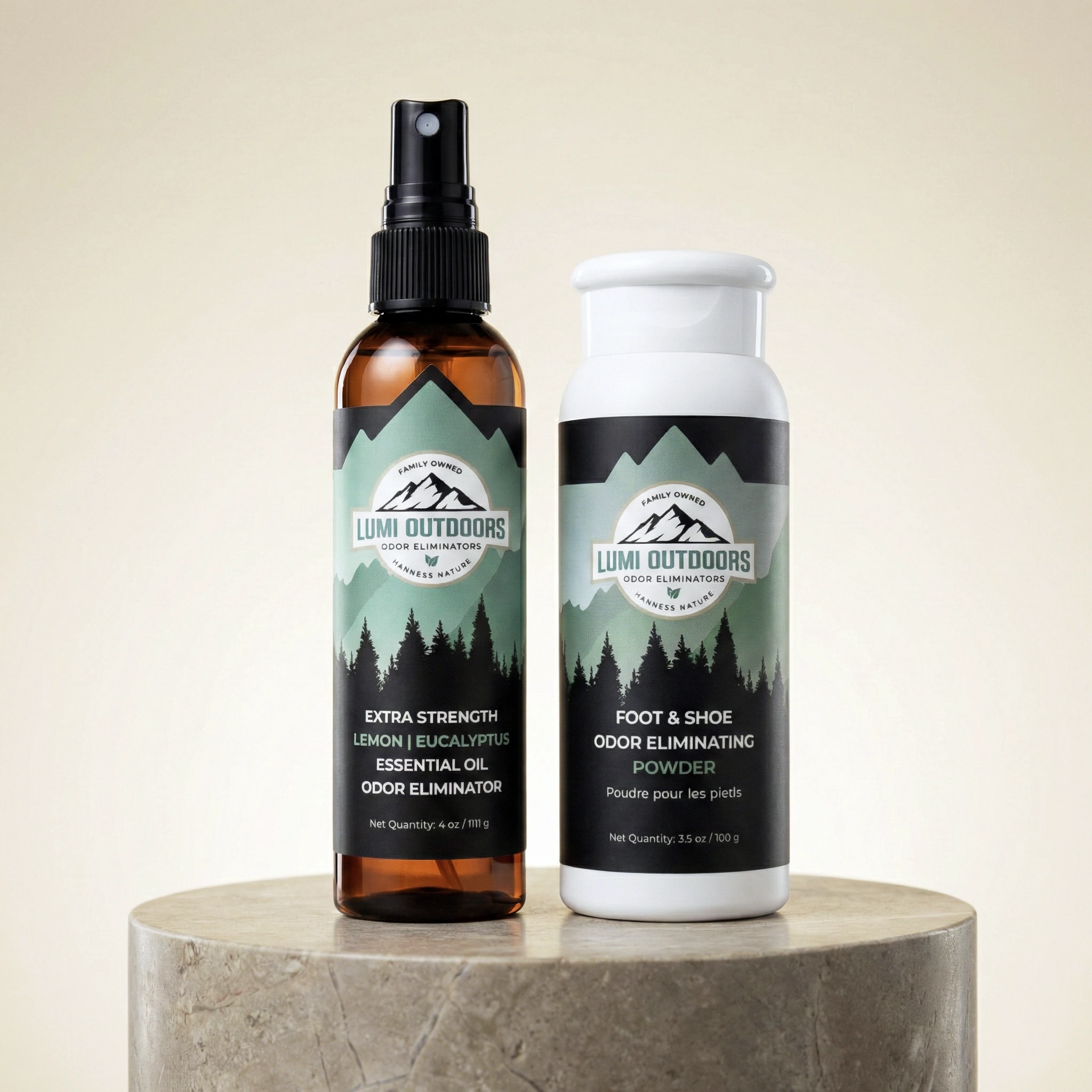
Join 1 Million+ Other People Who Chose Lumi to Conquer Their Shoe Odor.
- THE ULTIMATE 1-2 PUNCH AGAINST ODOR
- A COMPLETE KIT FOR SHOES, BAGS & GEAR
- PROUDLY FAMILY-OWNED & MADE IN UTAH
- THE "FRESH CONFIDENCE" GUARANTEE