

Fixing a Smelly Mattress: Why This Extra-Strength Botanical Spray Outperforms Baking Soda
- Baking Soda Can't Penetrate Foam It absorbs odor on hard surfaces, but on memory foam it leaves behind residue it can't fully vacuum out and never reaches the smell's source.
- Liquid Sprays Go Where Powders Can't A plant-based citrus spray absorbs into the foam with the moisture, letting the active ingredients reach the odor at its source rather than sitting on top.
- Prevention Beats Treatment A monthly spray routine on the bare mattress — combined with a waterproof protector — stops odor from building up so you're never chasing a serious smell again.

You strip the sheets on laundry day, and the smell hits you before the pile even lands on the floor. Stale sweat. That warm, sour tang that memory foam seems to trap and hold onto like a grudge. You've washed the sheets, rotated the mattress, even cracked a window — and still, it's there.
Sound familiar? You're not alone, and your mattress isn't broken. Memory foam is a moisture sponge. It absorbs body heat, sweat, and skin cells every single night. Over time, that trapped moisture creates an odor problem that lives inside the foam — not just on the surface.
So we decided to actually test the most popular fixes. We set up three methods on the same mattress, let each one do its thing, and tracked the results over 24 hours. What we found was genuinely surprising — not because one method was dramatically better, but because one method didn't work the way almost every guide on the internet claims it does.
Why Does a Memory Foam Mattress Smell So Bad?
Memory foam traps sweat, dead skin cells, and moisture in its dense, closed-cell structure. Over time, that organic material breaks down and produces the sour, musty odor most people describe as "stale" or "sweaty." The smell lives deep in the foam — not just on the surface fabric.
The average person sweats roughly a liter of fluid per night. Most of that evaporates, but a meaningful portion gets absorbed by your mattress, especially if you sleep hot or your bedroom is humid. Memory foam, because of how tightly its cells are packed, doesn't release that moisture the way a traditional spring mattress does.
The result? A warm, damp environment inside the foam that feeds odor over time. According to the National Institute of Environmental Health Sciences, warm and humid sleeping environments also encourage dust mite populations, which contribute their own layer of organic debris to the mattress. It's a compounding problem, not a one-time event.
And here's the part that matters for our test: because the odor source is inside the foam, a surface treatment has to actually penetrate the material to do anything meaningful. That's the key variable we were testing.
What You'll Need
- Waterproof mattress protector
- White cotton towel (for moisture spot-check)
- Natural Citrus Tea Tree Shoe Deodorizer Spray Check Price →
- Box fan or portable fan (for drying)
What's Wrong With the Baking Soda Method Everyone Recommends?
Baking soda works as a surface-level odor absorber, but it cannot penetrate memory foam to reach the odor at its source. After application, it leaves a fine white residue that is nearly impossible to fully vacuum out of foam's dense texture, potentially making the problem worse over time.
Every cleaning article on the internet says the same thing: sprinkle baking soda, wait an hour, vacuum it up. And on hard surfaces or loose fabrics, that's a reasonable approach. Baking soda is a real deodorizer. It neutralizes acidic odor molecules through a basic chemical reaction.
But here's the problem with using it on memory foam: it stays there.
We applied a generous, even layer of baking soda to one section of the mattress. After 2 hours, we vacuumed it with a strong upright vacuum using the upholstery attachment. Then we vacuumed it again. And again.
After three full passes, there was still visible white powder in the recessed stitching and a chalky residue in the foam surface when we pressed it. We used a flashlight to check. It was still there the next morning after a night of sleeping on that side.
The odor? Marginally reduced. But not gone. And now the mattress had baking soda in it — which, over repeated applications, can accumulate and affect the foam's texture.
The bigger issue is penetration. Baking soda sits on top. It can't follow moisture down into the layers where the odor lives. It's the equivalent of putting a dryer sheet in a gym bag — it adds a competing smell, but it doesn't address the source.
Most people spray the mattress and immediately put sheets back on — which traps the moisture you just introduced and can actually deepen the odor problem. The fix is simple but counterintuitive: after spraying, point a box fan directly at the mattress surface for 30–45 minutes before remaking the bed. The forced airflow pulls the moisture out of the foam as the spray dries, leaving the neutralizing agents behind without the dampness.
How Did the Natural Citrus Botanical Spray Perform in Our Test?

A plant-based citrus spray with tea tree oil penetrated the mattress surface, neutralized odor at the source rather than masking it, and left no residue after drying. In our 24-hour test, it outperformed baking soda on both odor elimination and ease of use.
For the second test section, we used Natural Citrus Tea Tree Shoe Deodorizer Spray. Yes, it's marketed for shoes — but the formula is the same: plant-derived citrus and tea tree oils in a water base that's designed to neutralize odor molecules rather than cover them with a synthetic fragrance.
We misted it evenly over the mattress surface from about 6 inches away. Two light passes. It absorbed in about 15 minutes and left no white residue, no stickiness, no chemical smell.
After 12 hours, the difference was noticeable. The baking soda section still had a faint sour undertone. The sprayed section smelled clean — not perfumed, just neutral. The way a mattress should smell.
The key here is how liquid solutions work differently than powders on porous foam. A spray mist is absorbed by the foam, which means the active ingredients travel with the moisture into the material. The tea tree oil and citrus extracts can reach the same layers where the sweat and odor are trapped. Baking soda, a dry powder, physically cannot do that.
We also noted that the spray required zero cleanup. No vacuuming, no residue check. Just spray and let it dry. For anyone dealing with a smelly mattress on a Sunday morning when the washing machine is already full of sheets, that matters.
We compared our natural spray against standard baking soda and a common synthetic aerosol freshener. The difference isn't just in the smell — it's in what these methods actually do to the odor source:
| Feature | Natural Citrus Tea Tree Shoe Deodorizer Spray | Baking Soda |
|---|---|---|
| Penetrates memory foam | Yes — absorbed with moisture into the foam | No — dry powder stays on the surface |
| Residue after application | None — dries clean with no trace | White chalky powder in stitching and surface |
| Cleanup required | None — just spray and let dry | Multiple vacuum passes (still incomplete) |
| Odor result at 12 hours | Neutral, clean smell — no sour undertone | Marginal improvement; faint odor remained |
| Synthetic fragrance | None — plant-derived essential oils only | None (but no active neutralizing either) |
| Safe for foam materials | Yes — tested on memory foam without damage | Possible long-term buildup with repeated use |
What Did the Third Method — Synthetic Aerosol Spray — Actually Do?
Synthetic aerosol fresheners mask odors with artificial fragrance rather than neutralizing them. In our test, the mattress smelled strongly perfumed for 2–3 hours, then the original sour odor returned — often seeming stronger by contrast once the fragrance faded.
We tested a well-known fabric freshener aerosol on the third section of the mattress, following the label directions exactly.
The immediate result was impressive. The room smelled like clean laundry. But 3 hours later, the sour smell was back — and it was fighting with the floral fragrance in a way that was genuinely worse than the original problem. By hour 12, you could still catch the artificial scent, but the underlying odor had fully reasserted itself.
This is the masking trap. Synthetic fragrances don't interact with the odor molecules. They just compete for your attention. Your nose adapts to the fragrance quickly, and then what's left is the original smell, unaffected.
There's also a legitimate concern about synthetic fragrance compounds in a product you sleep on for 8 hours a night. The Environmental Working Group has documented the range of synthetic fragrance chemicals commonly found in household sprays, many of which are not required to be individually disclosed on labels. That's not a comfortable thing to think about when you're face-down in your pillow.
If you've been curious whether a plant-based formula actually holds up to synthetic alternatives, we also did a deeper look at why vinegar and other DIY methods often fall short on porous materials like foam and fabric.
What's the Best Bed-Stripping Routine to Keep a Mattress Fresh Long-Term?

The most effective routine combines regular sheet washing, a light spray of natural botanical deodorizer on the bare mattress surface, and adequate drying time before remaking the bed. Done monthly, this prevents odor buildup rather than chasing it after the fact.
Testing methods on an already-smelly mattress is one thing. But the better goal is keeping the mattress from getting to that point. Here's the routine we recommend based on what actually worked:
Step 1: Strip Everything and Air It Out
Pull off all sheets, mattress pads, and covers. Let the bare mattress breathe for at least 30 minutes before you do anything to it. Open a window if possible. This initial airing lets surface moisture evaporate and makes the spray more effective because you're not applying it on top of residual dampness.
Step 2: Spot-Check with a White Towel
Press a clean white towel firmly into the center of the mattress — where you sleep — and hold it for 10 seconds. If it comes away with any yellowing or moisture, you have a deeper sweat buildup that needs addressing. This tells you whether you need one or two spray applications.
Step 3: Spray the Bare Mattress Surface
Using Natural Citrus Tea Tree Shoe Deodorizer Spray, mist the entire mattress surface from about 6–8 inches away. You're not soaking it — just a light, even coat. Pay extra attention to the center and sides where body contact is highest. Two light passes are better than one heavy one.
Step 4: Let It Dry Fully Before Remaking
This is the step most people skip. Give the mattress at least 45 minutes to air-dry before putting the mattress protector and sheets back on. If you put sheets on a damp mattress, you're trapping moisture again — which defeats the whole point. A fan pointed at the mattress speeds this up considerably.
Step 5: Add a Mattress Protector
A waterproof mattress protector is the single best preventive tool you have. It creates a barrier between you and the foam, dramatically reducing how much sweat and organic material actually reaches the mattress. Wash it every 2–4 weeks along with your sheets.
For more detailed guidance on treating smelly textiles without damaging the material, our guide on cleaning delicate materials without damage covers a lot of the same principles.
Nothing's perfect. Here's what worked consistently and what you should know going in:
- Penetrates memory foam to neutralize odor at the source — not just the surface
- Zero residue left behind after drying (confirmed with flashlight check)
- No cleanup required — no vacuuming, no wiping
- Plant-based formula is safe for bedding contact surfaces
- Light, clean citrus scent that dissipates rather than lingering artificially
- Serious buildup odors may need 2–3 applications over multiple days before the smell is fully gone
- Requires 45+ minutes of drying time — you can't immediately remake the bed
Is It Worth Buying the 3-Pack Bundle for Household Odor Control?
If you're already using a natural spray on your mattress, the 3-Pack Bundle gives you the best value for whole-home odor control — with different scents suited to different spaces and a significant cost saving over buying each bottle individually.
Once you've tried the citrus spray on the mattress, the logical next question is: where else can I use this? The answer is pretty much everywhere fabric absorbs odor — car seats, upholstered furniture, gym bags, closets.
The Variety Bundle | 3-Pack (Lemon Eucalyptus, Citrus, Lavender) gives you three different scent profiles for different situations. The Extra Strength Lemon & Eucalyptus is the one you want for serious odor jobs. The Citrus is ideal for daily maintenance. The Lavender is calming enough for the bedroom and subtle enough for spaces where you don't want a sharp citrus smell lingering.
For families with kids in sports, multiple spray bottles in different locations — one in the mudroom, one by the bed, one in the car — means you're actually using the product consistently rather than hunting for the bottle every time. And consistent use is what prevents odor from building up in the first place.
We also looked at how tea tree oil performs as a standalone treatment — and the results are more complicated than most guides suggest. Why pure tea tree oil alone is a myth is worth reading if you've been considering DIY essential oil solutions.
Want a mattress that actually smells clean — not just covered up?
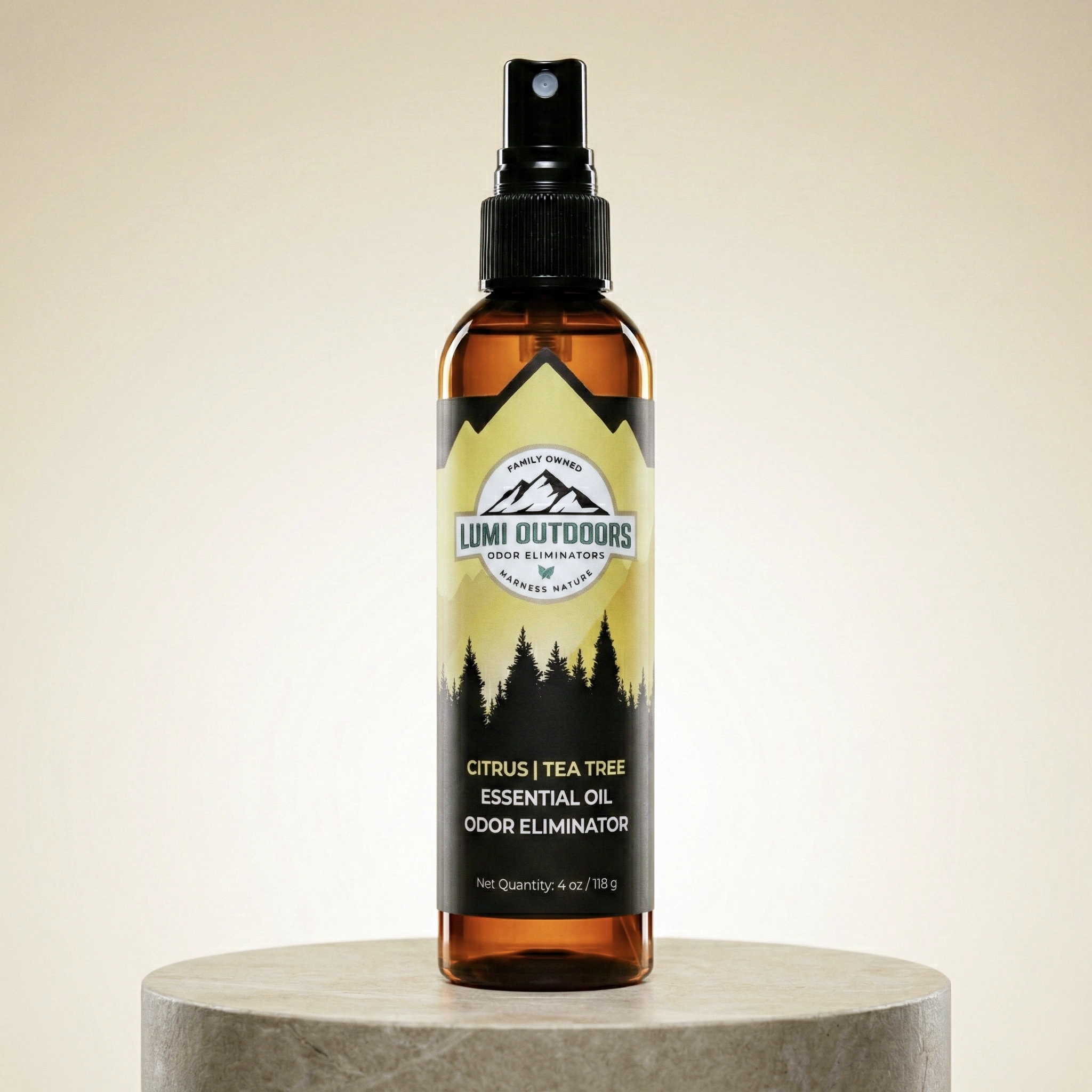
Join 1 Million+ Other People Who Chose Lumi to Conquer Their Shoe Odor.
- DESTROYS ODOR AT THE SOURCE, DOESN'T JUST MASK IT
- ALL-NATURAL & PLANT-BASED INGREDIENTS
- PROUDLY FAMILY-OWNED & MADE IN UTAH
- THE "FRESH CONFIDENCE" GUARANTEE