

7 Natural Stinky Work Boots Remedy Hacks for Tough Gear
- Pull the insoles first Removing insoles right after wearing is the single highest-impact habit for slowing work boot odor — it allows the densest moisture-soaked part of the boot to air dry separately.
- Moisture is the real enemy Foot powder applied before wearing stops sweat from soaking into the insole in the first place, cutting odor at the source instead of chasing it afterward.
- Enzyme sprays beat fragrance masking Natural enzyme-based sprays neutralize odor compounds at a molecular level — they don't just cover the smell up, which means it doesn't come back an hour later.
- Rotate your remedies The most effective routine combines daily spray treatment, weekly baking soda overnights, and cedar shoe trees — no single hack does everything on its own.

You already know the smell. You walk through the front door, kick off your boots, and within sixty seconds, someone in the next room says something. It's not subtle. Work boot odor — the kind baked in by ten-hour days on a job site, soggy hiking trails, or a long hunting season — is a different beast entirely from a slightly musty sneaker. The leather is thick. The insoles are dense. The moisture soaks all the way down and just... stays there.
Regular shoe sprays often don't cut it. You need remedies that actually reach the source of the smell — not just mask it for an hour. So here are 7 hacks that actually work on heavy-duty boots. Start with #1 and work your way down. By the time you hit #7, you'll have a system that keeps them fresh for good.
1. What Is the First Thing You Should Do With Smelly Work Boots?
Pull out the insoles immediately after wearing — this single step does more to prevent odor buildup than almost anything else because it exposes the most moisture-saturated part of the boot to air.
Your insoles absorb the bulk of your foot sweat all day. If they stay sealed inside the boot overnight, that moisture has nowhere to go. You've basically created a sealed container of warm, damp material — the exact conditions that breed bad odors. Pull them out, set them on a rack or countertop, and let both the insoles and the boot interior breathe separately. This one habit alone can dramatically slow down odor buildup over time.
If your insoles are more than six months old and still smell even after airing out, it's time to replace them. No hack in the world can fully fix an insole that's been saturated beyond recovery.
2. How Does Baking Soda Actually Help With Boot Odor?
Baking soda (sodium bicarbonate) absorbs moisture and neutralizes acidic odor compounds inside boots — but it works best as an overnight treatment, not a quick fix.
This is one of the oldest tricks around, and there's a reason people keep coming back to it. Pour about two tablespoons of baking soda directly into each boot. Tip the boot back and forth to spread it around the insole area. Leave it overnight — at least eight hours. In the morning, dump it out and shake the boot to remove the residue before wearing.
One thing most guides skip: baking soda works better in dry boots than wet ones. If your boots are still damp from the day, let them air out for an hour first. Wet baking soda just clumps up and doesn't absorb as well. Also, don't skip shaking it all out — powder residue can make the inside slippery and wear down your socks faster. Want to understand why baking soda sometimes fails and what to use instead, check out this breakdown.
Most people spray the insole and call it done — but the worst odor in heavy work boots lives in the toe box and the heel well, not the center of the insole. Tilt the boot upside down and spray directly into the toe area, then stand it upright and spray the heel. Let it air dry toe-down so the formula runs toward the areas that trap the most heat and sweat all day. This is especially important for steel-toe and composite-toe boots, where the sealed toe cap creates a pocket that standard sprays never reach.
3. Can Newspaper Really Absorb Odor and Moisture From Heavy Boots?
Yes — crumpled newspaper is a surprisingly effective moisture absorber for thick boots because the paper fibers draw out dampness from deep within the leather or fabric lining, which is what actually feeds the odor.
Stuff each boot as tightly as you can with crumpled newspaper and leave it for at least six hours. The paper pulls moisture out of the boot walls and insole area through capillary action. It's a low-tech fix that works especially well on hunting boots and hiking boots after a wet day out.
Change the newspaper after the first two to three hours if your boots were soaked — wet paper stops absorbing. And yes, black ink newspaper is fine. The ink is soy-based in most modern printing and won't stain the inside of your boots. If you're nervous, plain white printer paper works too, just tear it into strips first.
4. Do Cedar Shoe Trees Work for Heavy Work Boots and Hunting Boots?

Cedar shoe trees are one of the most effective long-term tools for heavy boots because untreated cedar wood naturally absorbs moisture, deters mold, and leaves a mild cedar scent — without any chemicals whatsoever.
The key word there is untreated. You want raw cedar, not lacquered or painted wood. The natural oils in the cedar do the work. Insert them right after you pull the boots off and leave them in overnight. They also help boots hold their shape, which is a big deal for expensive leather work boots that can warp or crack when they dry out unevenly.
Cedar trees do lose some potency over time as the oils dry out. You can refresh them by lightly sanding the surface with fine-grit sandpaper — it opens up the wood grain and brings the oils back. Do this every few months and your cedar inserts will last for years. This is also a great pairing with the baking soda method from Hack #2 — alternate between the two.
5. How Does White Vinegar Help With Deep Boot Odor?
Diluted white vinegar breaks down the specific type of odor compounds produced by sweat and bacteria inside boots — and because it evaporates fully, it leaves no lasting smell of its own once the boot dries.
Mix equal parts white vinegar and water in a spray bottle. Spray the inside of each boot — the insole, the heel, and the toe area — and let it air dry completely before wearing. Don't soak the boot; a light, even mist is enough. The acetic acid in the vinegar neutralizes the alkaline compounds responsible for that sharp, ammonia-like boot odor.
The vinegar smell while it's drying is strong, yes. But once the boot is fully dry — usually two to three hours — it's completely gone. This works well as a weekly reset for heavy-use boots. According to Healthline, acidic solutions like white vinegar are one of the most-recommended natural tools for neutralizing shoe odor at home.
One caution: test on a small, hidden area first if your boots are raw suede or unfinished leather. Vinegar can occasionally affect surface treatments on very delicate materials, though it's generally safe on standard leather and rubber-soled work boots.
6. Should You Use Foot Powder in Work Boots Before You Even Put Them On?

Yes — applying foot powder before you put on your boots stops sweat from saturating the insole in the first place, which means there's far less moisture to turn into odor by the end of the day.
Here's the thing about odor: it's mostly a moisture problem. Sweat itself doesn't smell that strongly. The odor comes from bacteria that feed on sweat in a warm, enclosed space. Cut the moisture supply, and you cut the smell at the root. That's what foot powder does. It creates a dry barrier between your foot and your insole all day long.
A talc-free option like Lumi's Natural Foot Powder works well here — it uses plant and mineral-based ingredients to absorb sweat throughout the day without feeling cakey or chalky. You can apply it directly to your feet or sprinkle a small amount inside the boot before putting it on. For work boots worn for ten-plus hour shifts, this is a smarter move than just treating the boots after the fact. Want to go deeper on powder ingredients? This piece on why kaolin clay outperforms traditional talc is worth a read.
If your feet sweat a lot no matter what, this preventative step is non-negotiable. You can use all the sprays and baking soda in the world, but if the boots are getting saturated every single day, you're always playing catch-up.
Nothing's perfect. Here's what worked and what didn't across all these methods:
- Removes insoles daily — zero cost, massive impact on odor reduction
- Baking soda and vinegar are household staples — no special shopping required
- Cedar shoe trees last for years with minimal maintenance
- Natural enzyme spray handles the worst odors in one step with no prep
- Foot powder prevents odor from forming rather than just treating it after
- DIY methods like baking soda and vinegar require consistency to work — skipping a few days lets odor rebuild fast
- Severely saturated insoles past the point of recovery need to be replaced — no remedy fully fixes them
7. What Is the Easiest and Most Effective Spray Remedy for Stinky Work Boots?
A natural enzyme-based spray — applied right after removing boots — is the most time-efficient remedy because it neutralizes odor at the molecular level rather than just covering it up, and it requires zero scrubbing or prep work.
All six hacks above work. But they also take time, consistency, and a few different supplies. If you want one thing you can do every single day in ten seconds flat, a quality spray is it. The catch is that most commercial sprays just deposit a strong artificial fragrance on top of the problem. Two hours later, the chemical smell fades and the original boot smell comes right back.
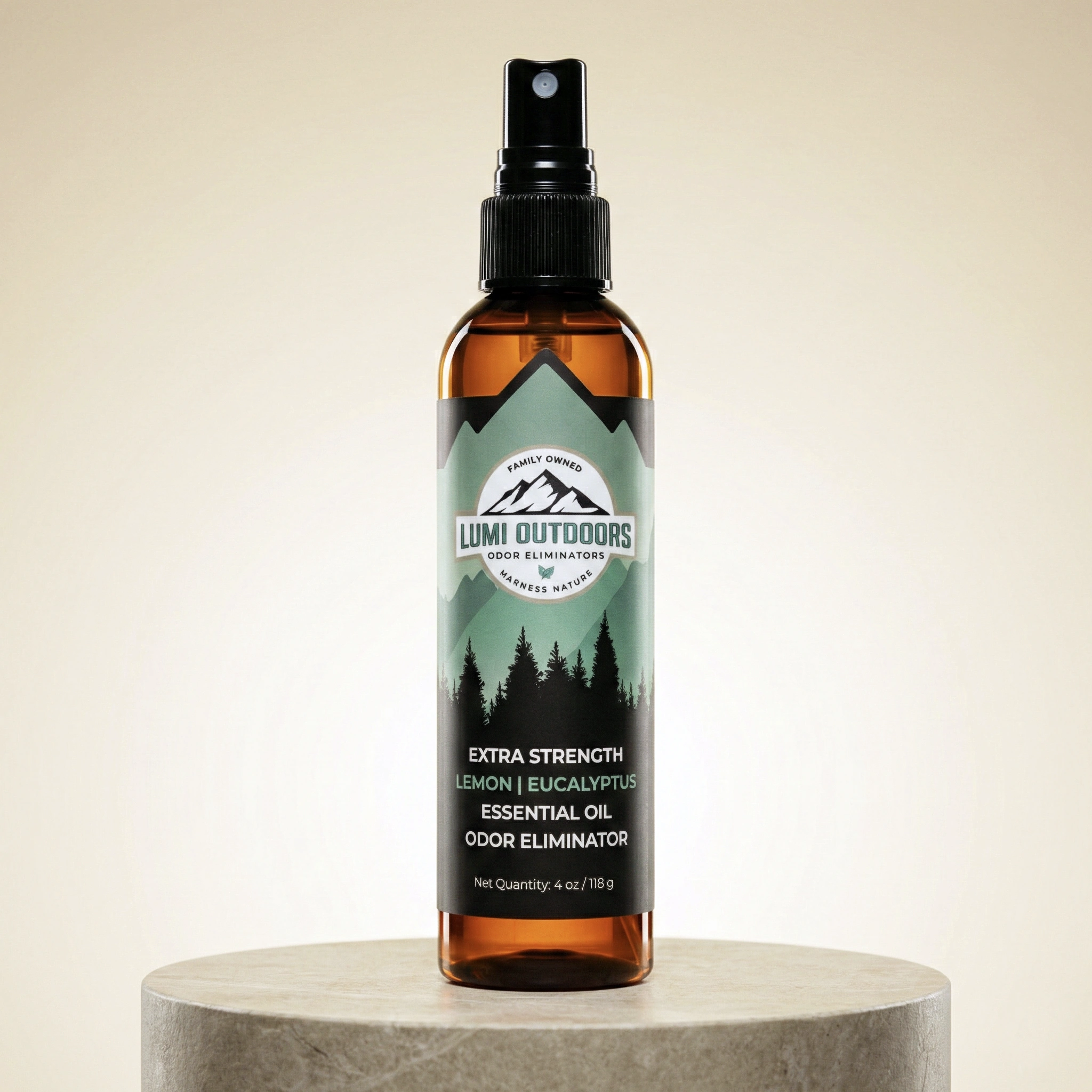
That's where a natural enzyme-based formula is different. Enzymes break down the actual organic compounds causing the odor — they don't just coat over them. Lumi's Extra Strength Shoe Deodorizer Spray uses a lemon and eucalyptus formula that gets into the dense lining of work boots, hunting boots, and hiking boots where other sprays can't reach. It's 100% plant-based, free from harsh chemicals, and safe to use around kids and pets. Two or three sprays into each boot right after you take them off, and you're done. No waiting, no prep, no mess.
For a boots-only household where the smell is severe, this is the one we keep by the door. If you've got multiple family members dealing with different levels of boot odor, the Variety Bundle 3-Pack gives you the extra strength formula plus two other options, which is smart value for a house with both work boots and everyday shoes to manage.
You don't need to do all seven of these every day. Start with Hack #1 (pull the insoles) and Hack #7 (spray them down). Add in the baking soda overnight treatment once or twice a week. That three-part routine handles about 90% of what makes work boots smell. The other hacks are your heavy artillery for boots that have already gotten pretty far gone.
Your boots are expensive. A good pair of work boots can run $150 to $300 or more, and proper odor care actually extends their life by preventing moisture damage to the leather and lining. This isn't just about the smell — it's about protecting your gear. For more on keeping footwear in top shape, this guide on eliminating foot odor in sneakers for good has some crossover tips that apply to any footwear you care about.
Pick your starting point. Try it tonight. Your family — and your coworkers — will notice.
Ready to stop dreading taking your boots off at the door?
Join 1 Million+ Other People Who Chose Lumi to Conquer Their Shoe Odor.
- DESTROYS ODOR AT THE SOURCE, DOESN'T JUST MASK IT
- ALL-NATURAL & PLANT-BASED INGREDIENTS
- PROUDLY FAMILY-OWNED & MADE IN UTAH
- THE "FRESH CONFIDENCE" GUARANTEE