

Why Your Gym Bag Still Smells After Washing (And the Fix)
- Washing isn't enough Bacteria build biofilms deep in synthetic fibers that standard detergent can't reach — the smell survives the machine and comes back with the next drop of moisture.
- Synthetic fabrics are the problem Polyester and nylon bond with body oils, creating a permanent food source for bacteria that cotton or canvas doesn't hold onto in the same way.
- The real fix is two-step Break down existing biofilm with vinegar or an essential oil spray, then establish a dry-bag rule and airflow routine to prevent colonies from re-forming.

Your gym bag smells after washing because the bacteria causing the odor aren't sitting on the surface — they're embedded in the synthetic fibers as a biofilm, a protective layer that standard detergent can't penetrate. Washing removes surface dirt and dead skin cells, but the bacterial colonies living deep in the polyester and nylon weave survive the machine cycle and reactivate the moment any moisture returns.
Here's what to do about it — starting with why your bag is basically a five-star resort for bacteria.
Why Does Washing a Gym Bag Not Remove the Smell?
Standard laundry detergent is designed for surface-level cleaning. It lifts loose dirt, oils, and grime from fabric fibers — but it doesn't break down the biofilms that odor-causing bacteria build inside synthetic materials over time, which is why the smell survives even a hot wash cycle.
A biofilm is essentially a bacterial community that secretes a protective matrix — a thin, sticky shield made of polysaccharides and proteins that physically blocks detergent molecules from reaching the bacteria underneath. According to research published by the National Institutes of Health, biofilms can be up to 1,000 times more resistant to chemical cleaning agents than free-floating bacteria.
That's not a typo. 1,000 times.
The bacteria responsible — primarily Staphylococcus and Micrococcus species — feast on the sweat, sebum, and dead skin cells your gym clothes deposit into the bag's lining on every trip. They don't need much. A slightly damp interior and a zipper closed for 12 hours is enough to let a new colony take hold and start producing the volatile organic compounds (VOCs) that your nose picks up as "that smell."
Washing disrupts the colony temporarily. But the biofilm matrix stays anchored to the fiber. Within 24–48 hours of the bag getting damp again — from a water bottle, a post-workout shirt, or just ambient humidity — the smell is back. That's not bad luck. That's biology.
Why Are Synthetic Fabrics So Much Worse Than Cotton or Canvas?
Polyester and nylon are oleophilic, meaning they have a chemical affinity for oils — and that property makes them bond tightly with the sebum and body oils in sweat, creating a near-permanent food source for bacteria that cotton or canvas simply doesn't hold onto in the same way.
Cotton fibers are hydrophilic — they absorb water and release it relatively easily when washed. Synthetic fibers do the opposite. They're moisture-wicking on the surface (great for athletic performance), but they trap oils deep in the fiber structure where water and soap struggle to reach. The same mechanism explains why washing athletic shoes often fails — it's a fabric problem, not a hygiene problem.
Temperature makes this worse in a specific way. Most gym bag care labels recommend cold or warm water to protect zippers, foam padding, and structural materials. But Staphylococcus epidermidis — one of the most common culprits in sweat odor — thrives between 15°C and 45°C (59°F–113°F). A warm-water wash cycle sits squarely in that comfort zone. You're essentially giving the bacteria a warm bath and calling it a cleaning.
The dark, enclosed interior doesn't help either. Without UV exposure or airflow, the bag's lining becomes what microbiologists call a "favorable microenvironment" — warm, moist, nutrient-rich, and protected from light. The gym bag you zip shut after every session is a near-perfect incubator.
Most people spray a deodorizer into their gym bag and then immediately zip it shut — that's the one thing that guarantees the smell comes back. Essential oil sprays need airflow to dry and work; sealed inside a bag, the moisture from the spray itself can actually encourage bacterial growth. Always spray with the bag fully open and leave it unzipped for at least 20 minutes before closing.
How Do You Actually Get Rid of Gym Bag Odor for Good?

Permanently eliminating gym bag odor requires two things: breaking down the existing odor buildup with an essential oil treatment that penetrates synthetic fibers, and establishing a drying and airflow routine that prevents new colonies from forming between washes.
Start with a targeted pre-treatment before your next wash. White vinegar (undiluted) applied directly to the bag's interior lining and left for 30 minutes before washing is a genuinely effective free option — acetic acid disrupts biofilm structure and lowers the pH of the fabric to a level bacteria find hostile. It's not glamorous, but it works. You can also check out this breakdown of the three-step freshening method for how to apply a similar approach to athletic gear generally.
For the "hot zones" — the main compartment lining, the shoe pocket, and the shoulder straps (which absorb direct skin contact) — a spray-based treatment that targets residual odor after washing is the most practical ongoing fix. Lumi's Extra Strength Shoe Deodorizer works well here; a few spritzes into the open bag after washing, then leave it unzipped to air dry completely. The lemon eucalyptus scent is noticeable for the first 10 minutes or so, then fades to neutral — so you're not going to smell like a cough drop at the gym.
Baking soda is another solid free option. Pack the inside of the dry bag with a cup of baking soda, seal it overnight, then shake it out before use. It won't break down a biofilm on its own, but it neutralizes the VOCs responsible for the immediate smell and absorbs residual moisture. Think of it as maintenance between deeper treatments.
One thing most guides skip: drying position matters. Don't just leave a washed bag sitting upright on a shelf. Hang it open, ideally near a window with natural light. UV exposure is genuinely bactericidal, and airflow through the interior dries out the micro-environments where bacteria thrive. Fifteen minutes of sunlight does more than an hour in a dark closet.
How Do You Stop the Smell From Coming Back?
Preventing gym bag odor from returning comes down to one rule: never zip a bag that contains anything damp. Secondary measures — airing the bag after every use, using a dedicated shoe compartment or pouch, and applying a light deodorizing spray to hot zones after sessions — keep bacterial colonies from re-establishing between washes.
The "dry bag" rule sounds obvious. It almost never gets followed. A slightly damp workout shirt or a sweaty pair of socks sealed inside a bag for eight hours creates enough moisture and warmth to restart bacterial growth before you've even made it to the parking lot. If you can't hang the clothes to dry before packing, at minimum leave the bag's zipper open when you get home.
Dedicated gear pouches help more than most people expect. Separating shoes and sweaty clothes from the main compartment keeps contamination localized. If the shoe pocket develops a persistent smell, it doesn't have to mean treating the entire bag. You can also check out why certain popular "odor hacks" like freezing don't actually address the bacterial source — the same logic applies to gym bags.
If you want a maintenance routine that's actually sustainable, a three-pack variety bundle gives you the flexibility to keep a bottle in your locker, one at home, and one in the car — so a quick spray after sessions becomes automatic rather than a project. For a deeper look at the chemical risks in conventional deodorizing sprays, it's also worth reading why synthetic chemical aerosols come with their own tradeoffs in enclosed spaces like gym lockers and car trunks.
One detail most people overlook: the straps. Shoulder straps sit against skin for extended periods and absorb sweat directly — but because they're structural, they often don't get treated at all. After a particularly heavy session, a quick spray on the straps and a wipe-down with a damp cloth takes 30 seconds and stops the strap from becoming the primary odor source within a few weeks.
Done watching the smell come back after every wash?
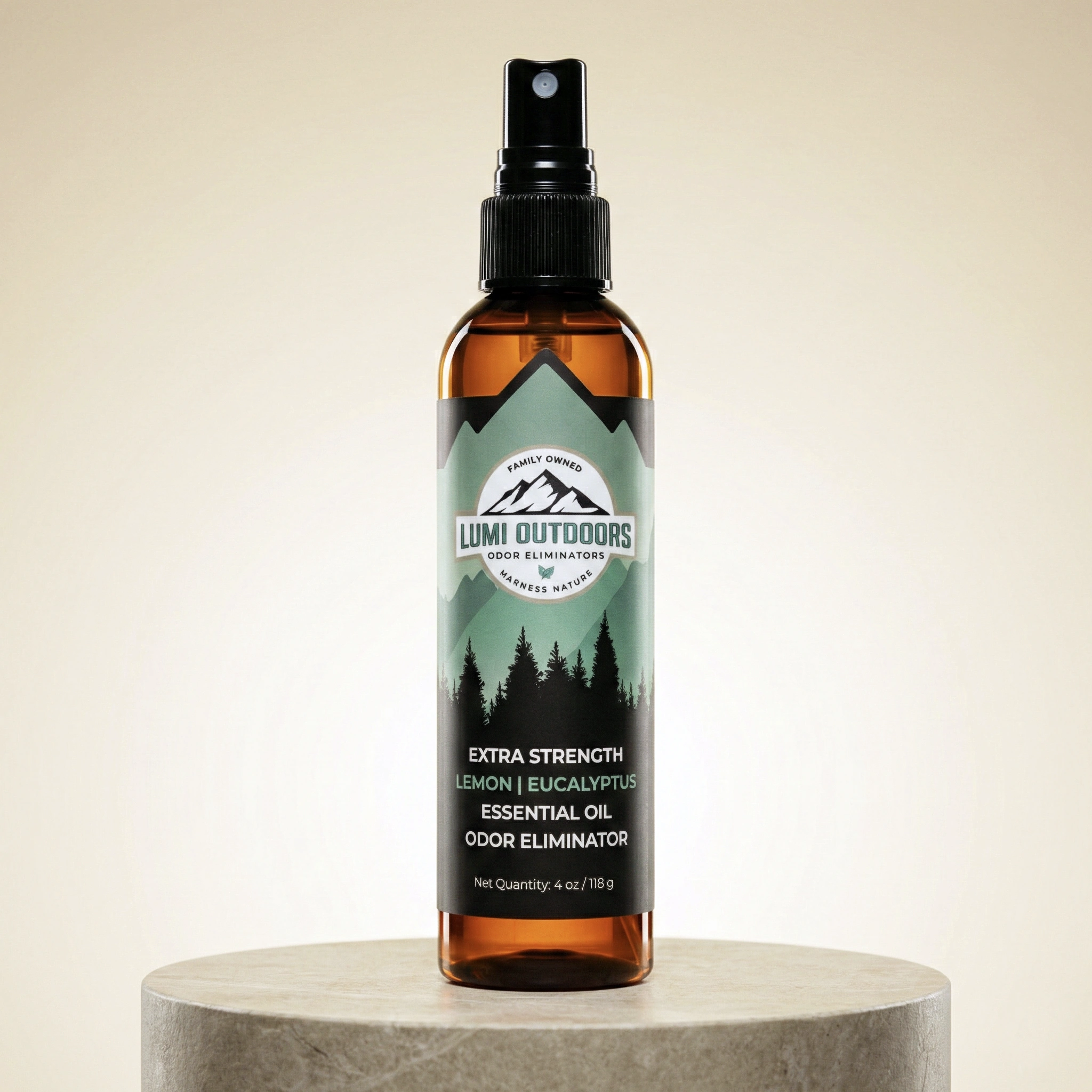
Join 1 Million+ Other People Who Chose Lumi to Conquer Their Shoe Odor.
- DESTROYS ODOR AT THE SOURCE, DOESN'T JUST MASK IT
- ALL-NATURAL & PLANT-BASED INGREDIENTS
- PROUDLY FAMILY-OWNED & MADE IN UTAH
- THE "FRESH CONFIDENCE" GUARANTEE