

Why does baking soda make your shoe smell worse when mixed with sweat?
- The Saturation Point Baking soda works in dry conditions, but heavy foot sweat dissolves it into an alkaline paste that traps odors instead of absorbing them.
- The Bacterial Shift Once baking soda raises the shoe's pH above neutral, it can favor ammonia-producing bacteria, making the smell sharper and more pungent than before.
- The Fix Remove all residue, let shoes dry completely, then switch to a kaolin clay or arrowroot-based powder that absorbs moisture without dissolving into paste.

Baking soda makes shoe smell worse when sweat overwhelms it — the sodium bicarbonate dissolves into a damp, alkaline paste that traps dead skin cells and bacteria against the shoe material, concentrating the odor instead of absorbing it. This happens when the moisture load inside the shoe exceeds what the baking soda crystals can hold in dry form. Once it turns to paste, it stops working as a deodorizer entirely.
Here's exactly why the chemistry breaks down — and what to use instead so you're not dealing with what Reddit users have accurately described as a foul smelling paste.
Why Does Baking Soda Turn Into a Smelly Paste Inside Shoes?
Baking soda (sodium bicarbonate) works by absorbing moisture and neutralizing acidic odor compounds in dry conditions — but inside a sweaty shoe, it quickly hits a saturation point where the crystals dissolve completely, forming a wet alkaline slurry that amplifies odor rather than eliminating it. The science is straightforward: sodium bicarbonate is hygroscopic, meaning it pulls moisture from its environment. That's a feature in a dry pantry. In a hot sneaker worn for eight hours, it's a liability.
Your foot produces roughly 250 ml of sweat per day across both feet, according to data from the American Podiatric Medical Association. When that moisture floods the shoe interior, baking soda crystals dissolve faster than they can neutralize anything. What's left is a thick, chalky film coating the insole.
That paste does two damaging things simultaneously. First, it traps volatile organic compounds (VOCs) — the actual odor molecules — inside the shoe instead of letting them dissipate. The thick texture creates a physical barrier that prevents gases from escaping, so the smell concentrates and builds. Second, the alkaline environment it creates (baking soda raises the pH to around 8.3) can actually favor certain bacteria that produce more pungent byproducts than the ones it originally neutralized.
That's the real problem.
The bacterial activity behind bromodosis (the clinical term for foot odor) is heavily pH-dependent. Most odor-causing bacteria — like Brevibacterium linens, which produces that distinctive cheese-like smell — are relatively acid-tolerant. But shift the shoe environment alkaline with excess baking soda, and you may be creating more favorable conditions for ammonia-producing bacteria. The result: a smell that's sour, sharp, and noticeably worse than what you started with.
What Makes the Residue Problem Even Worse Over Time?
When baking soda is left in shoes for multiple days without being removed, it doesn't just sit there — it forms a porous crust that provides ideal nesting conditions for bacterial colonies deep inside the fabric or insole fibers. The residue traps dead skin cells (your feet shed roughly 30,000–40,000 cells per hour) against the insole surface, creating what amounts to a concentrated food source for odor-causing bacteria.
One thread on r/Frugal documented this exactly: multiple users reported that shoes treated with baking soda for more than two days developed a smell described as "sour paste" or "wet dog mixed with old cheese." That's consistent with the biology. The crusted residue isn't neutral — it's a concentrated bio-film that smells on its own.
There's also the VOC-trapping issue mentioned above, but it's worth emphasizing the texture specifically. Loose powder allows air movement. Dissolved paste does not. Once the baking soda transitions from crystalline to paste form, it behaves more like a sealant than an absorber — sealing odors in rather than letting them evaporate out.
Most people never check this.
The fix people expect — "just leave the baking soda in longer" — actively makes the problem worse. More time means more moisture absorption, more dissolution, more paste, and more concentrated smell. It's a self-defeating loop, which is why shoe odor keeps coming back after treatment for so many people.
Most people shake baking soda into shoes that still have moisture from the previous wear — that's the single biggest mistake. Baking soda needs a dry surface to work crystalline absorption. If you can feel any warmth or dampness inside the shoe, the powder will dissolve within minutes of contact. Let shoes air out for a minimum of two hours at room temperature before treating with any powder, and you'll get dramatically better results from even the most basic deodorizer.
How Do You Fix Shoes That Already Have the Baking Soda Paste Problem?

Remove the residue completely before attempting any other treatment — use a dry vacuum with a crevice tool to extract loose powder, then wipe the insole with a barely damp cloth, and let the shoe dry fully (6–8 hours minimum) in a well-ventilated area before wearing. Skipping the drying step just resets the moisture problem that caused the paste in the first place.
For stubborn crust that's embedded in fabric insoles, a soft-bristled shoe brush works better than a cloth. Scrub gently to break up the residue without pushing it deeper into the weave. If the insole is removable, pull it out and clean it separately — dried baking soda residue can be nearly impossible to fully extract from a glued-in insole.
Once the shoe is clean and dry, the question is what to use instead. Professional-grade foot powders use kaolin clay and arrowroot powder as the base absorbers — these materials wick moisture without dissolving into a paste, and they stay loose and silky rather than forming a gritty crust. Kaolin clay in particular has a layered crystalline structure that allows it to hold significantly more moisture per gram than sodium bicarbonate before becoming saturated. Lumi's Natural Foot Powder uses exactly this kind of formulation — kaolin clay, arrowroot, and bentonite clay — and it's worth keeping in your gym bag as a daily prevention step rather than a reactive fix.
If the smell is already severe rather than just preventative, a spray-based approach gets deeper into the fabric. Look for one with eucalyptus or lemon oil as the active agent — these target odor-causing bacteria without adding any physical bulk to the shoe environment. Lumi's Extra Strength Shoe Deodorizer Spray is what I'd reach for after the deep-clean reset, particularly for work boots or cleats that have serious buildup.
For a completely free option: plain white vinegar diluted 1:1 with water, applied with a cloth to the insole, then left to air dry for several hours. Acetic acid actively neutralizes alkaline baking soda residue and disrupts bacterial cell walls. It smells sharp for about 20 minutes, then fades to neutral. Not glamorous, but it works.
Is Baking Soda Ever Actually the Right Choice for Shoes?
Yes — but only as a dry, short-term overnight treatment in low-sweat shoes, removed completely before wearing. The key constraint is time and moisture. Baking soda works fine in a dress shoe or loafer worn briefly and stored dry. It fails in athletic shoes, work boots, or any shoe that's been worn for a full day of physical activity.
The "dry treatment only" rule is non-negotiable. Sprinkle a thin layer — not a thick pour — into a completely dry shoe. Leave it for six to eight hours maximum. Tap it out entirely before putting the shoes on. If there's any visible residue or the shoe feels damp at all, you're already past the point where baking soda helps.
There's also a meaningful difference between raw kitchen baking soda and formulated foot powders that contain baking soda as one ingredient among several. Raw sodium bicarbonate has no additional moisture-wicking agents and nothing to prevent it from caking. Formulated powders balance it with absorbers like cornstarch and arrowroot that stay loose under humidity, and often include zinc oxide — a skin protectant used in diaper creams and sunscreen — that addresses the bacterial layer rather than just the moisture. That combination is what prevents the paste problem entirely.
If you want to dig into why DIY hacks so frequently underperform on serious odor, the freezing method has the same fundamental flaw — it addresses the symptom without changing the underlying shoe environment that keeps creating the problem.
The smell always comes back when the root cause stays the same.
One final detail worth knowing: if you've been using baking soda in shoes worn without socks, the residue situation is significantly worse. Direct skin contact transfers far more dead skin cells and sebum into the shoe material, and baking soda paste without a sock barrier gets ground into the insole with every step. Switching to moisture-wicking socks — merino wool or a synthetic blend — cuts the bacterial food supply dramatically and makes any deodorizer work considerably better.
Done with the baking soda paste problem for good?
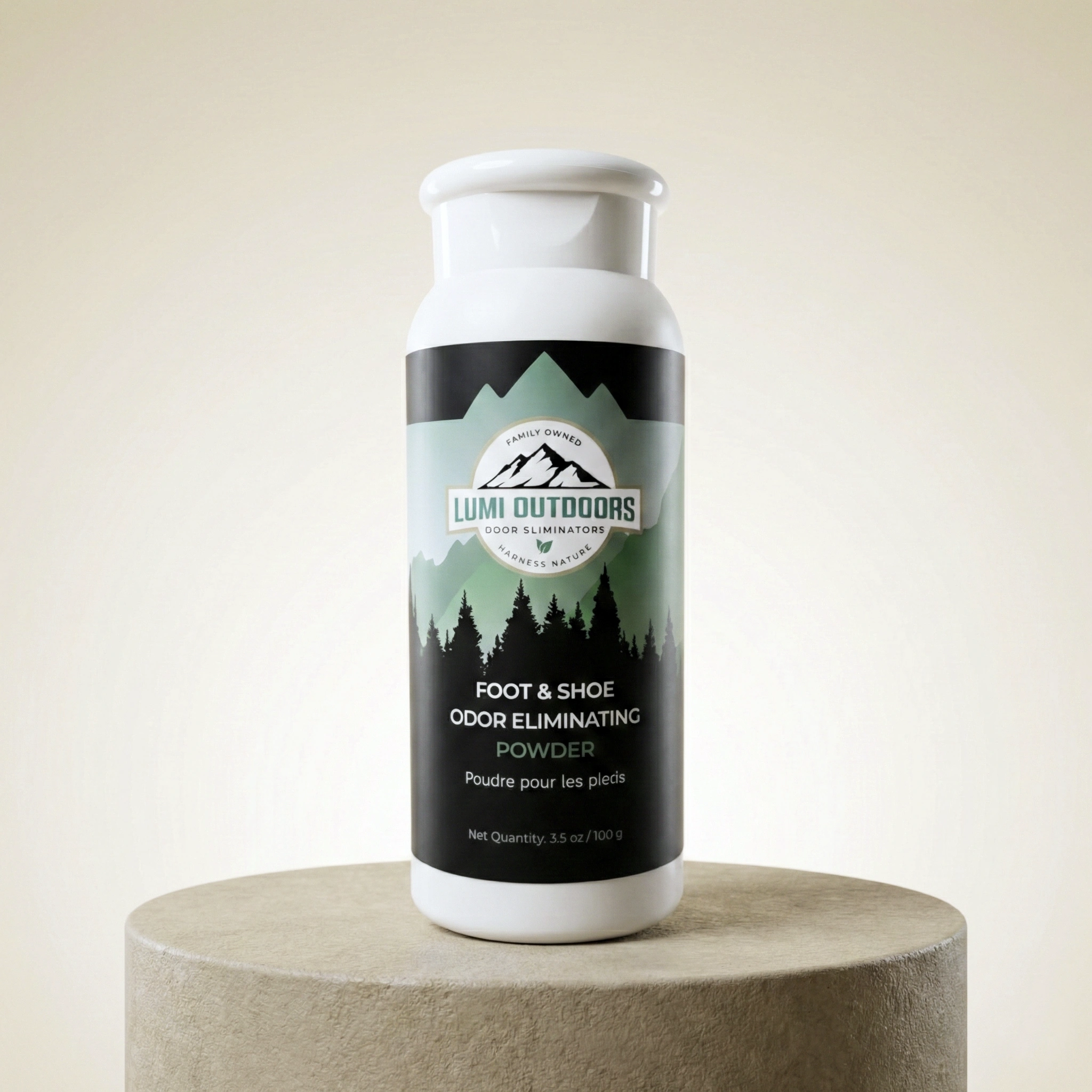
The best way to fight odor is to stop it before it starts. Our all-natural, talc-free foot powder is your first line of defense against mois...
- ABSORBS SWEAT & NEUTRALIZES ODOR
- ALL-NATURAL & TALC-FREE FORMULA
- PROUDLY FAMILY-OWNED & MADE IN UTAH
- THE "FRESH CONFIDENCE" GUARANTEE