
Shoes Still Smell After Freezing Them Overnight? 3 Reasons Why Hacks Fail
- Freezing doesn't kill bacteria Cold temperatures force odor-causing bacteria into dormancy — the moment shoes warm up, the bacteria wake up and the smell returns.
- Thawing makes it worse Condensation from the freeze-thaw cycle adds moisture to the shoe interior, giving bacteria a fresh supply of exactly what they need to multiply.
- Biofilms are the real blocker Deep shoe odor lives in protective bacterial biofilms that a standard kitchen freezer can't penetrate — effective treatment has to reach the source directly.

Freezing shoes doesn't eliminate odor — it pauses it. The bacteria living in your shoe's foam and fabric enter a dormant state when cold, but they're very much alive. The moment your shoes warm back up to room temperature, the smell returns, often within minutes of the first wear.
This isn't a fringe theory. It's basic microbiology. And once you understand the three mechanisms at work, you'll see why no amount of freezer time fixes a genuinely funky pair of shoes. Here's what's actually happening.
1. Freezing Makes Bacteria Dormant, Not Dead
The bacteria causing shoe odor — primarily Brevibacterium and Staphylococcus species — survive freezing because cold temperatures trigger dormancy, not death. A standard kitchen freezer at 0°F slows bacterial metabolism dramatically, but it doesn't cross the threshold required to rupture cell walls or destroy the organisms.
Think of it like a bear going into hibernation. The bear isn't dead — it's just waiting for warmer conditions. Brevibacterium linens, the species most responsible for that sharp, cheesy foot smell, is well-adapted to temperature swings. It evolved in environments that regularly cycle between warm and cold, so your freezer isn't the hostile environment you're imagining.
Laboratory sterilization — the kind that actually kills bacteria — requires either extreme heat (autoclaving at 250°F+) or cryogenic flash-freezing at temperatures well below -100°F. The frozen peas in your freezer are sharing space at 0°F. That's not even close to sterilization territory.
So the odor "disappearing" overnight? That's just cold air slowing the release of volatile organic compounds. Put the shoes on, and body heat does the rest.
2. Thawing Creates the Perfect Bacterial Comeback

When frozen shoes thaw, condensation forms inside the material as warm air hits cold surfaces — and that moisture spike gives dormant bacteria exactly what they need to multiply rapidly.
This is the part most people miss. The freeze-thaw cycle doesn't just fail to kill bacteria — it actively makes conditions worse afterward. Moisture is the primary driver of bacterial growth in footwear. A study cited by the American Orthopaedic Foot & Ankle Society found that a single foot can produce up to a pint of sweat per day, and foam insoles can retain moisture for 24-48 hours after wear.
When you pull shoes out of the freezer and let them sit on your floor, condensation forms on and inside the cold material. That moisture — combined with the body warmth from your foot — creates an ideal growth environment. The bacteria that were dormant at 0°F are now warm, fed, and reproducing again within about 20 minutes.
The smell always comes back.
If you've noticed that post-freeze shoes sometimes smell worse than before you froze them by the end of the day, this is why. You've given the bacteria a moisture boost they didn't have before.
Most people spray the insole and call it done — but the toe box is where biofilm buildup is most concentrated, because sweat glands on the ball of the foot and toes have the highest density of contact with the shoe. Spray the toe box interior directly, hold the shoe sideways so the product runs into the tip, and let it sit upside-down for 5 minutes before righting it. This gets the treatment into the hardest-to-reach fibers instead of letting it pool at the heel.
3. Biofilms Protect Bacteria From Temperature Extremes
Persistent shoe odor is often caused by bacteria living inside biofilms — thin, protective coatings that bacteria produce to shield themselves from environmental stressors, including extreme cold. A 12-hour freeze can't penetrate these layers.
A biofilm is essentially a community of bacteria encased in a self-secreted protective matrix. It's the same principle behind the slime you see on rocks in a stream — bacteria organized into a structure that makes them collectively far more resilient than any individual cell would be. Inside shoe foam and fabric fibers, biofilms can build up over weeks of wear.
This matters because biofilms are the reason "deep" shoe odor is so resistant to surface treatments. When you're dealing with shoes that have been worn daily for months without treatment, you're not fighting a few rogue bacteria — you're dealing with established colonies. The CDC notes that biofilm-forming bacteria can be up to 1,000 times more resistant to environmental stressors than free-floating cells.
Freezing, spraying with water, or even airing shoes out in sunlight can't reliably break down a mature biofilm. That's the real problem with "quick fix" shoe hacks — they're designed for surface-level freshness, not embedded odor.
Worth knowing before we get to actual solutions.
Why Cold Alone Can't Fix Funky Footwear
The smell from shoes is caused by volatile organic compounds (VOCs) produced as bacteria metabolize sweat — freezing temporarily suppresses VOC release, creating an illusion of freshness that disappears the moment the shoe warms up.
The "freshness" you smell right out of the freezer is real — but it's a physical effect, not a chemical one. Cold air holds fewer airborne odor molecules. The shoe smells better because the VOCs aren't volatilizing at low temperatures. It's the same reason a block of cheese smells stronger at room temperature than when it's just come out of the fridge. The cheese hasn't changed. The conditions have.
There's also a useful deep-dive on this exact topic in our breakdown of whether freezing shoes actually eliminates smell, if you want the full science. The short version: it's theater, not treatment.
For a genuinely effective approach, you need something that neutralizes odor at the source — not something that just chills it temporarily.
What Actually Works (The Real Fix)
Effective shoe odor treatment requires three steps: drying the interior completely, applying a targeted treatment that neutralizes odor at the source, and allowing the product to fully penetrate before wearing again.
Start with the drying step. Pull the insoles out completely and let both the insoles and the shoe interior air out for at least two hours before applying anything. Applying a spray to a still-damp shoe is like mopping a wet floor — you're just redistributing the problem.
For the treatment itself, look for a spray built around essential oils with documented odor-disrupting properties. Eucalyptus and lemon eucalyptus oil work by altering the bacterial environment in the foam and fabric — not masking smell with fragrance. The Lumi Extra Strength Shoe Deodorizer Spray is what I'd reach for here — it's plant-based, and the lemon eucalyptus scent fades to neutral within about 10-15 minutes of drying, so your shoes don't smell like a cleaning product.
Spray the interior thoroughly, paying extra attention to the toe box. That's where the highest concentration of sweat glands make contact with the shoe, and where biofilm buildup is most severe. Then let the shoes air dry for 15-20 minutes before wearing. Don't rush this step — damp essential oils can't fully penetrate foam fibers.
One honest limitation: if the shoe's foam liner is severely saturated after months of use without treatment, a single application won't undo all of it. Give it 3-4 uses over a week before judging results. For a look at other stubborn-odor approaches that pair well with this method, the guide on advanced hacks for "unfixable" footwear covers techniques most people never try.
One free option worth trying alongside any spray: stuff shoes overnight with crumpled newspaper. Newsprint absorbs residual moisture from the foam, which removes the bacterial food source. It won't break down biofilms, but it's a genuinely useful maintenance habit — especially for athletic shoes worn multiple days in a row.
Rotate between two pairs whenever you can. Shoes need at least 24 hours to fully dry after a full day of wear. One pair Monday-Wednesday-Friday, another Tuesday-Thursday-Saturday. This single habit does more for long-term odor prevention than any product used on a single pair.
Tired of the smell coming back every single time?
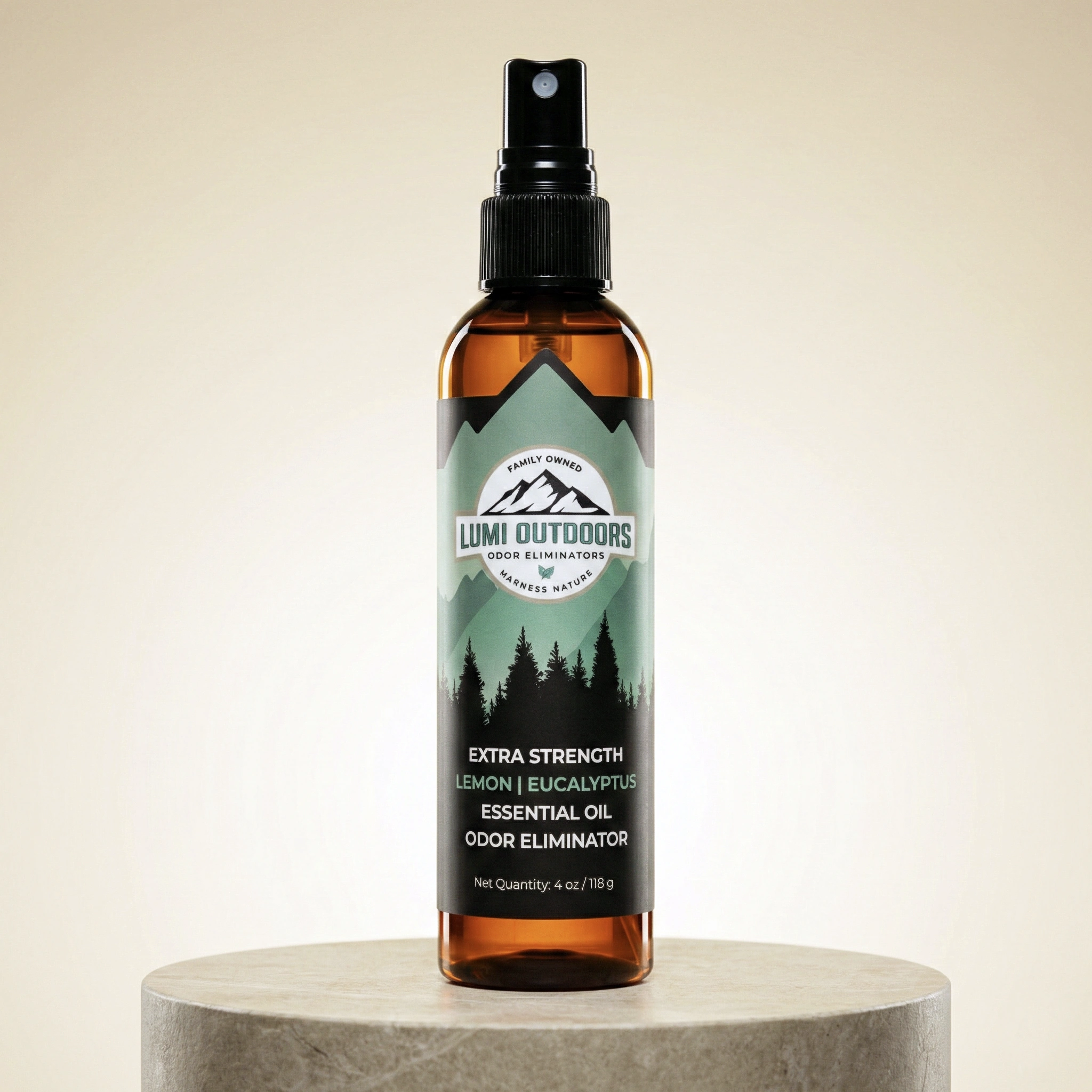
Join 1 Million+ Other People Who Chose Lumi to Conquer Their Shoe Odor.
- DESTROYS ODOR AT THE SOURCE, DOESN'T JUST MASK IT
- ALL-NATURAL & PLANT-BASED INGREDIENTS
- PROUDLY FAMILY-OWNED & MADE IN UTAH
- THE "FRESH CONFIDENCE" GUARANTEE