

The 2-Ingredient Spray That Deodorizes Fishing Boots at a Molecular Level
- Molecular Action Natural oils bond with scent molecules to break them down instead of just covering them up.
- Zero Residue Unlike powders, natural sprays evaporate completely without leaving a gritty or sticky mess in your boots.
- Proactive Care The secret to fresh gear is treating boots immediately after use before the odor has time to set.

There is a specific kind of "welcome home" that every fishing family knows. It starts the second the truck pulls into the driveway and the garage door begins to lift. It isn't the smell of a fresh catch or the salty breeze from the coast. It is the thick, heavy, and frankly aggressive scent of damp fishing boots that have spent eight hours soaking in lake water, sweat, and fish scales.
If you have ever left a pair of rubber boots or wading shoes in a warm car overnight, you know exactly what I am talking about. It's a smell that seems to have a life of its own. You've probably tried the usual tricks: leaving them in the sun, stuffing them with dryer sheets, or maybe even trying to wash them in the bathtub with dish soap. But here is the problem: that "fishy" funk isn't just on the surface. It is trapped deep inside the lining of your gear. To truly fix it, you have to go deeper than a surface scrub.
Why Do Fishing Boots Smell So Bad After a Trip?
Fishing boots smell because moisture from sweat and water gets trapped in the inner lining, creating a breeding ground for odor-causing particles that feed on organic fish proteins. These odors become "locked" into the porous materials of the boot, making them nearly impossible to remove with standard soap and water.
When you are out on the water, your feet are doing a lot of work. Even in the highest-quality breathable waders, moisture builds up. That dampness mixes with the microscopic bits of organic matter—fish slime, algae, and pond water—that inevitably find their way inside. Unlike your everyday sneakers, fishing boots are often made of dense rubber or thick neoprene designed to keep water out. Unfortunately, that also means they are incredibly good at keeping odors in.
Standard cleaners usually just try to drown out the smell with heavy perfumes. You end up with boots that smell like "mountain breeze" mixed with "rotten trout." It’s not an improvement. To actually clear the air, you need something that doesn't just mask the scent but actually breaks down the odor molecules themselves. Here's the thing: you don't need a chemistry degree to fix this. You just need the right natural tools.
If you want to stop the moisture before it starts and neutralize the scent without using harsh chemicals in your home, this is the bottle we keep right by the mudroom door:
What You'll Need
- Newspaper for stuffing
- Microfiber cloth
- Natural Lavender Tea Tree Shoe Deodorizer Spray Check Price →
- Soft-bristled shoe brush
What Is the Best Way to Deodorize Fishing Boots?
The best way to deodorize fishing boots is to use a natural spray containing tea tree and lavender oils, which neutralize odor molecules at the source. This method works best when the boots are sprayed immediately after use and allowed to air dry in a well-ventilated area.
Using a natural approach isn't just about being "green." It's about how the chemistry actually works. Tea tree oil and lavender aren't just there to smell pretty. They contain natural compounds that bond with the acidic and alkaline molecules that cause bad smells. When you spray these into your boots, they don't just sit on top of the fabric. They penetrate the lining to neutralize the "funk" at a molecular level.
I’ve found that the "spray and pray" method works best if you are consistent. As soon as you get home, give the inside of each boot a generous misting. This stops the odor from setting into the material. If you wait until the next morning, the smell has already had twelve hours to make itself at home in the fibers of your boots. For more on the science of why this happens, you might want to check out why scrubbing doesn't work as well as you’d hope.
For extreme cases, spray your boots and then place them inside a large Ziploc bag for two hours. This 'vapor chamber' forces the essential oils to penetrate the deepest pores of the neoprene lining before they evaporate.
Can You Use Baking Soda to Clean Smelly Boots?
Baking soda is not recommended for fishing boots because it often clumps when it hits leftover moisture, creating a messy paste that is difficult to remove from the boot's lining. While it can absorb some surface odors, it does not address the deep-seated organic proteins that cause the "fishy" smell.
We’ve all heard the advice to "just throw some baking soda in there." In theory, it makes sense. Baking soda is an absorbent. But in the real world of fishing gear, it's a bit of a nightmare. Fishing boots are rarely 100% dry when we decide to clean them. When baking soda hits that damp neoprene or felt lining, it turns into a gritty white sludge. Not only is that uncomfortable to walk on the next time you head out, but it can actually damage the breathability of your gear.
Plus, baking soda is a one-trick pony. It can help with some acidity, but it won't touch the oily residues left behind by fish scales or pond algae. If you’re curious about the details, there’s a whole breakdown on why baking soda alone is a terrible shoe deodorizer for active gear. Stick to liquids that can evaporate and leave nothing behind but freshness.
How Often Should You Clean Your Fishing Gear?

You should perform a light cleaning and deodorizing of your fishing gear after every single trip to prevent long-term odor buildup. A deep clean with a soft brush and mild soap should be done once a month or whenever the gear is visibly soiled with mud or salt.
I know, the last thing you want to do after a long day on the water is "chores." You’re tired, you’re hungry, and you probably have fish to clean. But taking sixty seconds to spray your boots and wipe down your rain gear will save you so much money in the long run. Odor isn't just annoying; it can actually be a sign that the materials in your boots are breaking down due to the organic matter trapped inside.
Start by using a soft-bristled shoe brush to knock off any dried mud or fish scales from the exterior. Then, use a microfiber cloth to wipe away any excess water. Finally, give the interior that molecular-level treatment with your spray. If your rain jacket smells as bad as your boots, you can find more tips in this guide on how to deep clean rain gear.
We compared our natural spray against the big-brand aerosols you find at the grocery store. The difference isn't just in the smell—it's in the chemistry.
| Feature | Lumi Natural Sprays | Grocery Store Aerosols |
|---|---|---|
| Odor Neutralizing | Molecular Bonding | Masking Perfumes |
| Ingredients | Plant-Based Oils | Harsh Chemicals & Butane |
| Residue | Zero Clumping | Powdery White Film |
| Eco-Friendly | Biodegradable Formula | Synthetic Propellants |
Are Essential Oils Safe for Rubber and Leather Boots?
Yes, high-quality essential oil sprays are safe for rubber and leather fishing boots when used as directed. Unlike chemical-based aerosols, these natural oils do not dry out leather or cause rubber to crack over time.
A lot of people worry that putting oils on their expensive gear will ruin it. It's a fair concern. However, the concentration in a well-made deodorizer like the Natural Lavender Tea Tree Shoe Deodorizer Spray is specifically balanced to be effective without being oily. In fact, tea tree oil has been used for centuries for its cleansing properties. It is much gentler on your boots than the harsh alcohols and synthetic propellants found in cheap sprays.
In fact, many professional anglers prefer natural sprays because they don't leave behind a "chemical" scent that might spook the fish. While there is no hard proof that a fish can smell the deodorizer on your boots, many experienced fishermen swear by keeping things as natural as possible. For more on this, you can look at the biological science of olfaction and how different scents linger in aquatic environments.
How to Deodorize Fishing Boots Overnight?

To deodorize fishing boots overnight, spray the interior thoroughly with a natural neutralizer and then stuff the boots with clean newspaper. The newspaper pulls moisture out of the lining while the spray works to break down odor molecules.
The "Newspaper Trick" is an old-school move for a reason—it works. If your boots are truly soaked, the spray alone might struggle because the odor molecules are literally floating in water. By stuffing newspaper into the toes and ankles, you create a wick that draws that water out. When you wake up the next morning, pull the damp paper out, and you’ll find boots that are dry, fresh, and ready for another day on the river.
Is the natural route perfect? Mostly, but it does require consistency. Here's the honest breakdown:
- Actually eliminates odors rather than masking them
- Safe for expensive gear like Simms or Orvis waders
- Saves money by extending the life of your footwear
- Requires consistent use after every trip for best results
- Strong herbal scent during initial application
At the end of the day, fishing is supposed to be about relaxation and the thrill of the catch—not about who can hold their breath the longest in the garage. By moving away from heavy chemicals and moving toward a molecular-level fix, you're not just covering up a problem. You're actually solving it. Your family will thank you, your nose will thank you, and your expensive boots will last a lot longer.
So, the next time you head out to your favorite spot, make sure you have a bottle of Natural Lavender Tea Tree Shoe Deodorizer Spray waiting for you when you get back. It's the easiest sixty seconds you'll ever spend on gear maintenance.
Tired of shoe odor? We recommend:
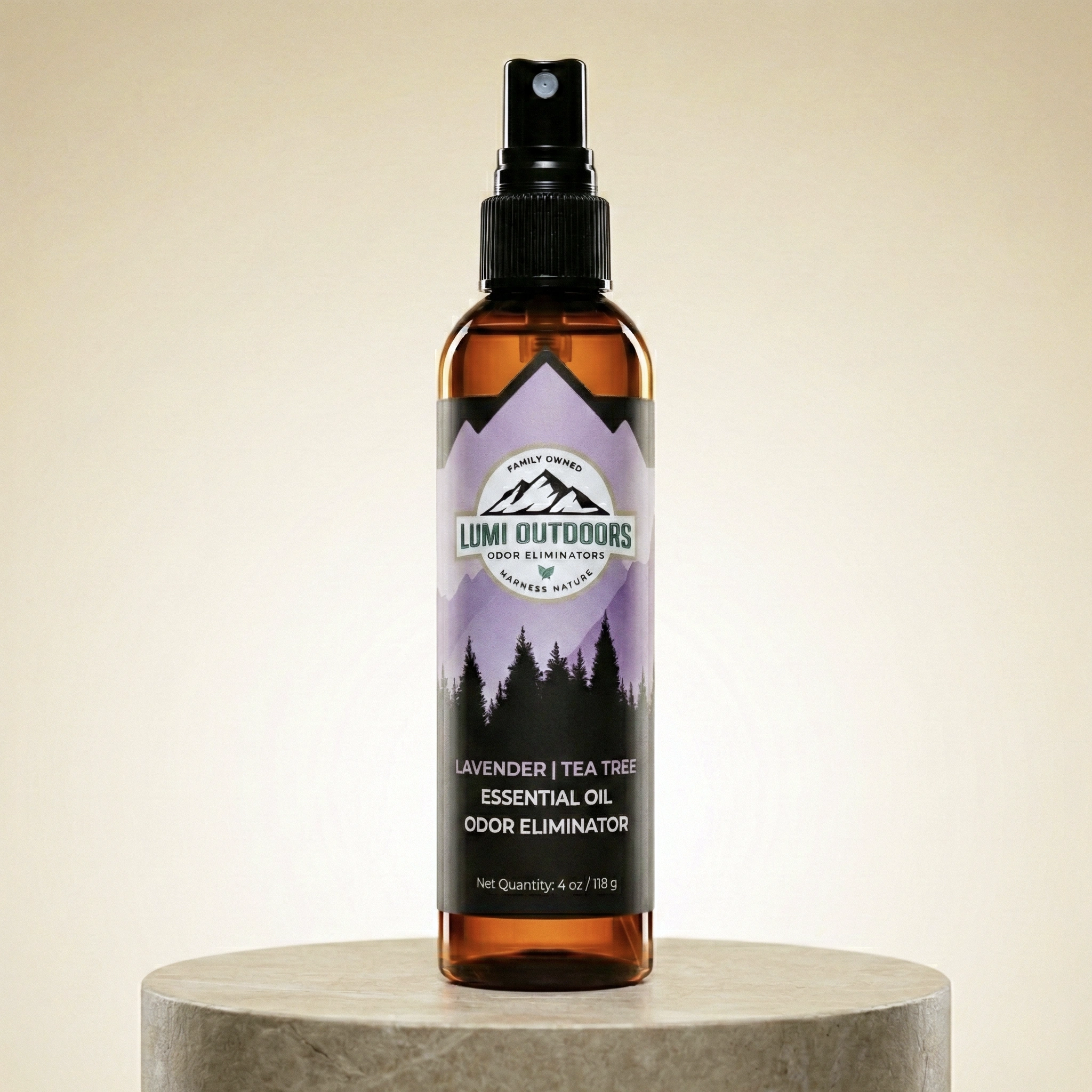
Join 1 Million+ Other People Who Chose Lumi to Conquer Their Shoe Odor.
- DESTROYS ODOR AT THE SOURCE, DOESN'T JUST MASK IT
- ALL-NATURAL & PLANT-BASED INGREDIENTS
- PROUDLY FAMILY-OWNED & MADE IN UTAH
- THE "FRESH CONFIDENCE" GUARANTEE