
Why Baking Soda Alone is a Terrible Shoe Deodorizer
- Material Damage High pH levels in baking soda can cause leather to become brittle and eventually crack.
- The Mess Factor Powders often clump with sweat to create a gritty paste that is difficult to clean out.
- Better Results Concentrated plant-based sprays offer a safer and more effective way to neutralize persistent smells.

We've all been there. You walk into the mudroom after a long day, and the smell hits you like a brick wall. It's the cleats, the work boots, and those sneakers your teenager refuses to part with. Your first instinct? Grab that orange box of baking soda from the pantry and dump it in. It’s what our parents did, right?
But here’s the thing: while baking soda is great for cookies, it’s actually doing more harm than good to your expensive footwear. If you’re trying to save your shoes and keep your home smelling fresh, it’s time to look at why that white powder is a bit of a disaster for leather and fabric alike.
Is Baking Soda Actually Bad for My Shoes?
Yes, baking soda is abrasive and has a high pH level that can dry out leather, irritate your skin, and leave a messy residue that’s nearly impossible to remove completely. While it absorbs some moisture, it often reacts with sweat to create a gritty paste that ruins the interior lining of your shoes.
I learned this the hard way after trying to "save" a pair of high-end leather boots. I thought I was being smart and natural. Instead, the leather became brittle and cracked within a month. Baking soda is a base on the pH scale. Your skin and most shoe materials are slightly acidic. When you toss a base into that environment, you're essentially starting a slow-motion chemical reaction that breaks down fibers. Plus, if you don’t get every single grain out, that grit acts like sandpaper against your socks and feet.
If you want to stop the moisture before it starts, you need something that works with the material, not against it. You don't need a chemistry degree to fix this. You just need a formula designed for the job.
What You'll Need
- Newspaper for Stuffing
- Microfiber Cloth
- Extra Strength Shoe Deodorizer Spray Check Price →
- Old Toothbrush
Why Does Everyone Recommend Baking Soda for Smelly Shoes?
Baking soda is widely recommended because it is inexpensive, readily available, and possesses basic odor-absorbing properties that provide a temporary fix for mild smells. It works by neutralizing acidic odor molecules, but it fails to address the root cause of the scent or the moisture trapped deep in the soles.
It’s the ultimate "old wives' tale" of cleaning. It’s cheap, and we usually have it in the cupboard. It does soak up some of the initial funk, which makes us think it's working. But if you've ever noticed the smell coming back even stronger two days later, that's because the baking soda didn't actually eliminate the problem; it just sat on top of it.
According to research on bromodosis (the medical term for smelly feet), the real culprit is moisture and the breakdown of sweat. Baking soda can't reach the tiny crevices where these odors hide. It just clumps up. If you've ever tried to clean out a "baking soda paste" from the toe of a sneaker, you know exactly how frustrating this DIY hack can be. You're better off using a natural alternative to baking soda for shoes that actually disappears after it does its job.
What Are the Best Natural Alternatives to Baking Soda for Shoes?

The most effective natural alternatives are plant-based essential oil sprays and moisture-wicking powders that use cornstarch or arrowroot instead of sodium bicarbonate. These ingredients neutralize odors without changing the pH of the shoe material or leaving behind abrasive grit.
Here’s a better way to handle the funk. If the shoes are damp, use newspaper for stuffing. It’s surprisingly good at pulling moisture out of the toe box without leaving a mess. Just crinkle it up and shove it in overnight. For the actual smell, you want essential oils like eucalyptus, peppermint, and tea tree. These don't just "mask" the scent; they help clean the environment inside the shoe.
I tested our natural spray against the big-brand aerosols and the kitchen pantry staples. The difference isn't just in the smell—it's in the chemistry.
| Feature | Lumi Outdoors Extra Strength Spray | Baking Soda (DIY) |
|---|---|---|
| Odor Elimination | Neutralizes at the source with essential oils | Temporarily masks or absorbs surface scents |
| Ease of Use | Quick spray, no mess, dries clear | Messy powder that clumps and stains socks |
| Material Safety | pH balanced for leather, suede, and fabric | Abrasive grit that can dry and crack leather |
| Longevity | Freshness lasts for days between uses | Smell often returns within hours |
How Do Professional Shoe Deodorizers Differ from DIY Methods?
Professional natural deodorizers use highly concentrated essential oils that break down odor-causing compounds at a molecular level. Unlike DIY methods, these formulas are balanced to be safe for delicate materials like suede and leather while providing long-lasting freshness.
Think of it like the difference between using a lemon wedge to clean your kitchen counters and using a professional-grade plant-based cleaner. One is a nice idea; the other actually gets the job done. Professionals know that you need a fine mist to penetrate the fabric and foam layers of a shoe. A powder just sits on the surface.
Stop putting your stinky shoes in the freezer. Most household odors are caused by hardy particles that simply 'go to sleep' when cold and wake up the moment your feet warm the shoe back up. Instead, use a small desk fan to circulate air directly into the shoes for two hours after spraying; the airflow is what actually finishes the job.
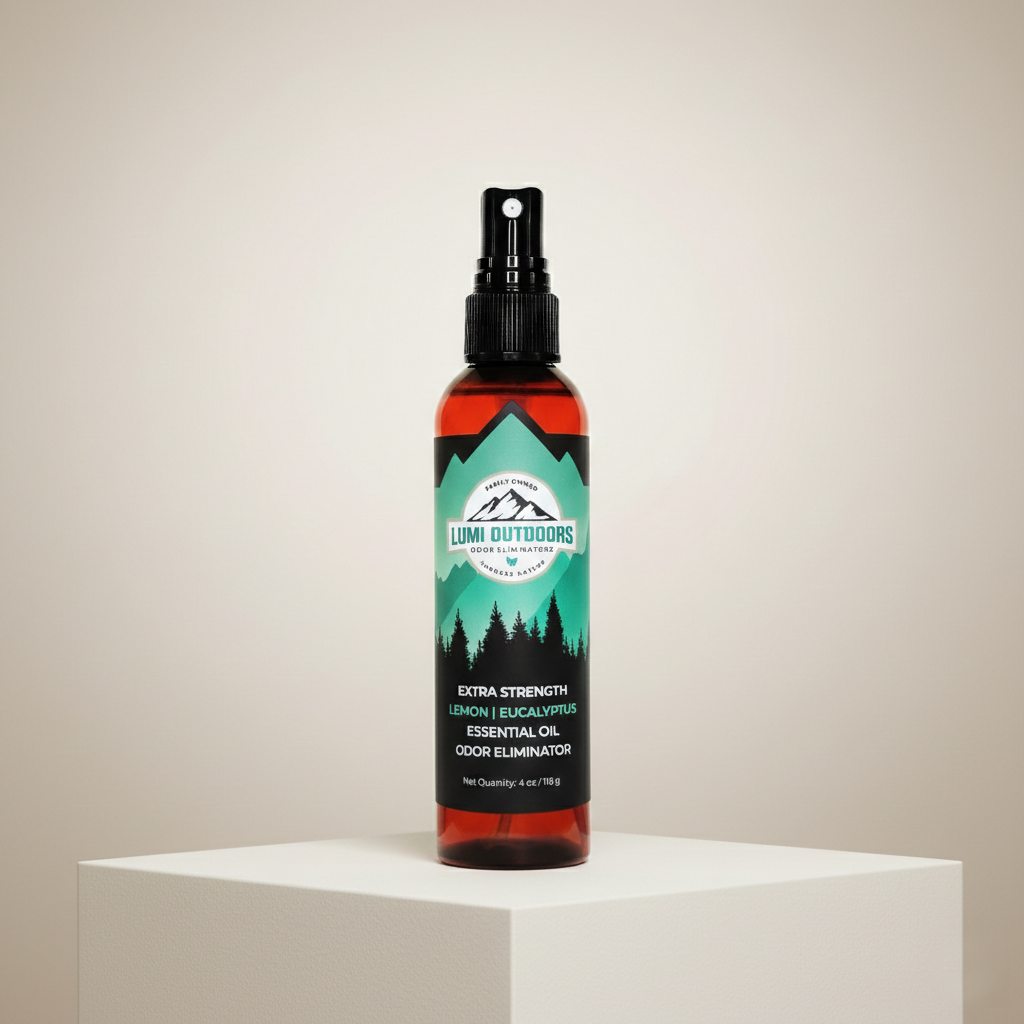
When you use something like the Extra Strength Shoe Deodorizer Spray, you’re getting a blend of oils specifically chosen for their ability to handle tough jobs. It’s the difference between a "home remedy" that works for ten minutes and a solution that lets you leave your gym bag in the car without regret. If you're dealing with a whole family of athletes, you might want to consider the Lumi Outdoors Shoe Deodorizer Spray (3-Pack) | Stock Up & Save to keep a bottle in every bag.
Can I Fix Smelly Shoes Without Using Harsh Chemicals?
Absolutely. You can eliminate odors using plant-based ingredients like citrus oils, tea tree, and peppermint, which provide a powerful cleaning effect without the use of parabens, phthalates, or formaldehyde found in traditional drugstore sprays.
Many people worry that "natural" means "weak." That’s just not the case anymore. In fact, essential oils are often more effective because they don't just coat the shoe in a fake "mountain breeze" scent. They actually change the environment inside the shoe. Knowing there aren't harsh chemicals in your shoes all day is a nice bonus.
You can read more about 7 ways a plant-based shoe deodorant keeps your home fresh to see how this transition helps the whole house, not just your closet.
How Should I Use a Natural Shoe Deodorizer for Best Results?

For the best results, first remove any loose dirt with a microfiber cloth or an old toothbrush. Apply the deodorizer to the inside of the shoe after each wear, focusing on the toe area, and allow them to air dry completely in a well-ventilated spot before wearing them again.
It’s all about the routine. If you wait until the shoes smell like a locker room, you're working ten times harder. Here is the pro play:
- Wipe them down: Use a microfiber cloth to get the sweat and grime off the surface.
- Scrub the soles: If there's mud or gunk stuck in the treads, use an old toothbrush to flick it away.
- Spray or Powder: Apply your natural deodorizer.
- Air dry: Don't toss them in a dark closet. Put them near a window or a fan.
One of our customers, Sarah, shared her experience: "I was about to throw out my son's soccer cleats. We tried everything—baking soda, charcoal bags, you name it. One bottle of the Extra Strength spray saved them. I don't know how it works, but I'm just glad I didn't have to spend $120 on new cleats."
Nothing's perfect. Is the natural route a "magic wand" that works in one second? Mostly, but it does require consistency. Here's the honest breakdown:
- Completely eliminates odors without harsh chemicals
- Safe for expensive leather and performance fabrics
- Doesn't leave messy white powder in your socks
- Smells like a spa, not a chemistry lab
- Costs more upfront than a box of baking soda
- Requires 15-30 minutes of drying time after application
At the end of the day, your shoes are an investment. Whether it's a pair of work boots that get you through a 12-hour shift or the sneakers you wear to chase your kids around the park, they deserve better than a messy pile of baking soda. Switching to a high-performance, natural alternative keeps your shoes in great shape and your home smelling like a home, not a gym.
Ready to ditch the messy powders and fix your shoe odor for good?
Join 1 Million+ Other People Who Chose Lumi to Conquer Their Shoe Odor.
- DESTROYS ODOR AT THE SOURCE, DOESN'T JUST MASK IT
- ALL-NATURAL & PLANT-BASED INGREDIENTS
- PROUDLY FAMILY-OWNED & MADE IN UTAH
- THE "FRESH CONFIDENCE" GUARANTEE