
Struggling with athlete gear odor? Here is the 2-step system you need.
- Why it's worse Synthetic athletic fabrics trap sweat and create the warm, moist conditions where odor-causing bacteria thrive — regular shoes simply don't have this problem to the same degree.
- Why one product isn't enough Powder prevents moisture buildup before workouts; spray neutralizes odor after — they target different timeframes and neither fully does the other's job.
- The system Apply foot powder to dry feet and inside the shoe before activity, then spray the interior immediately after removing the gear while it's still warm.
- Pet owners Essential oil sprays should dry fully and air out before cats can access treated shoes.

Why does athletic gear smell worse than everyday shoes?
Athletic gear smells worse than everyday shoes because synthetic performance fabrics trap sweat at a rate that leather or canvas simply can't match — and a single 90-minute practice can deposit enough moisture to keep odor-causing bacteria like Brevibacterium and Staphylococcus epidermidis thriving for 24 hours or longer. The re-wear cycle makes it significantly worse. One practice doesn't dry out completely before the next one starts.
Regular sneakers have it easier. Cotton canvas breathes. Leather develops a patina. The materials themselves help regulate moisture. But the synthetic mesh and thermoplastic linings in cleats, wrestling shoes, and court sneakers are engineered to be lightweight and durable — not breathable. According to research published by the National Institutes of Health, synthetic polymer fabrics retain significantly more bacterial colonies than natural fiber alternatives after comparable periods of use.
Think about what actually happens inside a cleat during a soccer game. Your foot produces up to 250 mL of sweat per hour during intense exercise. That moisture soaks into the insole, wicks into the lining, and saturates the sock. Then you pull the cleats off, toss them in a bag, and go home. The bag seals in the humidity. The bacteria that cause bromodosis — the clinical term for foot odor — get a warm, dark, moist place to multiply for 18 hours straight.
That's the real problem.
It's not a hygiene issue. It's a chemistry issue. The bacteria breaking down sweat proteins produce isovaleric acid — the compound responsible for that sharp, cheese-like smell that no amount of airing out will fully eliminate. Once isovaleric acid has bonded to synthetic fabric fibers, a quick spray of air freshener just adds a floral note to the funk. It doesn't remove anything.
The re-wear cycle compounds all of this. A kid with Tuesday/Thursday soccer practice and a Saturday game rarely has time for those cleats to fully dry between sessions. Parents of athletes know this intimately — you're already halfway to the next practice before the gear from the last one has stopped being damp. Partial drying is worse than no drying, because it creates the ideal humidity level for bacterial growth: not soaked, but persistently moist.
Don't wait until after the workout to pull the tongue back on cleats or sneakers — do it immediately when you take them off and prop the shoes sole-to-sole so air circulates through both openings at once. This creates a passive chimney effect that drops interior humidity by roughly half in the first 20 minutes, before bacterial activity peaks. Most people let shoes sit flat and closed, which is the worst possible drying configuration for high-sweat footwear.
Why do you need both powder and spray — can't you just pick one?
You can use just one, but you'll get partial results — powder alone absorbs moisture but won't neutralize existing odor embedded in fabric, while spray alone can't prevent new bacteria from establishing in wet conditions; the 2-step approach works because prevention and elimination are two different jobs requiring two different tools.
Think of it like this: powder is your defense, spray is your offense. A spray of essential oil-based deodorizer applied to dry fabric neutralizes existing odor. But if you spray into a shoe that's still holding moisture from your workout, you're applying a treatment to a wet environment — and wet environments are where bacteria thrive. You haven't fixed the root condition. You've just temporarily flavored it.
Powder alone has the opposite problem. Mineral-based powders like those containing zinc oxide and kaolin clay do an excellent job creating a dry, inhospitable surface for bacteria. But they can't reach the deep fabric layers where bacterial colonies have already established. The smell will diminish, not disappear. Customer reviews consistently report that powder-only approaches reduce odor by about half — but the stubborn baseline smell stays.
The 1-2 combination works because the steps target different timeframes. Powder goes in before or during wear — it's preventative. Spray goes in immediately after wear — it's reactive. Together, they address both the moisture that feeds bacteria and the bacterial activity that produces odor. Neither step does both jobs alone.
Here's how the formulations compare for tackling serious athletic gear odor:
| Feature | Lumi 2-Step System | Charcoal Inserts (Dr. Scholl's) | Baking Soda (DIY) |
|---|---|---|---|
| Targets odor directly | Yes — essential oils neutralize odor compounds | No — absorbs odor passively without targeting bacteria | Partially — neutralizes acid smell but not bacterial source |
| Prevents moisture buildup | Yes — powder step creates dry environment before workouts | Partial — charcoal absorbs some post-wear moisture | Partial — baking soda absorbs moisture but can clump |
| Ease of use | Two steps required — powder before, spray after | Drop-in and forget — no application technique needed | Sprinkle in, shake out — simple but messy |
| Works on synthetic mesh linings | Yes — spray penetrates fabric when applied warm | Limited — sits on surface, less penetration | Yes — powder contacts all interior surfaces |
| Cost per use | Higher upfront, lower per-use over time | Inserts replaced every 30-60 days — moderate cost | Pennies per use — lowest cost option available |
| Odor elimination speed | 15-30 minutes post-spray | 8-12 hours passive overnight absorption | Overnight — 6-8 hours minimum effective contact |
Step 1: The proactive defense — how do you use foot powder correctly?

Apply foot powder directly to dry feet before putting on socks, then add a light dusting inside the shoe itself — focusing on the toe box and insole — to create a moisture-absorbing barrier before bacteria have anything to work with. Doing this before the workout (not after) is the key difference between prevention and treatment.
Most people skip the powder step entirely, or they apply it after the workout as a cleanup measure. That's backward. The point of a mineral-based powder is to deny bacteria their food source — sweat — before it accumulates. Apply it when your feet are already dry and the shoe environment is controlled, and you're starting each workout 30 minutes ahead of the bacterial growth curve.
Look for powders formulated with arrowroot, zinc oxide, kaolin clay, and bentonite clay — not just corn starch. Corn starch absorbs moisture adequately; zinc oxide and kaolin clay are minerals you'll also find in diaper creams and face masks. This matters because a powder you use every day should feel comfortable, not cakey. And unlike talc-based powders (which have faced significant scrutiny), mineral-clay formulas skip talc entirely.
For a free DIY version that genuinely works: mix equal parts baking soda and corn starch, add a few drops of tea tree oil, and shake it into a repurposed spice jar with holes in the lid. It won't match a zinc oxide and kaolin formula, but it'll absorb moisture effectively. It's a solid starting point if you're not ready to commit to a specific product yet.
If you want a targeted approach that checks all those ingredient boxes, the Natural Foot Powder — with its talc-free blend of arrowroot, zinc oxide, kaolin clay, and a trace of lemongrass oil — is worth having alongside the steps below.
What You'll Need
- Moisture-wicking athletic socks
- Replacement insoles
- Natural Foot Powder Check Price →
- Cedar shoe trees or newspaper for overnight drying
Step 2: The reactive refresh — when and how do you use a deodorizer spray?

Spray immediately after removing the gear — while the shoe is still warm from your foot — because this is when the fabric pores are open and the spray can penetrate deeper into synthetic linings; waiting until the next day means you're treating a cold, closed fabric surface where the formula stays on top instead of absorbing through.
Technique matters more than most people realize. Hold the spray 6–8 inches from the opening and direct two short bursts into the toe box, one into the heel. Don't saturate — you're not trying to soak the insole. You want the essential oils to contact the inner surface and begin neutralizing odor. Let the shoe sit open, ideally with the tongue pulled back, for at least 15 minutes before storing.
For synthetic mesh or knit uppers, this process works perfectly as described. For leather or smooth synthetic linings, a single burst is usually enough — these materials don't absorb as readily, and the formula sits on the surface longer, which actually extends contact time. Never spray the outer leather body of dress shoes or leather cleats directly; focus the nozzle inside the opening.
Plant-based sprays formulated with tea tree, eucalyptus, or citrus oils are genuinely more effective than synthetic cover-up sprays because they don't just mask the smell — they disrupt the isovaleric acid production cycle at the source. Dr. Scholl's Odor-X uses activated charcoal, which works well for passive overnight deodorizing — it's an effective absorber and worth knowing about if you prefer a no-spray approach. But it won't penetrate synthetic lining the way an essential oil-based spray will. Different tools, different strengths.
One honest limitation of any spray: it needs time to dry. The lemon eucalyptus scent from the Extra Strength Shoe Deodorizer Spray is noticeable for the first 10–15 minutes, then fades to neutral as it dries. If you spray and immediately stuff the shoes in a bag, you trap that humidity and lose most of the benefit. Patience — or at minimum, 15 minutes of open air — is part of the protocol.
Worth knowing.
Frequently asked questions about athlete gear odor control
Can I just use baking soda instead of the whole system?
Baking soda works as a short-term deodorizer but doesn't address the bacteria producing the odor — it neutralizes the acid smell temporarily, which is why the odor returns within a few hours of wearing the gear again.
Baking soda (sodium bicarbonate) is alkaline, so it neutralizes the acidic isovaleric acid that causes the sharp smell. It genuinely works for this, and if you need a zero-cost fix right now, sprinkling it into the shoe overnight and shaking it out in the morning will give you a fresher-smelling shoe in the AM. But the bacterial colony is still there. The smell regenerates the moment the shoe heats up during wear and conditions return to normal. It's a reset, not a solution.
Is it safe to spray gear every single day?
Yes — daily use of plant-based essential oil sprays is fine for shoe materials; just make sure you allow adequate drying time between spray application and wear, which takes about 15 minutes in open air.
Synthetic materials, mesh, rubber, and EVA foam are all unaffected by repeated essential oil spray applications at normal usage concentrations. Canvas and fabric uppers handle daily spray well. The one material to watch is unfinished suede — essential oils can darken suede slightly with heavy repeated use, so stick to the interior of suede shoes and avoid spraying the outer nap directly.
Why does the odor come back after just a few hours of wear?
If odor returns within hours, the treatment didn't fully take — either the spray didn't dry completely before wear, or the powder step was skipped, meaning the bacteria had fresh moisture to work with immediately after treatment.
This is the most common frustration with single-product approaches. Rapid odor return is almost always a moisture problem, not a spray potency problem. Check whether you're applying powder before workouts and whether the spray had full drying time. If you're doing both correctly and odor still returns fast, the insole may need to be replaced — insoles absorb bacteria at a structural level and can't be sprayed back to neutral after years of use. Replacement insoles run $15–25 and can make a bigger difference than any spray if the insole is the primary bacterial reservoir. To understand whether treating the foot or the shoe should come first in your specific situation, this breakdown covers the logic in detail.
What about pet safety when using sprays on gym bags and shoes?
If you're using an essential oil spray in a home with cats, the practical workaround is to spray in a closed room or closet and allow the shoes to fully dry and air out — about 30 minutes with good ventilation — before allowing cat access. Sprayed shoes that are fully dry and odor-neutral present minimal risk. But if your cat likes sleeping near the shoe rack or batting at cleats, the powder-first approach is the more straightforward choice. Dogs are generally less sensitive to these compounds at normal usage concentrations and tolerate the dried spray well.
For a longer look at how plant-based oil sprays interact with workout shoe materials specifically, this guide on preventing workout shoe odor with plant-based oils is worth reading.
- Addresses both prevention and elimination — two jobs most products ignore
- Talc-free mineral-clay powder formula
- Essential oil spray penetrates warm synthetic linings better than passive absorbers
- Talc-free formula is safe for daily use without buildup
- The spray needs 15 minutes of open-air drying before shoes are stored — no shortcuts
- Two-product system costs more upfront than a single solution like charcoal inserts
One thing most people don't account for: gear rotation matters as much as any product. The American Podiatric Medical Association recommends alternating athletic footwear every 24–48 hours to let EVA foam and fabric fully dry — which means a second pair of cleats or training shoes isn't a luxury, it's part of a serious odor-control protocol. If your athlete has one pair of cleats and practices four days a week, no spray system will fully compensate for the constant re-wear cycle. Two pairs used in rotation, combined with the powder-and-spray system, will extend both the freshness and the lifespan of the gear significantly more than any single product could on its own.
Ready to stop the odor before it even starts?
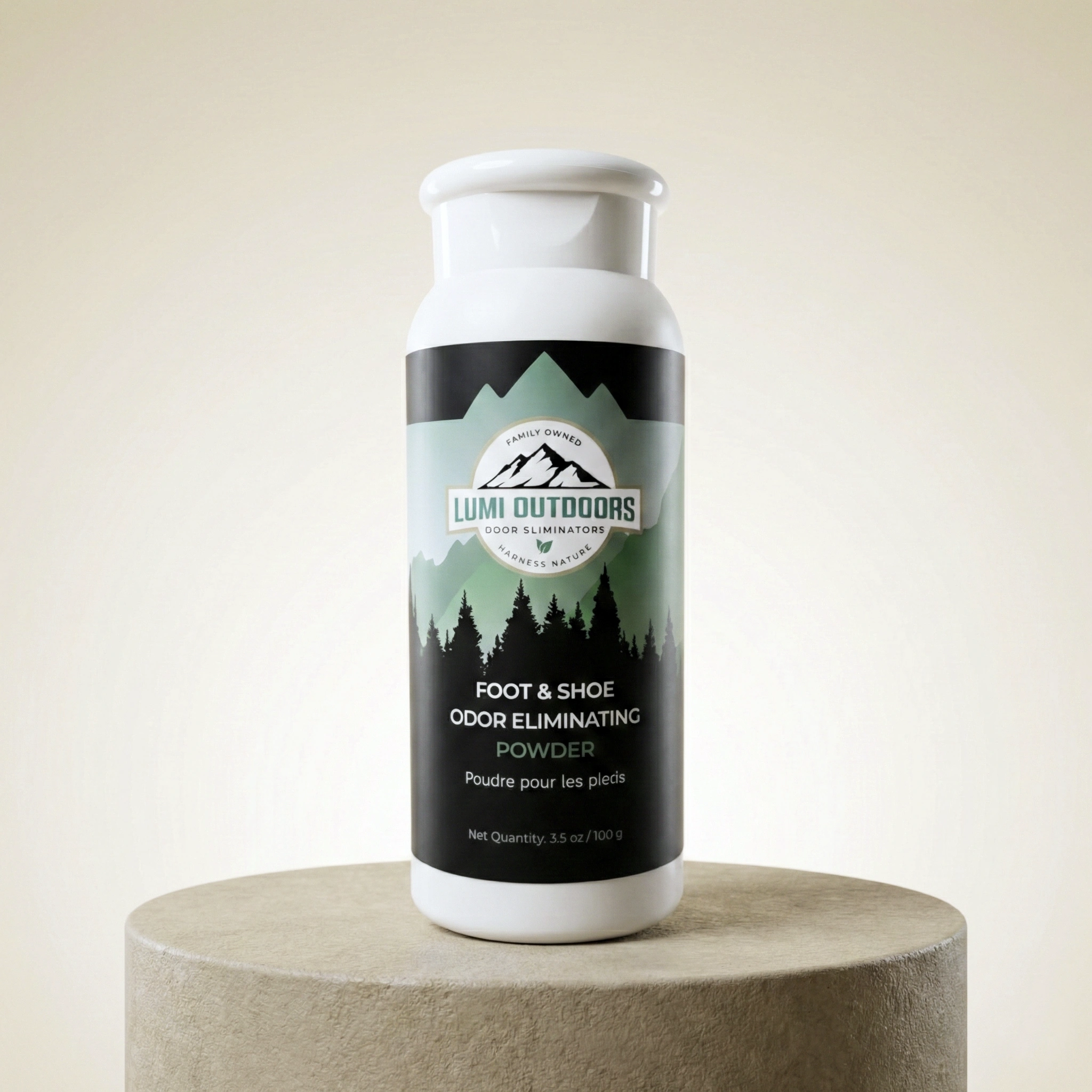
The best way to fight odor is to stop it before it starts. Our all-natural, talc-free foot powder is your first line of defense against mois...
- ABSORBS SWEAT & NEUTRALIZES ODOR
- ALL-NATURAL & TALC-FREE FORMULA
- PROUDLY FAMILY-OWNED & MADE IN UTAH
- THE "FRESH CONFIDENCE" GUARANTEE