
My Kid's Shoes Smell Terrible — Is That Normal at Their Age?
- It's completely normal Kids' feet have the same sweat gland density as adults but in a much smaller area, producing intense moisture that synthetic sneakers trap — smell is the inevitable result.
- The odor is bacteria, not sweat Bacteria like Micrococcus sedentarius break down sweat and produce isovaleric acid — that sharp, cheesy smell. Your kid's hygiene isn't the problem.
- Fix it with rotation and moisture control Rotate shoes every 24 hours, switch to merino or bamboo socks, and use a talc-free powder or baking soda to stop odor before it starts.

Yes, it's completely normal — and your kid's hygiene isn't the problem. Children's feet produce significant sweat in a small surface area, and modern synthetic sneakers trap that moisture, creating the perfect environment for odor-producing bacteria. The smell is the bacteria, not the sweat itself.
Here's exactly why it happens, and what actually works to stop it.
Why Do Kids' Shoes Smell So Much Worse Than Adults'?
Kids have the same number of sweat glands as adults, but those glands are packed into much smaller feet — which means the sweat density per square inch is significantly higher. Add constant movement and synthetic shoe materials that trap heat, and you've got a genuinely intense odor situation that has nothing to do with cleanliness.
Think about what a typical kid's day looks like: running at recess, gym class, soccer practice, basketball in the driveway. They're generating body heat for hours at a stretch. Their feet can produce up to half a pint of sweat per day during heavy activity — and that sweat has nowhere to go inside a closed shoe.
That's the real problem.
Most kids' sneakers are made from synthetic uppers — faux leather, polyester mesh, EVA foam linings — that are great for durability and price but genuinely bad at moisture management. Natural materials like leather and canvas breathe. Synthetics hold heat and moisture in, which is exactly what odor-causing bacteria need to thrive.
And if your child is approaching the tween years (roughly 8–12), hormonal shifts can change the chemical composition of their sweat itself. According to research published by the National Institutes of Health, apocrine sweat glands — which produce a richer, more bacteria-friendly secretion — become more active during puberty. The result is sweat that smells more pungent even before bacteria get involved.
What's Actually Causing the Smell Inside the Shoe?
The odor isn't from sweat itself — it's from bacteria like Micrococcus sedentarius and Staphylococcus epidermidis that feed on sweat and skin cells, producing isovaleric acid as a byproduct. Isovaleric acid is the specific compound responsible for that sharp, cheesy foot smell.
This condition — bromodosis — is completely benign and extremely common in children. The bacteria aren't dangerous. They're just doing what bacteria do: breaking down organic matter in a warm, moist environment. Your kid's shoe is basically a five-star resort for them.
Cotton socks make this worse. A lot worse. Cotton absorbs moisture and holds it against the skin, keeping feet damp for the entire school day. That sustained moisture is what lets bacterial populations grow large enough to produce noticeable odor. Switching to moisture-wicking socks — merino wool or bamboo blends — can cut odor significantly on its own, because those fibers actively pull sweat away from the skin and allow it to evaporate.
Worth knowing: the shoe itself carries bacteria even after the foot comes out. If your child puts on the same pair two days in a row without letting them dry fully, they're stepping back into a bacteria-dense environment before the previous day's population has died off. The smell compounds over time.
Most parents spray or powder the shoe opening and call it done — but the bacteria are deepest in the toe box and under the insole, where airflow never reaches. Pull the insole out completely before applying any powder or spray. Let it dry separately, ideally in direct sunlight for 20 minutes, since UV exposure degrades bacterial cell walls. Putting the insole back in while it's still slightly damp is the single most common reason odor treatment doesn't stick.
How Do You Actually Fix It? (Options for Kids)

The most effective approach combines moisture control with odor neutralization — and for kids specifically, you want to avoid harsh chemicals and synthetic fragrances. Rotate shoes every 24–48 hours, use a talc-free powder preventatively, and treat existing odor with an essential oil-based spray.
Start with the 24-hour rotation rule. Shoes need time to fully dry between wears — not just surface dry, but deep into the foam and fabric where bacteria live. If your child only has one pair of athletic shoes, that's the first thing to fix. A cheap backup pair worn on alternating days makes a noticeable difference. We've written more about why rotation actually works if you want the full breakdown.
For prevention, a talc-free powder applied directly to the shoe or foot before wearing absorbs moisture before it can become a bacterial feeding ground. Lumi's Natural Foot Powder uses arrowroot powder, kaolin clay, and zinc oxide — ingredients you'll recognize from diaper rash cream (zinc oxide) and face masks (kaolin clay). For existing odor already baked into the shoe, Lumi's Lavender & Tea Tree Spray is a plant-based option without synthetic fragrances — worth a mention because the lavender scent is gentle enough that it won't overwhelm a kid's sensitive nose.
The free DIY alternative that genuinely works: sprinkle plain baking soda inside each shoe after your child takes them off, let it sit overnight, and tap it out in the morning. Baking soda neutralizes isovaleric acid directly. It's not as lasting as a powder with clay and zinc oxide, but it costs nothing and works well enough for occasional maintenance. Cedar shoe inserts are another solid passive option — cedar naturally absorbs moisture and has a mild odor-neutralizing effect without any chemicals.
If you want to understand why shoe odor tends to come back even after treatment, this article on why shoe odor keeps returning explains the cycle clearly.
When Should You Actually Be Concerned?
Normal shoe odor is uniform, comes from inside the shoe, and disappears when the foot is clean and dry. If you're seeing redness, itching, peeling skin between the toes, or small crater-like pits on the sole of the foot, that's a different conversation — those are signs of a skin condition that needs medical attention.
Athlete's foot (tinea pedis) is the most common culprit when odor is accompanied by symptoms. It's a fungal infection, not a bacterial one, and it requires antifungal treatment from a pediatrician — not a shoe spray. The American Podiatric Medical Association recommends thoroughly drying between the toes after bathing as the single most effective prevention step for kids prone to athlete's foot.
Less commonly, excessive moisture can lead to pitted keratolysis — small, punched-out craters on the soles of the feet caused by bacteria breaking down skin tissue. It can look alarming, but it's treatable. If you see it, see a doctor. A shoe powder is not the fix here.
And if your child's feet sweat profusely even without much activity — soaking through socks, leaving wet footprints — that may be hyperhidrosis, a condition where sweat glands are overactive independent of temperature or exertion. It affects roughly 3% of children, according to the International Hyperhidrosis Society, and it's manageable with a dermatologist's guidance. Normal "active kid" sweat follows exertion; hyperhidrosis doesn't.
If the smell is just smell — no skin symptoms, no unusual sweating at rest — you're dealing with normal bromodosis in a growing, active kid. Switch the socks, rotate the shoes, and treat what's already in there.
Want to stop the smell before it starts?
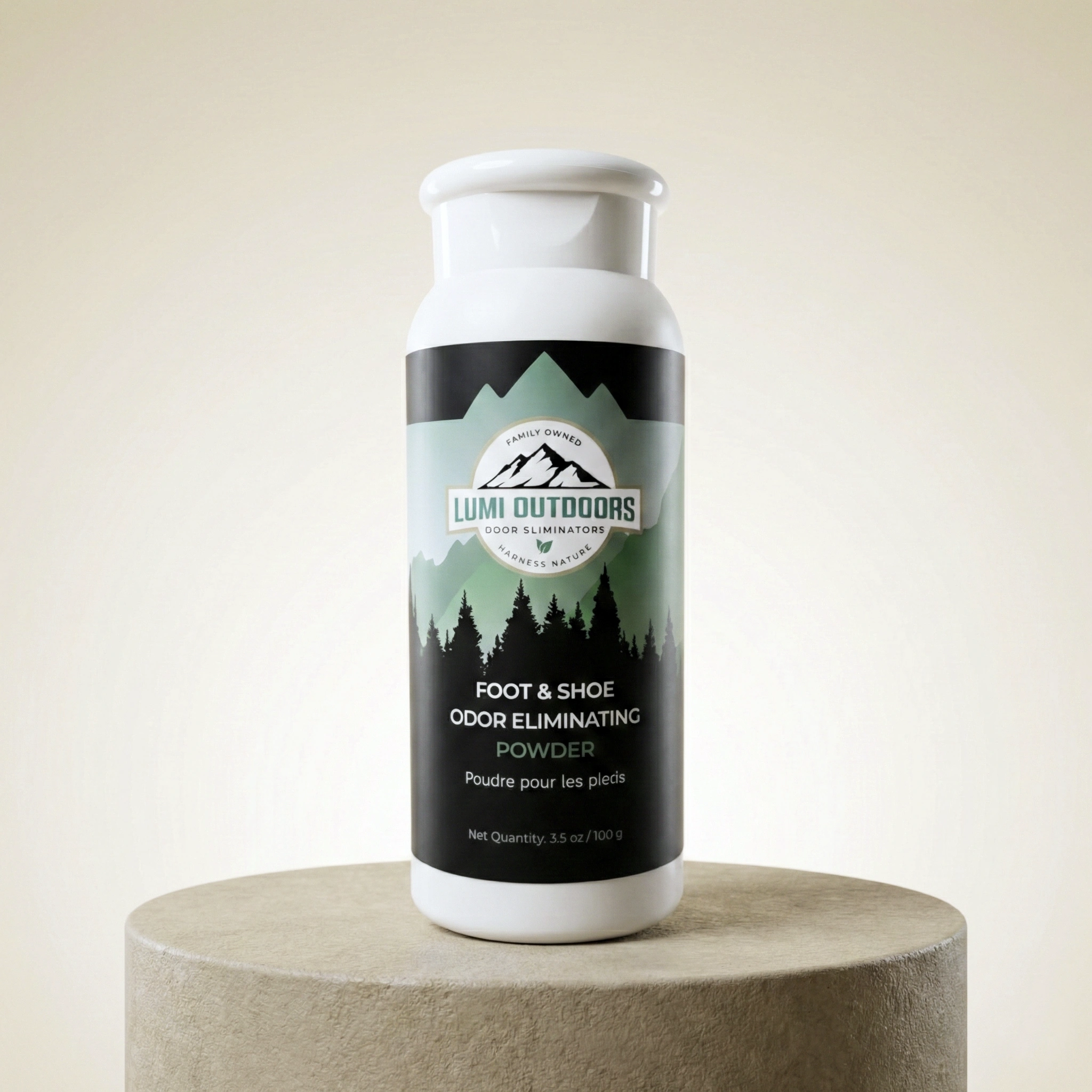
The best way to fight odor is to stop it before it starts. Our all-natural, talc-free foot powder is your first line of defense against mois...
- ABSORBS SWEAT & NEUTRALIZES ODOR
- ALL-NATURAL & TALC-FREE FORMULA
- PROUDLY FAMILY-OWNED & MADE IN UTAH
- THE "FRESH CONFIDENCE" GUARANTEE