

How to Stop Sperry's From Making Your Feet Smell Without Wearing Socks
- Powder First Apply a moisture-absorbing foot powder to your feet and insoles before every sockless wear — this is what replaces the moisture-wicking job a sock would do.
- Spray After, Not Before Spritz the insoles immediately after taking your Sperrys off, while they're still warm, so the deodorizer reaches bacteria before they settle into the leather.
- The 24-Hour Rule Never wear the same pair of Sperrys sockless two days in a row — the materials need a full dry cycle to prevent compounding moisture buildup that no spray can fix.

The fix is a two-step "Dry & Defend" protocol: apply a moisture-absorbing foot powder before you put your Sperrys on, then spray the insoles with a deodorizing spray immediately after you take them off. Done consistently, this routine intercepts sweat before it soaks into the leather and neutralizes odor-causing bacteria before they settle in overnight. Most people skip one or both steps — and then wonder why their boat shoes smell like a tide pool.
Here's what's actually happening inside your shoes, and exactly how to stop it.
Why Do Sperrys Smell So Fast Without Socks?
Sperrys smell fast when worn sockless because the leather or canvas insole absorbs sweat directly from bare skin, creating a warm, moist environment where odor-causing bacteria — particularly Brevibacterium and Staphylococcus epidermidis — multiply rapidly and produce the compounds responsible for that distinct, sour smell.
The human foot has roughly 250,000 sweat glands — more per square inch than almost anywhere else on the body. On a warm day, your feet can produce up to half a pint of sweat. A sock normally wicks that moisture away from your skin and the shoe's inner surface. Without one, all of that liquid goes directly into the insole.
Genuine leather Sperrys make this worse, not better. Leather is porous — it absorbs sweat efficiently, which is actually what makes it comfortable at first. But that same porosity means bacteria and their byproducts get embedded in the material itself. According to research published in the journal Applied Microbiology and Biotechnology, Brevibacterium species are the primary culprits in foot odor, metabolizing amino acids in sweat to produce isovaleric acid — the compound responsible for that sharp, cheese-like smell.
Canvas Sperrys absorb slightly less, but they also dry slower. Neither material is forgiving when worn sockless every day.
That's the real problem.
It's not just the smell on the surface — it's a biofilm buildup on the insole. Sweat, dead skin cells, and bacteria combine over repeated wears to form a layered colony that gets harder to remove with each passing week. That's why a shoe that smelled fine in May can smell like a locker room by July without any single "event" that caused it.
Most people spray their Sperrys and immediately store them in a closed shoe cabinet or bag — that's exactly wrong. Bacteria need oxygen-poor, humid conditions to multiply fastest, and a sealed cabinet provides both. After spraying, leave the shoes tongue-up in an open area with airflow (a windowsill or a shoe rack near a fan) for at least an hour before putting them away. The spray works significantly better when the moisture it's neutralizing has somewhere to evaporate.
What's the Best Way to Prevent Sperry Odor Before It Starts?

The most effective prevention is applying a talc-free foot powder to both your feet and the inside of the shoe before each wear — this creates a moisture barrier that keeps sweat from reaching the insole material in the first place.
Think of it as the "invisible sock" approach. A good foot powder — one with arrowroot, kaolin clay, or cornstarch as its base — absorbs moisture at the skin level before it transfers. You're not masking the smell after the fact. You're preventing the wet conditions that allow bacteria to thrive.
Apply it directly to the ball and arch of each foot, then tap a light dusting into each shoe. Takes about 20 seconds. That's the whole step.
The Lumi Natural Foot Powder is specifically built for this — talc-free, with a base of arrowroot and kaolin clay that absorbs sweat without leaving a chalky residue inside your leather insoles. It's what we'd reach for first. But if you want a zero-cost alternative before buying anything, plain baking soda dusted lightly into the shoe (not on your feet — it can be irritating at prolonged skin contact) absorbs moisture reasonably well for a day or two.
Cedar shoe trees are another genuinely solid free option. They won't fully replace a powder routine, but cedar naturally absorbs moisture and has mild odor-neutralizing properties. After a long day, pulling your Sperrys off and inserting cedar shoe trees immediately slows the bacterial growth window significantly. You can find basic cedar trees for under $15 at most shoe stores.
For most people, powder alone handles the prevention side. The other half of the equation is what you do after the shoes come off.
What Should You Do to Sperrys After Wearing Them Sockless?
After every sockless wear, spray the insoles with a deodorizing spray immediately — before bacteria have time to settle into the porous material — and let the shoes air out in an open, ventilated space for at least 24 hours before wearing them again.
The timing matters more than most people realize. Bacteria double roughly every 20 minutes under warm, moist conditions. A shoe you take off at 6pm has a very different bacterial load by 10pm than it does by 8am. Spraying immediately after removal — while the insole is still warm — gives the active ingredients the best chance to reach bacteria before they form deeper biofilm layers.
For post-wear treatment, the Lumi Extra Strength Shoe Deodorizer Spray (lemon eucalyptus formula) is a strong option here — two or three spritzes into each shoe, let them sit open, and the lemon eucalyptus scent fades to neutral within about 10 minutes. The shoes are ready to wear again after a full 24-hour air-down.
The 24-hour rule is non-negotiable if you're going sockless.
Even with powder and spray, the materials in your Sperrys need a full dry cycle between wears to reach what you might call "equilibrium dryness" — the point where residual moisture has fully evaporated from the interior layers of the shoe. Wearing the same pair two days in a row sockless compounds the moisture buildup faster than any spray can counteract. If boat shoes are part of your regular rotation, owning two pairs and alternating them daily is one of the most effective long-term strategies available.
If you want to know more about why smell keeps returning even after treatment, this breakdown of why shoe odor keeps coming back covers the biofilm cycle in detail.
Can You Wash Sperrys to Get Rid of Existing Odor?
Canvas Sperrys can be hand-washed with mild soap and water to reduce existing odor, but genuine leather Sperrys should never go in a washing machine — the water and agitation breaks down the leather's natural oils and can permanently warp the structure.
For canvas pairs with baked-in odor: remove the insole if possible, scrub it with a solution of one part white vinegar to two parts water, let it dry completely in the sun (UV exposure kills bacteria), and reassemble. The vinegar smell dissipates within a few hours of drying. This is a legitimate deep-clean option that costs nothing.
For leather Sperrys: wipe the insole surface with a cloth lightly dampened with the same vinegar solution, then let it air out for at least 48 hours. Do not saturate the leather. A specialized shoe deodorizer spray applied to the dry insole afterward helps neutralize anything the vinegar didn't reach.
When do you admit defeat? If the insole has turned dark and the smell persists through multiple cleaning cycles, the bacterial colonies have likely penetrated past the surface layer into the foam or leather beneath. At that point, replacing just the insoles (Sperry sells replacement insoles, and most shoe repair shops carry generic options) is more effective than any cleaning routine. It's a $15 fix that makes an old pair feel and smell new again.
A note on antiperspirant: some people apply clinical-strength antiperspirant to the soles of their feet to reduce sweat output at the source. It works — the active ingredient (aluminum chloride) blocks sweat ducts temporarily. If you're dealing with genuinely excessive sweating, foot antiperspirant has real merit as a supplemental step alongside the powder routine. It's not a replacement, but it reduces the total sweat volume the powder has to manage.
The system works. Powder in, spray after, air them out. That's it.
Ready to wear your Sperrys without worrying about what you're leaving behind?
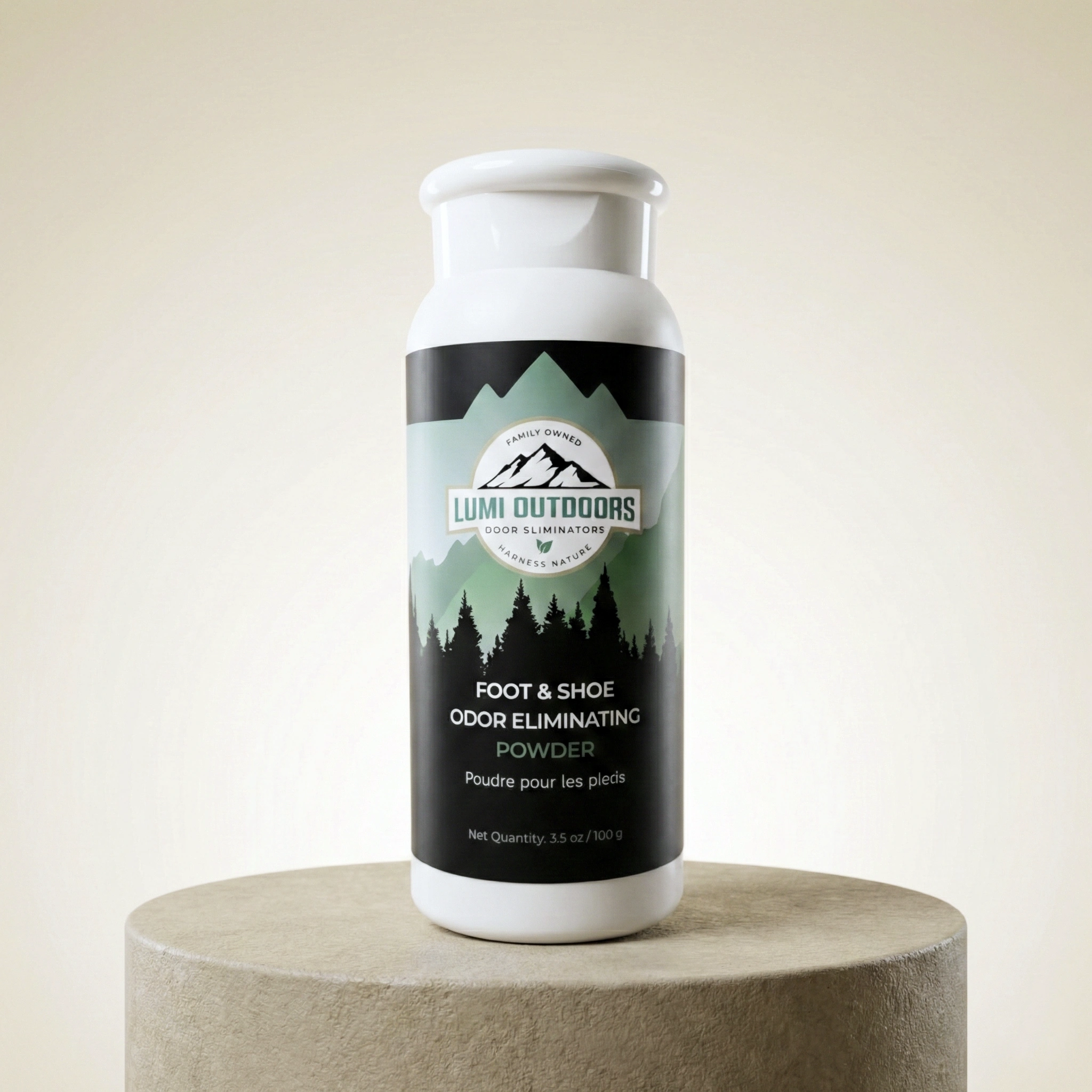
The best way to fight odor is to stop it before it starts. Our all-natural, talc-free foot powder is your first line of defense against mois...
- ABSORBS SWEAT & NEUTRALIZES ODOR
- ALL-NATURAL & TALC-FREE FORMULA
- PROUDLY FAMILY-OWNED & MADE IN UTAH
- THE "FRESH CONFIDENCE" GUARANTEE