

Why shoes suddenly stink even when you have perfect hygiene habits
- It's the shoes, not you Sudden shoe odor is almost always caused by bacteria crossing a biofilm threshold inside the foam, not a hygiene failure on your part.
- Two-phase fix required You need to break down the existing odor buildup first, then control moisture going forward — doing just one without the other means the smell comes back.
- Never wear the same pair two days in a row Shoe foam needs a full 24 hours to reach core dryness; skipping one rotation can double the moisture load and trigger the stink threshold.

Your shoes suddenly stink because bacterial colonies inside the foam and fabric have crossed a tipping point — not because your hygiene slipped. Once moisture and heat stack up past a threshold, bacteria like Brevibacterium and Staphylococcus shift from dormant to active, releasing volatile organic compounds (VOCs) that smell sharp and sudden.
Here's what separates sudden-onset odor from the slow-burn kind: it's almost never about your feet. It's about your shoes hitting a point of no return.
Why do shoes suddenly start smelling even if my feet are clean?
Shoe odor goes from zero to overwhelming when bacteria inside the shoe establish a biofilm — a structured colony that produces odor compounds at scale, not gradually. Clean feet still deposit sweat and dead skin cells, which feed that colony every single wear.
Think of it like a fire that's been smoldering under the surface. The smell isn't new — the conditions finally got bad enough to ignite it. Brevibacterium linens, one of the primary odor producers in shoes, is the same organism responsible for the pungent smell of aged cheeses. It thrives at skin temperature, feeds on the amino acid leucine found in sweat, and produces isovaleric acid — the compound behind that sharp, distinctive foot smell.
According to research indexed by the NIH's National Library of Medicine, biofilm formation is the mechanism that makes bacterial colonies suddenly "activate." A biofilm is essentially bacteria that have organized into a protected community embedded in a self-produced matrix. Once that matrix forms inside shoe foam or fabric, it's nearly impervious to surface-level cleaning.
That's the real problem.
Your feet were clean. The shoe wasn't. Every time you put on a slightly damp shoe — even one that feels dry on the outside — you're feeding an established colony. The interior foam of a shoe can retain moisture at its core for 24 to 48 hours after wear, even when the surface feels dry to the touch. Wearing that shoe again before it fully dries is like re-watering a plant you forgot you had.
There's also a material factor most people don't consider. The inner linings of modern athletic shoes — particularly the EVA foam layers — develop micro-tears after regular use. Those micro-tears create tiny pockets where bacteria embed and where no amount of surface spraying reaches. This is why a shoe that was fine six months ago can suddenly cross a smell threshold you can't walk back.
What triggers the sudden "stink threshold" in a shoe that seemed fine?

The most common triggers for sudden shoe odor are wearing the same pair two days in a row, a humidity spike, or a subtle change in your body chemistry — any of which can push an existing bacterial colony past its tipping point.
A few specific triggers worth knowing:
- Back-to-back wear: The 24-hour rotation rule exists because internal shoe foam genuinely needs a full day to reach core dryness. Skip one rotation and you can double the moisture load.
- Seasonal humidity: Summer air — especially in poorly ventilated mudrooms or gym bags — creates conditions where shoes never fully dry between wears.
- Diet or medication changes: Certain foods (asparagus, red meat, alcohol) and medications alter sweat composition in ways that change which bacteria thrive. This is a real and documented phenomenon, not folk wisdom.
- New workout intensity: More exertion means more sweat and more heat — two variables that speed up bacterial growth significantly.
There's also the reactivation effect, which catches people off guard. A shoe can smell completely fine when it's cold and dry. The moment your foot warms it up and introduces moisture, the dormant bacteria wake up and start releasing VOCs again. That "why does it smell the second I put them on?" experience is exactly this — a reactivation, not a new infection.
Worth knowing: synthetic linings trap bacteria more aggressively than natural materials. Leather shoes, which breathe better and have a slightly lower internal humidity, tend to cross the smell threshold more slowly than mesh or foam-lined athletic shoes.
Most people spray their shoes and immediately stuff them back in a closed gym bag or closet — that's the worst possible move. The spray needs open air to work; sealing the shoe traps the released VOCs and residual moisture right back in. After any treatment spray, leave shoes upright in open air for at least 12 hours before wearing or storing them in an enclosed space.
How do you actually fix sudden shoe odor instead of just masking it?
Fixing sudden shoe odor requires two separate steps: breaking down the existing odor buildup, and then controlling moisture going forward so it can't re-establish. Masking the smell with a fragrance spray skips step one entirely.
Here's a practical reset strategy:
Phase 1 — Deep decontamination. The goal is to penetrate the shoe fabric and disrupt the biofilm, not just freshen the surface. Essential oil-based sprays with eucalyptus or lemon are effective here — these compounds destabilize bacterial cell membranes rather than just covering the smell. For badly affected shoes, spray the interior, stuff them with newspaper (which wicks interior moisture while the spray works), and leave them in open air — not a closed closet — for at least 12 hours. Lumi's Extra Strength Shoe Deodorizer Spray works well for this phase, and the lemon eucalyptus scent is noticeable for the first 10 minutes or so before fading neutral.
Phase 2 — Moisture management. Apply a talc-free foot powder before every wear to absorb sweat at the source. This is the step most people skip, and it's arguably more important than the spray for long-term prevention. A good powder reduces the moisture load in the shoe by absorbing sweat before it can saturate the foam — no moisture, no biofilm growth. The Natural Foot Powder and Extra Strength Spray bundle pairs both phases into a single system, which is honestly the smarter approach if you've already hit the stink threshold once.
For a completely free alternative: baking soda packed loosely inside each shoe overnight genuinely works as a short-term deodorizer. It won't penetrate a biofilm the way an essential oil spray does, but it absorbs surface moisture and neutralizes some of the acid compounds responsible for the sharpest odors. Cedar shoe trees are even better for ongoing moisture control — they're a one-time purchase that pays for itself across dozens of pairs.
Phase 3 — The insole question. If the odor persists after a serious decontamination attempt, the factory insole is likely the problem. Foam insoles are porous enough to retain bacteria in a way that can't be reversed. Replacing a $5–10 aftermarket insole can eliminate 90% of the odor-causing material instantly — and it's worth doing before you give up on an otherwise solid pair of shoes.
You can also read more about why shoe odor keeps coming back after treatment — it's usually one of these phases being skipped.
Is it my feet or my shoes? How to tell the difference
If the odor stays on your skin after a thorough shower and scrub, your feet are the source — not the shoes. If the smell disappears when you're barefoot but returns the moment you put shoes on, the shoes are the bio-incubator.
The distinction matters because the fix is different. Shoe saturation — where the foam and fabric have absorbed enough bacteria to become a permanent odor source — is a shoe problem. Hyperhidrosis, or sudden onset excessive sweating, is a foot problem that will ruin new shoes just as fast as the old ones.
A few signs that something has shifted on the foot side:
- Persistent itching or peeling between the toes alongside the odor (possible athlete's foot, worth seeing a doctor)
- Odor that lingers on skin even 30+ minutes after a shower
- Sudden onset of noticeably more sweating than usual — not just "hot day" sweating, but a real change in baseline
For foot-side odor, zinc-based powders do double duty — they absorb moisture and help keep odor down. The American Podiatric Medical Association recommends thorough drying between toes after showering as a baseline hygiene step that most people genuinely underdo. It sounds almost too simple, but water trapped between toes is one of the fastest ways to alter your foot's microbial environment in a direction that makes shoe odor worse.
If you're unsure which side is the problem, try this: wear fresh socks with clean feet in a brand-new pair of cheap flip-flops for a day. If the smell is still there, start with your feet. If it disappears, start with your shoes. That test will save you from treating the wrong thing.
If you're also dealing with related questions — like whether isopropyl alcohol is safe for treating smelly feet — it's worth reading before you reach for whatever's under the sink.
Ready to stop the stink from coming back?
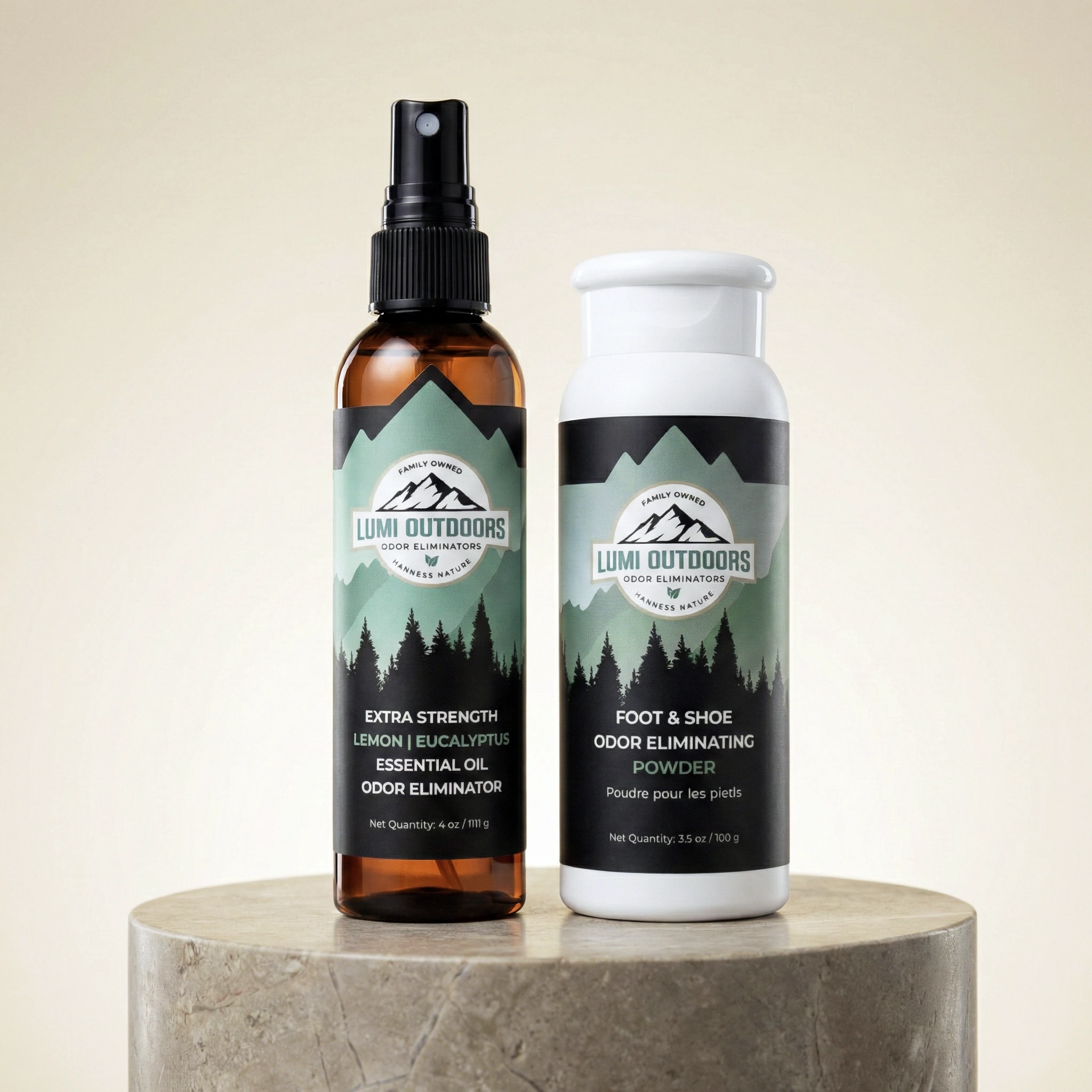
Join 1 Million+ Other People Who Chose Lumi to Conquer Their Shoe Odor.
- THE ULTIMATE 1-2 PUNCH AGAINST ODOR
- A COMPLETE KIT FOR SHOES, BAGS & GEAR
- PROUDLY FAMILY-OWNED & MADE IN UTAH
- THE "FRESH CONFIDENCE" GUARANTEE