

Does Putting Deodorant on Your Feet Actually Stop Shoe Odor?
- Yes, but temporarily Deodorant on your feet reduces odor for a few hours by slowing bacterial activity on the skin, but it doesn't address the sweat and bacteria already embedded in your shoe lining.
- The real problem is inside the shoe Bacteria colonize the foam insole and fabric lining over time — deodorant on your foot never reaches them, so the smell keeps coming back.
- Solution stacking actually works Use a foot powder before wearing to control moisture, and treat the shoe itself separately — that two-step approach breaks the foot-to-shoe feedback loop.

Yes — putting deodorant on your feet reduces shoe odor temporarily, but it doesn't fix the underlying cause. Deodorant masks the smell and can slow bacterial activity on the skin, but it does nothing about the sweat soaking into your shoe lining, which is where the real problem lives.
Here's exactly why the hack works a little, why it fails eventually, and what to pair it with if you want shoes that actually stop smelling.
Why Does Deodorant on Your Feet Work at All?
Deodorant works on feet for the same reason it works in armpits: it temporarily covers odor and slows the bacterial activity on skin that produces it. The effect typically lasts 2–4 hours on feet before sweat overwhelms it.
The smell from your feet isn't sweat itself — sweat is nearly odorless. It's the byproduct of bacteria, primarily Brevibacterium linens and Staphylococcus epidermidis, digesting the proteins and fatty acids in your sweat. According to the clinical definition of bromodosis (the medical term for foot odor), the condition is driven almost entirely by this bacterial metabolic process, not by hygiene failures.
Standard deodorant contains fragrance to cover the smell and agents like triclosan or alcohol that slow bacterial growth on the skin's surface. Apply it to your feet before putting on shoes, and you get a brief window where less bacteria means less odor output. That's the Reddit hack in a nutshell. It's not wrong, exactly. It's just incomplete.
The key word is surface. Deodorant only acts where you put it.
Why Does the Deodorant Hack Fall Short?
Deodorant fails as a long-term fix because shoe odor lives inside the shoe — not just on your foot. The bacteria and sweat that soak into the foam insole and fabric lining every day build up over time, and a layer of fragrance on your skin doesn't reach any of it.
Think of it as a foot-to-shoe feedback loop. Your feet sweat — up to half a pint per day according to the American Podiatric Medical Association — and that moisture transfers directly into the shoe. Bacteria on your skin hitch a ride with it. Once inside the warm, dark, airless environment of your shoe, they colonize the insole foam and keep producing odor compounds even when your foot isn't in there. That's why shoes smell even when you're not wearing them.
Stick deodorant creates an additional problem inside a shoe: it becomes a sticky residue. Unlike an underarm, where there's constant airflow, the inside of a shoe is a closed environment. The deodorant formula can clump and actually trap more sweat against the insole rather than letting it evaporate.
The result is often that "stinky floral" smell — a combination of old sweat compounds and whatever fragrance your deodorant uses. Not an upgrade.
Most people apply foot powder or deodorant and then immediately put their socks and shoes on — but giving it 60 seconds to fully settle into the skin makes a measurable difference in how long it holds. Powder that hasn't bonded to the skin surface just transfers directly onto your sock, where it does nothing for the shoe environment. Thirty seconds of air contact before the sock goes on isn't a magic fix, but it's the difference between a product working and just disappearing.
What Actually Eliminates Shoe Odor Instead of Just Masking It?

The most effective approach treats both the foot and the shoe separately, targeting moisture first and odor second. Moisture control prevents bacteria from thriving; a targeted shoe spray breaks down the compounds already embedded in the lining.
This two-step approach is sometimes called "solution stacking," and it's the reason people who use it stop cycling through deodorant hacks and air fresheners every week.
Step one is moisture control. A talc-free foot powder applied directly to your feet before putting on shoes keeps the foot surface dry, which starves the bacteria of the warm, moist environment they need. Look for powders that use arrowroot or kaolin clay as the base — they absorb moisture without the skin irritation concerns that came with talc formulas. If you want more context on why talc-free matters, this breakdown of talc-free powder benefits covers it well.
Step two is treating the shoe itself. Sprinkling baking soda into shoes overnight is a free, genuinely effective option — it absorbs residual moisture and neutralizes odor compounds through a basic chemistry reaction. The limitation is that it's passive and slow, so it works best for maintenance, not for shoes that already smell strongly.
For shoes with an established odor problem, a targeted spray that reaches the lining and insole foam works faster. The Lumi Natural Foot Powder and Extra Strength Shoe Deodorizer Spray bundle handles both steps together — the powder goes on your feet before wearing, the spray goes in the shoe after. It's the most practical version of the two-step approach if you want everything in one place.
Step three: rotate your footwear. Give each pair at least 24 hours between wears. The EVA foam in most athletic shoes holds moisture for 12–18 hours even in normal conditions, so wearing the same pair daily doesn't give the powder or spray enough time to do its job. It sounds obvious. Most people still don't do it.
For shoes that already smell deeply embedded, cedar shoe inserts are worth adding. Cedar is hygroscopic — it pulls moisture from the surrounding material — and the natural terpenes in cedarwood have mild odor-suppressing properties. They're not a standalone fix, but they're a good overnight maintenance tool between spray treatments. Check out this breakdown of whether to treat your foot or shoe first if you're trying to figure out which end of the loop to start with.
Deodorant vs. Antiperspirant: Does It Matter Which One You Use?
Yes — deodorant and antiperspirant are different products that do different things. Antiperspirant uses aluminum compounds to physically block sweat glands; deodorant uses fragrance and agents to reduce odor without stopping sweat. On feet, that distinction matters more than most people realize.
If you're using regular deodorant on your feet, you're only getting odor coverage, not sweat reduction. Some people try antiperspirant on their feet for the sweat-blocking effect, and it does work — aluminum compounds reduce eccrine gland output regardless of where you apply them. But feet have a much higher density of sweat glands than armpits (about 250,000 glands across the soles), so blocking them partially is less effective here than in a smaller area.
There's also a comfort issue. Antiperspirant can make the foot surface slippery inside the shoe, which is a real problem for anyone doing anything athletic. And if you have sensitive skin, the occlusion effect can cause irritation around the heel and arch where fabric rubs. That's not a reason to avoid it entirely, just a reason to test carefully on a small area first.
The honest answer: if you want sweat reduction on your feet specifically, a dedicated foot powder does it more safely and more comfortably than either product, with zero risk of the slippery-foot problem. Understanding whether antiperspirant on your feet is actually worth it is a different but related question worth reading if you've been going back and forth on this.
And if you're curious about the bigger picture — why some people's shoes suddenly start smelling worse despite nothing changing in their routine — this article on sudden shoe odor explains the most common triggers that have nothing to do with hygiene.
The deodorant hack isn't useless. But it's a band-aid on a problem that lives deeper in the shoe than a stick of Old Spice can reach.
Ready to stop the foot-to-shoe odor loop for good?
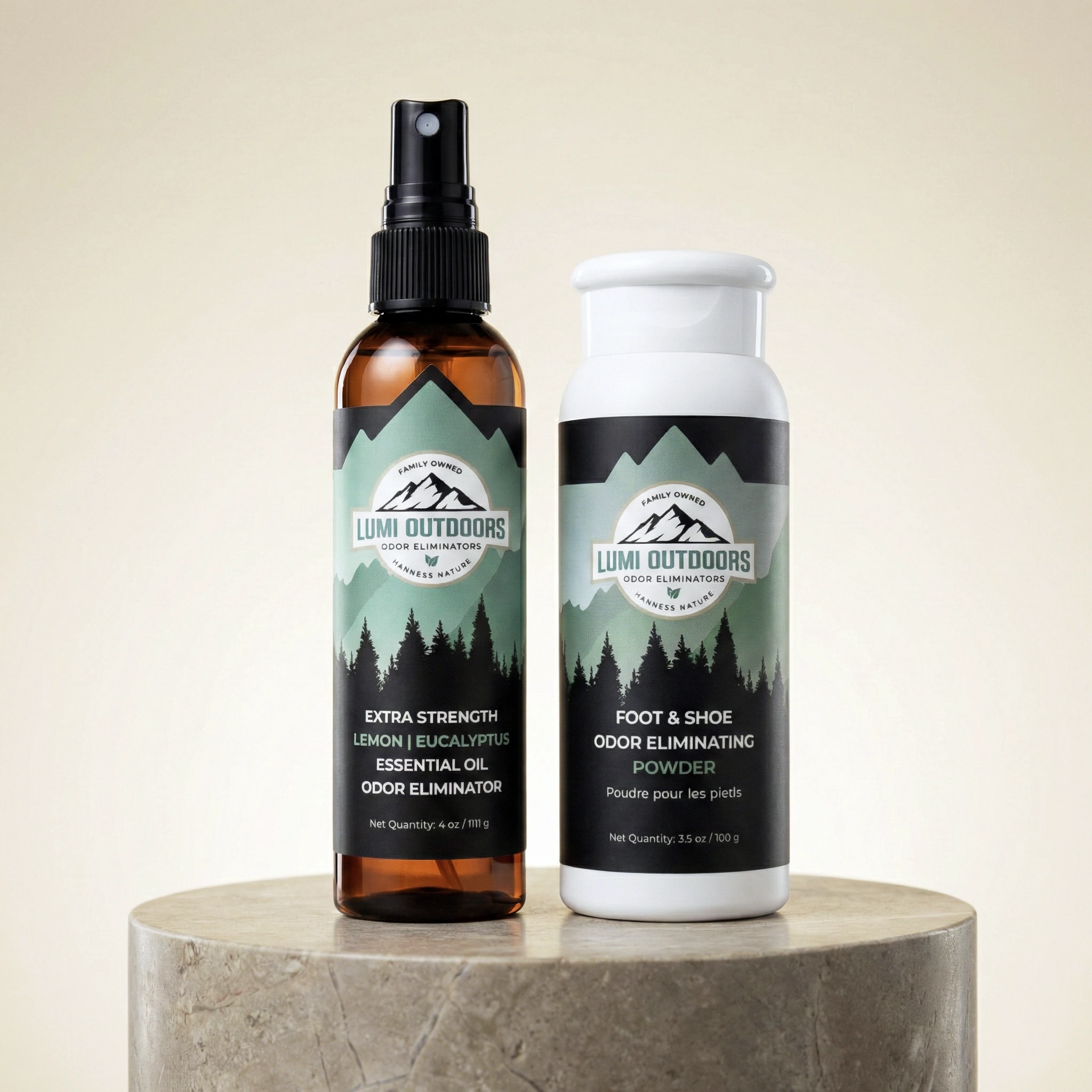
Join 1 Million+ Other People Who Chose Lumi to Conquer Their Shoe Odor.
- THE ULTIMATE 1-2 PUNCH AGAINST ODOR
- A COMPLETE KIT FOR SHOES, BAGS & GEAR
- PROUDLY FAMILY-OWNED & MADE IN UTAH
- THE "FRESH CONFIDENCE" GUARANTEE