

5 Pro Methods: How to Make Stinky Shoes Not Stink
- Moisture is the Enemy Controlling dampness with newspaper and airflow stops odors from setting into shoe fibers.
- Natural Neutralizers Baking soda and essential oils neutralize smells without the need for harsh synthetic chemicals.
- Prevention Over Cure Applying powder before a shift prevents sweat from soaking into the shoe in the first place.

You know that feeling. You finally walk through the front door after a grueling 12-hour shift at the hospital or the clinic. You’re exhausted, your back aches, and all you want to do is kick off your shoes and collapse on the couch. But as soon as those shoes come off, it hits you. That heavy, damp, unmistakable "work shoe" smell that seems to fill the entire entryway. It’s enough to make you want to leave your sneakers on the porch—or worse, just throw them in the trash and start over.
For those of us in the medical field or any job that keeps us on our feet all day, this isn't just about being "smelly." It’s about the frustration of seeing expensive work shoes ruined by odors that won't go away. You’ve probably tried the cheap drugstore sprays that just smell like "fake flowers and gym socks," and you’re tired of the chemical cloud they leave in your mudroom. You want something that actually works without making your home feel like a science lab.
I’ve been there, staring at a pair of perfectly good $150 nursing clogs wondering if I’ll ever get the funk out. The good news is, you don't have to throw them away. There are real, practical ways to reclaim your shoes and your home's air quality.
Why Do My Work Shoes Smell So Bad After a Long Shift?
Work shoes smell because the moisture from 12 hours of sweat becomes trapped in the shoe's lining, creating a perfect environment for odor-producing microbes to thrive. Without proper airflow and drying time, these odors settle deep into the materials and become harder to remove over time.
Here’s the thing: your feet have about 250,000 sweat glands. When you’re rushing between patient rooms or standing in the OR for hours, those glands are working overtime. In a standard 12-hour shift, your feet can produce quite a bit of moisture. Most high-performance work shoes are designed for durability and support, not necessarily for "breathing." This means that moisture stays trapped against the fabric and foam.
If you don't give that moisture a way out, it turns into a buffet for the tiny organisms that live on our skin. They eat the sweat and release the gases that we recognize as that "stinky shoe" smell. It’s a natural process, but it’s one that gets out of control quickly if you’re wearing the same pair of shoes day after day without a plan.
If you want to stop the moisture before it starts, you need a heavy-duty absorber. You don't need a chemistry degree to fix this; you just need the right tool to keep things dry from the start.
What You'll Need
- Old Newspaper
- Mesh Laundry Bag
- Natural Foot Powder Check Price →
- Baking Soda
How to Make Stinky Shoes Not Stink Using Natural Household Items?
You can neutralize shoe odors naturally by using moisture-absorbing household staples like baking soda, newspaper, and charcoal inserts. These materials pull dampness out of the shoe fibers, which stops odors from developing at the source without the use of harsh synthetic chemicals.
If you’re looking for a quick fix with things you already have in the pantry, Baking Soda is your best friend. It’s an alkaline substance, which means it’s great at neutralizing the acidic odors produced by sweat. Just sprinkle a generous amount inside your shoes after your shift and let them sit overnight. In the morning, shake them out over the trash can.
Another trick I’ve used for years involves Newspaper. If your shoes feel physically damp when you take them off, crumple up several pages of old newspaper and stuff them deep into the toes. The paper acts like a sponge, drawing out the liquid before it can soak into the deeper layers of the foam. It’s a simple "old school" trick, but it really works to speed up the drying process.
If you’re interested in more DIY ideas, check out this guide on how to deodorize boots without chemicals using basic ingredients you likely have right now.
Don't wear the same shoes two days in a row. Rotating between two pairs gives the foam and fabric a full 24-48 hours to completely dry out, which is the single most effective way to prevent permanent odors.
What Are the Most Effective Ways to Dry Out Shoes Overnight?

The most effective way to dry shoes overnight is to remove the insoles and place the shoes in a well-ventilated area with moving air, such as near a floor vent or in front of a small fan. This ensures that airflow reaches the interior of the shoe where moisture is most heavily concentrated.
Many people make the mistake of leaving their shoes in a dark, cramped closet right after a shift. That’s like putting a wet towel in a gym bag—it’s just going to get worse. Instead, pull the insoles out as far as they’ll go (or take them out completely) to let the bottom of the shoe "breathe."
I usually set mine near a window or a vent. If it was a particularly rainy day or a high-intensity shift, I’ll actually point a small desk fan directly at the openings of the shoes. Moving air is the enemy of odor. The faster they dry, the less time those smells have to set in.
We compared our natural spray against the big-brand aerosols. I tested both side-by-side for a week, and the difference isn't just in the smell—it's in how the shoes actually feel the next morning.
| Feature | Lumi Natural Sprays | Drugstore Aerosols |
|---|---|---|
| Ingredient Base | Essential Oils & Plants | Butane & Synthetic Fragrance |
| Odor Action | Neutralizes at the source | Masks with heavy perfume |
| Residue | Clean and invisible | Chalky white buildup |
| Scent Quality | Fresh citrus & herbs | Chemical \"New Car\" smell |
Can You Wash Medical Shoes and Sneakers in the Washing Machine?
Most canvas sneakers and synthetic medical shoes can be washed in a machine on a cold, gentle cycle, provided they are placed inside a mesh laundry bag to prevent damage. However, you should never put them in the dryer, as high heat can warp the soles and break down the adhesives holding the shoe together.
Before you toss your expensive sneakers into the wash, check the label. If they’re leather or high-end clogs, stick to hand-wiping. But for those mesh sneakers that seem to soak up every drop of liquid they encounter, the washing machine can be a lifesaver.
Here is my routine: Remove the laces and insoles. Put the shoes in a mesh laundry bag to keep them from banging against the drum. Use a small amount of mild detergent—nothing too heavy. Once the cycle is done, stuff them with that newspaper we talked about earlier and let them air dry. It might take 24 hours, so make sure you have a backup pair ready. For more details on this, you might find our guide on washing heavy-duty gear helpful, as many of the same rules apply to sneakers.
How Can I Prevent Shoe Odor Before My Shift Starts?

Preventing shoe odor begins with wearing moisture-wicking socks made of wool or synthetic blends and applying a natural foot powder to your feet before putting on your shoes. This proactive approach stops sweat from saturating the shoe material in the first place.
Cotton socks are actually the enemy here. Cotton absorbs moisture but doesn't let it go, meaning your feet sit in a damp environment for 12 hours straight. Look for "moisture-wicking" or "performance" socks. They pull the sweat away from your skin and toward the outer layer of the sock where it can evaporate more easily.
And don't underestimate the power of a good powder. Using something like the Natural Foot Powder before you even leave the house creates a dry barrier. It’s much easier to prevent a smell than it is to scrub it out later.
Is the natural route perfect? Mostly, but it does require a bit of consistency. You can't just spray once every three months and expect miracles. Here’s the honest breakdown of what you can expect:
- Uses high-quality essential oils instead of toxic chemicals.
- Actually neutralizes the odor rather than just covering it up.
- Safe for kids, pets, and sensitive skin.
- Extends the life of expensive footwear by maintaining a cleaner environment.
- Requires daily application for the best results in high-sweat environments.
- Powder can be a bit messy if you aren't careful when shaking it into the shoes.
At the end of a long day, you shouldn't have to worry about the smell of your shoes trailing behind you. By focusing on keeping things dry and using plant-based ingredients like citrus and tea tree, you can keep your favorite work shoes for years instead of months. It saves you money, saves your nose, and makes coming home just a little bit more relaxing.
If you're dealing with a whole household of athletes or multiple shifts a week, you might want to consider the Lumi Outdoors Shoe Deodorizer Spray (3-Pack). It lets you keep a bottle in the car, one in the gym bag, and one by the front door so you're never caught off guard.
Ready to eliminate shoe odor for good?
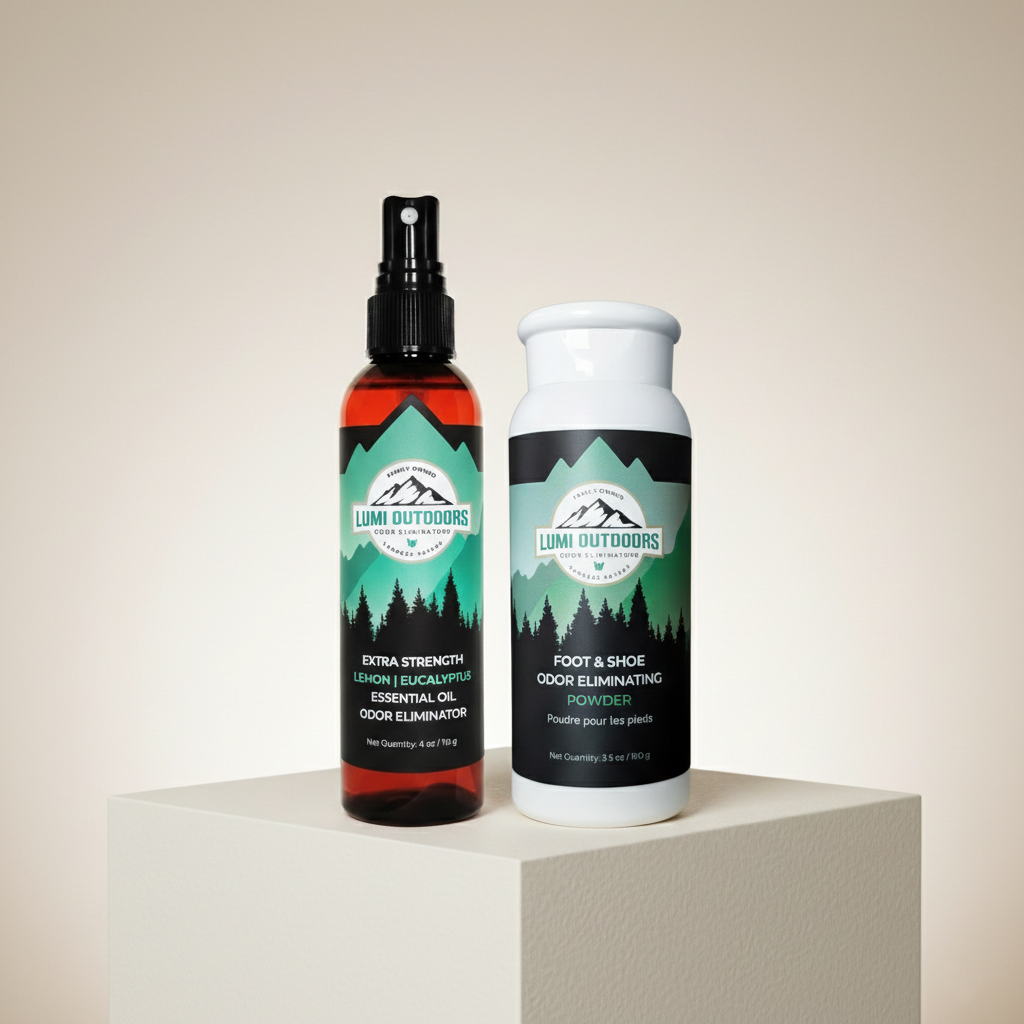
Join 1 Million+ Other People Who Chose Lumi to Conquer Their Shoe Odor.
- THE ULTIMATE 1-2 PUNCH AGAINST ODOR
- A COMPLETE KIT FOR SHOES, BAGS & GEAR
- PROUDLY FAMILY-OWNED & MADE IN UTAH
- THE "FRESH CONFIDENCE" GUARANTEE
Frequently Asked Questions
How often should I use shoe deodorizer spray?
Is it better to use powder or spray for stinky shoes?
Can I use these natural products on leather shoes?
Why do my shoes still smell even after washing them?