

3 Surprising Reasons Why Changing Your Socks Mid-Shift Actually Works
- Yes, it actually works Changing socks at the 5-6 hour mark resets moisture saturation and interrupts the bacterial growth cycle before odor peaks.
- The boot step is non-negotiable Putting fresh socks into a wet boot defeats the purpose — spray the boot interior during your break or you'll hit saturation 30-40% faster.
- Sock material matters as much as timing Cotton loses all wicking ability once damp; merino wool or synthetic blends continue working through the second half of your shift.

Changing your socks mid-shift genuinely works — and not just because "fresh socks feel nice." The mechanism is real: it resets the moisture saturation point of your entire footwear system before bacterial colonies hit their peak growth window, typically around the 5-6 hour mark of a long shift.
Here's exactly why it works, when to do it, and what to do with those first-pair socks so your bag doesn't smell like a locker room by end of day.
Does Changing Your Socks Mid-Shift Really Work?
Yes — changing socks mid-shift works because it interrupts three compounding problems at once: moisture saturation in the fabric, skin maceration from prolonged dampness, and the bacterial growth cycle that causes chronic boot odor. It's not a folk remedy. The science backs it up.
Most people think foot odor is just about sweat. It's not. The smell is produced by Brevibacterium linens and Staphylococcus epidermidis — bacteria that colonize warm, damp environments and metabolize sweat into isovaleric acid, the compound responsible for that sharp, acrid boot smell. According to research indexed by the National Institutes of Health, bacterial populations on skin can double roughly every 20 minutes under ideal conditions — and the inside of a work boot at hour five is about as ideal as it gets.
Your socks have a finite moisture capacity. Once they're saturated — usually within 4-6 hours of active wear — they stop wicking and start holding moisture against your skin. That's not just a comfort issue. Prolonged skin wetness causes maceration: the skin softens, weakens, and becomes prone to micro-tears. Those micro-tears are how blisters start, and they're also how bacteria get a deeper foothold.
That's the real problem.
A dry sock change at the 5-6 hour mark is essentially a hard reset. You remove the saturated material, give the skin surface a moment to breathe, and interrupt the bacterial growth cycle before it peaks. The second pair of socks starts from near-zero moisture load, which means the second half of your shift is dramatically more comfortable — and your boots smell significantly better by the time you get home.
Why Does Moisture Actually Cause Odor — Not Just Wetness?
Moisture doesn't cause odor directly — it creates the oxygen-depleted, warm, humid microenvironment where odor-causing bacteria thrive and multiply fastest. At 98°F and near 100% relative humidity inside a boot, bacterial activity accelerates exponentially compared to a dry environment.
Think of your socks like a sponge with a saturation threshold. A dry sponge absorbs. A soaked sponge just pushes water around. Your socks work the same way — moisture-wicking fabrics actively pull sweat away from skin and distribute it toward the outer surface where it can evaporate. But once the fabric hits saturation, the wicking mechanism stops. The sock becomes a warm, wet compress against your skin.
This is what podiatrists call the "swamp effect" — and it's the direct precursor to both friction blisters and chronic boot odor. The American Podiatric Medical Association notes that damp skin has significantly lower friction tolerance than dry skin, meaning a sock that's been wet for four hours creates blister risk that a dry sock simply doesn't. That's not a minor inconvenience on a 12-hour shift. It's the difference between finishing strong and limping through hour ten.
The bacteria angle is worth understanding specifically. Brevibacterium produces the most intense odor compounds — the same genus responsible for the smell of aged cheeses, which is why some people describe severe boot odor as almost cheese-like. These bacteria aren't dangerous, but they are prolific under heat and humidity. A single sock change at peak bacterial activity (typically hour 5-6) can reduce the final odor intensity significantly, because you're removing the primary substrate before the colony reaches its largest size.
Worth knowing.
Most people forget that the insole is the worst offender — it absorbs more direct foot sweat than the sock itself and never fully dries in a sealed boot. During your mid-shift break, pull the insoles out of the boots and leave them exposed to air for the full 5 minutes. Even brief exposure to ambient air drops the surface moisture enough to slow bacterial recolonization noticeably. If your insoles have a fabric top layer, pressing a dry paper towel against them for 30 seconds before re-inserting pulls out surprising amounts of absorbed moisture.
What's the Best Protocol for the Mid-Shift Sock Change?

The most effective mid-shift protocol takes about 5 minutes: remove boots and socks, let feet air for 60-90 seconds, apply a light dusting of moisture-absorbing foot powder, then put on the second pair of socks. Without the powder step, you're putting dry socks into a boot interior that's still damp — and you'll hit saturation 30-40% faster than before.
Timing matters more than most people realize. Too early (hour 2-3) and you're wasting a clean pair of socks before the saturation problem has actually developed. Too late (hour 8-9) and you've already spent hours in the swamp. The 5-6 hour mark is the sweet spot — it's when moisture saturation typically peaks, bacterial activity is accelerating, and you still have enough shift left that the second pair makes a meaningful difference.
The powder step is non-negotiable. You can check out our deeper breakdown of the best options in this industrial-strength foot powder review, but the short version is: any talc-free, absorbent powder applied to the foot before the second sock goes on will extend your comfort window by 1-2 hours.
Your boot interior also needs attention during the break. The liner is soaked. If you pull on fresh socks without addressing the boot, those socks will absorb moisture from the boot itself within the first 30 minutes. A quick spritz of a shoe deodorizer spray into the boot during your break — and a light shake to distribute it — lets the formula begin neutralizing the odor in the liner while you're putting on your socks. For that step, Lumi's Natural Foot Powder and Extra Strength Spray bundle gives you both tools in one kit, which is exactly what a mid-shift protocol needs. The spray takes about 15 minutes to fully dry, so spray first, powder your feet, then lace up.
Sock selection for the second pair matters too. Merino wool or synthetic moisture-wicking blends are the only sensible choice — not because cotton is comfortable (it's not, after hour three), but because cotton loses nearly all its moisture-wicking ability once damp. Merino wool continues wicking even when wet, which is why it's standard in endurance athletic contexts. If you're currently wearing cotton socks for 12-hour shifts, that change alone will have a bigger impact than almost anything else you do.
If you're curious how boot dryers compare to this approach for odor management, this analysis of boot dryer results on 12-hour shifts is worth a read — they solve a different part of the same problem.
How Do I Deal with the Used Socks in My Bag?
Seal used socks in a separate dry bag immediately after changing — don't leave them loose in your work bag. The used pair is still warm, damp, and actively producing odor compounds, and an unsealed bag will transfer that smell to everything else within about 20 minutes.
A simple waterproof stuff sack or a ziplock bag works fine. The key is containment before the socks cool down and the sweat smell sets into the fabric. Once isovaleric acid — the primary odor compound from Brevibacterium — binds to textile fibers, it's significantly harder to wash out. A quick spritz of any natural deodorizer spray on the used socks before bagging them can help break down those compounds before they set.
This habit also protects your boots long-term. Sweat contains sodium and lactic acid, and repeated saturation of the boot liner without intervention causes sweat salt crystallization in the midsole foam and fabric. Over months, this degrades the liner integrity and accelerates odor buildup even on fresh wash days. The mid-shift change — combined with a boot spray during the break — is probably the single highest-return maintenance habit for expensive work footwear. See also: why rotating two pairs of boots amplifies the benefit even further.
The free DIY version of this whole system: a ziplock bag for used socks, a small container of baking soda in the boot during break (shake it out before putting the boot back on), and any moisture-wicking sock in the second pair. It costs almost nothing. It won't neutralize odor as effectively as a dedicated spray, but it addresses the core moisture problem and is a genuine improvement over doing nothing.
The habit itself is the most important thing. Get that right first.
Ready to actually finish a 12-hour shift without dreading taking your boots off?
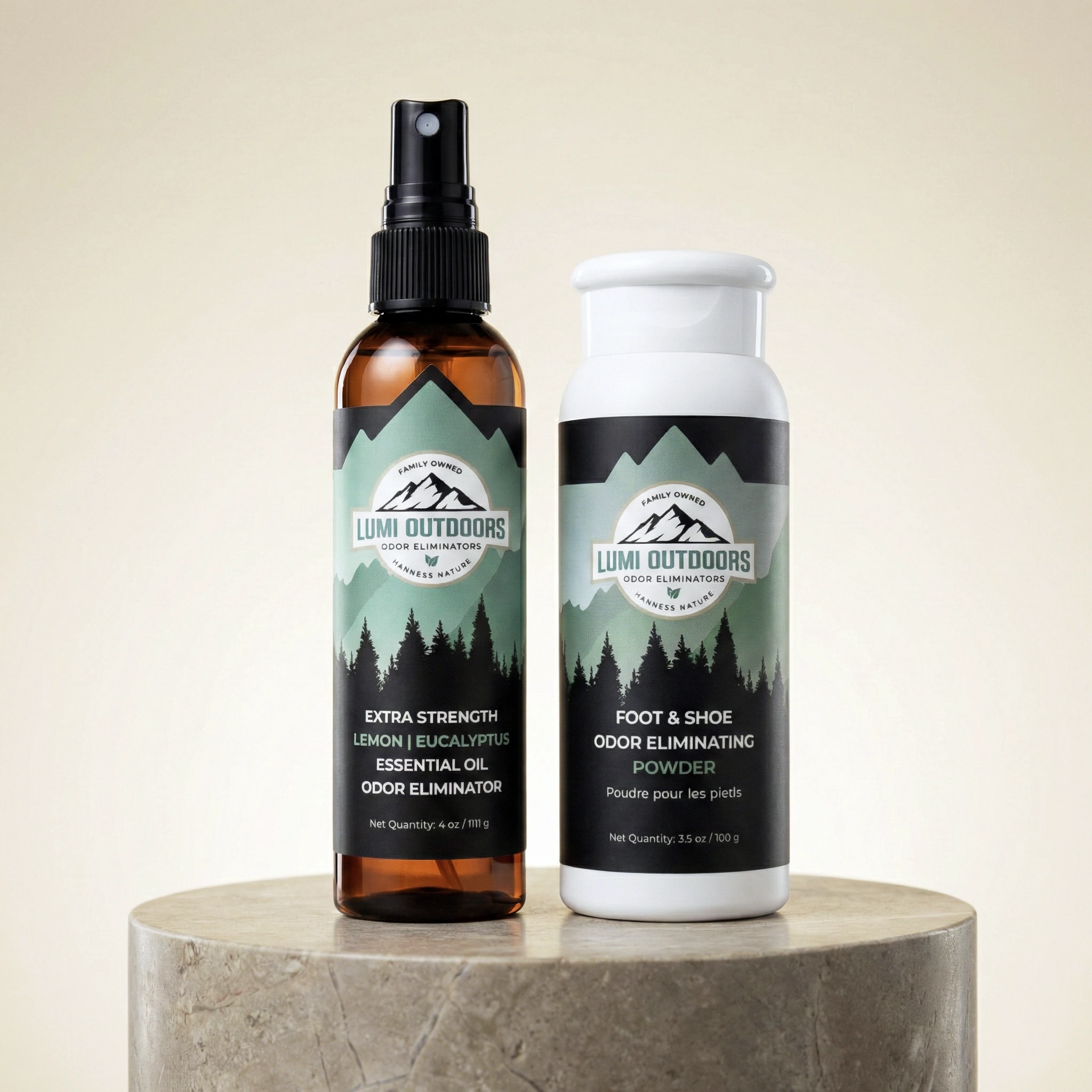
Join 1 Million+ Other People Who Chose Lumi to Conquer Their Shoe Odor.
- THE ULTIMATE 1-2 PUNCH AGAINST ODOR
- A COMPLETE KIT FOR SHOES, BAGS & GEAR
- PROUDLY FAMILY-OWNED & MADE IN UTAH
- THE "FRESH CONFIDENCE" GUARANTEE