
Why Your Gym Shoes Smell Worse Than Other Shoes & The 3-Step Fix
- Biology is the real culprit Bacteria like Brevibacterium and Staphylococcus thrive in the warm, moist, sealed environment of a gym shoe — converting sweat into isovaleric acid, the compound behind that sharp, cheesy smell.
- Materials make it exponentially worse Synthetic mesh and EVA foam provide massive surface area for bacteria to colonize and trap odor molecules deeper than leather or canvas ever would.
- The 3-step fix works in sequence Moisture defense before wear, targeted spray treatment after, and structured airflow during storage — each step addresses a different part of the odor cycle.
- Freezing and baking soda have real limits Both are useful in a pinch but don't eliminate embedded bacterial colonies — so the smell always comes back.

Your gym shoes smell worse than your work shoes, your dress shoes, and probably any other footwear you own — and there's a specific biological reason for that. During a typical 45-minute workout, your feet can produce over 500 mL of sweat, and most of that moisture stays trapped inside a sealed foam-and-mesh environment that bacteria absolutely love. Here are the exact reasons it happens, and the three steps to fix it.
Why Do Gym Shoes Smell So Much Worse Than Regular Footwear?
Gym shoes smell worse because they combine extreme sweat volume, synthetic materials that trap moisture, elevated heat from exercise, and a constant supply of dead skin — all inside a sealed environment. Regular footwear doesn't experience this same combination of conditions, so the bacterial colonies inside gym shoes grow faster and produce more odorous compounds.
Your office loafers might get a little damp on a hot day. Your gym shoes, on the other hand, experience something closer to a contained ecosystem. The human foot has roughly 250,000 sweat glands — more per square inch than almost anywhere else on the body. When you're doing box jumps or running intervals, those glands go into overdrive, and the sweat has nowhere to go.
The bacteria most responsible for shoe odor are Brevibacterium and Staphylococcus epidermidis. According to research cited by the bromodosis literature, these organisms metabolize sweat and dead skin into isovaleric acid — the compound that gives shoes that sharp, cheese-like smell. And they thrive specifically in warm, moist, low-oxygen environments. Sound familiar?
That's your gym shoe's interior on a Tuesday.
Leather and canvas shoes, by contrast, breathe slightly better and don't generate the same heat during use. They also don't trap moisture in thick foam midsoles. The gap in odor between a dress shoe and a training sneaker isn't just a matter of how much you sweat — it's the whole environment inside the shoe itself.
Most people treat shoe odor after they can already smell it — which means the bacterial colony is already well-established in the foam. The real leverage point is the first 10 minutes after a session, before the shoe cools down. Applying a deodorizing spray while the shoe is still warm allows the formula to penetrate foam more effectively, because the pores of the material are still slightly expanded from heat. Treat warm, not cold.
1. The Swamp Factor: Extreme Moisture Retention Inside Athletic Shoes
During a typical workout, the inside of a gym shoe reaches a relative humidity level close to 100%, creating the perfect conditions for bacterial growth. Athletic socks and foam liners act as sponges, holding moisture against the skin for hours after exercise ends.
Here's what most people don't account for: the moisture doesn't leave when you take your shoes off. The foam midsole and textile liner absorb sweat during exercise, and then that material stays damp for 12 to 24 hours unless it's actively dried. If you're putting your shoes back on the next morning without drying them out, you're reintroducing warm bacteria to a still-wet environment. The colony grows each cycle.
Athletic socks make this worse in a counterintuitive way. Thick cotton socks absorb a lot of sweat — but they hold onto it. Moisture-wicking synthetic or merino wool socks move sweat away from the skin faster, which slows down the process. It's a small switch that makes a real difference in how quickly the smell builds up.
The simplest free fix here: after every session, remove the insoles. Set them out separately from the shoe in a ventilated area — not inside your gym bag, not in the bottom of a locker. The foam core of an insole stays damp for far longer than the outer material feels dry to the touch. Pulling them out cuts drying time roughly in half.
Stuffing the shoe with newspaper also works. Newspaper draws moisture out of the foam through absorption — leave it in for a few hours and it'll pull out a surprising amount of liquid. Replace it once if you've had a particularly heavy session. This alone won't eliminate existing odor, but it dramatically slows new buildup.
If you want to pair these habits with a targeted approach, here's what works alongside daily moisture management:
What You'll Need
- Newspaper (for stuffing shoes to draw out moisture post-workout)
- Replacement insoles (reset the dead skin buildup in heavily used shoes)
- Natural Foot Powder and Extra Strength Shoe Deodorizer Spray Check Price →
- Cedar shoe inserts (for overnight moisture absorption between wears)
2. Synthetic Petri Dishes: Why Gym Shoe Materials Make Everything Worse

Synthetic mesh, polyester liners, and EVA foam — the standard materials in athletic footwear — provide significantly more surface area for bacterial colonization than natural materials like leather or canvas. The same mesh that allows airflow also creates thousands of microscopic pockets where bacteria embed and accumulate over time.
The "breathable mesh" selling point is real, but it has a trade-off. Open-weave synthetic mesh does allow air circulation, which is better than a fully sealed shoe. But that same structure creates an enormous surface area of tiny fiber interstices where bacteria attach and grow. A leather shoe has a relatively smooth, dense surface. A knit athletic upper is essentially a three-dimensional net of biological real estate.
EVA foam — the material in most athletic midsoles and removable insoles — is particularly good at retaining odor molecules. Once isovaleric acid and other volatile compounds absorb into foam, they're difficult to remove without direct chemical treatment. Washing your sneakers in a machine often fails for exactly this reason — water and detergent clean the surface but don't penetrate deep enough into the foam to remove embedded odor compounds.
This is worth knowing before you spend 40 minutes hand-scrubbing a pair of training shoes and wonder why they still smell after they dry.
3. Wait — Does Freezing Your Gym Shoes Actually Work?
No. Freezing makes bacteria dormant, not dead. The moment your shoes return to room temperature, the bacterial colony resumes metabolizing sweat and producing odor compounds. The smell comes back within hours of normal wear.
This one gets passed around like it's a life hack. And it sounds logical — cold kills things, right? But bacteria aren't killed by freezing temperatures; they simply go dormant. The Brevibacterium and Staphylococcus living in your foam liner pause their activity in the freezer, then wake right back up when the shoe warms to body temperature.
Not even close to a permanent fix.
The only thing freezing reliably does is temporarily reduce the active odor vapor coming off the shoe — which might make your gym bag smell better for a morning. But it does nothing to the underlying bacterial population. For more on why this popular trick falls short, the full breakdown is here: Why Freezing Your Shoes for Odor Is a Total Waste of Time.
Same goes for baking soda used alone. It's a pH buffer and mild moisture absorber, and it does help with surface-level odor. But baking soda can't penetrate foam, and it won't touch the bacteria embedded in the liner material. Use it in a pinch to freshen between wears, but don't expect it to solve a chronic problem. Some sources also note that powdery residue left in shoes over time can degrade adhesive bonds in the liner — worth knowing if you're protecting a pair of $150 training shoes.
Here's how these approaches compare based on their mechanism of action and real-world effectiveness:
| Feature | Spray + Powder Bundle | Baking Soda | Cedar Inserts | Freezing |
|---|---|---|---|---|
| Targets bacteria in foam | Yes — essential oils penetrate liner material | No — neutralizes surface odor only | No — absorbs moisture, not bacteria | No — makes bacteria dormant, not inactive |
| Cost | ~$25 for the bundle | Free — most households have it | ~$15–20, replace every 3–4 months | Free |
| Prevents odor before it starts | Yes — powder is applied before wear | No — reactive use only | Partial — absorbs overnight moisture | No — no preventive effect |
| Safe for synthetic foam and mesh | Yes — no harsh solvents | Mostly — residue can degrade adhesives over time | Yes — fully safe | Yes — but ineffective |
| Long-term odor elimination | Strong — breaks the bacterial cycle | Weak — odor returns quickly | Moderate — slows buildup over time | None — smell returns same day |
| Ease of use | Simple — apply powder before, spray after | Very simple — sprinkle inside | Very simple — place inside overnight | Simple but requires planning ahead |
4. Heat Acceleration: Your Workout Turns Shoes Into Odor Incubators
Exercise raises the internal temperature of athletic footwear into the 85–95°F range, which is close to the optimal temperature range for bacterial metabolism. This heat also accelerates the chemical breakdown of sweat into isovaleric acid, the compound responsible for the sharp, cheesy odor characteristic of gym shoes.
Bacterial metabolism roughly doubles in speed for every 10°C rise in temperature — a principle called the Q10 coefficient, documented extensively in microbiology. When you're working out, your body heat and friction push the shoe's internal environment into the range where bacterial activity is most efficient. They're processing sweat faster, producing more isovaleric acid faster, and embedding it deeper into materials faster.
This is why gym shoes that seem fine in the morning can smell noticeably stronger by the time you're leaving the gym. The odor compounds are being generated in real time, not just accumulating passively. It's an active biological process running at its peak.
Cedar shoe inserts — like those from Woodlore — are a solid intermediate option worth mentioning. Cedar naturally absorbs moisture and releases aromatic oils that help counteract odor. They work best for overnight storage after moisture has already been removed. Replace them every 3–4 months, because once the wood's aromatic oils deplete, you're left with plain dry wood — still useful for moisture absorption but much less effective for odor. They're a legitimate tool in the rotation, just not a complete solution on their own.
5. The Friction Factor: Dead Skin and the Bacterial Food Supply
Running and high-intensity training slough off dead skin cells at a significantly higher rate than everyday walking. These dead skin cells are the primary food source for odor-causing bacteria — the more friction inside the shoe, the faster the bacterial colony grows and produces odor compounds.
Most odor guides focus on sweat. The dead skin angle gets ignored, and it shouldn't be. The shedding of skin cells during athletic movement is essentially a continuous food delivery service for the bacteria already living in your shoes. More food means faster growth means more metabolic byproducts means more smell.
The footbed of a well-used gym shoe — especially the heel and ball of the foot area — accumulates a layer of skin cells and dried sweat that acts as a bacterial substrate. This is the "sludge" you can sometimes see or feel on an older insole. Replacing insoles every 6–8 months on a frequently-used pair of training shoes is cheap maintenance that most people skip entirely.
New insoles (around $10–15 for a decent pair) effectively reset this food supply problem. The bacteria don't disappear, but you've eliminated the accumulated substrate they've been living in.
The 3-Step Fix to Reclaim Your Gym Bag (And Your Reputation)

The most effective approach to gym shoe odor combines three steps: proactive moisture defense before wear, targeted odor neutralization after wear, and structured airflow during storage. Each step addresses a different part of the problem — none of them alone is enough, but together they break the odor cycle.
The DIY methods above handle individual pieces of the puzzle. But for odor that's already embedded in foam liners — the kind that's survived a few wash cycles and a round in the freezer — you need something that targets the bacterial environment directly. Look for a spray with essential oils like eucalyptus or tea tree, which disrupt bacterial activity without damaging synthetic foam or mesh materials. The Natural Foot Powder and Extra Strength Shoe Deodorizer Spray bundle addresses both sides of the equation: the powder goes on your feet before you put the shoes on, absorbing sweat before it saturates the liner, and the spray treats the shoe itself after each session.
Step 1: Proactive Moisture Defense
Apply a natural foot powder to your feet before putting on your gym shoes. This isn't an afterthought — it's the first line of defense. The powder absorbs moisture at the source, which means less sweat reaching the liner in the first place. Less moisture means fewer bacterial colonies, which means slower odor development. Do this before every session, not just when you notice a smell. Preventive use makes a dramatic difference in how quickly the cycle escalates.
Step 2: Targeted Odor Neutralization
After each session, spray the inside of both shoes and let them sit for at least 15 minutes before storing. The spray needs contact time with the liner material to be effective — don't just mist and close. Aim for the toe box and heel, where bacterial density is highest. The eucalyptus scent is noticeable for the first 10 minutes or so, then fades to neutral. That's the essential oils working, not a perfume covering the odor.
One honest trade-off: the spray does need that drying time before you can wear the shoes again, so it's best applied right after a session rather than right before the next one.
Step 3: Strategic Airflow
Store shoes in an open, ventilated area — not in a closed gym bag, not at the bottom of a locker. Pull the tongue forward to maximize airflow to the toe box. Remove insoles separately. If you're using cedar inserts, add them after the shoe has partially dried, not immediately after a sweaty session (cedar absorbs slower than it sounds, and you want the bulk moisture gone first).
Rotate between at least two pairs of gym shoes if possible. Shoes need a full 24–48 hours to fully dry at the foam-core level. One pair worn every day never fully recovers between sessions — it's a compounding problem.
Also: household air fresheners and aerosol body sprays are not a substitute for shoe deodorizer. The alcohol and fragrance compounds in those products can cause skin irritation and may damage shoe materials. There's a full breakdown of why that matters here: Stop Spraying Your Shoes! Why Air Freshener Causes a Chemical Rash.
- Two-product system addresses both moisture prevention and odor elimination — not just one side of the problem
- Natural essential oil formula is safe for foam, mesh, and synthetic liner materials
- Bundle pricing makes the complete system more accessible than buying separately
- Works proactively (powder) and reactively (spray), breaking the cycle rather than just masking it
- Eucalyptus scent fades to neutral after ~10 minutes — not a perfume cover-up
- Spray requires 15 minutes of drying time before the shoe can be worn — apply right after a session, not before the next one
- Noticeable eucalyptus scent on first application may be strong for people sensitive to essential oils
One thing worth adding before you go: if your shoes smell bad immediately after purchase, it's usually off-gassing from the adhesives and synthetic materials used in manufacturing — not bacteria. Give new shoes a 24-hour airing out before their first session, and the chemical smell dissipates on its own. It's a completely different problem from workout odor, and it doesn't need the same treatment.
Ready to break the gym bag odor cycle for good?
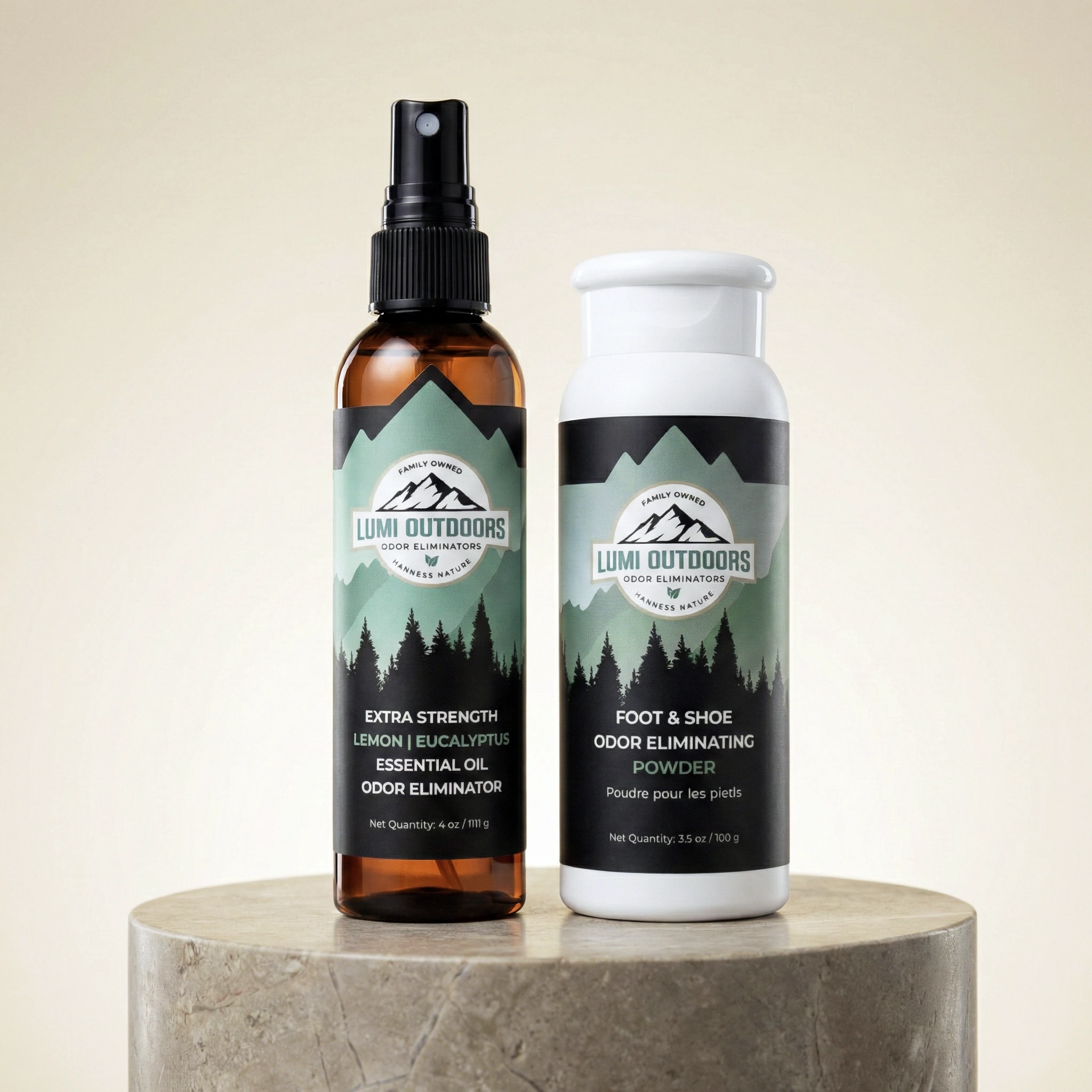
Join 1 Million+ Other People Who Chose Lumi to Conquer Their Shoe Odor.
- THE ULTIMATE 1-2 PUNCH AGAINST ODOR
- A COMPLETE KIT FOR SHOES, BAGS & GEAR
- PROUDLY FAMILY-OWNED & MADE IN UTAH
- THE "FRESH CONFIDENCE" GUARANTEE