

Why Vinegar Spray Made Your Shoes Smell Worse: The Hidden Reaction
- The Pickle Effect is real Acetic acid in vinegar reacts with ammonia from sweat to create new, sharper-smelling compounds that are harder to remove than the original odor.
- Moisture makes it worse Spraying liquid into porous shoe foam creates a wet, warm environment where odor-causing bacteria thrive — exactly what you were trying to stop.
- Fix it in three steps Neutralize with baking soda paste, treat with a plant-based essential oil spray, then dry with airflow for at least 6–8 hours before wearing again.

Vinegar made your shoes smell worse because acetic acid — vinegar's active compound — reacts with the ammonia and amino acids in dried sweat to produce new volatile compounds that smell sharper and more sour than the original odor. On top of that, adding moisture to a shoe's foam and mesh creates a warm, wet environment where odor-causing bacteria multiply fast. You didn't fix the smell — you stacked a new one on top of it.
Here's what actually happened inside your shoe, and how to turn it around.
Why Does Vinegar React So Badly with Shoe Odor?
The reaction happens because shoe odor is a cocktail of organic compounds — ammonia, isovaleric acid, and methanethiol — and acetic acid doesn't neutralize them. It reacts with them, producing new volatile molecules that smell sharper, more sour, and more persistent than what you started with.
This is sometimes called the "pickle effect." When acetic acid meets ammonia (a byproduct of bacterial metabolism in your sock), the two combine to form ammonium acetate — a compound with a distinctly pungent, vinegary-ammonia edge. That smell doesn't air out the way plain vinegar does. It's chemically bonded to the fabric fibers and foam.
There's also a moisture problem. Your shoe's midsole — the thick foam layer between the insole and outsole — is highly porous. When you spray liquid into it, that foam absorbs and holds moisture the way a sponge does. According to research published via the National Institutes of Health on bacterial skin colonization, Brevibacterium species (the bacteria responsible for the cheese-like foot odor note) are actually tolerant of mildly acidic environments. So while vinegar may disrupt some bacterial activity on the surface, it doesn't reach the colony deep in the foam — and the extra moisture you've introduced gives what's left in there a better breeding ground.
That's the real problem.
Vinegar also has a pH of around 2.4–3.4, which feels aggressive. But many shoe odors are themselves acidic — isovaleric acid, the compound that creates the sharp "gym locker" smell, has a pH below 5. You're essentially adding acid to acid. There's no neutralization happening. Just more odor molecules competing for your nose's attention.
What Is the Vinegar Actually Doing to Your Shoe's Materials?
Beyond the smell, acetic acid can chemically damage the glues, dyes, and synthetic liners inside modern athletic shoes — releasing off-gassing compounds that smell like wet plastic or, in some cases, rotten eggs as sulfur-containing adhesives break down.
This is especially true for shoes made with EVA (ethylene-vinyl acetate) foam midsoles — which is basically every athletic sneaker, running shoe, and work boot sold in the last 20 years. EVA is flexible and lightweight, but it's not acid-resistant. Repeated vinegar applications can degrade the foam's cell structure, leading to a spongy, compressed feel underfoot and releasing that distinctive chemical off-note.
Leather and suede are in worse shape. Acetic acid strips the natural oils from leather fibers — the same oils that keep the material supple. Once those oils are gone, the leather dries out, stiffens, and eventually cracks. You might not notice the damage after one application, but two or three treatments can take a quality boot from "well-worn" to "worn out" much faster than normal aging would.
Then there are the adhesives. The bond between the midsole and upper is maintained by polyurethane or solvent-based glues. Vinegar, particularly repeated applications with no drying time in between, softens these adhesives. The first sign is usually a slight gap forming at the toe. Cobblers call it "delamination." Most people call it "the sole-slap problem" — the flapping separation that means the shoe's structural integrity is already gone.
Worth knowing: vinegar damage to adhesives is cumulative, not instant. One careful application with proper drying probably won't ruin a quality shoe. Three panicked sprays because the smell got worse? That's a different story.
After any liquid treatment — vinegar, water, or spray — pull the insole out completely and prop the tongue open before drying. Most of the bacterial load lives in the insole, and leaving it inside the shoe during drying traps moisture underneath it, extending drying time by 4–6 hours and giving bacteria exactly the warm, damp environment they need to recolonize. Dry the insole separately, flat on a towel in open air.
How Do You Actually Fix a Shoe After a Vinegar Fail?

The rescue process has three steps: neutralize the acetic acid residue, eliminate the underlying bacteria causing the original odor, and dry the shoe completely before the next wear — skipping any of these steps means the smell comes back within a day.
Start with a pH reset. Mix a small amount of baking soda (sodium bicarbonate, pH ~8.3) with warm water to create a thin paste. Apply it lightly to the interior of the shoe with a cloth, let it sit for 10 minutes, then wipe it out. This is a genuine neutralization reaction — the base reacts with the acetic acid to form water and carbon dioxide, breaking the compound down rather than just masking it. Baking soda alone isn't a long-term fix, but as a first-response neutralizer after a vinegar mishap, it's the right tool.
After neutralizing, the shoe still has the original odor problem. That underlying bacterial colony in the foam needs to be addressed with something that actually reaches it. A plant-based essential oil spray — specifically one with eucalyptus or lemon oil as the active agents — works by disrupting the bacterial membrane rather than just changing the pH. Lumi's Extra Strength Shoe Deodorizer Spray is what we'd reach for here: the lemon eucalyptus formula gets into the foam layer and addresses the source rather than the surface.
Then dry the shoe properly. This step is where most people make a second mistake: they put the shoes near a heat source — a radiator, a dryer, direct sunlight — thinking heat speeds drying. It does, but it also accelerates adhesive breakdown and can warp the midsole. The correct method is indirect airflow. Point a fan at the open shoes, or set them in a well-ventilated area with the tongue pulled back and insoles removed. Give them at least 6–8 hours before the next wear. If you're dealing with thick work boots, 12–24 hours is more realistic.
Remove the insoles. Always. They hold more moisture than the shoe shell itself, and they're also where the heaviest bacterial concentration lives. If the insoles still smell after the baking soda treatment and a full drying cycle, replace them — they're inexpensive and make a bigger difference than most people expect.
Can Vinegar Permanently Ruin Your Shoes?
For most athletic shoes, a single vinegar application won't cause permanent damage if the shoes are dried thoroughly afterward — but repeated applications, or leaving vinegar-soaked shoes in a closed space like a bag or a locker, can cause permanent adhesive failure and foam degradation that cannot be reversed.
The point of no return for foam is when the vinegar has penetrated to the core of the midsole and the off-gassing smell has become structural. You'll know you're there when the smell persists even after the shoe has been completely dry for 48+ hours with good airflow. At that point, the volatile compounds are embedded in the foam matrix itself — not sitting on a surface that can be treated. Spraying anything else on top will only add more layers to the problem.
Leather and suede reach their point of no return faster. If the material has already started to crack or stiffen from acid exposure, re-oiling with a leather conditioner can sometimes restore suppleness — but only if you catch it early. Visible cracking along the toe box or heel is usually irreversible without professional restoration.
The honest answer is that most shoes survive one vinegar experiment. But if you're reading this because you've done it twice already and things are getting worse, it's worth weighing the cost of a replacement against the time you'll spend trying to rehabilitate them. Some shoes are worth saving. Others are cheaper to replace than to fix — and recognizing that cut-off point is part of knowing your gear.
One specific detail most guides skip: the glue used in athletic footwear typically begins to soften around pH 3.0 or below. White distilled vinegar sits right at pH 2.4. You're in the danger zone every time.
Done experimenting with DIY fixes that make it worse?
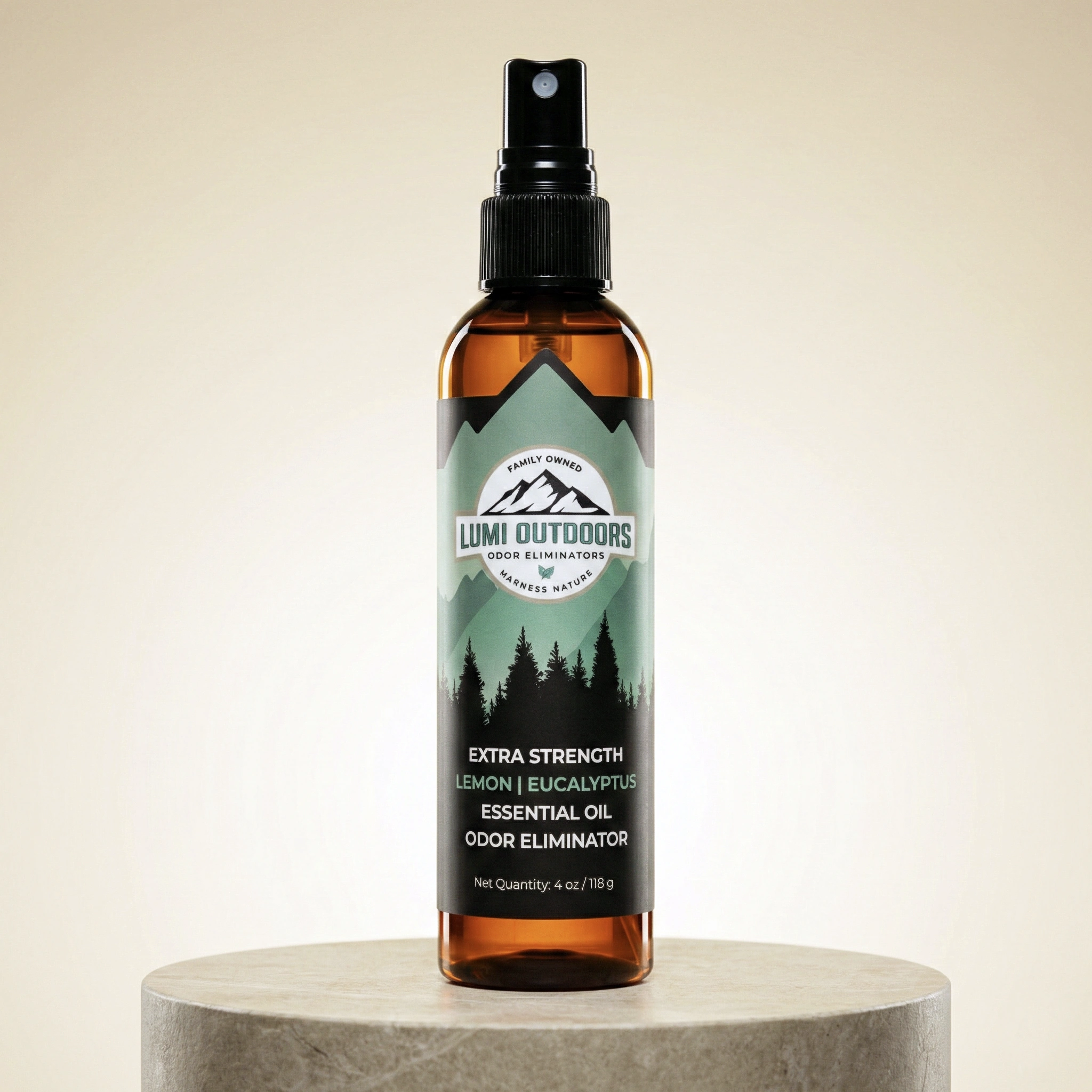
Join 1 Million+ Other People Who Chose Lumi to Conquer Their Shoe Odor.
- DESTROYS ODOR AT THE SOURCE, DOESN'T JUST MASK IT
- ALL-NATURAL & PLANT-BASED INGREDIENTS
- PROUDLY FAMILY-OWNED & MADE IN UTAH
- THE "FRESH CONFIDENCE" GUARANTEE