
Why do merino wool socks prevent foot odor better than synthetic fabrics?
- It's about vapor, not liquid Merino wool absorbs sweat as vapor before it condenses, keeping your foot surface dry and bacteria-free — synthetics only move moisture after it's already wet.
- The fiber structure does the work Wool's overlapping cuticle scales physically disrupt bacterial adhesion, which is why merino stays odor-free for days while polyester smells after a single wear.
- Socks alone aren't enough for heavy days Pair merino with a moisture-absorbing foot powder for high-output activities or long shifts — that combination closes the gap merino can't cover on its own.

Merino wool prevents foot odor by capturing moisture as vapor before it becomes liquid sweat — eliminating the damp environment that odor-causing bacteria need to survive. Wool fibers absorb up to 35% of their weight in moisture vapor and lock it inside the fiber cortex, so your foot stays dry on the surface. Synthetic fabrics can't do this.
Here's exactly why that difference matters — and what to do when even merino wool isn't enough on its own.
Why Does Merino Wool Resist Odor When Synthetics Don't?
Merino wool resists odor because its protein-based fiber structure physically disrupts bacterial adhesion, while synthetic fibers like polyester and nylon have smooth plastic surfaces where bacteria colonize easily and stay put through multiple washes. It's a structural difference, not just a marketing claim.
Your feet have approximately 250,000 sweat glands — more sweat glands per square inch than almost anywhere else on your body, according to the American Academy of Dermatology. That sweat itself is odorless. The smell comes from Brevibacterium linens and Staphylococcus epidermidis, bacteria that break down sweat compounds into isovaleric acid and methanethiol — the specific molecules responsible for the classic foot odor smell.
Synthetics create a perfect habitat for these bacteria. Polyester is essentially plastic — it has a smooth, non-porous surface that retains warmth and moisture at the skin interface. Bacteria adhere to that surface, form a thin biofilm, and colonize quickly. The warmth accelerates their metabolism, which means more odor compounds, faster.
Merino wool works differently at the fiber level. The outer layer of each fiber is made of overlapping scales called cuticle scales, and their physical structure actively disrupts the adhesion process that lets bacteria take hold. A 2014 study published in the Journal of the Textile Institute found that wool fibers showed significantly lower bacterial retention compared to polyester after equivalent wear cycles. The scales essentially make wool a hostile surface for bacterial colonies.
That's the real problem with synthetics — it's not just that they smell more during wear. They hold onto that odor even after washing, because the biofilm persists inside the fiber. Merino releases bacteria and odor compounds easily with a standard cold wash.
What's the Science Behind Wool's Moisture Management?
Merino wool manages moisture in two phases: it absorbs sweat vapor directly into the fiber cortex before condensation forms, then releases it slowly through evaporation — keeping your foot's skin surface consistently dry, which prevents the warm, wet conditions bacteria need to multiply.
This is where the "wicking" comparison gets misunderstood. Synthetic fabrics wick liquid — they move sweat that's already condensed on your skin across a surface and toward evaporation. That's useful, but it means your foot was already wet. Merino wool intercepts moisture one step earlier, absorbing vapor directly through the fiber wall into the cortex. You skip the condensation stage entirely.
The mechanism involves wool's natural protein structure, called keratin, which contains hydrophilic (water-attracting) amino acid groups that actively pull moisture vapor from the surrounding air. The outer cuticle layer remains hydrophobic — repelling liquid water — while the inner cortex absorbs vapor. This dual behavior is unique to wool among common textile fibers.
Merino wool also contains trace amounts of lanolin, the natural wax produced by sheep's sebaceous glands. While most of the lanolin is removed during processing, residual amounts remain in the fiber and serve as a mild hydrophobic shield. Lanolin has documented bacteriostatic properties — it doesn't eliminate bacteria outright, but it creates conditions that slow their growth. It's one reason unwashed wool resists odor far longer than unwashed polyester.
Temperature regulation matters too. Merino's vapor-phase moisture management keeps the microclimate inside your sock cooler than synthetics, because moisture absorption is an exothermic process that buffers temperature swings. Cooler foot temperatures mean less perspiration overall — which reduces the bacterial food supply at the source.
Most people buy merino socks and stop there — but the inside of your shoe is still a bacteria reservoir from your previous pair. If you switch to merino without deodorizing your shoes, you're putting a clean sock into a contaminated environment. The bacteria re-inoculate the fiber within the first hour of wear, and you lose most of merino's multi-day advantage before the day is half over. Treat the shoe, then switch the sock.
How Do You Build the Best Strategy for All-Day Fresh Feet?
The most effective approach pairs merino wool's passive moisture management with a proactive barrier — a moisture-absorbing foot powder applied before you put socks on — so bacteria never get a foothold even during high-output activities or 12-hour shifts.
Start with sock selection. A 60–80% merino content is the practical sweet spot. Pure 100% merino is luxuriously soft but wears thin faster under athletic stress. Blends that include 15–20% nylon add durability without compromising the moisture-management properties that make merino worth buying. Check the label before you buy.
For days when you're on your feet for hours — a long work shift, a hiking day, youth soccer practice in the heat — merino alone handles a lot, but adding a talc-free foot powder extends that protection significantly. The powder absorbs moisture at the skin surface before it even reaches the sock fiber, essentially pre-drying your foot. Lumi's Natural Foot Powder is what we'd reach for here — it's talc-free and uses arrowroot and kaolin clay to absorb sweat without the health concerns around talc. A plain cornstarch-based baby powder is a genuine free alternative that does a similar job if you already have it at home.
Shoe rotation matters more than most people realize. Even the best merino sock doesn't prevent odor buildup inside a shoe that never fully dries out. Changing socks mid-shift can reset your foot's moisture level mid-day, which is especially useful for nurses, construction workers, or anyone clocking a double. Pair that with a natural shoe deodorizer between wears and the inside of your shoe stops being a reservoir of odor-causing bacteria waiting to re-inoculate your clean socks.
Air-drying your merino socks flat after washing is also non-negotiable. Machine drying at high heat degrades the lanolin and can felt the cuticle scales, reducing both the moisture-management and the odor-resistance you paid for.
Does Merino Wool Stay Fresh After Multiple Days of Wear?
Yes — merino wool remains odor-free for 3–5 days of continuous wear in moderate conditions, which is why it's the default sock choice for thru-hikers and long-haul travelers who can't wash gear daily. Synthetics, by comparison, typically smell noticeable after a single full day of activity.
The multi-day performance comes back to biofilm. Synthetics develop a persistent bacterial biofilm after initial colonization — washing removes surface bacteria, but the biofilm layer survives and provides a scaffold for rapid re-colonization the next time you wear the sock. That's why your polyester athletic socks sometimes smell slightly off the moment you start sweating again, even fresh from the laundry. The biofilm is still there.
Merino wool doesn't support biofilm formation the same way. The cuticle scale structure, combined with residual lanolin, prevents the kind of deep bacterial colonization that synthetic fibers allow. When merino finally does reach its saturation point — usually after several days of heavy sweat — a simple cold soak and gentle wash resets the fiber completely. No residual smell, no ghost odor on day two post-wash.
Worth knowing: merino's multi-day freshness does have a limit. In hot, humid conditions with heavy foot perspiration, 3–5 days is optimistic. If you're doing back-to-back trail days in summer heat, plan to wash or at least fully air-dry every 48 hours. A foot powder on day two extends the window noticeably — here's more on why controlling foot sweat directly is such a powerful lever for multi-day freshness.
One last detail that most sock guides skip: thin merino socks (150–200 GSM) dry faster and resist odor longer in hot conditions, while midweight merino (250–300 GSM) performs better in cold weather or boots where breathability is lower. Matching GSM to your activity type makes a real difference in how long that fresh-sock feeling lasts.
Want to make your merino socks work even harder?
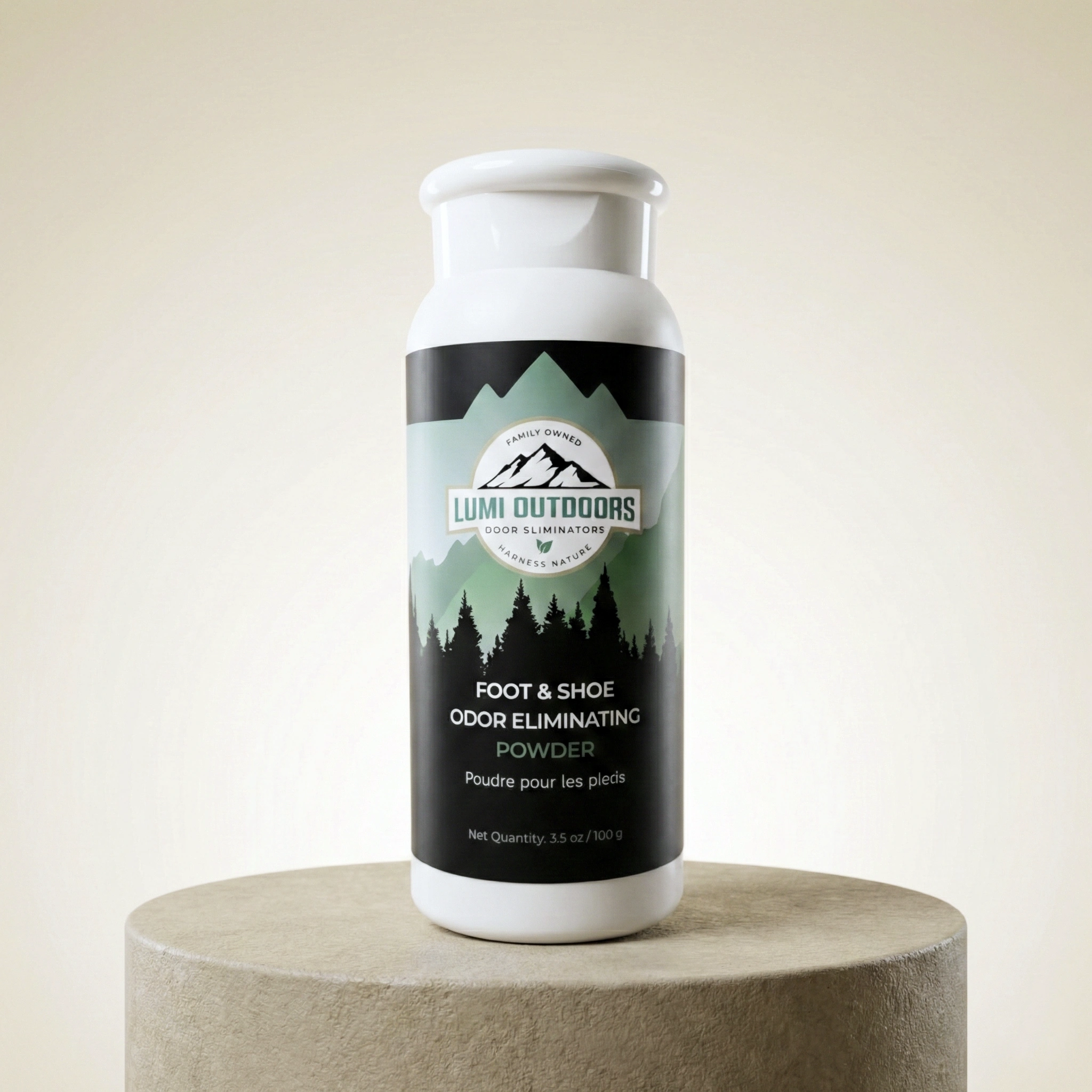
The best way to fight odor is to stop it before it starts. Our all-natural, talc-free foot powder is your first line of defense against mois...
- ABSORBS SWEAT & NEUTRALIZES ODOR
- ALL-NATURAL & TALC-FREE FORMULA
- PROUDLY FAMILY-OWNED & MADE IN UTAH
- THE "FRESH CONFIDENCE" GUARANTEE