
How to sanitize used shoes in 3 easy steps for a clean, fresh start.
- Three steps, in order Mechanical debris removal, deep disinfection, and complete moisture elimination — skipping any one of these means the bacteria and fungi come back.
- Washing machines don't cut it Standard wash cycles run too cool to eliminate dermatophytes and can spread fungal spores to other garments in the load.
- Dry is the goal Fungal spores can survive in used shoes for months, but they can't recolonize a shoe that stays consistently dry — moisture control is the long-term fix.

To sanitize used shoes effectively, you need three distinct phases: physical debris removal, deep disinfection with an agent that penetrates fabric fibers, and complete moisture elimination. Skip any one of these and you're not sanitizing — you're just masking the problem. The whole process takes about 24 hours, most of which is drying time.
The reason most people's efforts fall short is that they treat used shoes like dirty laundry. They toss them in a machine, run a warm cycle, and call it done. But the organisms living in the spongy midsole foam of a well-worn shoe aren't going anywhere from a 30-minute wash. They need targeted treatment, in the right order.
What's Actually Living in a Used Shoe?
The primary concern with secondhand shoes isn't just odor — it's dermatophytes, the fungi responsible for athlete's foot (tinea pedis). According to research published in the journal Mycoses, dermatophytes like Trichophyton rubrum can survive in shed skin cells inside footwear for months, even in the absence of a living host. That's not a hygiene concern you can rinse away.
Beyond fungal spores, the average shoe interior hosts Brevibacterium and Staphylococcus species — the same bacterial families responsible for the sour, acrid smell that announces someone walked into the room. These colonies embed in the porous foam of midsoles and the woven fibers of the lining, not just on the surface.
That's the real problem.
Odor is just the signal. The actual issue is a thriving microbial ecosystem that needs to be disrupted at the structural level, not just wiped down. The CDC notes that fungi spread through direct contact with contaminated surfaces — and a used shoe's interior is about as direct as contact gets.
Why Do Washing Machines Fall Short?
Standard washing machine cycles — even warm ones — rarely reach the temperatures needed to denature fungal spores, and the agitation can actually spread spores from the shoe to other garments in the load. Dermatophytes generally require sustained exposure to temperatures above 50°C (122°F) to be eliminated, and most home washer cycles for delicates or athletic gear run at 30–40°C to protect the materials.
There's also the structural damage to consider. Repeated machine washing breaks down the adhesive bonding layers in most athletic shoes, causing delamination — the sole separating from the upper. So you're risking your shoes and potentially contaminating your washing machine drum without actually solving the problem.
If you're curious whether chemical shortcuts like rubbing alcohol or hand sanitizer work any better, the honest answer is: it's complicated. For the full breakdown, read our piece on Hand Sanitizer on Smelly Shoes: Genius Hack or Total Disaster?
Most disinfection protocols treat the shoe interior as a flat surface — spray, wait, done. The midsole foam is actually porous and three-dimensional, and liquid agents need compression to penetrate it. After spraying, press down firmly on the insole area with a folded cloth for 20–30 seconds to physically push the disinfecting agent deeper into the foam structure. This one mechanical step dramatically improves how far the active ingredients actually reach.
Step 1: Mechanical Debris Removal
Before any chemical treatment can work, you must physically remove the biofilm layer — the combination of shed skin cells, dried sweat residue, and debris — from inside the shoe. Pull the insoles out entirely. These are almost always unsalvageable in heavily used shoes and should be replaced with fresh insoles after sanitization.
Use a stiff-bristled brush to scrub the interior lining, working in firm circular motions to dislodge compacted debris from the fabric weave. Pay special attention to the toe box and heel cup, where skin cells accumulate most densely. Shake loose material out, then use a dry microfiber cloth to wipe the interior clean.
Don't skip this step thinking the disinfectant will handle it. A chemical agent applied over a layer of organic debris is like spraying air freshener into a trash can — you're treating the surface, not the source.
Step 2: Deep Disinfection

This is where you actually break the microbial cycle. The goal is to apply a disinfecting agent that can penetrate fabric fibers and reach the spongy midsole — not just coat the surface. Essential oils like eucalyptus and tea tree oil have demonstrated activity against Trichophyton rubrum in laboratory studies, and they're safe for virtually all shoe materials, unlike bleach or high-percentage isopropyl alcohol.
Bleach and rubbing alcohol are tempting because they feel aggressive. But both carry real risks with used shoes. Bleach causes permanent discoloration on synthetic knits and leather, and breaks down polyurethane adhesives in the midsole bond. Isopropyl alcohol above 70% concentration evaporates too quickly to maintain the contact time needed to be effective against spores — typically a minimum of 10 minutes of wet contact. For more on why alcohol falls short compared to other options, our guide on hydrogen peroxide vs. rubbing alcohol for smelly shoes covers this in detail.
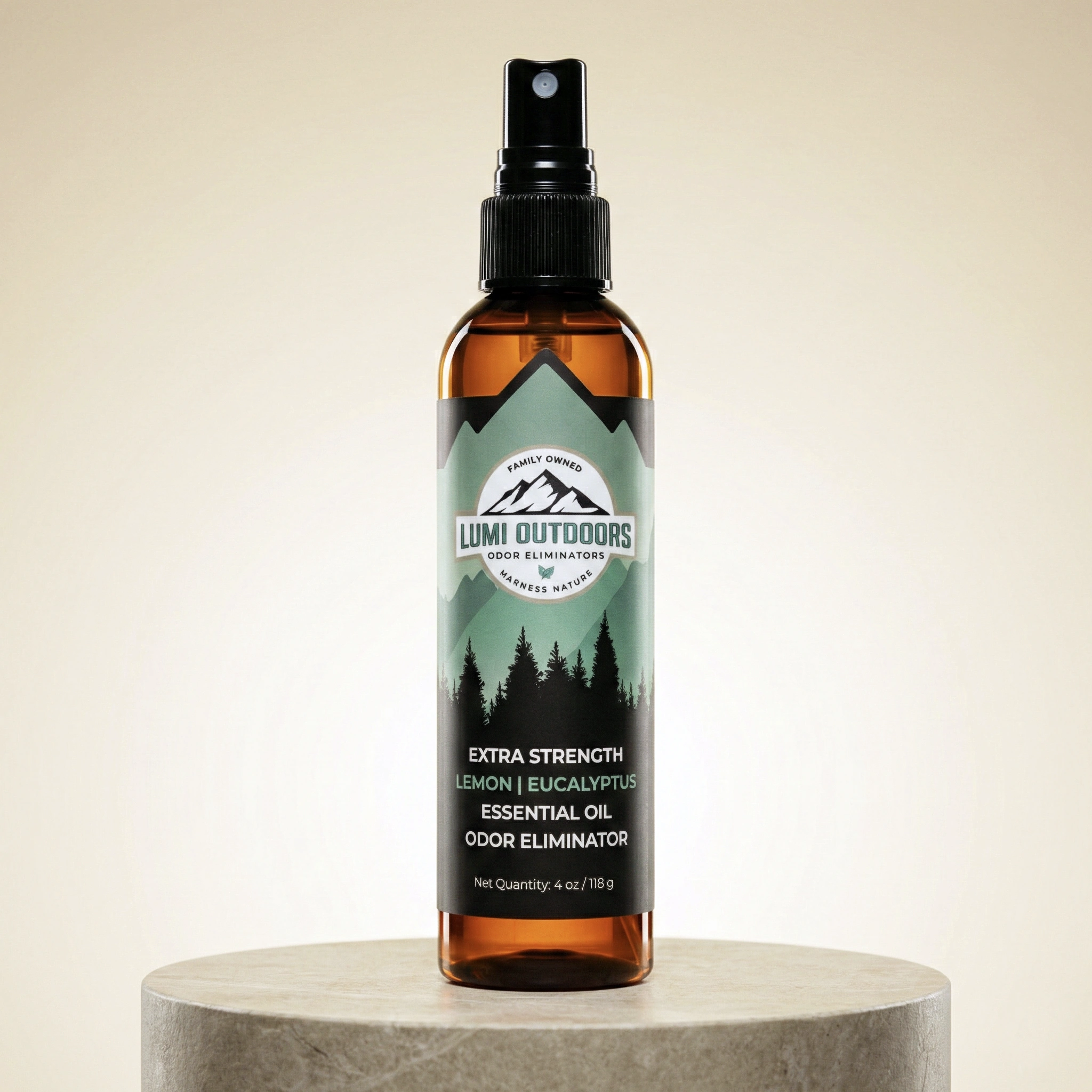
The most practical approach is a plant-based essential oil spray applied generously to the interior lining. Spray until the fabric is visibly damp — not dripping — and ensure the spray reaches into the toe box and along the sidewall lining. Lumi's Extra Strength Lemon & Eucalyptus Shoe Deodorizer Spray is what I'd reach for here: the concentrated eucalyptus formula is strong enough for heavily used shoes without damaging materials, and it doesn't leave a chemical residue that'll irritate skin on the next wear.
After applying, leave the shoes in a well-ventilated area for at least 15 minutes before proceeding to Step 3. The lemon eucalyptus scent is noticeable during this window, then fades to neutral as it dries — that's normal and expected.
Step 3: Complete Moisture Elimination
Fungal spores don't reactivate in dry environments. The final step is ensuring the shoe reaches and stays at a moisture level where microbial regrowth is impossible. Stuff the shoes with crumpled newspaper — newsprint is one of the most efficient passive moisture absorbers available — and leave them in a dry, ventilated space for a minimum of 24 hours.
Most people underestimate this stage. They complete steps one and two, slip the shoes on the next morning, and wonder why the smell returns in a week. What happened: residual moisture in the midsole foam created ideal conditions for bacterial recolonization within 48–72 hours.
The smell always comes back if you skip this part.
After the 24-hour drying window, sprinkle a moisture-absorbing powder into the shoe before inserting fresh insoles. A talc-free foot powder with zinc oxide and kaolin clay — like Lumi's Natural Foot Powder — creates a desiccant environment that discourages recolonization. Zinc oxide actively buffers skin pH while kaolin clay physically absorbs sweat throughout the day. This is the "1-2 punch": you've neutralized existing organisms in step two, and now you're changing the environment so they can't come back.
What About the "Freeze the Shoes" Method?
Freezing shoes overnight is a widely shared tip that claims to kill odor-causing bacteria by exposing them to sub-zero temperatures. The reality: most common shoe bacteria are psychrotolerant, meaning they survive freezing temperatures in a dormant state and reactivate when the shoe warms up. Freezing reduces odor temporarily by slowing bacterial metabolism, but it does not eliminate the colony.
It's a fine short-term move if you need the shoes wearable tomorrow and have no other option. But for sanitizing used shoes — especially anything with a fungal concern — freezing isn't a sanitization protocol. It's a pause button.
Worth knowing before you put someone else's shoes in your kitchen freezer next to the leftovers.
How Do You Know When Shoes Are Beyond Saving?
Not every pair of used shoes is worth sanitizing. If the midsole foam is visibly compressed and the shoe has lost its structural shape, the dense collapsed foam becomes nearly impossible to fully dry — creating a permanent moisture reservoir no spray can solve. Similarly, shoes with visible mold growth (not just odor) in the toe box or along the welt should be discarded.
The honest threshold: if the shoes have been sitting in a dark, damp environment for more than six months without wear, the dermatophyte survival odds are meaningful enough that the sanitization protocol needs to be repeated twice over two days rather than once. Spore load matters, and one pass may not be sufficient for extreme cases.
If you've already done a full sanitization protocol and the odor returns within a week, that's a signal the bacterial colony re-established. Our article on Why Shoe Odor Keeps Coming Back After Treatment explains the recolonization cycle in more detail and what to do when one round isn't enough.
Most people never check this: the tongue of the shoe. It's the most overlooked surface in the interior, harbors as much sweat residue as the insole, and is almost never treated in casual cleaning. Include it explicitly in both Step 1 and Step 2.
Ready to actually sanitize those used shoes — not just mask the smell?
Join 1 Million+ Other People Who Chose Lumi to Conquer Their Shoe Odor.
- DESTROYS ODOR AT THE SOURCE, DOESN'T JUST MASK IT
- ALL-NATURAL & PLANT-BASED INGREDIENTS
- PROUDLY FAMILY-OWNED & MADE IN UTAH
- THE "FRESH CONFIDENCE" GUARANTEE